Canadian lawmakers have historically visited Taiwan two times a year, only to hit a pause during the pandemic, says parliamentary trade committee.
"The intent is not to disrupt and cause problems for Taiwan, or problems for China. It's about trade," says Canadian lawmaker Judy Sgro.
(Getty Images)
A delegation of Canadian lawmakers has announced plans to visit Taiwan in October to seek economic opportunities in the Asia Pacific region, a move that could further stoke tensions between China and the West.
Members of a parliamentary committee on trade have been planning to visit the island state for some time, Canadian Liberal Member of Parliament Judy Sgro said on Wednesday.
"The intent is not to disrupt and cause problems for Taiwan, or problems for China. It's about trade, it's about friendship, it's about opportunities for Canada, in that whole Asia Pacific region," Sgro, who heads the trade panel, told the Reuters news agency.
The relationship between China and the West has worsened since US House of Representatives Speaker Nancy Pelosi visited Taiwan earlier this month against Beijing's wishes.
China says Taiwan is its inseparable province and is against foreign politicians visiting the island. Taiwan, which maintains diplomatic ties with some 14 countries, says it is an independent country.
In response to Pelosi's visit, China restricted trade and launched massive military drills around Taiwan, as well as slapped sanctions on Pelosi.
Beijing also imposed sanctions on a Lithuanian minister who visited Taiwan days after Pelosi's trip.
China said another trip by US lawmakers to the capital Taipei on Sunday was an infringement on its sovereignty and territorial integrity.
The Chinese embassy in Ottawa did not respond to a request for comment.
The Taipei Economic and Cultural Office in Canada also did not immediately respond to an emailed request for comment.
Sgro said Canadian lawmakers have usually visited Taiwan twice a year in the past but stopped due to the coronavirus pandemic.
"This is part of an ongoing effort for us to ensure that the doors are open for Canadian companies wherever there's trade opportunity," Sgro said.
Conservative MP and vice chair on the trade committee, Randy Hoback, said he would seek guidance from the Canadian Foreign Ministry before deciding on visiting Taiwan.
"I think we need to get back to normalcy in a lot of things and one of that is in visits and having interaction from country to country," Hoback told Reuters.
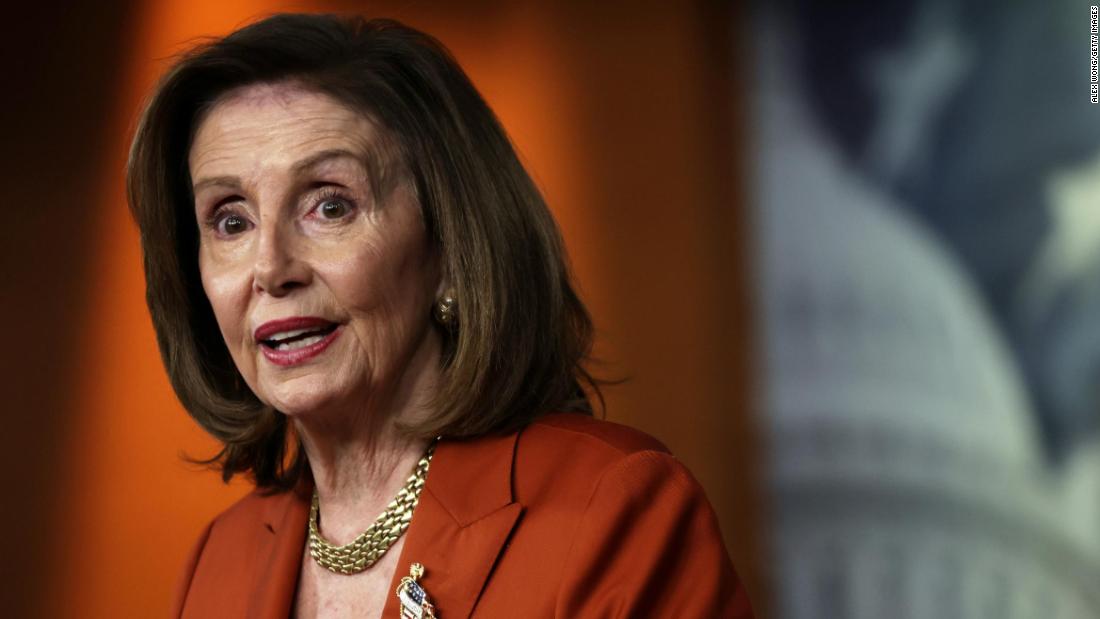
House Speaker Nancy Pelosi is being slammed on social media for comments she made about her "connection" with China that she spoke about during a press conference on Thursday.
Pelosi said that she has always had a special connection with China because of a childhood memory.
"When I was a little girl, I was told at the beach if I dug a hole deep enough, we would reach China, so we've always felt a connection there," Pelosi said.
Pelosi made the comment during a trip to the Indo-Pacific.
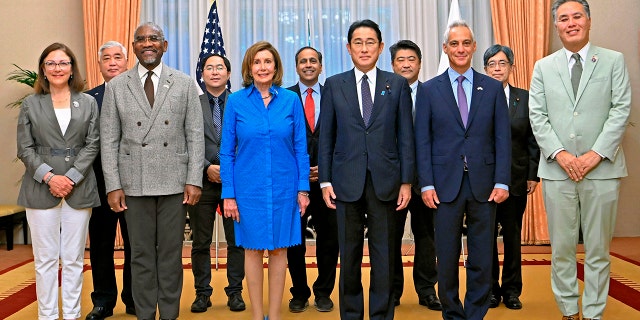
U.S. House Speaker Nancy Pelosi, front, center left, and her congressional delegation pose for a photo with Japanese Prime Minister Fumio Kishida, center right, before their breakfast meeting at the prime minister's official residence in Tokyo.
(Kyodo News via AP)
"you’re telling me this person was our best choice to visit taiwan?," another Twitter user said.
Pelosi made the trip to the Indo-Pacific in the past week and stopped in Taiwan on Tuesday, despite multiple threats from China advising her not to visit the island.
US House Speaker Nancy Pelosi (L) shakes hands with Hiroyuki Hosoda, speaker of Japan's House of Representatives, during a meeting in Tokyo.
(Photo by Kazuhiro Nogi/Afp/AFP via Getty Images)
"Our visit is one of several Congressional delegations to Taiwan – and it in no way contradicts longstanding United States policy, guided by the Taiwan Relations Act of 1979, U.S.-China Joint Communiques and the Six Assurances," Pelosi said in a statement. "The United States continues to oppose unilateral efforts to change the status quo."
Fox News' Timothy H.J. Nerozzi contributed to this report.
Adam Sabes is a writer for Fox News Digital. Story tips can be sent to Adam.Sabes@fox.com and on Twitter @asabes10.
US House Speaker Nancy Pelosi meets with officials in Japan during the last leg of her controversial tour to Asia that has drawn Beijing's fury and led to outsized military exercises around Taiwan.
Pelosi reached Japan two days after she became the most senior US official to visit Taiwan in 25 years.
(Reuters)
US House of Representatives
Speaker Nancy Pelosi is meeting Japanese officials in Tokyo, following a visit to Taiwan that Beijing answered with
unprecedented military drills and missile launches.
Pelosi will meet officials on Friday after arriving in Japan following a visit to South Korea on Thursday, where she vowed support to denuclearise North Korea.
In Tokyo, she and Prime Minister Fumio Kishida met for discussions on Friday morning. She is also expected to meet her Japanese counterpart Hiroyuki Hosoda, speaker of the more powerful lower house of parliament.
Kishida condemned China's firing of ballistic missiles during military drills around Taiwan, five of which Tokyo believes landed in its exclusive economic zone.
The missile launches are a "serious problem that impacts our national security and the safety of our citizens," Fumio Kishida told reporters after meeting Pelosi for breakfast.
Pelosi's brief trip to Taiwan, where she arrived unannounced
with a congressional delegation late on Tuesday and left on
Wednesday, marked the highest-level US visit to the
island state, which China says is its inseparable province, in 25 years.
It also came as Tokyo, one of Washington's closest allies,
has been increasingly alarmed about China's growing might in the Asia-Pacific and the possibility that Beijing could take
military action against Taiwan.
"China has chosen to overreact and use the speaker's visit as a pretext to increase provocative military activity in and around the Taiwan Strait," White House spokesperson John Kirby told reporters.
"The temperature's pretty high," but tensions "can come down very easily by just having the Chinese stop these very aggressive military drills," he added.
Largest Chinese drills in area
Pelosi lauded Taiwan's democracy and pledged American
solidarity. Beijing responded with military drills that a state
broadcaster said would be the largest by China in the Taiwan
Strait, including live firing on the waters and in the airspace
around the island.
Five missiles landed in Japan's exclusive economic zone, prompting Tokyo to lodge a strong protest through
economic channels.
Japan, whose southernmost islands are closer to Taiwan than
Tokyo, has warned that Chinese intimidation of Taiwan is an
escalating national security threat.
PM Kishida's Liberal Democratic Party
(LDP) has also pledged to double military spending to 2 percent of GDP.
Tensions between Japan and China ramped up a notch on
Thursday when China announced that a meeting between the two
nations' foreign ministers, set to take place on the sidelines
of an ASEAN meeting in Cambodia, had been called off due to its
displeasure with a G7 statement urging Beijing to resolve Taiwan
tension peacefully.
Beijing launches its largest manoeuvres aimed at the island state in more than a quarter of a century following senior US politician Nancy Pelosi's controversial visit to Taipei.
Global Times says, citing military analysts, the exercises were "unprecedented" and that missiles would fly over Taiwan for the first time.
(AFP)
China's largest-ever military exercises encircling Taiwan have kicked off, in a show of force straddling vital international shipping lanes after a controversial visit to the island state by US House Speaker Nancy Pelosi.
The exercises, including those involving live fire, began on Thursday afternoon and will be the biggest aimed at Taiwan since 1995 when China fired missiles in a large-scale exercise to show its displeasure over a visit by then-Taiwanese president Lee Teng-hui to the US.
Nationalist state-run tabloid Global Times said, citing military analysts, that the exercises were "unprecedented" and that missiles would fly over Taiwan for the first time.
"This is the first time the PLA will launch live long-range artillery across" the Taiwan Strait, the newspaper said using the Chinese military's formal name, the People's Liberation Army.
China's Taiwan affairs office said the punishment of pro-Taiwan independence diehards and external forces was reasonable and lawful.
Taiwan is not a "regional" issue but China's internal affair, the Beijing-based Taiwan affairs office added.
The drills come as Group of Seven leaders urged Beijing to show restraint while the ASEAN foreign ministers also warned the situation "could destabilise the region and eventually could lead to miscalculation, serious confrontation and unpredictable consequences among major powers."
The senior US politician left Taiwan on Wednesday morning, having defied a series of increasingly stark warnings from Beijing.
After Pelosi's departure, Taiwan's Defence Ministry announced that 27 Chinese warplanes had entered the island's air defence identification zone (ADIZ).
CCTV showed military planes taking off, naval warships on patrol, military vehicles and missile weapons participating in drills.
The exercises are aimed to "shock and deter against the major escalation of the United States' recent negative actions on the Taiwan issue, and a serious warning to the Taiwan independence forces," said the spokesperson of Eastern Theatre Command, Shi Yi.
CCTV news broadcast features a map of locations around Taiwan where China will conduct military exercises and training activities.
(Reuters)
Drills in preparation for 'actual combat'
Thursday's drills will include "long-range live ammunition shooting" in the Taiwan Strait. The zone of Chinese exercises will be within 20 kilometres of Taiwan's shoreline at some points, according to coordinates released by the Chinese military.
Taiwan's Defence Ministry spokesperson Sun Li-fang said that some of the areas of China's drills "breach into ... (Taiwan's) territorial waters".
But a source with the Chinese military told the AFP news agency that the exercises would be staged "in preparation for actual combat".
"If the Taiwanese forces come into contact with the PLA on purpose and accidentally fire a gun, the PLA will take stern countermeasures, and all the consequences will be borne by the Taiwanese side," the source warned.
Pelosi, second in line to the presidency, is the highest-profile elected US official to visit Taiwan in 25 years.
Before leaving Taiwan, Pelosi also met with several dissidents who have previously been in the crosshairs of China's wrath – including Tiananmen protest student leader Wu'er Kaixi.
Pelosi's trip heightened US-China tensions more than visits by other members of Congress because of her position as leader of the House of Representatives.
The last House speaker to visit Taiwan was Newt Gingrich in 1997.
Beijing considers Taiwan as an inseparable part of itself, but the latter has maintained its self-rule since 1949 and enjoys diplomatic ties with at least 14 countries.
Interactions between Washington and Taipei have grown significantly since the tenure of former US president Donald Trump, with former and sitting lawmakers making trips to the island, home to more than 25 million people.
The US formally recognised China in 1979 and shifted diplomatic relations from Taipei to Beijing, and accepted Taiwan as part of the mainland under Washington's One China policy.
Beijing is all set to launch its largest manoeuvres aimed at the island state in more than a quarter of a century following senior US politician Nancy Pelosi's controversial visit to Taipei.
Drills would be staged "in preparation for actual combat," says AFP, citing a Chinese military source.
(AFP)
Furious China is all set to conduct massive military exercises encircling the island state of Taiwan in retaliation for Nancy Pelosi's controversial visit, which has sparked new tensions in the region.
The exercises, including those involving live fire, are to start on Thursday and will be the biggest aimed at Taiwan since 1995 when China fired missiles in a large-scale exercise to show its displeasure over a visit by then-Taiwanese president Lee Teng-hui to the US.
It comes as Group of Seven leaders urged Beijing to show restraint, saying there was "no justification" for "aggressive" military drills in the Taiwan Strait.
The senior US politician left Taiwan on Wednesday morning, having defied a series of increasingly stark warnings from Beijing, which considers the island as its inseparable province and warned it would consider the visit a major provocation.
China later announced what it said was "necessary and just" military drills in the seas just off Taiwan's coast –– some of the world's busiest waterways.
"In the current struggle surrounding Pelosi's Taiwan visit, the United States are the provocateurs, China is the victim," Beijing's Foreign Ministry said.
After Pelosi's departure, Taiwan's Defence Ministry announced late on Wednesday that 27 Chinese warplanes had entered the island's air defence identification zone (ADIZ).
CCTV showed military planes taking off, naval warships on patrol, military vehicles and missile weapons participating in drills.
The exercises were aiming to "shock and deter against the major escalation of the United States' recent negative actions on the Taiwan issue, and a serious warning to the Taiwan independence forces," said the spokesperson of Eastern Theatre Command, Shi Yi.
CCTV news broadcast features a map of locations around Taiwan where China will conduct military exercises and training activities.
(Reuters)
Drills in preparation for 'actual combat'
The drills will include "long-range live ammunition shooting" in the Taiwan Strait.
The zone of Chinese exercises will be within 20 kilometres of Taiwan's shoreline at some points, according to coordinates released by the Chinese military.
Taiwan's Defence Ministry spokesperson Sun Li-fang said that some of the areas of China's drills "breach into... (Taiwan's) territorial waters".
"This is an irrational move to challenge the international order."
But a source with the Chinese military told the AFP news agency that the exercises would be staged "in preparation for actual combat".
"If the Taiwanese forces come into contact with the PLA on purpose and accidentally fire a gun, the PLA will take stern countermeasures, and all the consequences will be borne by the Taiwanese side," the source warned.
Taiwan's Mainland Affairs Council, which sets the government's China policies, accused Beijing of "vicious intimidation" and called for democratic countries to "unite and take a solemn stand to punish and deter" Beijing.
Pelosi meets dissidents
China tries to keep Taiwan isolated on the world stage and opposes countries having official exchanges with Taipei.
Pelosi, second in line to the presidency, is the highest-profile elected US official to visit Taiwan in 25 years.
Before leaving Taiwan, Pelosi also met with several dissidents who have previously been in the crosshairs of China's wrath –– including Tiananmen protest student leader Wu'er Kaixi.
"Both the United States and Taiwan governments need to... conduct more in defending human rights," Wu'er said.
Pelosi's trip heightened US.-China tensions more than visits by other members of Congress because of her position as leader of the House of Representatives.
The last House speaker to visit Taiwan was Newt Gingrich in 1997.
China slams US House Speaker Nancy Pelosi's visit to island state as threat to peace in Taiwan Strait, responding with flurry of military exercises and announcing suspension of several agricultural imports from Taiwan.
China has expressed fury at visit of US House Speaker Nancy Pelosi to Taiwan, painting it as a provocation that threatens fragile cross-strait status quo.
(Reuters)
Chinese military drills encircling Taiwan are threatening the island's key ports and urban areas, Taipei's Defence Ministry has said, as China furious over US officials' visit to the island state bans sand export to Taiwan and suspends some imports as well.
"The Defence Ministry has closely monitored and strengthened preparations, and will respond appropriately in due time," Taiwan's defence department said on Wednesday.
"The military will definitely stick to its posts and protect national security. We ask the public to rest assured and support the military."
The drill is "an attempt to threaten our important ports and urban areas, and unilaterally undermine regional peace and stability," it added.
"This move will not help China's international image," Taiwan said, vowing to "strengthen" defences and offer a resolute response as cross-strait tensions soar.
The Island's authorities pilloried Beijing's military posture just hours after China flew 21 military planes into Taiwan's air defence zone.
Taiwanese President Tsai Ing-wen said the island would "not back down" as a furious China geared up for military drills in retaliation for the visit of US House Speaker Nancy Pelosi.
"Facing deliberately heightened military threats, Taiwan will not back down. We will... continue to hold the line of defence for democracy," Tsai said at an event with Pelosi in Taipei.
China's leaders have expressed fury at the visit of US House of Representatives Speaker Nancy Pelosi to Taiwan, painting it as a provocation that threatens the fragile cross-strait status quo.
In response, China has announced a series of live-fire military exercises around Taiwan, with the Eastern Theatre Command saying that "joint naval and air exercises will be conducted in the northern, southwestern, and southeastern sea and airspaces" of the island.
The drills will include "long-range live ammunition shooting" in the Taiwan Strait, which separates the island from mainland China.
At some points, the zone of Chinese operations will come within 20 kilometres of Taiwan's shoreline, according to coordinates shared by the People's Liberation Army.
Beijing considers Taiwan as its province and has vowed to one day seize it, by force if necessary.
With the risk of conflict or miscalculation rising, officials from outgunned Taiwan have tried to appear resolute to preserve public calm.
Taiwan's cabinet said the military has increased its alertness level and authorities will make plans to ensure safety and stability around the island.
It said its citizens should feel reassured and that a national stabilisation fund for the stock market will closely watch the situation and react in a timely manner.
Meanwhile, Beijing's Commerce Ministry also announced retaliatory economic measures, saying it would suspend the export to Taiwan of natural sand –– a key component in the manufacturing of semiconductors, one of the island's main exports.
China said it is suspending imports of citrus fruits, chilled white striped hairtail and frozen horse mackerel from Taiwan.
Beijing said it will take disciplinary actions against two Taiwan foundations, banning them from financially cooperating with mainland companies and individuals, Ma Xiaoguang, spokesperson of China's Taiwan Affairs Office said.
The two foundations are Taiwan Foundation for Democracy and Taiwan International Cooperation and Development Fund, Ma said.
Earlier on Wednesday, Pelosi thanked Taiwan's president for her leadership and called for increased inter-parliamentary cooperation.
"We commend Taiwan for being one of the freest societies in the world," Pelosi told Taiwan's parliament.
She also said new US legislation aimed at strengthening the American chip industry to compete with China "offers greater opportunity for US-Taiwan economic cooperation."
Beijing considers Taiwan a breakaway province, but the latter has maintained its self-rule since 1949 and enjoys diplomatic ties with at least 14 countries.
Interactions between Washington and Taipei have grown significantly since the tenure of former US president Donald Trump, with former and sitting lawmakers making trips to the island home to more than 25 million people.
The US formally recognised China in 1979 and shifted diplomatic relations from Taipei to Beijing, and accepted Taiwan as part of the mainland under Washington's One China policy.
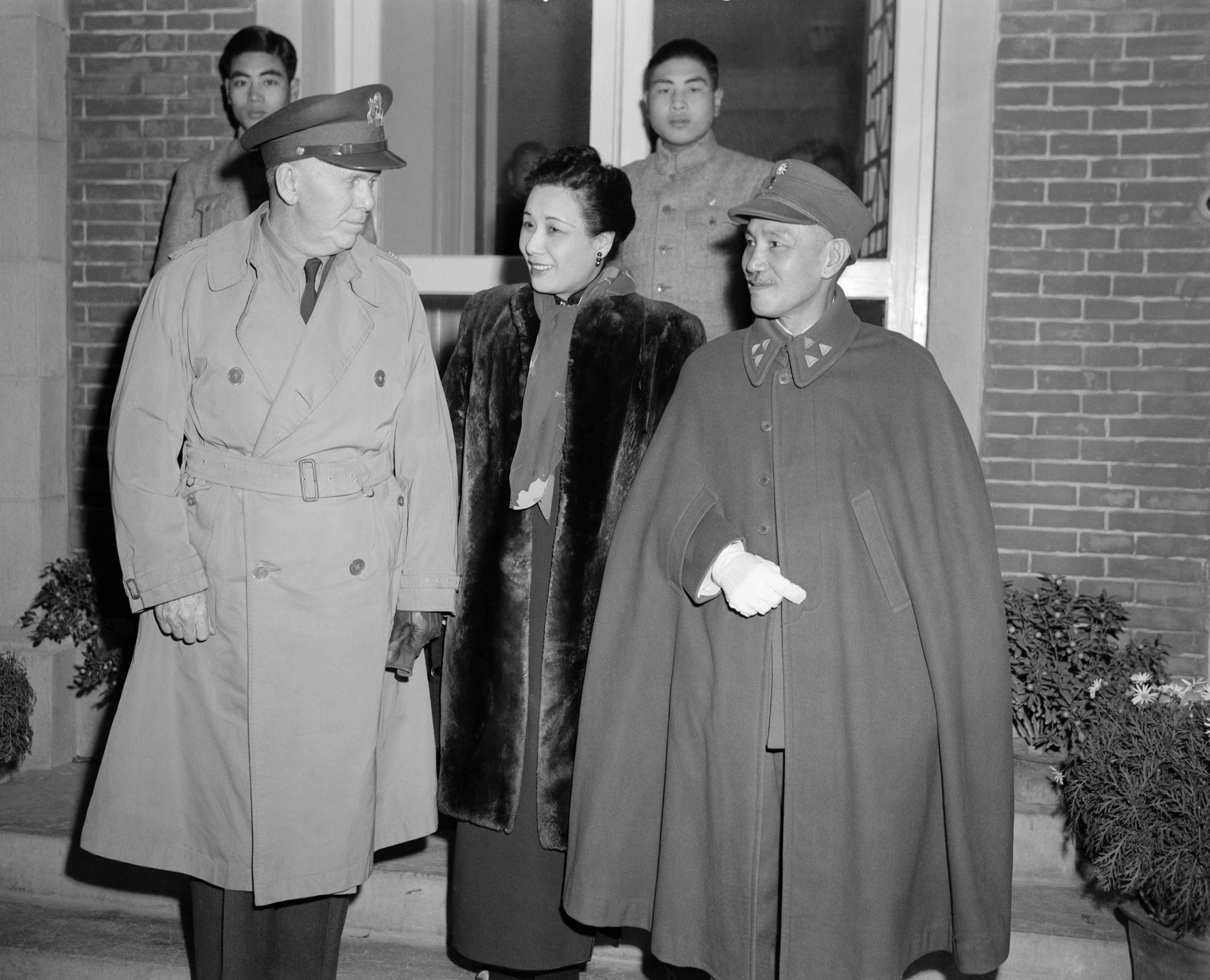
US Ambassador to China Gen. George C. Marshall with Nationalist leader Chiang Kai-Shek (right), and his wife, Soong Mei-ling, in China in 1943. (Bettmann/Getty Images)
During the Chinese civil war, the United States backed the ruling Nationalist government, led by the Kuomintang. The Soviet Union supported the Chinese Communist Party, which eventually took power and established the People's Republic of China.
The US continued to support the Kuomintang, or KMT, government after it retreated to Taiwan following its defeat. The US provided the KMT with development assistance to build its economy and initially shunned the People's Republic as an ideological and military adversary.
But following a diplomatic conflict between Beijing and Moscow in the 1960s — known as the Sino-Soviet split — relations between the US and the People's Republic began to thaw.
By 1979, the US had joined a growing list of nations to formally switch diplomatic recognition from Taipei to Beijing.
The One China policy: In what is known as the "One China" policy, Washington recognizes the People's Republic of China as the sole legitimate government of China. It also acknowledges Beijing's position that Taiwan is part of China. However, the US has never accepted the Communist Party's claim of sovereignty over the island.
Meanwhile, the US continues to retain close unofficial ties with Taiwan under the terms of the decades-old Taiwan Relations Act, facilitating commercial, cultural and other exchanges through the American Institute in Taiwan — the de facto US Embassy in Taipei.
Strategic ambiguity: The US maintains close unofficial ties with Taiwan, and is bound by law to provide Taiwan with defensive arms.But it remains deliberately vague on whether it would defend Taiwan in the event of a Chinese invasion, a policy known as ��strategic ambiguity.”
This is meant to dissuade any such invasion by keeping open the possibility of a US military response. At the same time, it's meant to avoid giving Taiwan the sort of assurance that could prompt it to declare official independence. The goal is to preserve the status quo and to avoid a war in Asia — and so far it appears to have worked, allowing Washington to walk the tightrope of relations with both sides.
Biden's remarks: But under Biden, some observers say that "strategic ambiguity" has become somewhat less ambiguous. Since taking office, Biden has said on three occasions the US would be willing to intervene militarily should the Chinese attack Taiwan — though the White House has rushed to walk back his remarks each time.
U.S. House of Representatives Speaker Nancy Pelosi arrived in Taiwan on Tuesday despite repeated warnings not to from mainland China, which claims the island democracy as its own territory.
Pelosi and members of a congressional delegation landed at Taipei Songshan Airport in the Taiwanese capital at just after 10:40 p.m. local time as part of her tour of Asia. She visited Singapore on Monday and Malaysia on Tuesday. Her office previously said she would also travel to South Korea and Japan but didn't mention a stop in Taiwan, until after her plane touched down under the cover of darkness Tuesday night.
"Our Congressional delegation’s visit to Taiwan honors America's unwavering commitment to supporting Taiwan's vibrant Democracy," Pelosi and the delegation said in a joint statement Tuesday. "Our visit is part of our broader trip to the Indo-Pacific -- including Singapore, Malaysia, South Korea and Japan -- focused on mutual security, economic partnership and democratic governance. Our discussions with Taiwan leadership will focus on reaffirming our support for our partner and on promoting our shared interests, including advancing a free and open Indo-Pacific region. America's solidarity with the 23 million people of Taiwan is more important today than ever, as the world faces a choice between autocracy and democracy."
"Our visit is one of several Congressional delegations to Taiwan -- and it in no way contradicts longstanding United States policy, guided by the Taiwan Relations Act of 1979, U.S.-China Joint Communiques and the Six Assurances," they added. "The United States continues to oppose unilateral efforts to change the status quo."
Pelosi is the most senior U.S. official to visit Taiwan in a quarter century. Beijing considers any official contact with Taiwan a recognition of its democratically elected government, which the mainland's ruling Communist Party asserts has no right to conduct foreign relations.
The delegation headed by US House Speaker Nancy Pelosi arrives in Songshan Airport in Taipei, Taiwan, Aug. 2, 2022.
Taiwan Ministry of Foreign Affairs via ABC News
Just minutes after Pelosi's arrival was confirmed, China's largest state-run news agency, Xinhua, announced that live-fire military drills would be held in the airspace and waters surrounding and close to Taiwan from Thursday to Sunday.
Meanwhile, the Chinese Ministry of National Defense announced that the armed command in charge of "defending China's sovereignty in the East China Sea," including Taiwan, "will carry out a series of joint military operations around" the island starting Tuesday night. The operations will include "joint air and sea exercises," "long-range live ammunition firing in the Taiwan Strait" and "regular-guided fire testing in the eastern waters of Taiwan Island," according to the ministry.
"This action is a solemn deterrent against the major escalation of the U.S.'s recent negative actions on the Taiwan issue, and a serious warning to the 'Taiwan independence' forces seeking 'independence,'" the ministry said in a statement Tuesday.
The Chinese Ministry of Foreign Affairs also released a statement, vowing to "take all necessary measures to resolutely defend national sovereignty and territorial integrity in response to the U.S. House Speaker's visit to Taiwan, China," adding that "the U.S. and the 'Taiwan independence' separatist forces must be responsible for all the consequences."
A spokesperson for the National People's Congress said in another statement that China's 3,000-member ceremonial legislature "firmly opposes and strongly condemns" Pelosi's trip to Taiwain.
The Chinese Communist Party's Taiwan Affairs Office called Pelosi's visit to the island "an escalation of the Taiwan-US collusion, which is very bad in nature and has very serious consequences."
The Boeing C-40C flight SPAR19 carrying the delegation headed by US House Speaker Nancy Pelosi arrives in Songshan Airport in Taipei, Taiwan, Aug. 2, 2022.
Ritchie Tongo/EPA-EFE/Shutterstock
In Washington, D.C., White House spokesperson John Kirby appeared to downplay China's announcement of large military drills near Taiwan in the coming days, saying the statements made thus far fall in line with the "playbook" he had discussed on Monday.
"She has every right to go," Kirby said of Pelosi while addressing reporters on Tuesday. "She's the speaker of the House of Representatives and a member of Congress, and it is not atypical for members of Congress to travel to Taiwan. It's also not unprecedented for a speaker of the House to travel to Taiwan."
Kirby said the U.S. government would continue to make sure Pelosi's visit was "safe and secure."
“We support her right to visit," he added. "We're going to make sure that that visit is safe and secure"
Pelosi's arrival came on the heels of already fiery reactions from Chinese officials amid reports that she was planning such a trip.
Zhao Lijian, spokesperson for the Chinese Ministry of Foreign Affairs, told a press briefing on Monday that Beijing "will take firm and strong measures" if Pelosi were to travel to Taiwan.
"We want to once again make it clear to the US side that the Chinese side is fully prepared for any eventuality and that the People’s Liberation Army of China will never sit idly by, and we will make resolute response and take strong countermeasures to uphold China’s sovereignty and territorial integrity," Zhao said. "We have on many occasions stated our grave concern and solemn position that we firmly oppose Speaker Pelosi's attempted visit to Taiwan region, and will take firm and strong measures to safeguard national sovereignty and territorial integrity."
"The One China principle is what underpins peace and stability across the Taiwan Strait," he added. "It is the United States that has constantly distorted and hollowed out the One China policy and made irresponsible remarks on the Taiwan question, creating tension across the Strait. The U.S. side lately has begun to stress the need to safeguard the sovereignty and territorial integrity of each country. We hope that the U.S. side should first act as it speaks on the Taiwan question and must not play the double-standard game."
A person watches a news channel about the potential visit of U.S. House Speaker Nancy Pelosi in Taipei, Taiwan, Aug. 2, 2022.
Ritchie B Tongo/EPA via Shutterstock
Under the so-called "One China principle", Beijing regards Taiwan as their territory, a renegade province to be reunified -- by force if necessary -- with the mainland. The U.S. has a "One China Policy" recognizing the people of Mainland China and Taiwan being part of "One China," that Beijing is China's sole legal government and does not support an independent Taiwan, but considers the matter "unsettled." Washington is also militarily supportive of the self-governing island and maintains extensive commercial and unofficial ties.
Taiwan split from mainland China in 1949, following a civil war between the Nationalist Party's forces and those of the Communist Party. As the communists took control of the mainland, the nationalists retreated to the island of Taiwan where they established their new capital.
Both sides agree that they are one country but disagree on which is the national leader. Although they have no formal relations, the island's economy remains reliant on trade with the mainland.
The U.S. switched diplomatic recognition from Taipei to Beijing in 1979. The Taiwan Relations Act, which went into force that same year, requires Washington to provide Taiwan with the means to defend itself.
Hua Chunying, a senior spokesperson for the Chinese foreign ministry, appeared to dial down the rhetoric on Tuesday before Pelosi's arrival was officially announced, telling reporters that Beijing and Washington "have maintained close communication."
"China has repeatedly and unmistakably expressed to the U.S. side our strong opposition to Speaker Pelosi's potential visit to Taiwan," Hua said. "And we hope that two U.S. officials will be very clear about the importance and sensitivity of this issue and how dangerous this issue could be."
While the Chinese foreign ministry has not yet summoned U.S. Ambassador to China Nicholas Burns in protest, Hua noted: "I think when appropriate, we will be in touch with the U.S. ambassador."
Unlike Zhao, she would not comment on any military response to Pelosi's visit and deferred the question to a spokesperson for the ruling party's military, the People’s Liberation Army.
A man rubs his forehead as he reads a newspaper headline reporting "U.S. Taiwan staring anxiously on U.S. House Speaker Nancy Pelosi" at a stand in Beijing, China, on Aug. 2, 2022.
"China appears to be positioning itself to potentially take further steps in the coming days and perhaps over longer time horizons," Kirby said.
Kirby told reporters that the "potential steps" China may take in response "could include military provocations, such as firing missiles in the Taiwan Strait or around Taiwan, operations that break historical norms such as a large-scale air entry into Taiwan's air defense identification zone" or "air or naval activities that crossed the median line; military exercises that could be highly publicized." He said the last time Beijing fired missiles into the Taiwan Strait was in 1996.
There could also be measures taken "in the diplomatic and economic space," Kirby said, "like Beijing's public assertions last month that the Taiwan Strait is not an international waterway."
When asked what planning was "being done in advance to ensure there won't be any dangerous fallout if she does indeed go to Taiwan," Kirby told reporters he could "assure" that Pelosi would be able to "travel safely and securely."
"The speaker makes her own decisions," he added. “And what we did was provide her context, analysis, facts, information, so that she could make the best decision possible for every stop, for every overseas travel."
Kirby cast the escalating tensions as fueled by China, which the U.S. was "not threatening." He said a potential visit from Pelosi would have precedent and would not "change the status quo" regarding China and Taiwan.
In 1997, then-House Speaker Newt Gingrich visited Taiwan after meeting with then-Chinese President Jiang Zemin in Beijing.
But Hua told reporters Tuesday that there would be no "excuse" for a visit by Pelosi.
"The wrong actions of individual U.S. politicians in the past should not set a precedent, much less an excuse for the US to make mistakes on the Taiwan issue," she said.
China has given no details on what sorts of units will take part in exercises planned for opposite Taiwan. In this file photo, a missile launches from a Chinese submarine.
China Photos | Getty Images News | Getty Images
China said it was conducting military exercises Saturday off its coast opposite Taiwan after warning Speaker Nancy Pelosi of the U.S. House of Representatives to scrap possible plans to visit the island democracy, which Beijing claims as part of its territory.
The ruling Communist Party's military wing, the People's Liberation Army, was conducting "live-fire exercises" near the Pingtan islands off Fujian province from 8 a.m. to 9 p.m., the official Xinhua News Agency said. The Maritime Safety Administration warned ships to avoid the area.
Such exercises usually involve artillery. The one-sentence announcement gave no indication whether Saturday's exercise also might include missiles, fighter planes or other weapons.
Pelosi, who would be the highest-ranking American elected official to visit Taiwan since 1997, has yet to confirm whether she will go. President Xi Jinping warned his U.S. counterpart, Joe Biden, in a phone call Thursday against "external interference" in Beijing's dealings with the island.
China says Taiwan has no right to conduct foreign relations. It sees visits by American officials as encouragement for the island to make its decades-old de facto independence official.
The Ministry of Defense warned Washington this week not to allow Pelosi, who is Biden's equal in rank as leader of one of three branches of government, to visit Taiwan. A spokesman said the PLA would take unspecified "strong measures" to stop pro-independence activity.
The PLA has flown growing numbers of fighter planes and bombers near Taiwan and has in the past fired missiles into shipping lanes to the island.
Taiwan and China split in 1949 after a civil war that ended with a communist victory on the mainland.
The two governments say they are one country but disagree over which is entitled to national leadership. They have no official relations but are linked by billions of dollars in trade and investment.