More than two million acres of agricultural land have been flooded and government is close to a deal to import vegetables and other edible goods from Iran and Afghanistan, officials say.
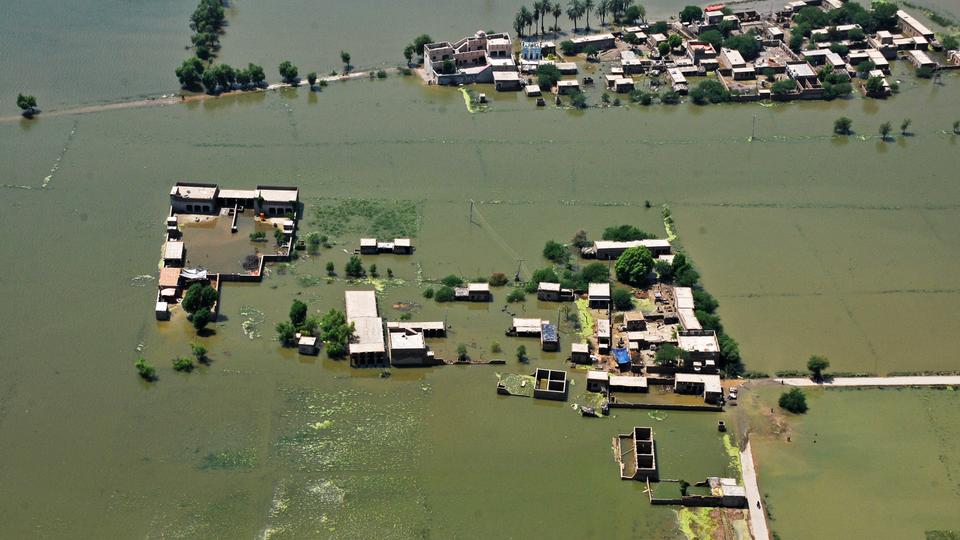
This aerial photograph taken on August 31, 2022 shows a flooded residential area after heavy monsoon rains in Shikarpur, Sindh province.
(AFP)
Vegetable and fruit
prices have soared in markets across Pakistan as devastating
rains ruin crops and disrupt supplies, an early sign of how the
worst floods in decades are creating food shortages at a time of
financial crisis.
In the eastern city of Lahore, close to the border with
India and far from the worst floods in Sindh province, prices of
some vegetables have tripled.
"Last week, I sold onions for 90 rupees a kg and today the
government price is 300 per kg," said vegetable seller Ahmad
Ali. The Pakistani government sets prices for some fresh
produce, although traders often ignore the guidelines.
Tomatoes and onions are among the most common ingredients in
Pakistani cooking, and tens of thousands of tonnes of each are
consumed each month.
"The supply of vegetables and fruit to Lahore is getting
lower day by day because of the flood, rains and destruction to
roads," said Malik Salim Awan, a supplier at Lahore's fruit and
vegetable market.
"Before the current scenario, we were receiving over 100
trucks (of fresh produce) daily. Now, we receive 10 to 15 trucks
only," Awan said.
Pakistan's 220 million people are already facing rampant inflation, with consumer prices up 24.9 percent year-on-year in July. The economy is in turmoil, with fast-depleting foreign reserves and a record depreciation of the rupee against the US dollar.
That leaves the country particularly vulnerable as it counts the cost of extreme monsoon rains through August that have killed more than 1,100 people.
Damage to homes and infrastructure will run into billions of dollars, while losses in the key farming sector have yet to be fully assessed.
Officials say that more than two million acres of agricultural land have been flooded, destroying most standing crops and preventing farmers from sowing new ones.
'Rice crop has been washed away'
Hundreds of kilometres from Lahore, people must
clear up flooded homes at the same time as worry about where the
next meal will come from.
"Tomatoes were 60 rupees a kg, and now they are more than
200 ... even the price of flour is double now," said Sain Bukash
Husain, 20, whose home in the village of Garhi Yasin in the
southern province of Sindh has been badly damaged.
"What can we do?"
Sindh, with a population of 50 million, has been hardest
hit, with 697 mm of rain thus far in the monsoon period, or 466 percent above the 30-year monsoon average. Pakistan as a whole has seen
nearly 190 percent more rain than the 30-year average.
In Dera Ismail Khan, in central Pakistan along the Indus
River, warehouses storing vegetables are already emptying out.
The government of Prime Minister Shehbaz Sharif is
scrambling to secure supplies.
"The rice crop has been washed away," Sharif told reporters
after visiting northern Pakistan. "Fruit and vegetables are
gone." He said flood waters had swept away 700,000 livestock.
Pakistan's agrarian sector powers the economy and feeds the
people, accounting for more than a fifth of the country's
output, employing up to 40 percent of the workforce and producing goods
worth around $80 billion annually.
Commerce Minister Naveed Qamar said on Wednesday that the
government was close to an agreement to import vegetables and
other edible goods from Iran and Afghanistan, and an urgent
request had gone to the cabinet to approve it.
"Prices are up already. If you go to buy onions you wouldn't
get it. If you go to buy tomatoes you will get it at a much
higher price," Qamar told a news conference, citing the fallout
of the floods.
Source: Reuters
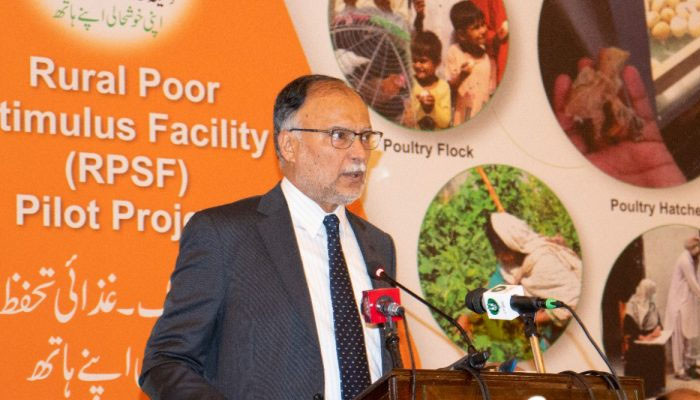
Minister for Planning, Development and Special Initiatives Ahsan Iqbal. —APP
40-50 per cent cotton crop have also been damaged, says Ahsan Iqbal.
He says 0.9 million livestock have been washed away in floods.
Recent floods brought more devastation than 2010, says federal minister.
Minister for Planning, Development and Special Initiatives Ahsan Iqbal Monday warned that country might face food security challenges due to flood and torrential rains, Geo News reported.
While speaking at an event in Islamabad, Federal Minister Ahsan Iqbal said that due to the recent floods and torrential rains in the country crops of rice, banana, onion and other agricultural produces were affected badly.
“In addition, 40-50 per cent cotton crop has also been damaged across the country due to floods,” he added.
Ahsan Iqbal said that recent floods in Pakistan brought more devastation than that caused by the flood in 2010, saying, “0.9 million livestock and one million houses have been washed away in floods.”
Pakistan monsoon flooding death toll rises to 1,061
The recent floods and torrential rains brought devastation across the country due to which tens of millions of people are compelled to live under open skies and in tents with thousands still helplessly waiting for relief.
According to the National Disaster Management Authority released on Monday, the death toll from monsoon flooding in Pakistan since June has reached 1,061.
The NDMA said more than two million acres of cultivated crops have been wiped out, 3,457 kilometres (about 2,200 miles) of roads destroyed, and 157 bridges washed away.
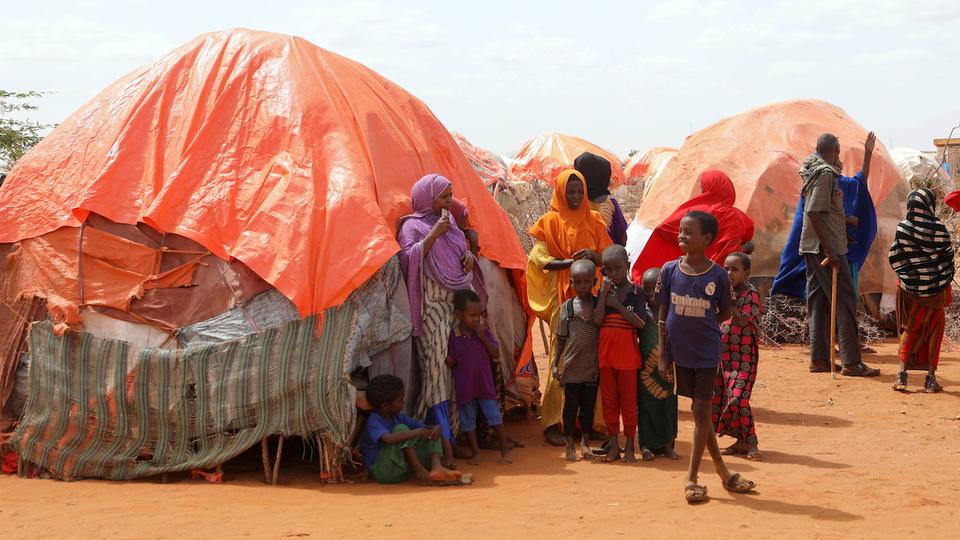
East Africa bloc has announced nearly 50 million people across the region are expected to face acute food insecurity this year.
Aid groups and other watchdogs have been calling for more funds to be devoted to East Africa after the war in Ukraine grabbed the world's attention and money.
(Reuters)
More than 50 million people across the East African region are expected to face acute food insecurity this year.
Intergovernmental Authority on Development, or IGAD, warned on Friday that some 300,000 in Somalia and South Sudan are projected to be under full-blown famine conditions.
The assessment by IGAD is one of the most dire yet as United Nations agencies, humanitarian groups and others continue to raise alarm over the region's food crisis that many say has been largely neglected as the international community focuses on the war in Ukraine.
That assessment applies to seven member states of IGAD, from Djibouti to Uganda.
Samantha Power, the administrator of the United States Agency for International Development, is travelling in East Africa to spotlight the hunger crisis in the region.
In Kenya's capital Nairobi on Friday, Power announced at least $255 million in drought-related humanitarian and development support to Kenya. She is expected to visit Ethiopia and Somalia, where some communities have suffered four consecutive failed rainy seasons.
Power earlier in the week spoke of the need to prevent the global food crisis from becoming a catastrophe, announcing $1.2 billion in funding that includes immediate food assistance for people in Ethiopia, Somalia and Kenya.
In addition to immediate humanitarian aid, the international community must sustain investment in global agriculture and undertake concerted diplomacy “so that we mobilise more resources from donors, avoid export restrictions that can exacerbate the crisis, and lessen the burden on poor countries,” Power said in a speech Monday at the Center for Strategic and International Studies in Washington.
Aid groups and other watchdogs have been calling for more funds to be devoted to East Africa after the war in Ukraine grabbed the world's attention and money.