Showing posts with label war. Show all posts

Poland demands Germany pay $1.3 trillion in 'war reparations'

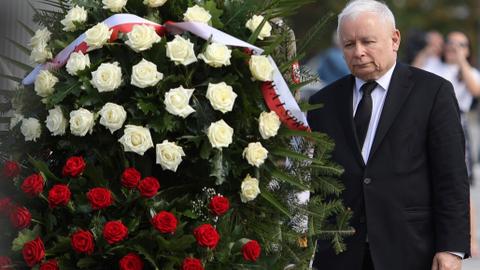
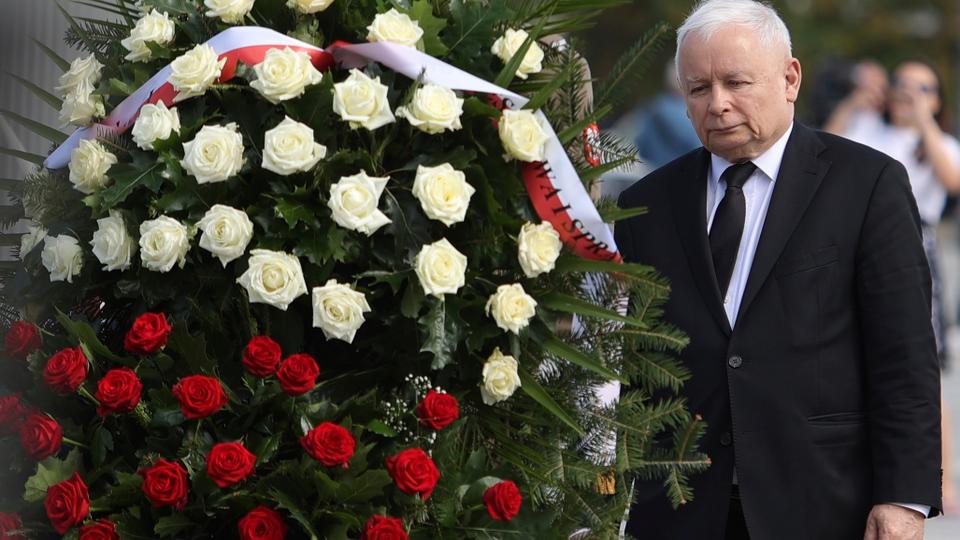
"Germany has never really accounted for its crimes against Poland," says top politician Jaroslaw Kaczynski, claiming many Germans who committed crimes lived in impunity in Germany after World War 2.

"We will turn to Germany to open negotiations on the reparations," says Jaroslaw Kaczynski. (AP)
Poland's top politician has said that the government will seek the equivalent of some $1.3 trillion in reparations from Germany for the Nazis' World War 2 invasion and occupation of his country. Jaroslaw Kaczynski, leader of the Law and Justice party, announced on Thursday the huge claim at the release of a long-awaited report on the cost to the country of years of Nazi German occupation as it marks 83 years since the start of World War II. "We not only prepared the report but we have also taken the decision as to the further steps," Kaczynski said during the report's presentation. "We will turn to Germany to open negotiations on the reparations," Kaczynski said, adding it will be a "long and not an easy path" but "one day will bring success." He insisted the move would serve "true Polish-German reconciliation" that would be based on "truth." Poland's right-wing government argues that the country which was the war's first victim has not been fully compensated by neighbouring Germany, which is now one of its major partners within the European Union. "Germany has never really accounted for its crimes against Poland," Kaczynski said, claiming that many Germans who committed war crimes lived in impunity in Germany after the war. He claimed the German economy is capable of paying the bill. READ MORE: Poland lambasts Germany, France for their 'imperialist' behaviour in EU
Berlin says compensations already paid Germany argues compensation was paid to Eastern Bloc nations in the years after the war while territories that Poland lost in the East as borders were redrawn were compensated with some of Germany's pre-war lands. Berlin calls the matter closed. "Poland long ago, in 1953, waived further reparations and has repeatedly confirmed this waiver," the Foreign Ministry said in an emailed response to an Associated Press query about the new Polish report. Top leaders including Kaczynski, who is Poland's chief policy maker, and Prime Minister Mateusz Morawiecki attended the ceremonial release of the report at the Royal Castle in Warsaw, rebuilt from wartime ruins. The release of the three-volume report was the focus of national observances of the anniversary of the war that began on September 1, 1939, with Nazi Germany's bombing and invasion of Poland that was followed by more than five years of brutal occupation. A team of more than 30 economists, historians and other experts worked on the report since 2017. The issue has created bilateral tensions. Some six million of Poland’s citizens, including three million Jews, were killed in the war. Some of them were victims of the Soviet Red Army that invaded from the east. Source: AP

#Poland #demands #Germany #pay #trillion #war #reparations https://www.globalcourant.com/poland-demands-germany-pay-1-3-trillion-in-war-reparations/?feed_id=19080&_unique_id=63117342f2fbd

Russia Stages Scaled-down War Games With China, India

Russia is staging joint war games with China and India on Thursday, boasting far fewer troops and hardware than previously amid Moscow’s six-month campaign to capture territory in Ukraine. The 50,000 troops announced for the Vostok-2022 (East-2022) military exercises compare with 300,000 who had participated in the previous drills that took place in Russia’s Far East four years ago. Vostok-2022 will also deploy 140 warplanes and 5,000 pieces of military equipment, a fraction of the 1,000 military aircraft and 36,000 equipment involved in Vostok-2018. “This is going to be the smallest strategic-level exercise in years because the entire ground forces potential is engaged in operations in Ukraine,” Konrad Muzyka, director of the Poland-based Rochan military consultancy, told Reuters. Muzyka estimates that up to 80% of Russia’s eastern military district manpower had been deployed in Ukraine, saying it is more likely the Russian military has freed up 10,000-15,000 troops for the Vostok-2022 drills.
Russia’s Defense Ministry said Vostok-2022 brings together airborne troops, aviation forces, as well as Federal Security Service (FSB), Federal Guard Service (FSO) and interior and emergencies ministry representatives across nine firing ranges in Far East Russia. A total of 6,000 foreign troops from member states and partners of the China-led Shanghai Cooperation Organization (SCO) and the Russia-led Collective Security Treaty Organization (CSTO) of ex-Soviet republics, it added. India is sending a 75-member detachment for the drills, including Gurkha troops and navy and air force representatives, according to Bloomberg. China is deploying army, air and naval forces at Vostok-2022, which state-backed media say will focus on U.S. threats in the Pacific. Russia's Defense Ministry says the two countries' navies will "assist ground troops" in the coastal area of northern and central parts of the Sea of Japan, and "defend maritime communications and areas of maritime economic activity." Beijing and New Delhi have refused to criticize Moscow’s “special military operation” in Ukraine, though both countries have steered clear of incurring secondary sanctions by providing Russia with military assistance. “Today, soldiers and officers from 10 countries are standing in single formation, and a total of 14 countries are taking part in the exercise,” Russia’s Deputy Defense Minister Yunus-Bek Yevkurov said at the opening ceremony Wednesday. “We’re connected not only by the need to strengthen military security near our borders, but also by the long friendly relations between the countries,” Yevkurov said. The Sept. 1-7 war games are divided into two stages.  The first three-day stage will practice repelling enemy airstrikes, engaging them in fire and conducting defensive and offensive actions in Russia’s Primorye region. The second four-day stage will manage a “strategic operation in the eastern direction and during the defeat of the enemy.”


#Russia #Stages #Scaleddown #War #Games #China #India https://www.globalcourant.com/russia-stages-scaled-down-war-games-with-china-india/?feed_id=18611&_unique_id=631047f2cdf3f

1Mln Russians Flee to EU Since the Start of Ukraine War, Border Agency Says

Nearly 1 million Russian citizens have fled to the European Union in the six months since their country invaded Ukraine, the EU’s border agency Frontex said Thursday. A total of 998,085 Russian passport holders have entered the EU from the day of the invasion on Feb. 24 to Aug. 22, a Frontex spokesperson told Germany’s DPA news agency. Meanwhile, some 7.7 million Ukrainian citizens have fled to the EU and 4.7 million returned to their homeland since the Russian invasion, Frontex said on Aug. 12. The EU’s border agency recorded fewer entries among Russian citizens in the week of Aug. 16-22 from the previous week as the bloc’s 27 members debate a proposed visa ban for Russian tourists. Finland, the Czech Republic and Estonia last week called for an EU-wide visa ban for Russian tourists. Latvia, Lithuania and Poland stoped issuing new tourist visas to Russians since the Feb. 24 invasion of Ukraine. Estonia barred entry to Russians with existing visas, while Finland vowed to cut the number of processed Russian tourist visa applications by 90% starting Sept. 1. In a compromise with members that oppose such broad measures, the Czech government is expected to propose higher costs and processing times for Russians’ and Belarusians’ short-term entry visas at an EU meeting Wednesday. The European Commission last week emphasized the need for humanitarian access into the EU for dissident Russians, saying visa applications should be assessed individually and not under a blanket rule.

#1Mln #Russians #Flee #Start #Ukraine #War #Border #Agency https://www.globalcourant.com/1mln-russians-flee-to-eu-since-the-start-of-ukraine-war-border-agency-says/?feed_id=15972&_unique_id=630865edc8b2f

Ukraine's Zelensky Vows Fight 'Until the End' on 6-month War Anniversary

British Prime Minister Boris Johnson was in Kyiv on Wednesday, hailing Ukraine's six-month long resistance to the Russian invasion as his counterpart President Volodymyr Zelensky vowed the fight would continue "until the end". Wednesday marked half a year since Russian President Vladimir Putin ordered the large-scale invasion of Ukraine, as well as the day the nation annually celebrates its 1991 independence from the Soviet Union. During a surprise visit to the Ukrainian capital Johnson said Putin had failed to account for the "strong will of Ukrainians to resist." "You defend your right to live in peace, in freedom, and that's why Ukraine will win," he said in front of reporters during the afternoon. The Ukrainian leader had issued his own defiant morning video address, declaring: "We don't care what army you have, we only care about our land. We will fight for it until the end." Referring to Russia he vowed Ukraine "will not try to find an understanding with terrorists". "For us Ukraine is the whole of Ukraine," he said. "All 25 regions, without any concession or compromise."

Fresh aid

Meanwhile on Wednesday, the U.S. announced $3 billion in fresh military aid. The new tranche of U.S. funding will help Kyiv acquire more weaponry, ammunition and other supplies for its armed forces, locked in a grinding war of attrition with Russian troops in the east and south with neither side advancing significantly in weeks. Johnson also unveiled his own £54 million ($64 million) package of aid, including 2,000 "state-of-the-art drones" as well as anti-tank munitions. The White House announcement came as Washington warned Moscow could be planning a surge in strikes on civilian targets coinciding with Independence Day observations. Gatherings have been banned in the capital Kyiv and Zelensky has urged citizens to be on guard against "Russian terror". Nevertheless the leader and his wife marked a minute of silence for fallen Ukrainian soldiers and laid yellow and blue floral bouquets at a memorial in central Kyiv, the president's office said.

European support

Johnson's visit was accompanied by other messages of support from Ukraine's allies. United Nations Secretary-General Antonio Guterres called the anniversary of the start of Russia's war in Ukraine a "sad and tragic milestone". European Commission President Ursula von der Leyen said the EU has been standing with Ukraine "from the very beginning" and "will be for as long as it takes." But in an absurd message, the authoritarian leader of Belarus, which offered its territory as a staging ground for Russia's invasion, gave congratulations to Ukraine on its Independence Day. "I am convinced that today's contradictions will not be able to destroy the centuries-old foundation of sincere good neighbourly ties between the peoples of our two countries," Alexander Lukashenko said.

Muted anniversary

In the early days and weeks of Russia's invasion, Kyiv was under siege by Russian troops which reached the suburbs of the capital. Moscow's offensive quickly faltered, and its forces withdrew in late March to regroup for assaults on Ukraine's east and south. But in the capital, Ukrainians were sombre about the anniversary after a half-year of death and destruction.  "Six months, the peace of life has been broken in every family," Nina, an 80-year-old pensioner, said at Independence Square in central Kyiv, on Tuesday. "How much destruction, how many dead, how can we relate to it?" she asked. The capital city's administration said it would shut public service centres on Wednesday and Thursday, and shopping malls said they would close for the anniversary for safety concerns.  However, in central Kyiv crowds of people gathered in a surreal atmosphere to inspect dozens of disabled Russian tanks, trucks and armoured vehicles installed near the government quarter to showcase Ukraine's military prowess. Cotton candy vendors plied trade to pedestrians, who peered down tank barrels and posed for selfies, draped in the Ukrainian flag. 

#Ukraines #Zelensky #Vows #Fight #6month #War #Anniversary https://www.globalcourant.com/ukraines-zelensky-vows-fight-until-the-end-on-6-month-war-anniversary/?feed_id=15321&_unique_id=63066fd09ee6c

Blasts, drone attacks rock Russian-held areas far from Ukraine war front

Russia reported fresh Ukrainian drone attacks on Friday, after explosions erupted near military bases in Russian-held areas of Ukraine. This photo taken on Aug. 16, 2022 shows smoke billowing from a munitions depot in the village of Mayskoye, Crimea. Stringer | AFP | Getty Images

Russia reported fresh Ukrainian drone attacks on Friday evening, a day after explosions erupted near military bases in Russian-held areas of Ukraine and Russia itself, apparent displays of Kyiv's growing ability to pummel Moscow's assets far from front lines. The latest incidents followed huge blasts last week at an air base in Russian-annexed Crimea. In a new assessment, a Western official said that incident had rendered half of Russia's Black Sea naval aviation force useless in a stroke. Russia's RIA and Tass news agencies, citing a local official in Crimea, said it appeared Russian anti-aircraft forces had been in action near the western Crimean port of Yevpatoriya on Friday night. Video posted by a Russian website showed what appeared to be a ground-to-air missile hitting a target. Reuters was unable immediately to confirm the video's veracity. Tass cited a local official as saying Russian anti-aircraft forces knocked down six Ukrainian drones sent to attack the town of Nova Kakhovka, east of the city of Kherson. Ukraine says retaking Kherson is one of its main priorities. Separately, an official in Crimea said defenses there had downed an unspecified number of drones over the city of Sevastopol. "The Ukrainian armed forces treated the Russians to a magical evening," said Seriy Khlan, a member of Kherson's regional council disbanded by Russian occupation forces. The night before, multiple explosions had been reported in Crimea — which Moscow seized in 2014 — including near Sevastopol, headquarters of Russia's Black Sea Fleet, as well as at Kerch near a huge bridge to Russia. Inside Russia, two villages had been evacuated after explosions at an ammunition dump in Belgorod province, more than 100 km (60 miles) from territory controlled by Ukrainian forces.

Kyiv coy about incidents in Crimea

Moscow dismissed the head of the Black Sea Fleet this week. Ukraine hopes its apparent new-found ability to hit Russian targets behind the front line can turn the tide in the conflict, disrupting supply lines Moscow needs to support its occupation. A senior U.S. defense official said on Friday that U.S. President Joe Biden's administration was preparing another security assistance package for Ukraine valued at $775 million and containing surveillance drones and for the first time mine-resistant vehicles. Since last month, Ukraine has been fielding Western-supplied rockets to strike behind Russian lines. Some explosions reported in Crimea and Belgorod were beyond the range of ammunition Western countries have acknowledged sending so far. A senior Ukrainian official said around half of incidents in Crimea were Ukrainian attacks of some kind, and half accidents caused by Russia's poor operations. He emphasized that attacks were carried out by saboteurs rather than long-range weapons, though he would not say whether Kyiv now had ATACMS, a longer range version of the U.S. HIMARS rockets it began using in June. The official, who declined to be named, said Ukraine had hoped its strikes would have a bigger impact in reducing Russian artillery power but Moscow was adapting.

Concern about nuclear plant

Ukraine's nuclear power operator said on Friday it suspected Moscow was planning to switch over the Zaporizhzhia plant to Russia's power grid, a complex operation Kyiv says could cause a disaster. The power station is held by Russian troops on the bank of a reservoir. Ukrainian forces control the opposite bank. Moscow has rejected international calls to demilitarize the plant and Putin on Friday renewed his accusation that Kyiv was shelling it in a phone call with French President Emmanuel Macron, according to the Kremlin's readout. Macron's office said Putin agreed to a mission to Zaporizhzhia by the International Atomic Energy Agency (IAEA). Thousands of people have been killed and millions forced to flee since Russia launched its invasion on Feb. 24, saying it aimed to demilitarize Ukraine and protect Russian speakers on what Putin called historical Russian land.

Ukraine and Western countries view it as a war of conquest aimed at wiping out Ukraine's national identity.


Source https://www.globalcourant.com/blasts-drone-attacks-rock-russian-held-areas-far-from-ukraine-war-front/?feed_id=13660&_unique_id=6301aac42124e

UK spy head says Russia is losing 'information war' in Ukraine

Fast News

Leaders of Türkiye, Ukraine and UN discuss ways to end Russia's onslaught in Ukraine and secure Europe's largest nuclear power station as fighting rages on 177th day of conflict.

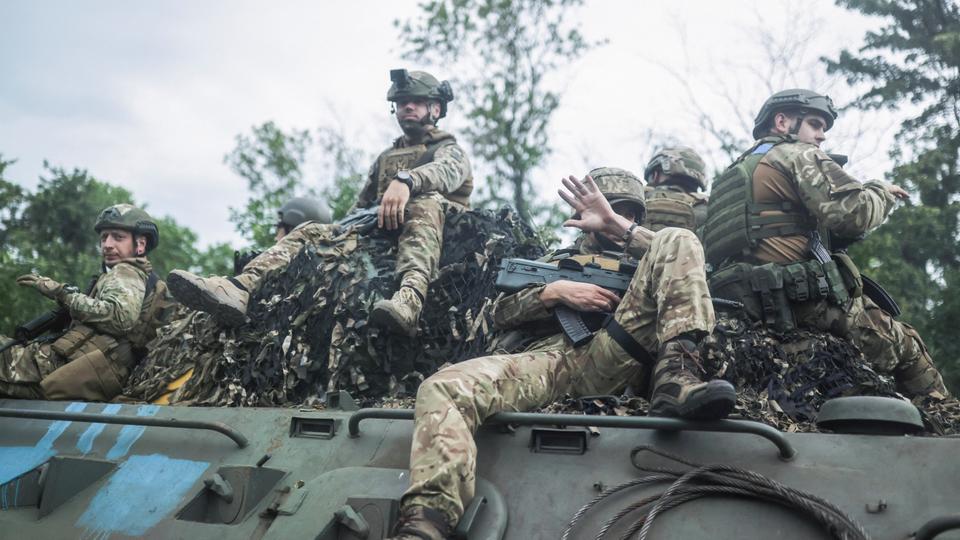
Ukrainian servicemen travel on a Wheeled-BTR fighting vehicle near Bakhmut in the Donetsk region.
Ukrainian servicemen travel on a Wheeled-BTR fighting vehicle near Bakhmut in the Donetsk region. (Reuters)

Friday, August 19, 2022

UK spy chief: Putin losing 'information war' in Ukraine 

Russia has failed to gain ground in cyberspace against Ukraine almost six months after its onslaught on the country, the head of Britain's GCHQ intelligence service has said.

Jeremy Fleming, the intelligence head, in an op-ed in The Economist, wrote that both countries have been using their cyber capabilities in the fighting in Ukraine.

"So far, President Putin has comprehensively lost the information war in Ukraine and in the West. Although that's cause for celebration, we should not underestimate how Russian disinformation is playing out elsewhere in the world," Fleming wrote.

Fleming said Russia had deployed WhisperGate malware to destroy and deface Ukrainian government systems. He also said Russia has used the same playbook before on Syria and the Balkans and said online disinformation is a major part of Russia's strategy. 

For live updates from Wednesday (August 17), click here

Source: TRTWorld and agencies


Source https://www.globalcourant.com/uk-spy-head-says-russia-is-losing-information-war-in-ukraine/?feed_id=12799&_unique_id=62fef0eb92fb6

El Salvador arrests 50,000 since 'war on gangs' crackdown

Almost 69 percent of detainees are accused of belonging to the notorious Mara Salvatrucha gang, officials say. Rights groups have denounced arbitrary arrest of many people, including minors, with no gang links.

The small Central American country has increased sentences for gang membership five-fold, to up to 45 years.
The small Central American country has increased sentences for gang membership five-fold, to up to 45 years. (Reuters Archive)

El Salvador has arrested some 50,000 suspected gang members since President Nayib Bukele launched a "war on gangs" in March on criminal groups harassing the country, the head of the country's police force announced.

"We can inform the Salvadoran people that we have already reached 50,000 recorded detentions during the period of the emergency regime," said Mauricio Arriaza, director of the National Civil Police on Tuesday.

Arriaza, as well as Justice Minister Gustavo Villatoro and Defence Minister Rene Merino, appeared on Tuesday in front of parliament to request an extension of the emergency powers, which have done away with the need for arrest warrants.

They were first enacted in March and have been prolonged on a month-by-month basis.

The small Central American country has also increased sentences for gang membership five-fold, to up to 45 years.

To house some of the detainees, Bukele ordered the construction of a gigantic prison for 40,000 gang members in a rural area of the city of Tecoluca, in the centre of the country, which should be ready before the end of the year.

"The results of the emergency regime have been overwhelming, we have had a strong impact on these terrorist structures," Villatoro said on Tuesday in his report on the gang crackdowns.

READ MORE: El Salvador nets nearly 42,000 suspected gangsters since crackdown

[embed]https://www.youtube.com/watch?v=--NcL-hbW5E[/embed]

Surge in detentions

Almost 69 percent of the detainees are accused of belonging to the notorious Mara Salvatrucha gang –– also known as MS-13 –– followed by the Surenos faction of the Barrio 18 gang (17.7 percent) and the Revolucionarios faction of the same group (12.7 percent).

Rights groups have denounced the arbitrary arrest of many people, including minors, with no gang links.

In different operations, the police and the army have seized more than a million dollars, in addition to 1,283 weapons.

More than 1,500 vehicles, as well as drugs and cell phones, have also been seized.

The wave of detentions is unprecedented in the country of 6.5 million people, who have suffered decades of violent crime driven by powerful gangs such as MS-13 and Barrio 18.

These gangs count some 70,000 members, most of them now behind bars, according to the authorities.

READ MORE: El Salvador arrests 10,000 in ongoing crackdown on gangs

Source: AFP


Source https://www.globalcourant.com/el-salvador-arrests-50000-since-war-on-gangs-crackdown/?feed_id=11931&_unique_id=62fc5ed32f295

Japan marks end of World War Two

Prime Minister Fumio Kishida in his address largely focused on the damages Japan suffered on its turf, including the US atomic bombings on Hiroshima and Nagasaki and massive firebombings across the country.

Some 900 participants observed a minute of silence at noon during the ceremony held at the Budokan arena.
Some 900 participants observed a minute of silence at noon during the ceremony held at the Budokan arena. (Reuters)

Japan’s Prime Minister Fumio Kishida has renewed Japan's no-war pledge at a sombre ceremony to mark his country's 77th anniversary of its World War II defeat.

In his first address as prime minister since taking office in October, Kishida said on Monday Japan will “stick to our resolve to never repeat the tragedy of the war."

Kishida did not mention Japanese aggression across Asia in the first half of the 20th century or the victims in the region. 

Kishida largely focused on the damages Japan suffered on its turf — the US atomic bombings on Hiroshima and Nagasaki, massive firebombings across Japan and the bloody ground battle on Okinawa. 

He said the peace and prosperity that the country enjoys today is built on the suffering and sacrifices of those who died in the war.

READ MORE: Hiroshima marks 77th anniversary of world's first atomic bombing

Emperor Naruhito repeated his “deep remorse” over Japan's wartime actions in a nuanced phrase in his speech, like his father, Emperor Emeritus Akihito, who devoted his career to making amends for a war fought in the name of the wartime emperor, Hirohito, the current emperor’s grandfather.

A minute of silence

Some 900 participants observed a minute of silence at noon during the ceremony held at the Budokan arena. 

The crowd was reduced from about 5,000 before the pandemic, participants were asked to wear masks, and there was no singing of the national anthem.

While Kishida on Monday stayed away from praying at the Yasukuni Shrine and sent a religious ornament instead, three of his Cabinet members visited — Economic Security Minister Sanae Takaichi and Disaster Reconstruction Minister Kenya Akiba earlier Monday and Trade and Industry Minister Yasutoshi Nishimura on Saturday.

“I paid respects to the spirits of those who sacrificed their lives for the national policy,” Takaichi told reporters, adding that she also prayed so that there will be no more war dead in Ukraine.

Victims of Japanese actions during the first half of the 20th century, especially China and the Koreas, see the shrine as a symbol of Japanese militarism because it honours convicted war criminals among about 2.5 million war dead.

READ MORE: Will Japan skirt constitutional ban to raise an army

China's Foreign Ministry spokesperson Wang Wenbin, on Sunday after Nishimura’s visit, criticised it as "Japanese government’s erroneous attitude toward historical issues."

Wang urged Japan to “deeply reflect on its history of aggression, properly handle relevant issues with a sense of responsibility and win the trust of its Asian neighbours and the larger international community through concrete actions.”

Source: AP


Source https://www.globalcourant.com/japan-marks-end-of-world-war-two/?feed_id=11077&_unique_id=62f9f82ec816b

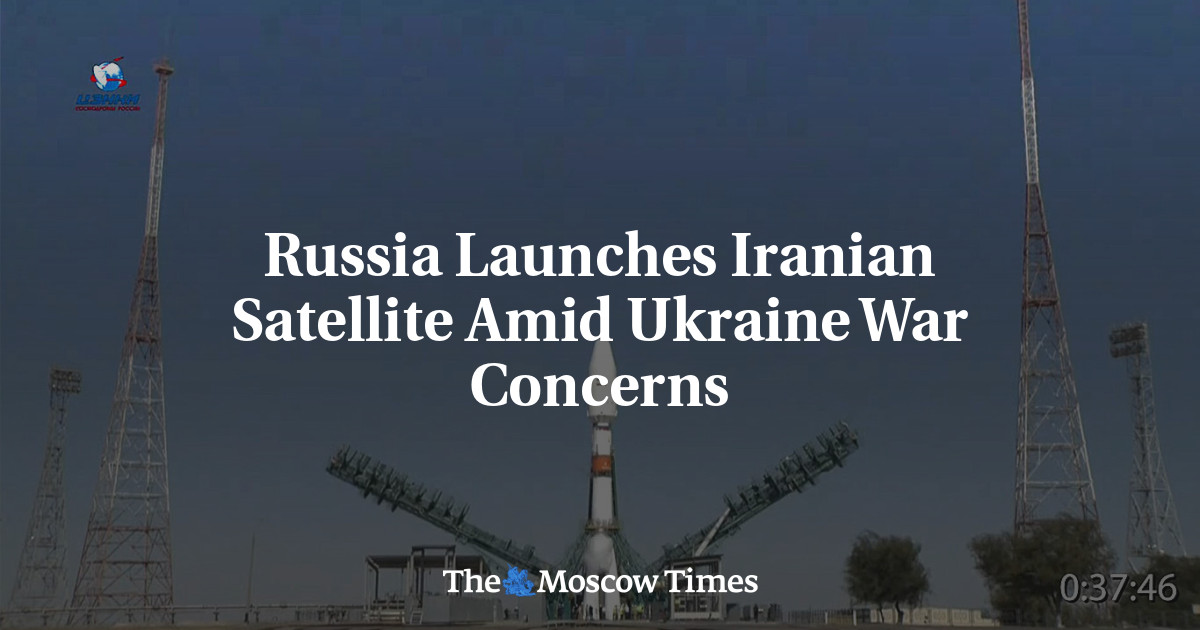
Russia Launches Iranian Satellite Amid Ukraine War Concerns

An Iranian satellite launched by Russia blasted off from Kazakhstan early Tuesday and went into orbit amid controversy that Moscow might use it to improve its surveillance of military targets in Ukraine.

A live feed from Russian space agency Roscosmos showed the launch of the Soyuz-2.1b rocket carrying the Khayyam satellite from the Russia-controlled Baikonur cosmodrome at the scheduled time of 05:52 GMT.

The Russian mission control confirmed its subsequent entry into orbit. 

Iran, which has maintained ties with Moscow and refrained from criticism of the Ukraine invasion, has sought to deflect suspicions that Moscow could use Khayyam to spy on Ukraine.

Last week, U.S. daily The Washington Post quoted anonymous Western intelligence officials as saying that Russia "plans to use the satellite for several months or longer" to assist its war efforts before allowing Iran to take control.

But the Iranian Space Agency said on Sunday that the Islamic republic would control the Khayyam satellite "from day one."

"No third country is able to access the information" sent by the satellite due to its "encrypted algorithm," it said.

The purpose of Khayyam is to "monitor the country's borders," enhance agricultural productivity and monitor water resources and natural disasters, the space agency said.

In a pre-launch statement on Monday ISA praised "the high reliability factor of the Soyuz launcher."

"Due to Khayyam satellite's weight of more than half a ton and the very high success rate of the Soyuz launcher, the launch of the Khayyam satellite has been entrusted to Russia," the statement on the space agency's website noted. 

As Moscow's international isolation grows under the weight of Western sanctions over Ukraine, the Kremlin is seeking to pivot Russia towards the Middle East, Asia and Africa and find new clients for the country's embattled space program.

Russian President Vladimir Putin met Iranian counterpart Ebrahim Raisi and Supreme Leader Ayatollah Ali Khamenei in Tehran last month -- one of his few trips abroad since the invasion began. 

'Long-term cooperation'

Khayyam, apparently named after the 11th-century Persian polymath Omar Khayyam, will not be the first Iranian satellite that Russia has put into space — in 2005, Iran's Sina-1 satellite was deployed from Russia's Plesetsk cosmodrome.

Iran is currently negotiating with world powers, including Moscow, to salvage a 2015 deal aimed at reining in Tehran's nuclear ambitions.

The United States — which quit the landmark Joint Comprehensive Plan of Action or JCPOA under then-president Donald Trump in 2018 — has accused Iran of effectively supporting Russia's war against Ukraine while adopting a "veil of neutrality."

During his meeting with Putin last month, Iran's Khamenei called for "long-term cooperation" with Russia, and Tehran has refused to join international condemnation of Moscow's invasion of its pro-Western neighbor.

Iran insists its space program is for civilian and defence purposes only, and does not breach the 2015 nuclear deal, or any other international agreement. 

Western governments worry that satellite launch systems incorporate technologies interchangeable with those used in ballistic missiles capable of delivering a nuclear warhead, something Iran has always denied wanting to build.

Iran successfully put its first military satellite into orbit in April 2020, drawing a sharp rebuke from the United States.


Source https://www.globalcourant.com/russia-launches-iranian-satellite-amid-ukraine-war-concerns/?feed_id=8529&_unique_id=62f213d9afdff

'Education, healthcare not freebies': AAP-BJP 'rewadi' war reaches Supreme Court

The AAP has approached the Supreme Court over the BJP's allegation that it was giving out freebies for votes.

Delhi CM and AAP national convener Arvind Kejriwal (left) and PM Narendra Modi. (Photos: PTI)

HIGHLIGHTS

  • Aam Aadmi Party has approached the SC against BJP's 'freebies for votes' allegations.
  • AAP said education, health, etc cannot be considered "rewadi".
  • PM Earlier, PM Modi had warned people to stay away from "rewadi culture".

The Aam Aadmi Party has approached the Supreme Court saying that expenditure on public welfare schemes, such as education, health, etc cannot be considered as "rewadi" or freebies, as claimed by the BJP.

Taking a dig at the BJP, it said that "debt waivers and tax relief for a few people" should be considered freebies.

"Some parties make some promises before the election but do something entirely different when the government is formed," it said in a petition.

ALSO READ | Revdi culture: PM Modi warns against electoral freebies at Bundelkhand expressway launch

Taking a dig swipe at PM Narendra Modi, the party mentioned that before the (2014) elections, the Prime Minister had said that every Indian would get Rs 15 lakh each. "But after the government was formed, he waived Rs 10 lakh crore of only a few people," it said.

On Monday, Delhi CM and AAP national convener Arvind Kejriwal lashed out at the Modi government over the PM's comments on freebies. Prime Minister Narendra Modi said that efforts were being made to bring in a culture of collecting votes by distributing 'free rewadi' in the country. PM Modi warned people against this "rewadi" culture.

ALSO READ | Atmosphere created against free education, free medical treatment: Arvind Kejriwal

Reacting to this, Kejriwal said providing free, quality education and medical care was not giving out freebies.

--- ENDS ---


Source https://www.globalcourant.com/education-healthcare-not-freebies-aap-bjp-rewadi-war-reaches-supreme-court/?feed_id=8466&_unique_id=62f1e1c5cdfd8

Roma refugees fleeing war in Ukraine say they are suffering discrimination and prejudice

Instead, they found themselves behind a barbed wire fence in a repurposed immigration detention center that was, she says, dirty and full of strangers, some of whom were aggressive towards her and her children.

Baloh, a Roma woman, was shipped off to the prison-like facility alongside other mostly Roma families, while tens of thousands of other Ukrainian refugees found places to stay in private homes and dormitories in the Czech Republic.

"It was like a prison. It was bad. I was afraid there, there were so many people, many scary people," she told CNN.

Hers is a common story, according to NGOs and activists.

"Roma refugees are automatically placed into non-standard accommodation," says Patrik Priesol, head of the Ukraine program at Romodrom, a Czech NGO focused on Roma rights and advocacy. "It is very saddening and I am not afraid to say it amounts to institutional racism and segregation."

The Czech Republic has received more than 400,000 refugees from Ukraine since Russian President Vladimir Putin ordered a full scale invasion of the country in late February. The Czech government has passed an EU-wide law that allows refugees fleeing Ukraine to apply for temporary protection status, access health care and start working in the bloc.
Millions of women and children have fled the war in Ukraine. Traffickers are waiting to prey on them

In a statement emailed to CNN, the country's police headquarters said ethnicity does not play a role in the application process.

"We are not considering ethnicity of the applicants, only their citizenship," a spokesperson for the Czech Police headquarters told CNN in a statement.

Russia's war on Ukraine has sparked a huge wave of solidarity across Europe, with governments and individuals rushing to offer help to those fleeing the conflict. The UN believes more than 6.3 million Ukrainians have fled their country, although some have since returned.
But the crisis has also exposed an ugly truth: That in many places, Roma people are simply not welcome.

CNN visited shelters and spoke to a number of refugees, social workers and activists in the Czech Republic, Romania and Moldova. In all three countries, the problems Roma refugees face are uncannily similar.

Roma refugees from Ukraine are routinely accused of not being Ukrainian; they are segregated in low quality accommodation. According to several NGOs, many are given misleading information about their rights; and issues that are easily solved when faced by others who've fled Ukraine -- such as missing passport stamps -- are often used as a reason for them to be turned away.

Reports by rights groups from Poland, Slovakia and Hungary suggest such discrimination is common across eastern Europe.

Romanian Roma rights campaigner Nicu Dumitru told CNN the refugee crisis had shone a light on the kind of hostility Roma people still face in Europe.

Nicu Dumitru speaks to a resident at one of the shelters housing predominantly Roma refugees in Bucharest on Saturday, July 16.

"Being discriminatory against Black people or gay people is becoming less acceptable in Europe, or at least people restrain themselves from doing this in public. That's not the case with Roma, which is probably the last group of people that is still fine to discriminate against in Europe," he told CNN.

Roma communities have faced persecution and discrimination in Europe ever since they first came to the continent from India hundreds of years ago, and were persecuted during the Holocaust.

Roughly 90% live below the poverty line, according to the European Union Agency for Fundamental Human Rights.

Dumitru works for Aresel, a Bucharest-based Roma civic education initiative that turned its focus to refugees fleeing Ukraine earlier this year after receiving multiple reports of discrimination.

'We will stay here. We will fight'

He said one watershed moment for the organization came in April when a large group of Roma refugees complained about being denied humanitarian meals at a help point in Bucharest. "They were kicked out because they were 'too many' and 'too loud' and people would say, 'You're not Ukrainian, you're Roma, go away,'" Dumitru said.

ADRA, the group distributing the meals, told CNN the incident, which was caught on camera, had been "taken out of context and led to the idea of discrimination and intolerance against Roma people." It said the Roma group had been turned away because it was made up mostly of men but was in an area reserved for mothers and children, and added it has zero tolerance for discrimination of any kind. "The group left the room at the announcement of another person, unaffiliated with ADRA," the ADRA response said, adding that other Roma groups from Ukraine were in the center.

The Bucharest Municipal Emergency Coordination Center told CNN it is providing humanitarian aid "without discrimination" and added it "has not received any reports of discrimination in the provision of aid."

Across the border in Moldova, Roma mediator and journalist Elena Sirbu said she, too, was horrified when she saw what was happening in one of the refugee centers in the Moldovan capital, Chisinau.

Elena Sirbu said she witnessed blatant discrimination against Roma people fleeing the conflict.

Sirbu said she was originally asked by the authorities to help "handle" the situation but instead became an advocate for Roma refugees after witnessing the discrimination first-hand.

"When I saw the ignorance and the attitude ... these people ran away from the war, they come here, it was cold outside, some of the children had no winter shoes, and they asked for a cup of tea or [diapers], and the Moldovan authorities told them to go away, accusing them of not being refugees, and saying 'we want normal people,'" she told CNN. "And this was happening in front of me. How do you think I should act?"

The Moldovan government's Crisis Management Center (CUGC), which is responsible for the shelters, said the shelters are required to "comply with the principle of non-discrimination in all stages of service provision and promote and respect human rights, regardless of race, skin color, nationality, ethnicity."

The CUGC "constantly consults with Roma refugees regarding their specific needs," it told CNN, and "imposes measures to combat discriminatory attitudes towards refugees, especially the Roma group."

No home to go back to

Luiza Balokhyna and her five children ended up in a refugee camp that houses almost exclusively Roma families.

Like many Roma refugees, Luiza Baloh and her kids, who range in age from nine months to 11 years, have fallen through the cracks in the system.

She told CNN the Czech detention center which she and her children were sent to was so scary that she decided to leave. The family ended up camping at the main train station in Prague alongside hundreds of others, mostly Roma refugees. She was told by authorities that she was no longer eligible for help, because she had "rejected" the accommodation she had been offered.

Priesol said this was a common scenario and that poor communication was often to blame. "Some of these people are functionally illiterate, they are in a post-traumatic situation, and they are offered a place in a detention facility that is temporarily turned into an accommodation facility, and they are told 'this prison here is your home now,'" he said.

"They don't understand the serious consequences of their decision to decline the offer," he added.

Baloh eventually ended up in one of two makeshift refugee camps in the suburbs of Prague which have since been merged into one.

Camp officials say it's a place to which authorities send people they say aren't eligible for assistance. The Czech government said people who do not receive temporary protection status can stay for a few days and then leave the country.

Conditions at the camp, which CNN was granted access to by the authorities in charge, were basic: Large military-style tents surround a plaza that is partially shaded by gazebos. There are portable toilets and mobile shower units and meals are served three times a day. Most of the residents are Roma and many come from some of the poorest areas of Ukraine.

Nikol Hladikova, the social worker in charge of the camp, is the head of the humanitarian department at Prague's Social Services Center, a municipal agency. She has been involved in the refugee crisis response since the beginning and corroborated Baloh's account of conditions in the detention facilities.

"My first visit to one of them, we came with a bus full of refugees and I turned the bus back because the situation there was absolutely horrendous," she told CNN. "There was dirt and excrement everywhere, there was no kettle to boil water and we had a one-month-old baby with us."

Hladikova said conditions at the facility had improved after she and her colleagues raised concerns about them.

Segregation 'is not intentional', authorities say

Lida Kalyshinko says the facilities in the Chisinau refugee shelter are not suitable for her disabled granddaughter.

Lida Kalyshinko fled her home in the Odesa region, near the Ukraine-Moldova border, with her family after the war broke out. She, her daughter and two granddaughters have spent the last three months in an abandoned university building in Chisinau that has been turned into a refugee shelter.

The building houses more than 100 refugees, almost all of them Roma. The few that are not Roma are mostly citizens of central and western Asian post-Soviet countries, including Tajikistan and Azerbaijan.

A single drinking water tap serves the entire building and discarded furniture clutters the dark corridors where small children roam. At the time of CNN's visit in mid-July, several Covid-19 cases had been reported among the residents.

Standing outside the large, grey building, Kalyshinko pointed to a mobile shower unit provided by UNICEF. The facility was of little use to her granddaughter, who uses a wheelchair, she said. "She has only taken a shower four times since coming here, because it's so difficult to get her there, there are so many steps and the showers can't be used by disabled people."

The Moldovan government's Crisis Management Center (CUGC), which is responsible for the shelter, told CNN it was trying to make conditions there better, working to bring a hot water supply into the building. Once that is done, shower facilities will be set up on each floor, it said.

In a written response to questions from CNN, the CUGC denied intentionally segregating Roma refugees in the shelter, saying that they had been placed there to avoid breaking up "large families of ethnic Roma, who could not be separated in different placement centers" at a time when large numbers of refugees were coming into the country.

Ala Valentinovna Saviena prepares meals in the shelter in Chisinau.

Moldova is one of the poorest countries in Europe and as such has limited capacity to deal with the refugee crisis. More than 550,000 people have crossed from Ukraine into the nation of 2.6 million since the beginning of the war. The vast majority have already left for other, wealthier European countries, but around 88,000 remain according to the UN refugee agency, UNHCR.

Ala Valentinovna Saviena says she too would like to leave Moldova. The 49-year-old told CNN she left her hometown, Odesa, in late February hoping to join relatives in Germany. But her 19-year-old son doesn't have a passport or other form of ID, which makes a trip to a European Union country extremely difficult.

Moldova, which is not part of the EU, changed its entry requirements for undocumented people fleeing Ukraine after the war started, but those who want to continue on into the EU face more bureaucracy.

It's a common issue faced by Ukrainian Roma. "We have 5,000 Roma refugees staying in Moldova and a lot of them don't have documents, maybe 30%," Sirbu said. "We tried to work with the [Ukrainian] embassy but it's not possible to get new documents there," she said.

Uprooted by war, some Ukrainians in the UK now face homelessness alone

Ukrainian authorities have set up special help points near the border where people can request new documents, but a trip across the border and back is out of reach for many who've already fled.

The added complication in Saviena's son's case is his age: As a man over the age of 18, he may not be allowed to leave Ukraine again if he returns. The rule requiring most men age 18 to 60 to remain in Ukraine to defend the country was not tightly enforced at the beginning of the war but is now. Saviena said her son was allowed to leave Ukraine by walking through a humanitarian corridor.

Activists said Ukrainian Roma wanting to come to Europe are also victims of intentional misinformation, including misleading guidance about the documents they need.

"They talk on Facebook and there's a lot of disinformation -- so if it says you cannot go to Romania without a biometric passport, they believe it and they don't come even if it's not true," Lucian Gheorghiu, Dumitru's colleague at Aresel, told CNN.

Lengthy bureaucracy

But even those who do have the correct documents aren't guaranteed a warm welcome. Roma refugees across Europe have been subjected to lengthy background checks that are supposed to determine whether they are eligible for protection, according to reports from several activist groups.

Vit Rakusan, the Czech Interior Minister, said in May that such checks were necessary because of "mostly Roma refugees" who held Hungarian as well as Ukrainian citizenship and were coming to the Czech Republic to exploit the benefits system.

Veronika Dvorska from Iniciativa Hlavak, a volunteer group that helps refugees arriving at the main train station in Prague, said the vetting process can take as long as 10 days.

"We'd send people to the registration center and they would come back to us after being told they needed to be checked. In our experience, these were mostly, if not exclusively, Roma refugees," she told CNN. "I have no reports of non-minority refugees ever coming back."

At the height of the crisis in May, as many as 500 people were sheltering at the train station waiting for the checks, according to Dvorska.

The Czech government framed the dual citizenship of Roma refugees as a major issue, even sending a special diplomatic letter to the Hungarian government, according to a statement by the Ministry of Interior.

They fled Afghanistan's takeover by the Taliban last year. Now they've fled Ukraine, refugees again

But there is very little evidence that it was ever a widespread problem. The Czech Ministry of the Interior told CNN the police had conducted 7,100 checks and found 335 instances of people holding dual citizenship. It said there were 201 people with Hungarian citizenship and 66 with Polish citizenship. The rest held citizenships of number of other EU countries.

But Hladikova and Priesol point out that many of the Ukrainian Roma who also hold Hungarian passports were given Hungarian citizenship as part of Prime Minister Viktor Orban's controversial decade-long policy of handing out passports to ethnic Hungarians living abroad.

"We all criticized Orban's regime for this, we all protested against it, we knew that it put people into a legal trap and now we are using it to our advantage. It's a pinnacle of hypocrisy," Priesol said.

The Czech government also announced in a statement in May that, in order to crack down on people "who are not running away from the war," it would reject anyone who did not have an EU entry stamp in their passport.

Dvorska and Priesol each said the rule only seemed to be applied to Roma refugees; others who don't have the stamp are offered other ways of showing that they were living in Ukraine when the war broke out, they said.

Separately, the Czech government said it would not accept applications for temporary protection status, an EU measure, from people who have applied for protection in a different EU country -- even if they have since canceled their status there.

The European Commission dismissed both of these statements, saying they were not in line with European law. Responding to questions from CNN, the Commission said EU member states cannot deny the status to people who don't currently have protection status in another EU state and said "the existence or non-existence of an entry stamp is not relevant" in the process.

Asked about the discrepancy between the EU guidance and the Czech approach, a spokesperson for the Interior Ministry reiterated that under the Czech laws, people who have canceled their protection status in another EU country were not eligible for it in the Czech Republic.

Priesol said the seemingly arbitrary rules are all part of the Czech government's strategy to deter people from applying for a visa. "The authorities are creating hurdles in the process on purpose and this atmosphere is creating a very uncomfortable environment," he said.

The Czech interior ministry said the applications are handled by "experienced police officers who are able to detect irregularities during interviews."

"But it's a reflection of the mood in society and the unwillingness to integrate Roma people -- anti-Roma sentiment is so high in the Czech Republic that there is very little opposition to this treatment of people," Priesol added.

First time in school

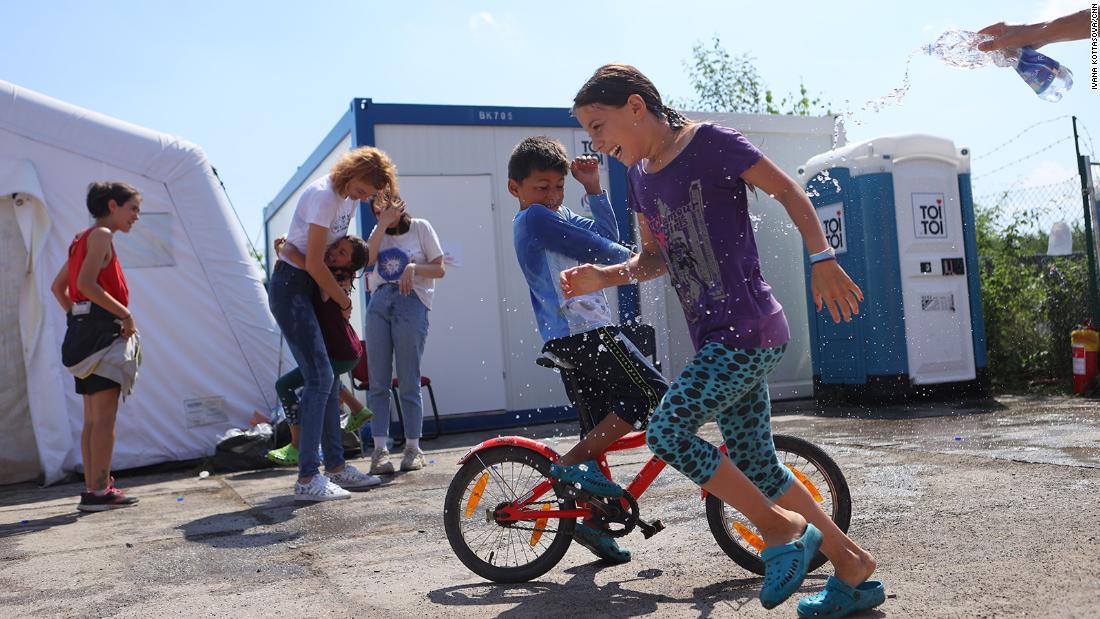
Children play in a refugee camp in Prague. Second from left is Nikol Hladikova, the social worker responsible for the camp's operations.

Baloh told CNN that, like several dozen others in the Prague camp, she would like to stay in the Czech Republic long term, since she doesn't have a home to go back to.

"I would like my children to go to school. I'd like to work. I had a job in Ukraine, I was a cleaner in a restaurant," she told CNN.

Hladikova said her department was trying to find longer term accommodation for those people who would like to stay and integrate into the Czech society. It's a process that takes time and a lot of patience -- most of the camp's residents can't read or write and cultural differences persist.

"I have known some of these families since April and I can see how much improvement they've made and it's unbelievable. Especially the children, they are like sponges, they absorb new things so quickly ... but this is not something [outsiders] can see," she said.

Opinion: As Ukraine dreams of joining the EU, its ex-communist neighbors have lessons

"Unfortunately, there are many people who don't even get here. They are stopped at the train station and they are sent back to Ukraine," Hladikova added, saying some of her Roma clients have been turned away from official registration centers and help points.

Hladikova is adamant that her job is to help people like Baloh who want to stay and integrate -- even if other authorities want the family to leave the country as soon as possible.

"We have different goals and a different style. I am here to take care of my clients, help them as much as I can. But for the state, it's expensive, they don't want to do this, it's been going on for a long time," she said.

Her friendly, no-nonsense attitude makes Hladikova extremely popular in the camp she runs. When CNN visited, the children kept coming over to give her a hug; later, as a water fight broke out in the scorching midday heat, she laughed and let the kids spray her with water.

Balokhyna's eldest daughter, 11-year-old Hanna, told CNN she had never been to school before coming to Prague. Now she goes almost every day.

During an improvised math class in one of the tents that day, she was wrestling with the question of 72 + 9. Shifting eight rows of colorful beads to one side, she got stuck for a moment, nervously gazing at one of the volunteer teachers.

Then, with a little help, she figured out the answer, everyone around her smiling as she whispered: "81."

Ana Sârbu contributed reporting.


Source https://www.globalcourant.com/roma-refugees-fleeing-war-in-ukraine-say-they-are-suffering-discrimination-and-prejudice/?feed_id=7654&_unique_id=62ef420647ef4

Firepower and cyber have emerged as the mainstay of future war: COAS

Chief of Army Staff (COAS) General Qamar Javed Bajwa during his visit at the Army Cyber Command. — ISPR

RAWALPINDI: Chief of Army Staff (COAS) General Qamar Javed Bajwa on Friday visited the newly raised Army Cyber Command, the Inter-Services Public Relations (ISPR) said in a statement.

The military’s media wing stated that the COAS also visited the Cyber Division and Army Center of Emerging Technologies, two of the main components of the Army Cyber Command.

“Nature and character of warfare is changing. Firepower and cyber have emerged as the mainstay of future war and we need to enhance our capability and capacity in these domains,” the COAS said.

“The newly raised Cyber Command shall progressively be linked to Tri-Services level and will also form part of national cyber initiatives to have synergy at the national level", the COAS said.

The statement further added that the COAS, upon his arrival, was received by Commander Army Cyber Command Lieutenant General Asif Ghafoor, while Lieutenant General Sahir Shamshad Mirza, Lieutenant General Azhar Abbas, and other senior Army officers were also present at the occasion.


Source https://www.globalcourant.com/firepower-and-cyber-have-emerged-as-the-mainstay-of-future-war-coas/?feed_id=7101&_unique_id=62ed6140ee0e4

China’s massive war games continue, Taiwan hits out at ‘evil neighbour’

China has encircled Taiwan with a series of huge military drills — now into their second day — that have been condemned by the United States and other Western allies.

Set to last until Sunday, the exercises will take place in multiple zones around Taiwan — at some points within just 20 kilometres (12 miles) of the shore.
Set to last until Sunday, the exercises will take place in multiple zones around Taiwan — at some points within just 20 kilometres (12 miles) of the shore. (AFP)

Taiwan says Beijing's fighter jets and ships have crossed the median line that runs down the Taiwan Strait as part of its latest military drills, calling China "the evil neighbour next door".

China has been holding huge drills encircling Taiwan, which Beijing considers as its own territory, since Thursday to protest this week's visit to the island state by US House Speaker Nancy Pelosi.

The drills involve live firing on the waters and in the airspace near the self-ruled island state, with as many as four missiles believed to have flown over the capital Taipei in an unprecedented escalation during the exercises.

"This Chinese military exercise, whether it be the launch of ballistic missiles or the deliberate crossing of the median line of the strait, is a highly provocative act," Taiwan's defence ministry said in a statement on Friday.

"...multiple batches of Chinese warplanes and warships conducted exercises around the Taiwan Strait and crossed the median line of the strait."

The median line is an unofficial but once largely-adhered-to border that runs down the middle of the Taiwan Strait, which separates Taiwan and China.

It was previously rare for military jets and ships to cross the median line, although Chinese incursions have become more common after Beijing declared in 2020 that the unofficial border no longer existed. 

And there has been a spike in median-line incursions during this week's drills.

Crossings of the line are sensitive because the Taiwan Strait is narrow, just 130 kilometres (81 miles) at its thinnest point, and incursions raise the risk of military accidents. 

READ MORE: Pelosi vows US will 'not allow' China to isolate Taiwan

[embed]https://www.youtube.com/watch?v=V5hXU_LRgpU[/embed]

Show of strength

The latest drills are expected to continue until midday Sunday, and have sparked outrage from the United States, Japan and the European Union, as well as Taipei.

China defends the drills as just countermeasures in the face of provocations by the United States and its allies in Taiwan.

Taiwan's premier Su Tseng-chang called for allies to push for de-escalation on Friday.

"(We) didn't expect that the evil neighbour next door would show off its power at our door and arbitrarily jeopardise the busiest waterways in the world with its military exercises," he told reporters.

The military exercises have straddled some of the busiest shipping lanes in the world. Airlines too have cancelled flights to Taipei and rerouted others to avoid airspace nearby that has been closed to civilian traffic during Chinese military exercises.

Beijing is yet to formally confirm whether missiles overflew the island state during the drills, while Taipei has refused to confirm or deny the flight paths, citing intelligence concerns.

But Japan's defence ministry said of the nine missiles it had detected, four were "believed to have flown over Taiwan's main island".

Meng Xiangqing, a professor at China's military-affiliated National Defence University, told state broadcaster CCTV that the drills represented the People's Liberation Army's closest-ever exercises to the island, its first encirclement and the first time it set up a shooting range east of Taiwan.

"That's unprecedented," Bonnie Glaser, a Washington-based Asia security specialist at the German Marshall Fund of the United States, said of statements that four ballistic missiles had been fired over Taiwan.

"In my view, the larger threat is that China is doing a rehearsal for a blockade, demonstrating it can block Taiwan's ports and airports, and prevent shipping," she said.

READ MORE: What are key developments in US-Taiwan ties?

Source: TRTWorld and agencies


Source https://www.globalcourant.com/chinas-massive-war-games-continue-taiwan-hits-out-at-evil-neighbour/?feed_id=6854&_unique_id=62ecb6e0bde5b

Zelenskyy slams Amnesty over 'laws of war' report

Fast News

Ukraine cedes some territory in the east in the face of an enormous Russian offensive – now in its 163rd day – and NATO says Moscow must not be allowed to win.

Amnesty International accuses Ukraine of endangering civilians by basing troops in residential areas, angering Kiev.
Amnesty International accuses Ukraine of endangering civilians by basing troops in residential areas, angering Kiev. (AFP)

Friday, August 5, 2022

Zelenskyy accuses Amnesty of excusing Russian 'terrorist state'

Ukrainian President Volodymyr Zelenskyy has condemned Amnesty International for excusing Russian acts of "terror" after the rights group said Kiev's forces were endangering civilians by establishing bases in residential areas.

Amnesty had tried to "amnesty the terrorist state and shift the responsibility from the aggressor to the victim", Zelensky said in his daily address.

"There is no condition, even hypothetically, under which any Russian strike on Ukraine becomes justified. Aggression against our state is unprovoked, invasive and terrorist," he added.

For live updates from Thursday (August 4), click here

Source: TRTWorld and agencies


Source https://www.globalcourant.com/zelenskyy-slams-amnesty-over-laws-of-war-report/?feed_id=6812&_unique_id=62ec9a3abeefa

Putin Recognizes Border Guards as War Veterans

Russian President Vladimir Putin signed a law Thursday recognizing border guards who repel cross-border attacks from Ukraine as war veterans. 

The legislation confers war veteran status to active and retired members of the security forces who “repel an armed invasion and provocations on the border and in territories adjacent to war areas in Ukraine since Feb. 24” — the date when Putin invaded Ukraine. 

The same status is granted to those who had been injured during their service. 

The law takes effect Thursday, Aug. 4.

Veteran status gives the holder tax and transport privileges and state assistance with accommodation and health care. War veterans also receive monthly payments from the government.

A number of attacks, some of which damaged infrastructure and claimed civilian lives, have been reported in Russia's border regions in the five months of hostilities — though Ukraine has neither confirmed nor denied being behind them. 

Putin recognized civilians — including doctors, technical specialists, construction workers and journalists — who have worked with Russian troops in occupied areas of Ukraine as war veterans. 

The president signed a law conferring veteran status to all Russian soldiers fighting in Ukraine in March.

Russia deems its invasion to be a "special military operation" and has not formally declared war.


Source https://www.globalcourant.com/putin-recognizes-border-guards-as-war-veterans/?feed_id=6413&_unique_id=62eb84002fe39