Showing posts with label Fears. Show all posts

Shelling near Ukraine nuclear plant fuels disaster fears

Russia’s plan to expand the size of its military is “unlikely” to have an impact on its war on Ukraine, UK's Defence Ministry assessed as the war enters 187th day.

A Russian military convoy is seen on the road toward the Zaporizhzhia Nuclear Power Station in Enerhodar, Zaporizhzhia region in territory under Russian military control in southeastern Ukraine, on May 1, 2022.
A Russian military convoy is seen on the road toward the Zaporizhzhia Nuclear Power Station in Enerhodar, Zaporizhzhia region in territory under Russian military control in southeastern Ukraine, on May 1, 2022. (AP)
Monday, August 29, 2022 Shelling near Ukraine nuclear plant fuels disaster fears Russian forces have pounded Ukrainian towns across the river from the Zaporizhzhia nuclear power plant, officials said, while reports of shelling around the facility fuelled fears of a radiation disaster. Captured by Russian troops in March but run by Ukrainian staff, Zaporizhzhia, Europe's largest nuclear power plant, has been a major hotspot in the six-month conflict with both sides trading blame for recent shelling near the plant. Russian forces fired at Enerhodar, the city where the plant is located, the chief of staff of Ukraine's president, Volodymyr Zelenskyy, said late on Sunday on his Telegram channel alongside a video of fire fighters dousing burning cars. "They provoke and try to blackmail the world," chief of staff Andriy Yermak said. Russia, Ukraine trade claims of nuclear plant attacks Russia and Ukraine have traded claims of rocket and artillery strikes at or near Europe's largest nuclear power plant, intensifying fears that the fighting could cause a massive radiation leak. Ukraine's atomic energy agency painted an ominous picture of the threat on Sunday by issuing a map forecasting where radiation could spread from the Zaporizhzhia Nuclear Power Plant, which Russian forces have controlled since soon after Moscow's Ukraine war began. Attacks were reported over the weekend not only in Russian-controlled territory adjacent to the plant along the left bank of the Dnieper River, but along the Ukraine-controlled right bank, some 10 kilometres from the facility. Russian Defense Ministry spokesperson Igor Konashenkov said Ukrainian forces had attacked the plant twice over the past day, and that shells fell near buildings storing reactor fuel and radioactive waste. In another apparent attack, Russian forces shot down an armed Ukrainian drone targeting one of the Zaporizhzhia plant's spent fuel storage sites, a local official said.  Russian troop expansion ‘unlikely’ to impact Ukraine war – UK Russia’s plans to expand the size of its military is “unlikely” to have an impact on its war on Ukraine. Britain’s Defense Ministry said in its latest intelligence update on the war that it was unclear whether Russia would make the increase by more recruitment or by rising the conscription. “In any case, under the legislation currently in place, the decree is unlikely to make substantive progress towards increasing Russia’s combat power in Ukraine,” the statement said. “This is because Russia has lost tens of thousands of troops; very few new contract servicemen are being recruited; and conscripts are technically not obliged to serve outside of Russian territory,” read the British statement. US blasts 'cynical' Russia for blocking UN nuclear text The US State Department said that Russia did not want to acknowledge the grave radiological risk at the south Ukraine plant and had blocked a draft agreement on nuclear non-proliferation because it mentioned such risk. "After weeks of intensive but productive negotiations, the Russian Federation alone decided to block consensus on a final document" at the conclusion of the four-week NPT review conference, State Department deputy spokesman Vedant Patel said in a statement. He said Moscow's move was done "in order to block language that merely acknowledged the grave radiological risk at the Zaporizhzhia Nuclear Power Plant in Ukraine," a major atomic facility that is currently occupied by the Russian military. For live updates from Sunday (August 28), click here Source: TRTWorld and agencies

#Shelling #Ukraine #nuclear #plant #fuels #disaster #fears https://www.globalcourant.com/shelling-near-ukraine-nuclear-plant-fuels-disaster-fears/?feed_id=17218&_unique_id=630c40f7cc574

Oil prices fall as recession fears, Iran production weigh on demand outlook

Oil prices extended losses on Tuesday after weak US and Chinese data reinforced recession expectations with signs that Iran is moving towards a nuclear deal adding to the downward pressure.

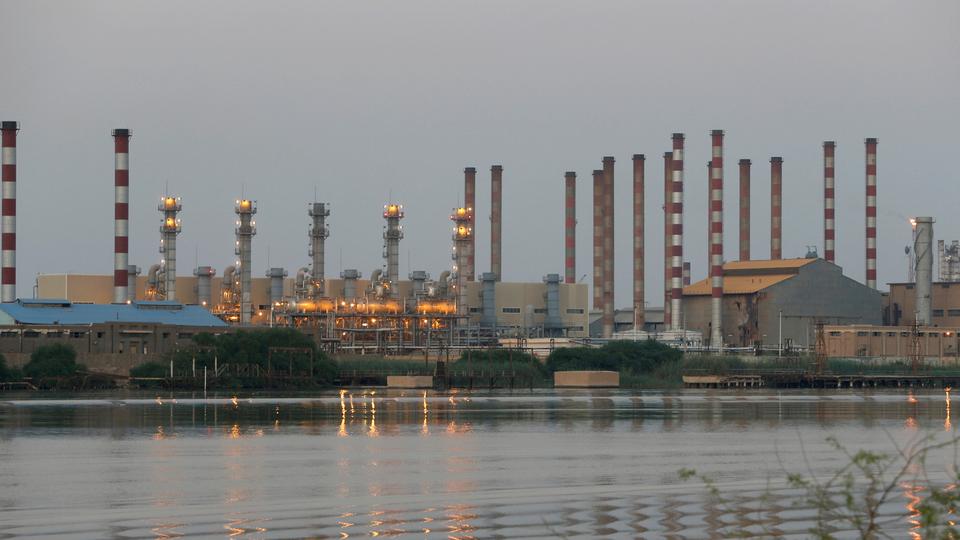
Abadan oil refinery in southwest Iran pictured from Iraqi side of Shatt al Arab south of Basra on September 21, 2019.
Abadan oil refinery in southwest Iran pictured from Iraqi side of Shatt al Arab south of Basra on September 21, 2019. (Essam Al-Sudani / Reuters)

Oil prices have extended losses after weak US and Chinese data spurred fresh concerns about a potential global recession that could hit energy demand.

Brent crude futures fell 90 cents, or 1 percent, to $94.20 a barrel by 00:03 GMT. WTI crude futures fell 81 cents, or 0.9 percent, to $88.60 a barrel.

Oil futures fell about 3 percent during the previous session as demand expectations are lowered in light of a string of soft economic indicators in major economies.

Signs that Iran is moving towards a nuclear deal added to the downward pressure on prices, with an agreement seen allowing the country to restart sales into the world market.

Analysts said Tehran could provide 2.5 million barrels a day, giving a much-needed shot in the arm to supplies, which have been hammered by sanctions on Russia in response to its attacks on Ukraine.

Libya has also boosted production, helping prices drop to six-month lows and wiping out the gains seen after the Ukraine conflict started.

But analysts warned that there might still be some way to go on an Iran agreement owing to upcoming US elections.

"A deal with Iran would likely not be popular with US voters and so is hard to envisage before the November mid-terms," said National Australia Bank's Ray Attrill.

"Markets are currently prone to optimism, though, and hopes for a deal... have added to downward pressure on oil prices."

Iran responded to the European Union's "final" draft text to save a 2015 nuclear deal on Monday, an EU official said, but provided no details on Iran's response to the text. The Iranian foreign minister called on the United States to show flexibility to resolve three remaining issues.

READ MORE: Libya 'confirms' its oil production is back to pre-blockade levels

[embed]https://www.youtube.com/watch?v=fJaU9xmPpsc[/embed]

Disappointing China data

China's central bank cut lending rates to revive demand as data showed the economy slowing unexpectedly in July, with factory and retail activity squeezed by Beijing's zero-Covid policy and a property crisis.

China's fuel product exports will rebound in August to near the highest for the year so far after Beijing issued more quotas in June and July, although broader curbs are set to cap shipments at seven-year lows for 2022, analysts and traders said.

In the United States, total output in the major US shale oil basins will rise to 9.049 million bpd in September, the highest since March 2020, the U.S. Energy Information Administration (EIA) said in its productivity report on Monday.

Market participants awaited industry data on US crude stockpiles due later on Tuesday. Oil and gasoline stockpiles likely fell last week, while distillate inventories rose, a preliminary Reuters poll showed on Monday.

[embed]https://www.youtube.com/watch?v=y6ZOrzJ-j8E[/embed]

Hopes of cooling inflation

With surging oil prices a key driver of inflation to multi-decade highs around the world, the drop has fanned hopes that the headline figure could begin to come down.

That has led to speculation that central bank chiefs could lift rates at a slower pace, and then think about pivoting monetary policy to cuts as early as next year.

The prospect of a less painful hiking campaign has sparked a rally in equities from their June lows.

And on Tuesday, Asia built on Wall Street's upbeat performance.

Hong Kong and Shanghai rose after Beijing cut rates on Monday as the world's number two economy struggles to recover from a plunge in activity caused by extended Covid lockdowns.

Sydney, Seoul, Taipei, Manila, Jakarta and Wellington were also up, though Tokyo was flat and Singapore dipped.

Still, analysts warned that while equities are enjoying a bounce, the economic outlook could keep them subdued or even fall back again.

"The risk of the markets going below the June lows is quite high," Shane Oliver, at AMP Services, told Bloomberg Television. The weak data presage "weaker earnings growth ahead in the US", he added.

READ MORE: UN chief blasts oil firms profiting from energy crisis

Source: Reuters


Source https://www.globalcourant.com/oil-prices-fall-as-recession-fears-iran-production-weigh-on-demand-outlook/?feed_id=11469&_unique_id=62fb152e4eceb

GDP: US economy contracts again, fueling recession fears

Gross domestic product, a wide-ranging measure of economic activity, fell by 0.9% on an annualized basis from April through June. That decline marks a key symbolic threshold for the most commonly used — albeit unofficial — definition of a recession as two consecutive quarters of negative economic growth.

The hotly anticipated data release has taken on outsized significance as investors, policymakers and ordinary Americans seek some measure of clarity in the current muddled economic environment.

The negative dip shown in Thursday's first read on second-quarter GDP activity -- data that will be revised two more times -- was driven mostly by a decline in inventory levels. Businesses in recent quarters have tried to replenish stockpiles drawn down during the pandemic -- and in trying to adjust for supply chain upheaval, they've found themselves overstocked at a time when consumers have pulled back on some purchases. Investments made in inventory during the second quarter were therefore lower than they were in the first quarter.

"The general takeaway is the economy is slowing, and that's what the [Federal Reserve] wants," said Ryan Sweet, who leads real-time economics at Moody's Analytics. "We're not in a recession."

Although Thursday's initial estimate marked a sharp drop from the 6.7% expansion the economy underwent in the second quarter of 2021, the White House has been adamant that the world's largest economy, despite being buffeted by decades-high inflation and a cascade of supply shocks, remains fundamentally sound.

If it looks like a recession and quacks like a recession...
The administration even took the unusual step of publishing an explainer of sorts, maintaining that two consecutive quarters of economic contraction does not, in and of itself, constitute a recession. The White House posted a blog entry last week saying that in addition to GDP, data pertaining to the labor market, corporate and personal spending, production and incomes all go into the official determination of a recession.
The nonprofit National Bureau of Economic Research is the official arbiter of recessions, and it is unlikely to render a verdict any time soon. The group's Business Cycle Dating Committee typically weighs a plethora of statistics over a period of months before making a determination.

"They have a much stricter definition: It's a broad-based and persistent weakness in the economy," Sweet said. "And this isn't broad based. It's really concentrated in inventories and in trade -- trade was a big drag on first-quarter GDP."

Additionally, the labor market is doing well, he said. Monthly job gains average more than 450,000 through the first six months of this year, according to the Bureau of Labor Statistics. However, while those gains are moderating, as anticipated, the past few weeks have also seen jobless claims increase.

On Thursday, the latest weekly jobless claims data from the BLS showed that first-time claims for unemployment benefits were an estimated 256,000 for the week ending July 23. That total is 5,000 below the previous week's level, which was revised upward by 10,000 claims to 261,000.

"Jobless claims have definitely moved higher from their cyclical lows," Sweet said. "I think that's more of a reflection of an economy shifting into a lower gear."

Economists say the biggest reason it would be premature to call a recession based on Thursday's numbers is that the data can and probably will change. Subsequent revisions to first-quarter GDP figures, for instance, changed from an initial drop of 1.4% to 1.6%, and Thursday's numbers are just the first of three estimates.

Adjustments are the norm rather than the exception, since the Commerce Department repeatedly refines its calculations as new information becomes available. About a third of initial GDP releases rely on statistical extrapolations and assumptions in the absence of hard data, according to the Federal Reserve Bank of San Francisco.

"These are typically single points in time, snapshots. It's almost like looking at a balance sheet versus an income statement over a quarter," said Eric Freedman, chief investment officer at US Bank Wealth Management.

"New information can emerge," he said, and when it does, those variables change the outcome.

Sometimes, the differences between estimates are significant. Revisions to GDP in the fourth quarter of 2008, for example, revealed that economic activity actually plunged by an annualized -8.4%, indicating a much deeper recession than the initial estimate of -3.8% suggested.

Right now, the biggest smudge on the lens preventing economists from getting a clear picture is a buildup of inventories and a corresponding imbalance in the country's usual trade flows.

"What you're starting to see and hear a lot about right now is what's happening with inventories... Inventories are an issue, both in terms of the mix of inventory retailers are holding as well as the amount," Freedman said.

Fed makes history with second massive rate hike in as many months
A rush to load up on goods during the previous two quarters was a miscalculation for companies like big-box stores. Walmart and Target have both told investors they expect to cut prices in order to move products. But from a macroeconomic perspective, some experts think those missteps imply that the economy in the first quarter wasn't as anemic as the drop in GDP might otherwise imply.

Anna Rathbun, chief investment officer at CBIZ Investment Advisory Services, suggested that the 1.6% contraction in first-quarter GDP was artificially low because businesses started stockpiling inventory in the final quarter of last year. This pulled forward economic activity that otherwise would have taken place in the early months of this year, she said.

"The fourth quarter, to me, was bloated a little bit," Rathbun said. "Everyone was just hoarding things."

In addition, when companies import more and export less, that dynamic weighs on GDP, said Jacob Kirkegaard, a senior fellow at the Peterson Institute for International Economics.

"It's the value of production within the physical borders of the United States, so therefore if you have, hypothetically, exports that are flat and higher imports, then your trade deficit is rising. In that sense, a rising trade deficit subtracts from GDP," he said, particularly when combined with wild swings in prices.

"When you have highly fluctuating commodity prices, and especially in periods of high inflation in general, then it can be misleading and, in my opinion, paint an overly negative view of where the economy is," Kirkegaard said. "We have to be careful with saying the GDP number is the absolutely valid metric for economic well-being in the country."

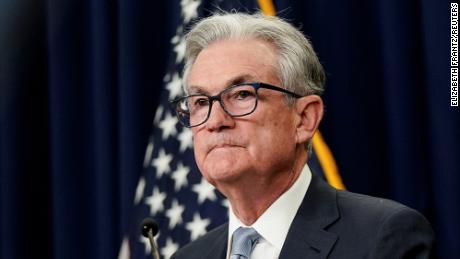
Federal Reserve Chairman Jerome Powell on Wednesday reiterated the importance of considering various key economic measures as the central bank determines future rate moves. However, Powell said the first read of a GDP report should be taken "with a grain of salt."


Source https://www.globalcourant.com/gdp-us-economy-contracts-again-fueling-recession-fears/?feed_id=3648&_unique_id=62e358dded58e