Showing posts with label impact. Show all posts

Pakistan floods impact 15% of population, leave nearly 1,000 dead

"Thirty-three million have been affected, in different ways; the final homeless figure is being assessed," says Climate Change Minister Sherry Rehman as monsoon floods ravage Balochistan and Sindh provinces.

Rains and floods damaged houses during the monsoon season in Dera Allah Yar, Jafferabad, Balochistan, Pakistan.
Rains and floods damaged houses during the monsoon season in Dera Allah Yar, Jafferabad, Balochistan, Pakistan. (Reuters)
Historic monsoon rains and flooding in Pakistan have affected more than 30 million people over the last few weeks while officials in the South Asian country said they are assessing the total figure of homeless. Sherry Rehman, the country's climate change minister called the situation a "climate-induced humanitarian disaster of epic proportions" on Thursday. "Thirty-three million have been affected, in different ways; the final homeless figure is being assessed," Climate Change Minister Sherry Rehman told the Reuters news agency in a text message. Pakistan has urged the international community to help with relief efforts as it struggles to cope with the aftermath of torrential rains that have triggered massive floods since last month, killing more than 900 people. Rehman said Sindh province has received "784 percent" more rainfall this month than the August average, while the province of Balochistan had received nearly 500 percent more. She added that the southern province, hardest hit in the last few days, had requested 1 million tents for affected people. "South of Pakistan is inundated almost underwater. ... People are going to higher ground," she said. "Needs assessment is being done, we have to make UN’s international flash appeal; this is not the task of one country or one province, it is a climate-induced disaster," she added. Minister for Planning and Development Ahsan Iqbal separately told Reuters that 30 million people had been affected, a figure that would represent about 15 percent of the South Asian country's population.
Tens of thousands displaced UN agency Office for the Coordination of Humanitarian Affairs (OCHA) said in an update on Thursday that the monsoon rains had affected some three million people in Pakistan of which 184,000 have been displaced to relief camps across the country. Funding and reconstruction efforts will be a challenge for cash-strapped Pakistan, which is having to cut spending to ensure that the International Monetary Fund approves the release of much-needed bailout money. The National Disaster Management Authority (NDMA) said in a report that in the last 24 hours 150 kilometres of roads had been damaged across the country and over 82,000 homes have been partially or fully damaged. Since mid-June, when the monsoon began, over 3,000 kilometres of road, 130 bridges and 495,000 homes have been damaged, according to NDMA's last situation report, figures also echoed in the OHCA report.
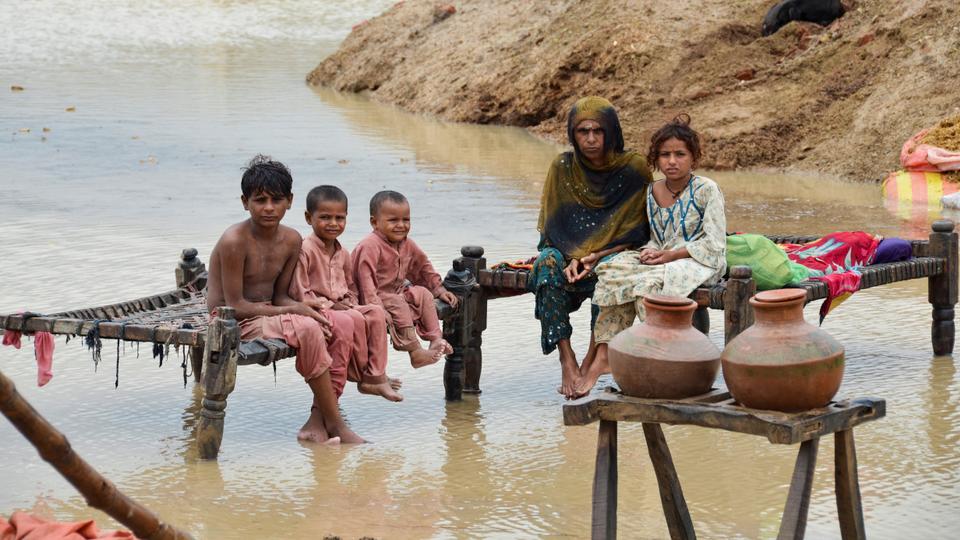
The Balochistan provincial government said it needed more funds and appealed to international organisations for assistance. "Our losses are massive," Balochistan's Chief Minister Abdul Qudoos Bezenjo said on Wednesday. There were food shortages in every district hit by the flooding, with some also disconnected from the rest of the province due to more than 700 kilometres of roads being washed away. Bezenjo said his province needed "huge assistance" from the government and from international aid agencies. "Brother, the rain has not stopped for the past three months. ... We are living in a rickshaw with our children because the roof of our mud house is leaking," a woman who declined to be named told Reuters TV in Hyderabad, Sindh's second-largest city. Seated with three of her children in the rickshaw she said: "Where can we go? The gutters are overflowing, and our courtyard is filled up with sewage. Our houses and alleys have turned into a floating garbage bin." OCHA also warned that alerts had been issued for floods, river overflows, and landslides in several areas of Pakistan, and heavy rainfall was forecast for the next two days, too, over most of the country. Pakistan is eighth on a list of countries deemed most vulnerable to extreme weather caused by climate crisis, according to the Global Climate Risk Index compiled by environmental NGO Germanwatch.
Source: Reuters


#Pakistan #floods #impact #population #leave #dead https://www.globalcourant.com/pakistan-floods-impact-15-of-population-leave-nearly-1000-dead/?feed_id=15895&_unique_id=63082cbb7a42c

Recognizing Dimensions of the Global Impact of Pronatalism Tuesday, August 16, 2022

New Legacy Radio

Tuesday at 10 AM Pacific Time on VoiceAmerica Variety Channel

The show addresses the social, systemic, and structural realities for those who are childless/childfree and non-parents. We will discuss key issues pertaining to diversity, equity, inclusion, and belonging as it relates to people without children. For our community, the show will offer a sense of visibility and connection, and an opportunity to be part of the change we are collectively seeking. For parents and professionals, the show will be a place to gain greater awareness around the social realities for many of their friends, family, and employees/co-workers, without children. It will be an opportunity for us all to begin to find common ground in what we want to achieve as individuals, families, and communities, which includes, and benefits us all. The show will also be an invitation for practitioners, organizations, businesses, institutions, and policymakers to join this dialogue and to honestly assess their cultures and policies, and how they impact people without children.


Source https://www.globalcourant.com/recognizing-dimensions-of-the-global-impact-of-pronatalism-tuesday-august-16-2022/?feed_id=11812&_unique_id=62fbfb078e7a9

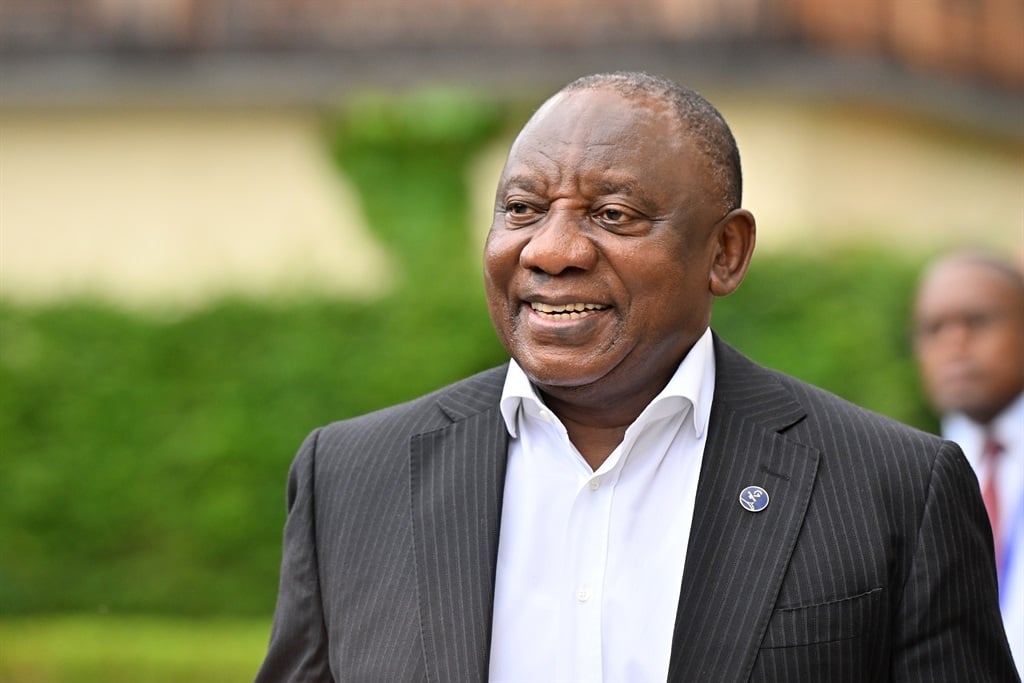
Cyril Ramaphosa | A social compact for growth and jobs needs to make a lasting impact


There is agreement among social partners that the social compact cannot be a vague set of commitments, but a clear pathway to achieve higher levels of equality, jobs and common prosperity, writes Cyril Ramaphosa.


Dear Fellow South African,

Since the advent of democracy, our people and, indeed, social partners have on many occasions been able to unite around common programmes to address the challenges facing our society.

As South Africans, we united around our very first social compact together when we, after broad consultation, crafted our world-renowned Constitution that brought an end to the reviled and oppressive system of apartheid. Over time, social partners have been able to reach important social compacts around job creation, economic growth, Eskom's restructuring and the global financial crisis, among others.

More recently, social partners contributed to developing the Economic Reconstruction and Recovery Plan as a response to the effects of Covid-19.

The impact of these pacts has been varied but broadly impactful.

Economy not growing

We have been facing high levels of joblessness, growing inequality and high levels of poverty over the past two decades. Our economy has not been growing at the pace that could enable us to make a meaningful dent in unemployment, poverty and inequality. To reduce the impact of these triple challenges, we need a number of impactful interventions, including attracting much more investment and enhancing the state's capability.

To turn our economy around and create the millions of jobs needed cannot be achieved by government alone. A comprehensive programme will require the mobilisation of all social actors. With this in mind, I said in this year's State of the Nation Address (SONA) that we would work with our social partners to finalise a comprehensive social compact to grow the economy, create jobs and combat hunger.

Over the last few months, a team led by the ministers of Employment and Labour, Trade, Industry and Competition, and Finance have been meeting with social partners to map out the priorities that must be reflected in the new social compact. As part of this work, the team has had ongoing meetings with social partners. A framework for a social compact has been developed. It identifies priority actions to achieve higher levels of investment and growth, increase employment, unleash the dynamism of the private sector, protect workers' rights, expand support for the unemployed and tackle extreme poverty.

READ | Carol Paton: If Ramaphosa can't get govt to work properly, his social compact is useless

As the name implies, a new consensus can only be successfully implemented if there is full agreement on a common objective, the plan to achieve it, and a commitment by all partners to the plan's implementation.

We have seen what happens when such accords are concluded to much fanfare, only to fall short on implementation.

To ensure better outcomes and impact, for implementation to be effective, this time we have to do better. Even if this means delaying the finalisation of the new comprehensive social compact until all social partners agree on the contribution they will make towards the betterment of society.

The proposed compact builds on many of the key tenets of the Economic Reconstruction and Recovery Plan, such as job creation, accelerating structural reform and growth-enhancing measures, the expansion of mass public employment and social protection, and driving economic inclusion through greater entrepreneurial activity.

What is required most of all on the social compact is a clear set of interventions with a credible plan for their implementation. While the state has a responsibility to improve the climate for the private sector to invest, implement social support measures to protect society's most vulnerable, and spearhead poverty eradication programmes, there must be complementary actions by business.

Greater alignment needed

There must be a willingness from both organised business and labour to discuss the trade-offs needed to implement growth-enhancing measures in such a constrained economic environment. There needs to be greater alignment between government and civil society organisations in our communities on poverty alleviation programmes.

South Africa does not need yet another plan to overcome the challenges of poverty, unemployment, and inequality. That is why the focus of ongoing discussions is on a set of catalytic interventions for maximum impact.

READ | OPINION: A social compact is a great idea, except when it's built on lip service

We all want to see a consensus finalised, but given the complexity of the issues, and so that we don't set ourselves up for failure, it is absolutely critical that genuine consensus is achieved among all social partners.

Let us be clear, the implementation of the Economic Reconstruction and Recovery Plan continues. The work to grow the economy and create jobs is going ahead with the support of all economic stakeholders. There has been significant progress since SONA in implementing economic reforms, expanding public and social employment programmes in an unprecedented manner, working to bring new electricity generation capacity online, and mobilising new investment.

There is agreement among social partners that the social compact cannot be a vague set of commitments, but a clear pathway to achieve higher levels of equality, jobs and common prosperity. What we now need is to work together with greater urgency and purpose to complete that work, rather than to point fingers at one another.

With best regards.


Disclaimer: News24 encourages freedom of speech and the expression of diverse views. The views of columnists published on News24 are therefore their own and do not necessarily represent the views of News24.

Source https://www.globalcourant.com/cyril-ramaphosa-a-social-compact-for-growth-and-jobs-needs-to-make-a-lasting-impact/?feed_id=1718&_unique_id=62de3e83bd3ad