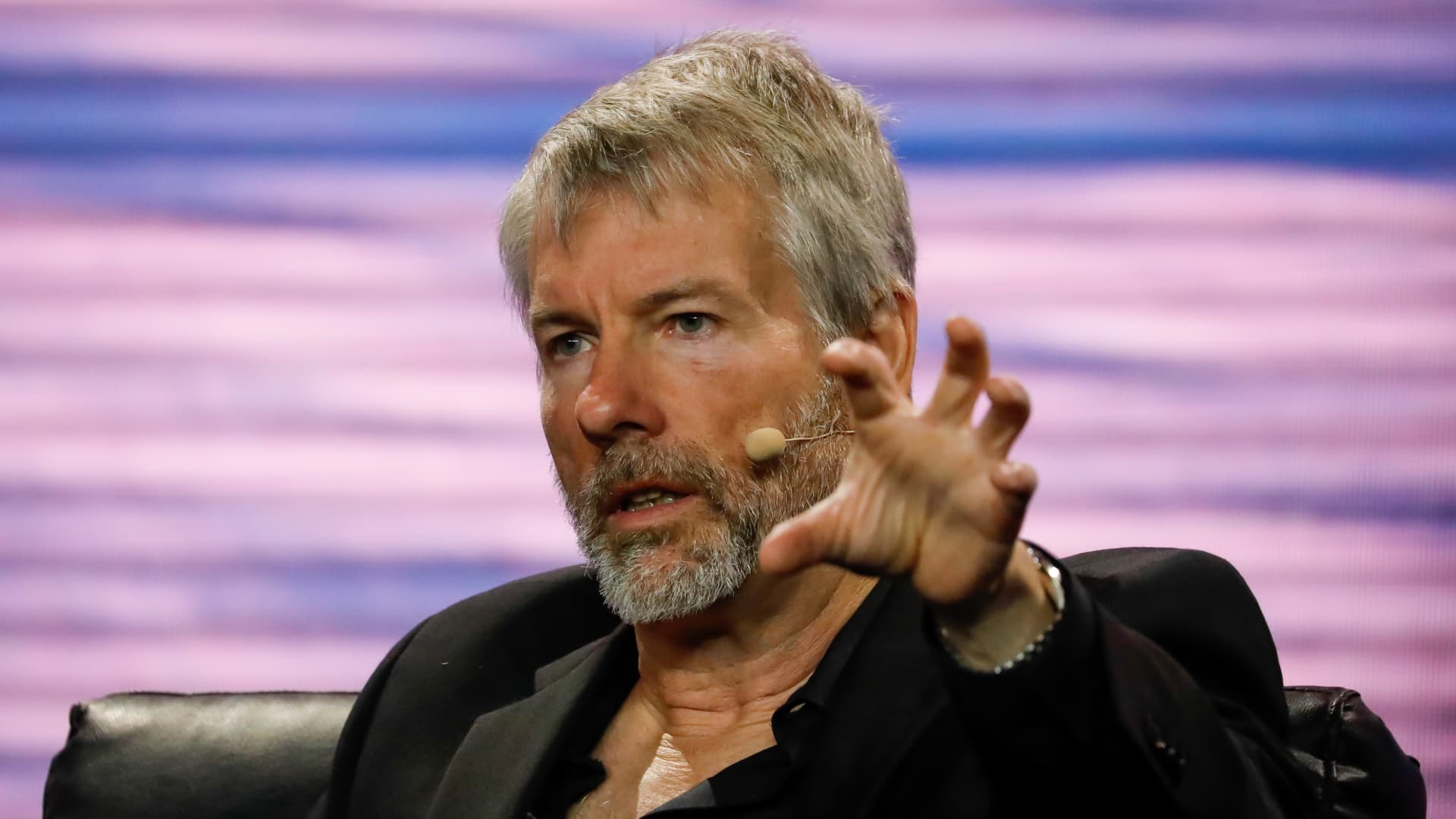
Sam Bankman-Fried, founder and chief executive officer of FTX Cryptocurrency Derivatives Exchange, speaks during an interview on an episode of Bloomberg Wealth with David Rubenstein in New York, US, on Wednesday, Aug 17, 2022.
Jeenah Moon | Bloomberg | Getty Images
FTX rode the crypto craze to a billion dollars in revenue last year while expanding its global footprint through a flurry of acquisitions, according to internal documents seen by CNBC.
The audited financials give a rare glimpse into the privately held start-up's finances. FTX was profitable, quickly expanding across the globe and saw breakneck growth.
The privately held crypto exchange's revenue soared more than 1,000% from $89 million to $1.02 billion in 2021. Its profitability, like many start-ups, depends on how you measure it. Operating income was $272 million, up from $14 million a year earlier. FTX saw net income of $388 million last year, up from just $17 million a year earlier.
FTX declined to comment on the leaked financial documents.
The company brought in $270 million in revenue in the first quarter of 2022, and was on track to do roughly $1.1 billion in revenue in 2022, according to an investor deck shared with CNBC. But it's unclear how FTX held up in the second quarter as crypto prices plunged during the recent so-called "Crypto Winter."
By way of comparison, publicly traded Coinbase also experienced a cash boom times during crypto's bull market, with $7.4 billion in revenue and $3.6 billion of net income last year. But in Q2 of this year, it reported $808.3 million in revenue, a decline of 64% from the year-ago quarter, and a surprise net loss of $1.1 billion, compared with $1.59 billion in net income in the same quarter last year, as retail trading volumes cratered.
FTX was founded in three years ago by former Wall Street quant trader Sam Bankman-Fried. The 30-year-old CEO has recently stepped in as the industry's lender of last resort, looking to backstop companies as liquidity dried up. On top of multiple loans of hundreds of millions of dollars, Bankman-Fried's companies also looked to acquire distressed assets. In July, FTX signed a deal that gives it the option to buy lender BlockFi and was in discussions to acquire South Korean Bithumb. FTX also offered to buy Voyager in August but was turned down for what the company claimed was a "low ball bid."
According to the documents, FTX had roughly $2.5 billion in cash at the end of last year and 27% profit margins, according to the documents. Margins were closer to 50% if advertising and "related party" expenses are stripped out. It last raised money in January, collecting $400 million from investors like SoftBank's Vision Fund 2 and Tiger Global, at a $32 billion valuation.
Global footprint
FTX was founded at a time when Coinbase and Binance had solidified themselves as the world's largest trading venues. Coinbase still operates largely within the U.S. Binance, the largest exchange by trading volume got its start in China, later moved its headquarters to the Cayman Islands and is now making a push for the U.S. market with an American subsidiary.
FTX has been quietly building its own fleet of global subsidiaries to compete.
FTX Trading Ltd is headquartered in Antigua, with FTX Derivatives Markets based in the Bahamas, where Bankman-Fried lives. FTX Trading recently bought Digital Assets DA AG, out of Switzerland, as well as IFS Group and Hive out of Australia – bringing the total to 15 smaller companies across the world. Its portfolio companies span Cyprus, Germany, Gibraltar, Singapore, Turkey and the United Arab Emirates, among other countries, according to the documents. Crypto companies often acquire start-ups to quickly get the proper regulatory licenses to set up shop in a new country.
Bankman-Fried also founded trading firm Alameda Research, which accounts for about 6% of FTX's exchange volumes, according to the documents.
FTX's U.S. business is technically owned by a parent company, West Realm Shires Inc. As of 2021, FTX U.S. made up less than 5% of FTX's total revenue. Still, the company is making a push to expand here with a series of high-profile ads and sponsorships.
FTX spent roughly 15% of revenue on advertising and marketing in 2021, according to the documents. That may account for its 2022 Super Bowl ad with actor Larry David and high-profile celebrity endorsements by Tom Brady and Giselle Bündchen, who are also equity investors in the company. FTX also bought the naming rights to Miami's NBA arena, formerly the American Airlines Arena. FTX planned to spend an estimated $900 million in advertising in the coming years, according to the documents.
The crypto exchange is also expanding into stock trading. It launched equities trading weeks after Bankman-Fried took a 7.6% passive stake in Robinhood, fueling speculation that FTX is looking to buy the trading app in a landgrab for U.S. retail accounts. Robinhood and Bankman-Fried have denied that a deal is in the works.
FTX has certainly ramped up its retail expansion efforts. But the documents show that it's still mainly a venue for more sophisticated traders using derivatives – either futures, or options. Sixty seven percent of revenue came from futures trading fees, while roughly 16% came from so-called spot trading. Futures and derivatives trades tend to be more lucrative for exchanges.
Source https://www.globalcourant.com/ftx-grew-revenue-1000-during-the-crypto-craze-leaked-financials/?feed_id=13527&_unique_id=63012b82ab01a