‏إظهار الرسائل ذات التسميات Technology. إظهار كافة الرسائل

YouTube removes video by Tesla investors using kids in FSD Beta test

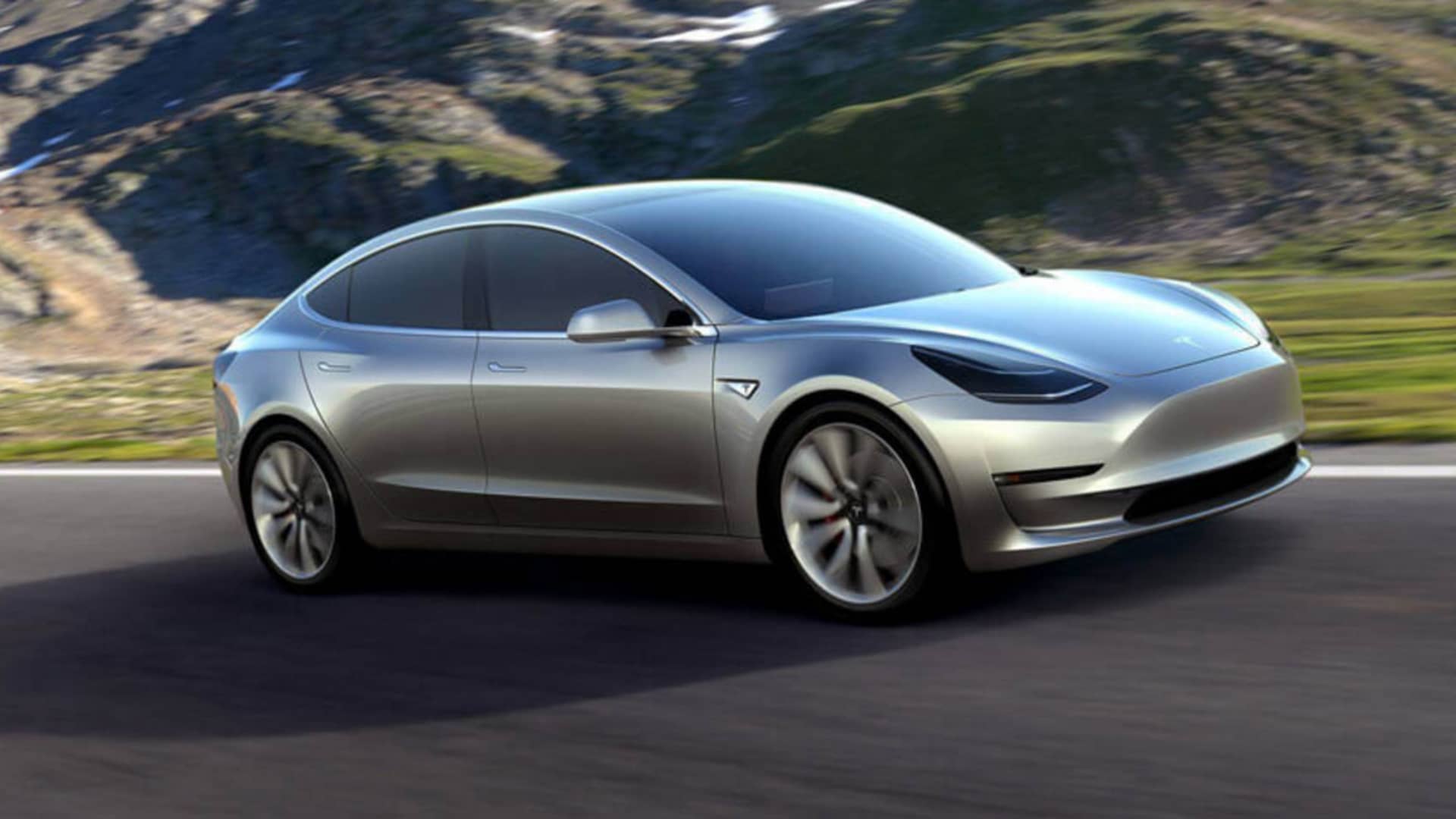
Tesla Model 3

Source: Tesla

YouTube has removed a pair of videos from its platform which showed Tesla drivers conducting amateur vehicle safety tests using their own children in place of mannequins in the road or the driveway.

The tests were to determine if a slow-moving Tesla equipped with the company's latest driver assistance systems would automatically avoid colliding with pedestrians — in this case children — walking or standing still in the road.

After CNBC reached out, a YouTube spokesperson, Elena Hernandez, wrote in an e-mail Friday night:

"YouTube doesn't allow content showing a minor participating in dangerous activities or encouraging minors to do dangerous activities. Upon review, we determined that the videos raised to us by CNBC violate our harmful and dangerous policies, and as a result we removed the content."

The specific policy that YouTube cited is pertaining to harmful and dangerous content. The company removes videos that encourage dangerous or illegal activities that risk serious physical harm or death when it is aware of them. The spokesperson said, "Specifically, we don't allow content showing or encouraging minors in harmful situations that may lead to injury, including dangerous stunts, dares, or pranks."

Tesla markets its driver assistance systems in the U.S. as a standard package called Autopilot and a premium option called Full Self-Driving (or FSD) that costs $12,000 up front or $199 per month. It also offers some drivers access to an experimental program called Full Self-Driving Beta if they attain a high score on the company's in-vehicle safety tests.

None of these systems make Tesla cars self-driving, nor safe to use without a driver behind the steering wheel, attentive to the road and able to steer, brake, or accelerate on short notice. Tesla's owners manuals caution drivers that the systems do not make their cars autonomous.

Driver: 'I was prepared to take over at any time'

In a video posted on Aug. 14, a Tesla owner and investor in the Elon Musk-led company, Tad Park, drove a Model 3 vehicle at eight miles per hour towards one of his children on a road in the San Francisco Bay Area. No one was hurt in the test.

The video had tens of thousands of views before YouTube, a division of Alphabet's Google, removed it. Alphabet also owns Waymo, the autonomous vehicle technology developer and robotaxi operator.

Park is the CEO of Volt Equity, and portfolio manager of an autonomous driving technology focused ETF called VCAR. "I have experienced the product myself, and believe in my investments," Park told CNBC. "We did extensive safety precautions so that kids were never in danger." 

In a follow-up email, Park wrote, "First we tried on a mannequin, then we tried with a tall basketball player, then finally one kid stood and my other kid crossed the street."

He said the car was never traveling more than eight miles an hour, and explained, "We made sure the car recognized the kid. Even if the system completely failed, I was prepared to take over at any time. I had a sense of when I was going to need to brake if the car was not sufficiently slowing down."

The tests were a success in Park's view, because the car slowed and did not strike any object, pedestrian or his kids. Asked if he would do it again, he said: "I do not think further tests are necessary, but if I did, yes, I would do this test again."

"That being said, I wouldn't recommend people to deliberately try this at home," he added.

Park conducted the tests in part as a rebuttal against a national advertising campaign from software company founder Dan O'Dowd criticizing Tesla's driver assistance features.

The video, now removed, was posted on a YouTube channel named Whole Mars Catalog, which is run by Omar Qazi, a shareholder and major promoter of Tesla on social networks. Tesla CEO Elon Musk frequently interacts with the blog and Qazi on Twitter.

In addition to YouTube, CNBC reached out to the California DMV and National Highway Traffic Safety Administration to ask whether such videos are safe or legal.

NHTSA said on Aug. 16, "NHTSA advises the public that it could be highly dangerous for anyone to attempt to test vehicle technologies on their own. No one should risk their life, or the life of anyone else, to test the performance of vehicle technology." 

The agency also noted, "As NHTSA has stated consistently, no vehicle available for purchase today is capable of driving itself. The most advanced vehicle technologies available for purchase today provide driver assistance and require a fully attentive human driver at all times performing the driving task and monitoring the surrounding environment."

The California DMV told CNBC via email: "As advanced vehicle technologies become more widely available, DMV shares the same concerns as other traffic safety stakeholders about the potential for driver misunderstanding or misuse of these features. DMV has previously indicated to Tesla and continues to emphasize the importance of providing clear and effective communication to customers, buyers and the general public about the capabilities, limitations and intended use of any vehicle technology."

The California DMV recently alleged that Tesla is engaging in deceptive marketing or false advertising where its driver assistance systems are concerned. It is also in the midst of a lengthy safety related review of Tesla's technology including FSD Beta.

Police in the town where Park conducted the test drive did not respond in time for publication. Tesla did not immediately return a request for comment.


Source https://www.globalcourant.com/youtube-removes-video-by-tesla-investors-using-kids-in-fsd-beta-test/?feed_id=13296&_unique_id=630064e11f546

Apple and Meta headsets could face a big challenge: Sticker shock

Apple and Facebook parent Meta are expected to release mixed reality headsets in the coming year that could finally fulfill the industry's promise to turn head-worn devices into the next big shift in personal computing.

But there's one major potential snag: sticker shock.

The best-selling virtual reality headset, the Meta Quest 2, retails for $400 and accounted for 78% of the nascent VR market in 2021, according to IDC. Consumers who want the next-generation technology are going to have to spend multiples of that.

Meta's forthcoming high-end headset, codenamed Cambria, is expected to cost at least $800, the company said earlier this year. Apple's unannounced device could reportedly cost thousands of dollars. That's a hefty load for products in a category that's yet to go mainstream. Just 11.2 million VR units were shipped last year, IDC said. Apple sells that many iPhones every few weeks.

To expand the market, Meta and Apple will have to convince consumers that more advanced systems will be worth the investment. Both companies are reportedly betting on a new technology called passthrough mixed reality, which requires better displays and more processing power.

If passthrough mixed reality works as advertised, a VR headset would also function as a set of augmented reality glasses, enhancing the possibilities for applications and real-world use.

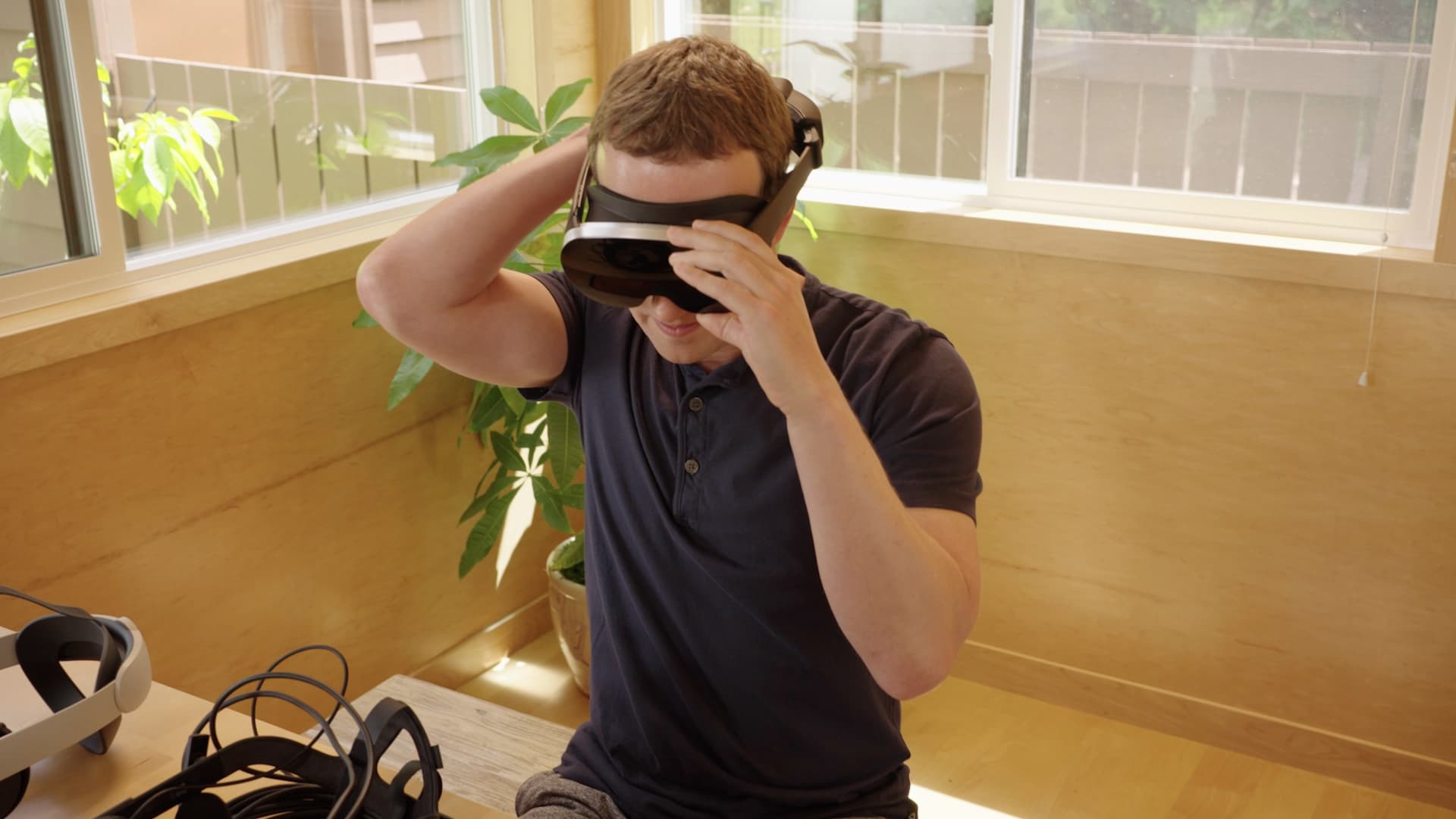
With existing VR devices, the experience is limited to what's on the headset's display. In passthrough AR, powerful cameras on the outside of a VR headset take video of the outside world and send it to two or more displays, one each in front of the user's eyes.

This allows for developers to play with mixed reality, overlaying software or graphics on the video of the real world from just outside.

Believers in mixed reality say that we'll eventually be able to condense the technology into a lightweight pair of glasses with transparent lenses. But that's for the future.

The passthrough approach is emerging as the preferred near-term option because optical transparent displays are nowhere near ready for primetime. The problem for today is that passthrough mixed reality requires a lot of expensive parts and a powerful headset, limiting the size of the market.

In addition to the advanced cameras, passthrough devices need depth sensors that can take detailed video and measurements of the user's surroundings. They also have to track the user's eyes so as not to waste power generating graphics that will go unseen. And they need powerful processing capabilities and software to reduce latency so that what the user sees inside the headset isn't delayed or blurred.

Read more about tech and crypto from CNBC Pro

Most important is the high-resolution screen that needs to be much denser than a smartphone display because it's so close to the user's eyes. Smartphone screens average about 550 pixels per inch, but mixed reality devices require displays with about 3,500 PPI, according to CounterPoint Research.

While Meta and Apple haven't released their headsets, a few devices currently on the market support passthrough mixed reality. The experiences tend to be limited — black and white or low-quality video — because of a lack of processing power.

A few weeks ago, I was able to test a headset from Varjo, a Finnish company co-founded by Urho Konttori, a former Microsoft and Nokia executive. Last year, Varjo released the XR-3, which offers full-color, low-latency passthrough mixed reality. It's expensive, heavy, and aimed at businesses. It costs $6,495 to purchase or about $1,500 to rent it for a year.

In playing around with the XR-3, I felt less isolated than with other VR headsets.

Varjo's XR-3 headset

Varjo

I could access a virtual world with the press of a single button, and I could pull up games that took over my entire field of view. I could use virtual computer monitors displaying Windows applications inside the virtual world.

I was also able to interact with the world around me through Varjo's passthrough view. In the demo, Varjo placed a life-size car model inside the space. I was able to walk around it and inspect its interior and discuss what I was seeing with someone who wasn't wearing a VR headset.

Most impressively, when passthrough was turned on, I could interact with the actual environment around me, carrying on a conversation with the person next to me or finding a chair and sitting in it. This isn't possible with existing VR technology, which forces you to remove yourself from the physical world.

Konttori told me that was one of his main goals. The company wants to almost mimic "human-eye" display quality, which he calls the "holy grail" of mixed reality.

'A single coherent scene'

Apple is notoriously secretive about its product roadmap, especially when it comes to new categories. The company has invested heavily in virtual reality research and development in its Technology Development Group and has purchased several startups specializing in mixed reality technology.

According to reports from Bloomberg and The Information, Apple is developing a mixed reality headset that resembles ski goggles with a powerful homegrown chip, similar to what powers its MacBook laptops, and higher-resolution displays than what's currently on the market.

The headset will reportedly support passthrough video and offer games and other applications. At one point, Apple was aiming for at least resolution similar to a 4K TV per eye for its first headset, because anything less could result in users seeing individual pixels, The Information reported.

Apple hasn't confirmed its plans to release a mixed reality headset, and the company didn't respond to a request for comment on this story. In an interview with Chinese media earlier this year, Apple CEO Tim Cook suggested that something is in the works.

Meta has said Project Cambria, with support of color passthrough, is scheduled to be released later this year. Based on renderings of the device that have been made public, it also looks like a pair of ski goggles. It will include pancake optics, a type of lens that doesn't need to be calibrated as finely as other VR lenses.

Meta said in May that the price for Cambria would be "significantly higher" than $800.

While passthrough technology has yet to hit the market in a real way and will be quite pricey once it does, metaverse developers are rallying behind it. The primary alternative, optically-based mixed reality, uses transparent displays built into lenses to integrate computer graphics with the real world. Microsoft's Hololens and Magic Leap use optical waveguides, a type of transparent display.

Transparent displays are also expensive, and they have their own sets of challenges. They're not good when used in bright daylight, and the current offerings can suffer from poor image quality and blurry text.

Varjo is making a bet on passthrough technology and Konttori says it's the better approach in large part because it's completely digital, putting more control in the hands of developers.

"It becomes computable," Konttori said. "It becomes a tool for artificial intelligence to be participating in your world, enhancing your view or your intellect, and you can distort the world in the tiniest ways or the biggest ways possible."

He expects passthrough to be "the winning approach for a very, very long time."

WATCH: The future of entertainment is mixed reality gaming experiences


Source https://www.globalcourant.com/apple-and-meta-headsets-could-face-a-big-challenge-sticker-shock/?feed_id=11924&_unique_id=62fc5bb28f0c2

Elon Musk sells 7.92 million Tesla shares worth $6.88 billion

NEW YORK, NEW YORK - MAY 02: Elon Musk attends The 2022 Met Gala Celebrating "In America: An Anthology of Fashion" at The Metropolitan Museum of Art on May 02, 2022 in New York City. (Photo by Dimitrios Kambouris/Getty Images for The Met Museum/Vogue)

Dimitrios Kambouris | Getty Images Entertainment | Getty Images

Tesla CEO Elon Musk sold 7.92 million shares of Tesla worth around $6.88 billion, according to a series of financial filings published Tuesday night.

His transactions occurred between Aug. 5 and 9, the SEC filings revealed, following Tesla's 2022 annual shareholder meeting on Aug. 4 in Austin, Texas.

Earlier this year, the Tesla and SpaceX CEO said on social media that he had "no further TSLA sales planned" after April 28.

That week, SEC filings revealed Musk had been selling a block of shares in his electric car maker worth about about $8.4 billion.

The centi-billionaire is in the midst of a contentious legal battle with Twitter, the social networking giant he agreed to acquire in April for about $44 billion or $54.20 per share.

Read more about electric vehicles from CNBC Pro

Amid an overall market decline, Twitter's share price and the price of Tesla shares dropped. Musk said he was terminating the deal and accused Twitter of failing to give him all the information he needed to go ahead with the acquisition.

He also accused Twitter of understating the number of bots, spam and fake accounts on its platform.

By July 8, Musk told Twitter he was terminating the deal.

Twitter has sued to ensure the Musk deal goes through for the promised price, which would represent a windfall for many of its shareholders.

Tesla shares were trading nearly flat after hours on the news. Shares in Tesla closed at $850, down just over 2% for the day on Tuesday, before the CEO's insider sales were made public through SEC filings.


Source https://www.globalcourant.com/elon-musk-sells-7-92-million-tesla-shares-worth-6-88-billion/?feed_id=8893&_unique_id=62f3282811812

Elon Musk challenges Twitter CEO Parag Agrawal to a debate on bots

Centi-billionaire Elon Musk provoked Twitter and challenged the company's CEO Parag Agrawal to a "public debate" about fake accounts and spam in the midst of a contentious legal battle over a $44 billion acquisition.

Musk filed a bid with the Securities and Exchange to acquire Twitter back in April this year. After the companies agreed to move ahead with a take-private deal, Musk said he was terminating his acquisition, and accused Twitter of presenting false numbers, including in its SEC filings, pertaining to the amount of monetizable daily active users, and the number of spam and bot accounts on the social network.

Twitter then sued Musk in a Delaware chancery court to ensure the deal would go through as promised, and Musk filed counterclaims and a countersuit there on July 29.

In a series of tweets that Musk began posting just before 1 a.m. on Saturday, Aug. 6, Musk interacted with a fan who had summarized his accusations about Twitter including that it was stonewalling him and giving him, "outdated data," and "a fake data set" when he asked the company for details about how it tabulates mDAU, and estimates for spam and bot accounts.

The Tesla and SpaceX CEO wrote, "Good summary of the problem. If Twitter simply provides their method of sampling 100 accounts and how they're confirmed to be real, the deal should proceed on original terms. However, if it turns out that their SEC filings are materially false, then it should not."

By just after 9 a.m. Saturday morning, Musk started a Twitter poll asking his followers to vote on whether "[l]ess than 5% of Twitter daily users are fake/spam." Respondents to the informal poll could choose one of Musk's provided answers which read either "Yes" followed by three robot emoji, or "Lmaooo no." (The slang abbreviation "lmao" stands for "laughing my a-- off.)

Musk also wrote Saturday morning: "I hereby challenge @paraga to a public debate about the Twitter bot percentage. Let him prove to the public that Twitter has <5% fake or spam daily users!"

A source close to the company says a debate is not going to happen outside of a pending trial.

Attorneys for Musk did not respond to requests to comment on Saturday, and an attorney for Twitter declined to comment on Musk's Saturday tweets.

Twitter's attorneys have argued in court filings that Musk gave the company just twenty-four hours to accept his offer before he would present it directly to Twitter shareholders, and waived due diligence including a chance to seek more information on false or spam accounts.

They wrote in court filings, "Musk's repeated mischaracterizations of the merger agreement cannot change its plain words."

At an annual shareholder meeting for Tesla on Aug. 4, Musk was asked to speak about Twitter during a question-and-answer session that followed a proxy vote.

He said, drawing laughter from the audience in attendance, "I obviously have to be a little careful what I say about Twitter because there's this lawsuit and stuff." He confirmed that the only two publicly traded securities he owns are Tesla and Twitter.

And then he spoke as if he still wants to become the owner of the social networking company, a stark contrast to arguments made by Musk via his attorneys in legal filings in Delaware in which Musk argues he should not have to go through with the deal.

At the Tesla 2022 shareholders' meeting, Musk said: "I think in the case of Twitter since I use it a lot, shoot myself in the foot a lot, you know, dig my grave, etc. I think it's — I do understand the product quite well, so I think I've got a good sense of where to point the engineering team at Twitter to make it radically better."

He added that Twitter would "help accelerate" a "pretty grand vision" he had to build a business he'd been thinking about since his earliest years as a tech entrepreneur, X.com or X Corporation.

"Obviously that could be started from scratch," he said, "but I think Twitter would help accelerate that by three to five years. So it's kind of like something I've thought would be quite useful for a long time. I know what to do. Don't have to have Twitter for that but, like I said, it's probably at least a three-year accelerant and I think it's something that will be very useful to the world."

Musk didn't go into any further details at that meeting. However, he reportedly said during a town hall meeting with Twitter employees in June this year that he wanted to grow Twitter's user base to a billion people and saw Twitter as a platform that could evolve into an app like China's WeChat, a "super app," that incorporates everything from messaging, video and social media, to mobile and point-of-sales payments, with a robust app ecosystem.

Unless they reach a settlement first, Twitter and Musk are headed for a five-day trial in Delaware that starts on Oct. 17. The judge ruling on the case is Chancellor Kathaleen St. J. McCormick.


Source https://www.globalcourant.com/elon-musk-challenges-twitter-ceo-parag-agrawal-to-a-debate-on-bots/?feed_id=7577&_unique_id=62ef05186a540

Uber and Lyft stocks had their best week ever

Air travelers wait in the ride share lot near a sign for Uber at Los Angeles International Airport (LAX) on August 20, 2020 in Los Angeles, California.

Mario Tama | Getty Images

Shares of gig economy companies Uber, Lyft, DoorDash and Airbnb popped this week after the companies posted quarterly reports that showed strong demand.

Lyft finished the week up 46%, and Uber jumped 37%, the best week ever for both stocks. DoorDash closed up 15%, and Airbnb rose for a third straight week, climbing 5.5%.

Investors are encouraged to see that gig companies in the consumer market are, so far, withstanding inflationary pressures that have rocked other sectors, such as retail. It also may be an indication that grocery delivery platform Instacart can form a stronger pitch for an IPO. Instacart confidentially filed for an IPO in May, though it's had to bring its private market valuation down.

Uber CEO Dara Khosrowshahi said he's noticed a change in consumer spending from retail to services. And inflation may even have helped. Khosrowshahi said Uber saw a boost in the number of drivers on the platform as consumers look to other ways to increase their income.

Airbnb, meanwhile, posted an all-time high in bookings. DoorDash said it had a record number of orders. Lyft, which still had a net loss, posted its highest ever adjusted earnings figure.

Here are some of the highlights:

  • Uber reported revenue of $8.07 billion, well above analyst estimates of $7.39 billion. Khosrowshahi said that driver engagement reached another post-pandemic high during the quarter.
  • Lyft reported a 16% increase in active riders, to 19.9 million, the highest since the start of the pandemic.
  • DoorDash posted better-than-expected revenue. Though it reported a wider loss per share than estimated, the company recorded 23% growth in the total number of delivered orders.
  • Shares of Airbnb were up for the third week in a row. The company posted higher-than-expected earnings Tuesday and revenues in line with expectations for the second quarter. Airbnb said gross nights booked for cross-border travel exceeded pre-pandemic levels and doubled compared with the same period last year.

Source https://www.globalcourant.com/uber-and-lyft-stocks-had-their-best-week-ever/?feed_id=7164&_unique_id=62ed99a6684ed

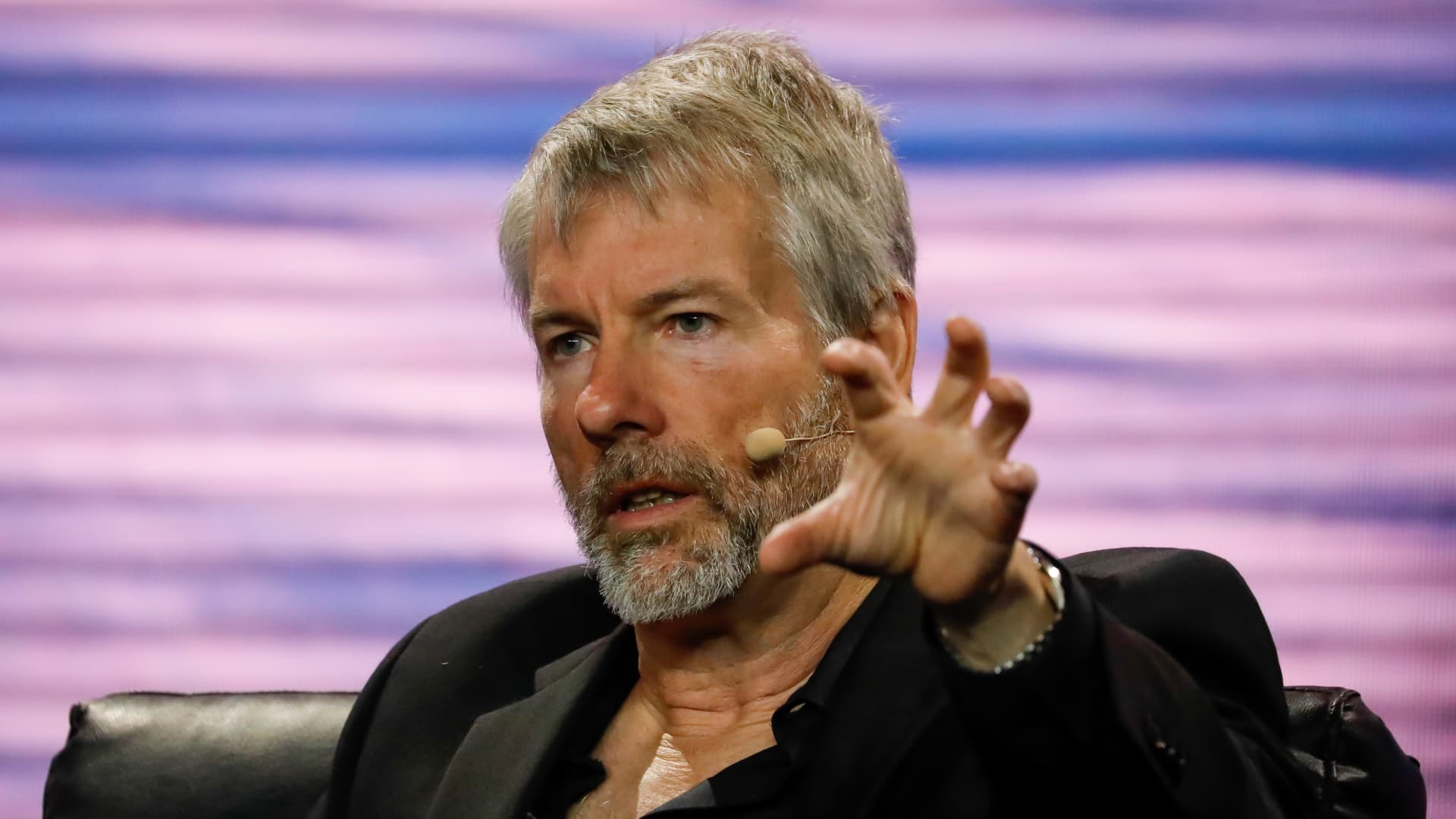
Microstrategy CEO Saylor moves to chairman role

MicroStrategy's Michael Saylor is leaving his role as CEO to become Executive Chairman of the company, according to a statement released by the company on Tuesday afternoon. The company's president, Phong Le, will take the reins from Saylor.

Saylor has been in the role of chief executive since launching the company in 1989. MicroStrategy went public in 1998.

MicroStrategy's stock is down over 48% this year. Bitcoin is down over 51% during that same time period.

"I believe that splitting the roles of Chairman and CEO will enable us to better pursue our two corporate strategies of acquiring and holding bitcoin and growing our enterprise analytics software business. As Executive Chairman I will be able to focus more on our bitcoin acquisition strategy and related bitcoin advocacy initiatives, while Phong will be empowered as CEO to manage overall corporate operations," said Mr. Saylor in the release.

The announcement comes as the company announces its second quarter earnings, in which its total revenues dropped by 2.6% compared to a year ago.

MicroStrategy may technically be in the business of enterprise software and cloud-based services, but Saylor has said the publicly traded company doubles as the first and only bitcoin spot exchange-traded fund in the U.S.

"We're kind of like your nonexistent spot ETF," Saylor told CNBC on the sidelines of the Bitcoin 2022 conference in Miami in April.

So far, the Securities and Exchange Commission has only approved ETFs that track contracts speculating on the future price of bitcoin, instead of the cryptocurrency itself. The commission has refused to greenlight any of the formal applications for a pure-play bitcoin-based ETF — a financial instrument that would give investors the chance to invest in bitcoin without having to go through the motions of signing up for an exchange, opening a crypto wallet, or dealing with any of the other logistics involved with buying and holding bitcoin.

"If there was a spot ETF, you'd be paying a 1% fee, and it wouldn't be leveraged. With MicroStrategy, we have a software company that generates cash flow, so we convert our cash flows into bitcoin," said Saylor in April.

MicroStrategy has been adding bitcoin to its corporate balance sheet for the last two years. The company has now spent close to $4 billion acquiring bitcoin at an average price of $30,700.

MicroStrategy has used company debt to purchase bitcoin, and in March, Saylor decided to take another step toward normalizing bitcoin-backed finance when he borrowed $205 million using his bitcoin as collateral — to buy more of the cryptocurrency.

"We have $5 billion in collateral. We borrowed $200 million. So I'm not telling people to go out and take a highly leveraged loan. What I am doing, I think, is doing my best to lead the way and to normalize the bitcoin-backed financing industry," said Saylor in April.

"As people realize they can borrow against something, then they realize they never have to sell it, and then they start to stretch their time horizon from — 'It's a 36-month speculation,' to — 'It's a 36-year holding.'"


Source https://www.globalcourant.com/microstrategy-ceo-saylor-moves-to-chairman-role/?feed_id=5783&_unique_id=62e991271eec3

Pinterest (PINS) Q2 2022 earnings

Pinterest shares jumped on better-than-expected user numbers even as earnings and revenue missed estimates and the company gave weak guidance for the third quarter.

Activist investor Elliott Management confirmed separately that it's Pinterest's top investor and said it has "conviction in the value-creation opportunity" at the company. 

Here's how the company did.

  • Earnings: 11 cents adjusted per share vs. 18 cents per share expected, according to Refinitiv.
  • Revenue: $666 million vs. $667 million expected, according to Refinitiv.

Pinterest said global monthly active users declined by 5% from a year earlier to 433 million. While that sort of drop-off is alarming for a social media app that relies on eyeballs to attract advertisers, analysts were expecting a steeper decline to 431 million.

The company's financials were gloomy, following a trend in the social media market. Facebook parent Meta, Twitter, and Snap all reported second-quarter earnings that missed on the top and bottom lines, and all attributed a weak online advertising market to their bleak results.

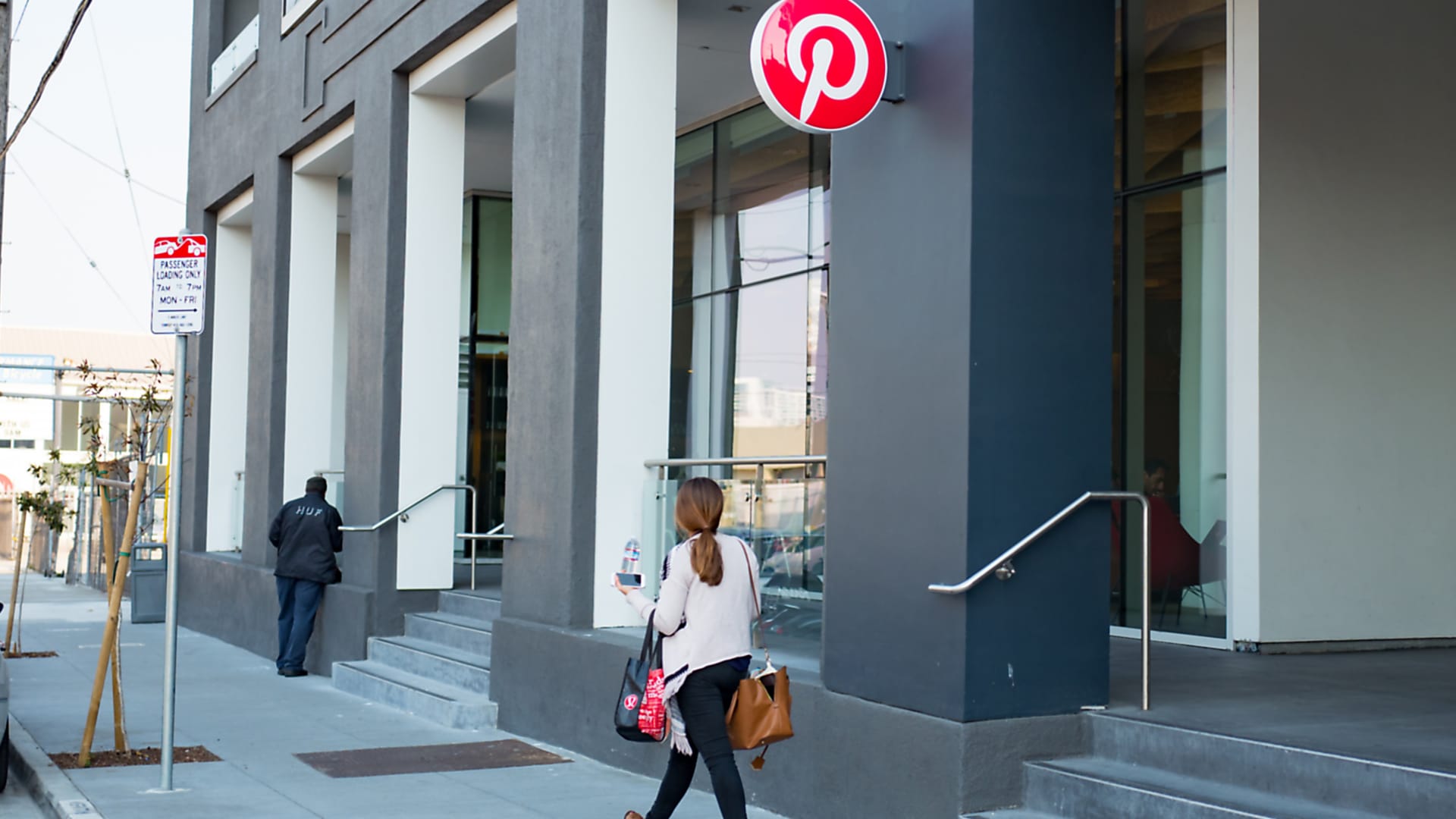
A woman walks past sign at the headquarters of Pinterest in the South of Market neighborhood of San Francisco.

Smith Collection | Gado | Archive Photos | Getty Images

More troubling than its second-quarter results was Pinterest's commentary about what's expected this quarter. The company said it estimates third-quarter revenue will grow "mid-single digits on a year-over-year percentage basis," below analysts' projections for sales growth of 12.7%.

In a letter to investors, Pinterest said economic challenges are leading marketers to reel in spending.

"The macroeconomic environment has created meaningful uncertainty for our advertiser partners," Pinterest said in the letter." The company said it saw "lower than expected demand from U.S. big box retailers and mid-market advertisers, who pulled back ad spend due to concerns about weakening consumer demand."

Pinterest said that its third-quarter guidance takes into account "slightly greater foreign exchange headwinds" than the previous quarter.

In June, Pinterest co-founder Ben Silbermann stepped down as the company's CEO, and was replaced by Bill Ready, previously the leader of Google's commerce unit. Pinterest's hiring of Ready pointed to a deeper push into e-commerce and online retail.

Elliott's involvement with the company was reported in July by The Wall Street Journal, which said at the time that the firm had built a stake of over 9% in the company. After Pinterest's results were released on Monday, Elliott confirmed it's the company's biggest shareholder and said it's pleased with Ready's progress.

"As the market-leading platform at the intersection of social media, search and commerce, Pinterest occupies a unique position in the advertising and shopping ecosystems, and CEO Bill Ready is the right leader to oversee Pinterest's next phase of growth," Elliott said in a statement.

WATCH: Earnings Exchange looks at Pinterest, Caterpillar and JetBlue


Source https://www.globalcourant.com/pinterest-pins-q2-2022-earnings/?feed_id=5433&_unique_id=62e8b422b3c48

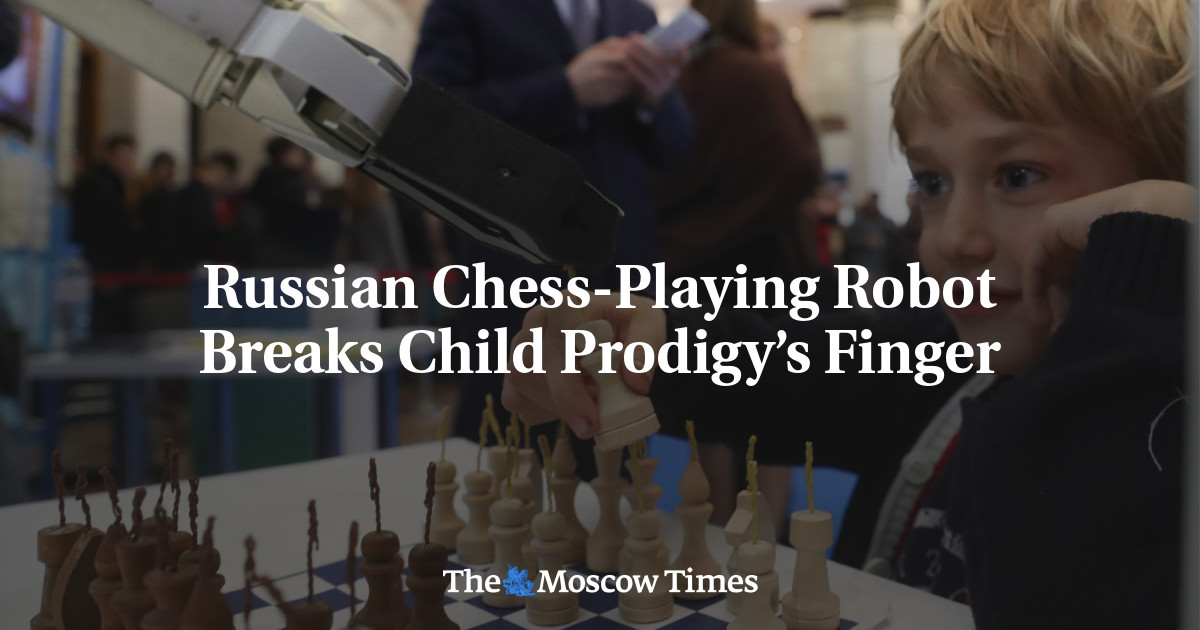
Russian Chess-playing Robot Breaks Child Prodigy’s Fingers

A Russian chess robot latched onto and broke a child prodigy’s finger during a tournament in Moscow, news outlets have reported.

Video shared by the Baza Telegram channel Thursday showed the robot arm squeezing the boy’s finger and adults rushing to his help.

The news outlet identified the victim as 7-year-old Kristofer, one of Moscow’s 30 strongest chess players under the age of 9.

Chess officials said the child player returned the next day to finish the week-long Moscow tournament and attend an awards ceremony after his finger was placed in a cast.

“The robot broke the child’s finger — that’s of course bad,” Sergei Lazarev, president of the Moscow Chess Federation, told the state-run TASS news agency Thursday. 

But he and his deputy appeared to place some of the blame on the boy’s swift maneuvering on the board.

“The kid made a move and then should have given time for the robot to respond, but the boy rushed it and robot grabbed him,” Lazarev was quoted as saying. 

“There are certain safety rules. The kid probably broke them in time trouble and didn’t notice when he made his move,” Sergei Smagin, Vice President of the Moscow Chess Federation, told the state-run RIA Novosti news agency Thursday.

Smagin said it was the first incident in the chess robot’s 15 years playing against humans.


Source https://www.globalcourant.com/russian-chess-playing-robot-breaks-child-prodigys-fingers/?feed_id=1686&_unique_id=62de3018e5f13

Parallel Imports Cut Russian Keyboard Supplies – Kommersant

Laptops and keyboards without a Russian-language layout are increasingly reaching Russia under a government scheme that maintains imports despite Western sanctions and an exodus of international businesses over the war in Ukraine, the Kommersant business daily reported Monday.

Russia’s “parallel import” scheme allows the supply of keyboards and laptops originally intended for foreign markets without approval from trademark owners.

The Industry and Trade Ministry said a Russian layout can be engraved on keyboards within the country without affecting the overall price of the product.

Demand has doubled for laser engraving services to change keyboard layouts into Cyrillic script, with keyboards and laptops coming mostly from Turkey and the United Arab Emirates this year, experts told Kommersant. 

But the practice involves unpacking the devices, which customers would then be less likely to buy, and sometimes completely removing the keyboard, which could cancel warranties, according to Kommersant.

Russia has imported 2 million keyboards at a value of 4 billion rubles ($69 million) and 1.4 million laptops at a value of 90 billion rubles ($1.5 billion) in January-June 2022, according to the retailer M.Video-Eldorado.

Experts forecast keyboards without a Russian language layout to reach 10% by the end of 2022.

Government tenders have also been affected by Russia’s keyboard parallel import mechanism.

“There are problems with supplying automated workstations [with Russian keyboard layouts] to departments as part of contracts that had already been signed,” an unnamed government source was quoted as saying.

“The terms of the tenders prohibit contractors from delivering workstations without a keyboard or with an English keyboard layout,” they added.


Source https://www.globalcourant.com/parallel-imports-cut-russian-keyboard-supplies-kommersant/?feed_id=1678&_unique_id=62de1cf8a51ac