Showing posts with label Millions. Show all posts

Millions affected as death toll from Pakistan's monsoon rains soars

At least 119 people have died in Pakistan in the previous 24 hours as heavy rains continue in parts of the south Asian country.

The annual monsoon is essential for irrigating crops and replenishing lakes and dams across the Indian subcontinent, but each year it also brings a wave of destruction.
The annual monsoon is essential for irrigating crops and replenishing lakes and dams across the Indian subcontinent, but each year it also brings a wave of destruction. (Reuters)
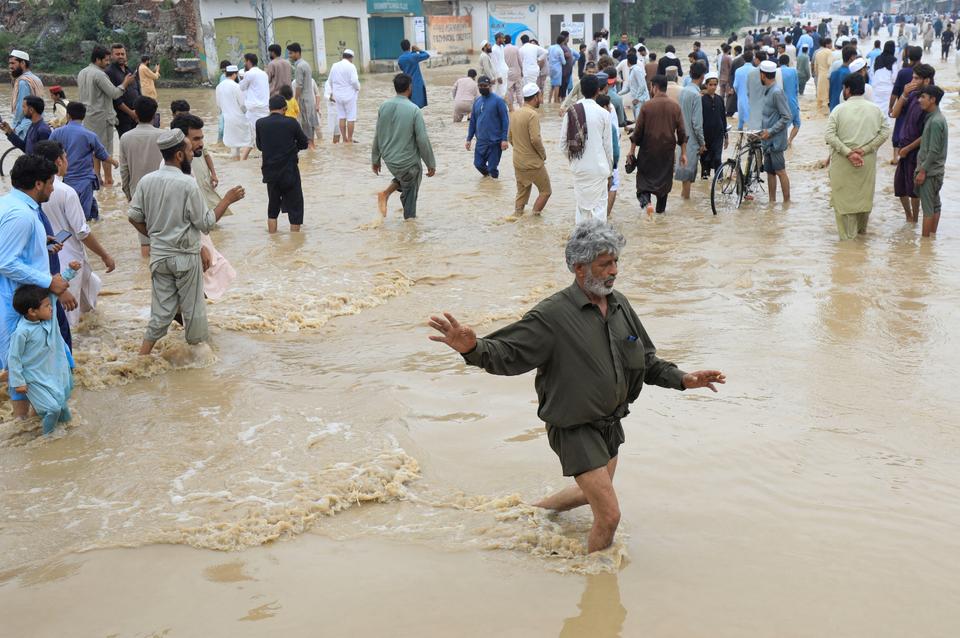
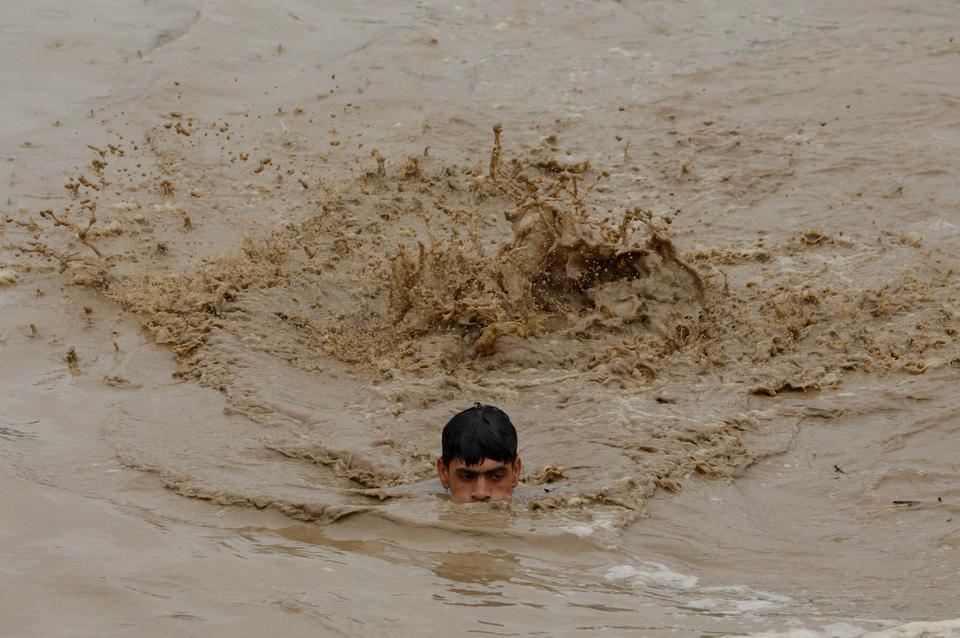
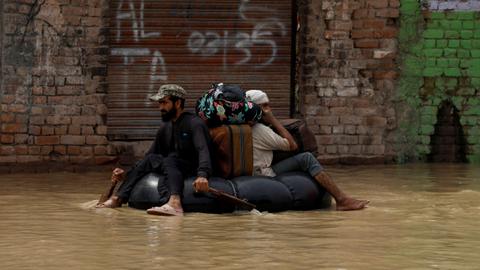
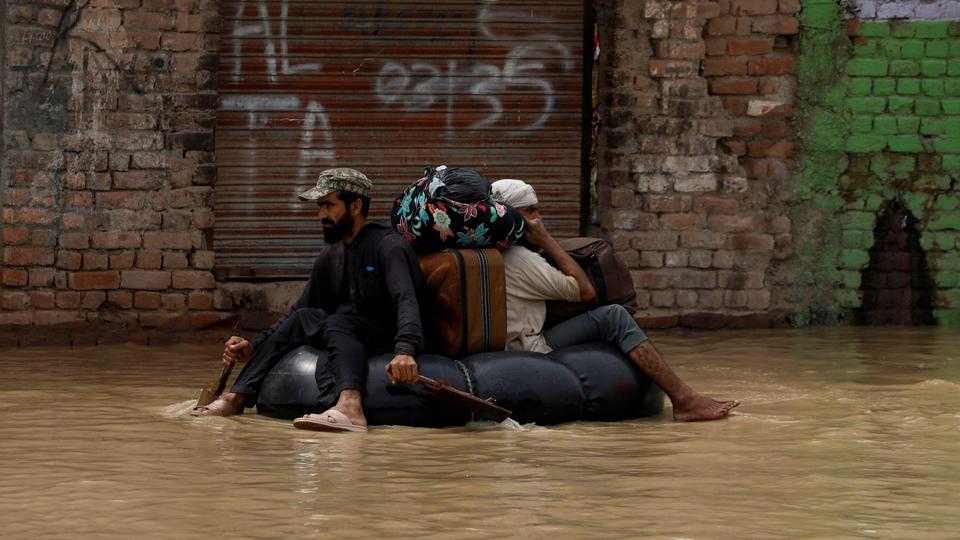
The death toll from monsoon flooding in Pakistan since June has reached 1,033. Figures released by the country's National Disaster Management Authority (NDMA) on Sunday said 119 people had died in the previous 24 hours as heavy rains continued to lash parts of the country. The annual monsoon is essential for irrigating crops and replenishing lakes and dams across the Indian subcontinent, but each year it also brings a wave of destruction. Officials say this year's monsoon flooding has affected more than 33 million people – one in seven Pakistanis – destroying or badly damaging nearly a million homes. The NDMA said more than two million acres of cultivated crops have been wiped out, 3,451 kilometres (2,150 miles) of roads destroyed, and 149 bridges washed away. READ MORE: Pakistan's rain deaths near grim milestone, millions left without shelter
Thousands of livestock had been killed and 1.7 million fruit trees destroyed, raising concerns over how families would feed themselves going into the cooler months while the country deals with an economic crisis.
Thousands of livestock had been killed and 1.7 million fruit trees destroyed, raising concerns over how families would feed themselves going into the cooler months while the country deals with an economic crisis. (Reuters)
International help sought Tens of thousands of people fled their homes in northern Pakistan  after a fast-rising river destroyed a major bridge, as deadly floods cause devastation across the country. Powerful flash floods in the northern province of Khyber Pakhtunkhwa caused the Kabul River to swell, sweeping away a large bridge overnight, cutting off some districts from road access.  Downstream, fears of flooding around the river banks prompted around 180,000 people in the district of Charsadda to flee their homes, according to disaster officials, with some spending the night on highways with their livestock. Historic monsoon rains and flooding in Pakistan have affected more than 30 million people over the last few weeks, the country's climate change minister said, calling the situation a "climate-induced humanitarian disaster of epic proportions".  The military has joined the country's national and provincial authorities in responding to the floods and Pakistan's army chief on Saturday visited the southern province of Balochistan, which has been hit heavily by the rains. "The people of Pakistan are our priority and we won't spare any effort to assist them in this difficult time," said army chief General Qamar Javed Bajwa. Pakistani leaders have appealed to the international community for help and plan to launch an international appeal fund. The foreign affairs ministry said Turkey had sent a team to help with rescue efforts. "The magnitude of the calamity is bigger than estimated," said Prime Minister Shehbaz Sharif, in a tweet, after visiting flooded areas.
The NDMA said more than two million acres of cultivated crops have been wiped out, 3,451 kilometres (2,150 miles) of roads destroyed, and 149 bridges washed away.
The NDMA said more than two million acres of cultivated crops have been wiped out, 3,451 kilometres (2,150 miles) of roads destroyed, and 149 bridges washed away. (Reuters)
Afghanistan floods In neighbouring Afghanistan, the Taliban administration also appealed for help after flooding in central and eastern provinces.  The death toll from floods this month in Afghanistan had risen to 192, disaster authorities said.  "We ask the humanitarian organisations, the international community and other related organisations and foundations to help us," Sharafudden Muslim, the deputy director of Afghanistan's disaster ministry, said at a press conference, adding more than a million families required assistance. READ MORE: Dozens more die as Pakistan blames 'horrors' of climate crisis for floods Source: AFP

#Millions #affected #death #toll #Pakistans #monsoon #rains #soars https://www.globalcourant.com/millions-affected-as-death-toll-from-pakistans-monsoon-rains-soars/?feed_id=16882&_unique_id=630b147c8926b

Pakistan's rain deaths near grim milestone, millions left without shelter

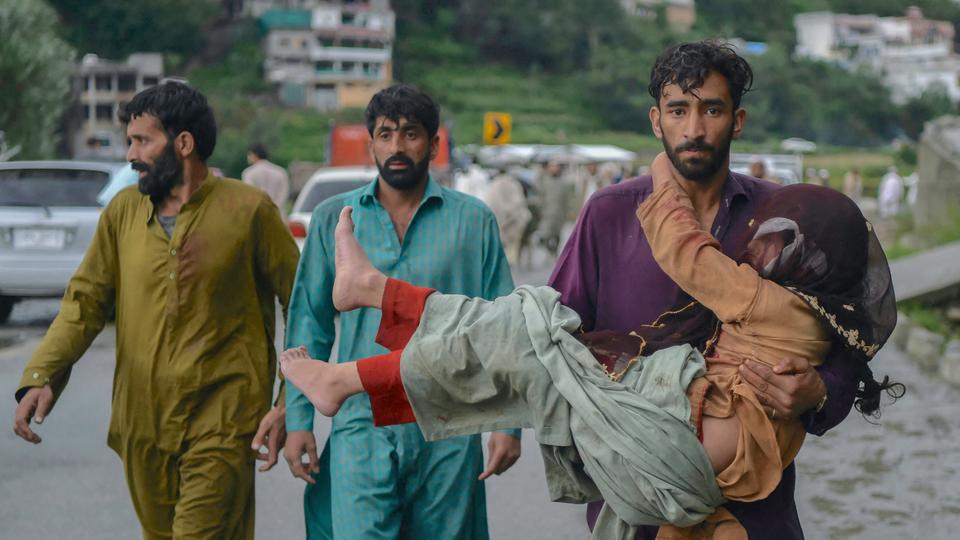
Scores of people were killed and dozens went missing in the past 24 hours as monsoon downpours and roaring floodwaters continued to pound the country.

Millions of people in flood-ravaged areas are without electricity and gas.
Millions of people in flood-ravaged areas are without electricity and gas. (AFP)
Pakistan has neared the grim milestone of 1,000 deaths in rain-related incidents since mid-June, with swirling floods triggered by torrential downpour sweeping the country. Another 45 people were killed and dozens went missing in the past 24 hours as monsoon downpours and roaring floodwaters continued to pound the country, according to officials and local media on Saturday. With half of the South Asian nuclear country under water, the government announced a full-fledged deployment of the army in all four provinces, and the northern Gilgit-Baltistan region to back the civil administration, which is struggling to cope with the unprecedented magnitude of the catastrophe, state-run Pakistan Television reported. The latest flooding caused by incessant rains displaced thousands in the northwestern Khyber Pakhtunkhwa, southwestern Balochistan and southern Sindh provinces, adding to the already increasing number of victims. Most of the fatalities were reported in Khyber Pakhtunkhwa, followed by Sindh and Balochistan, pushing the overall toll to 982 since June 14, according to Pakistan's National Disaster Management Authority. However, at a press conference in Islamabad, Information Minister Marriyum Aurangzeb said that the number was over 1,000. The ongoing monsoon spells, combined with massive flash floods, have left 30 million Pakistanis without shelter. Millions of people in flood-ravaged areas are without electricity and gas. Raging waters from the Kabul River inundated Noshehra, Charsaddah and Madan districts of Khyber Pakhtunkhwa, where the government has converted schools and government buildings into shelter camps for thousands of displaced people, local broadcaster Geo News reported. Massive floods swept away hundreds of houses, restaurants, bridges, and even several multi-storey hotels perched on the banks of the Swat River in the scenic Swat Valley, a favourite tourist attraction.  The southwestern Chaman border crossing between Pakistan and Afghanistan remained closed due to heavy rains and flooding. READ MORE: Dozens more die as Pakistan blames 'horrors' of climate crisis for floods
Türkiye to send humanitarian aid The week-long rains that already destroyed much of the infrastructure and agriculture in the otherwise arid province have come to an end in the eastern districts. Meanwhile, the Turkish Foreign Ministry on Saturday released a statement, saying that they are "deeply saddened by the loss of many of our Pakistani brothers" as a result of the heavy damage caused by floods. Türkiye will send a plane carrying humanitarian aid to Pakistan "in order to heal the wounds of our Pakistani brothers who were affected by the flood," according to the statement. Also, Turkish Foreign Minister Mevlut Cavusoglu spoke with his Pakistani counterpart Bilawal Bhutto Zardari over the phone, offering his condolences for those who lost their lives in the floods and pledging Türkiye’s support. READ MORE: Pakistan declares national emergency as floods leave at least 1,000 dead Source: AA

#Pakistans #rain #deaths #grim #milestone #millions #left #shelter https://www.globalcourant.com/pakistans-rain-deaths-near-grim-milestone-millions-left-without-shelter/?feed_id=16658&_unique_id=630a5adb34fee

UK in drought as apples burn on branches and hosepipe bans hit millions

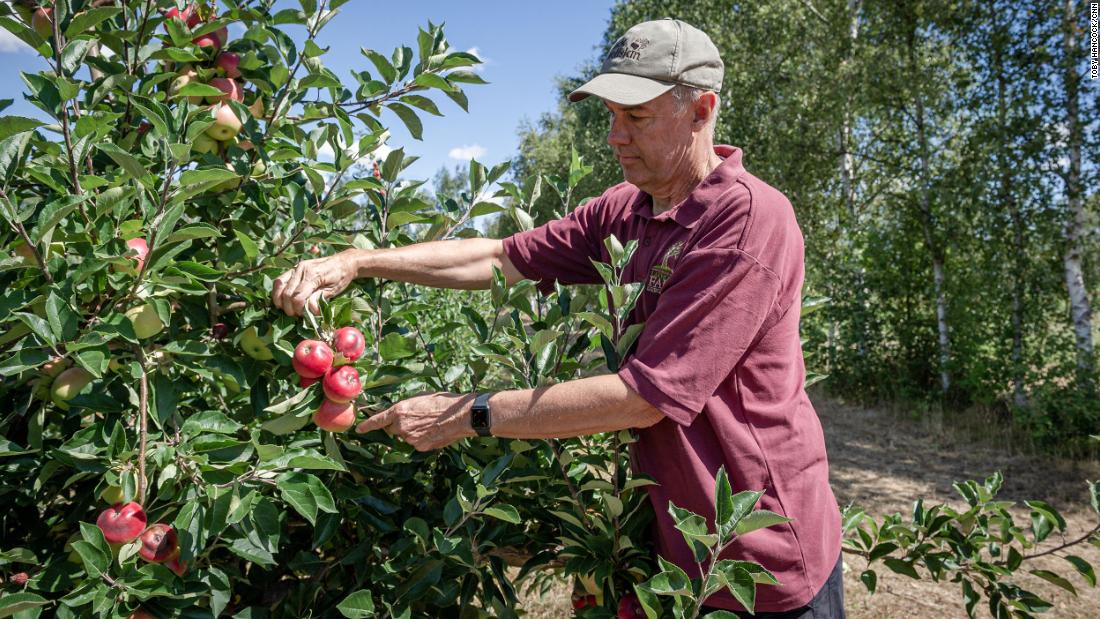
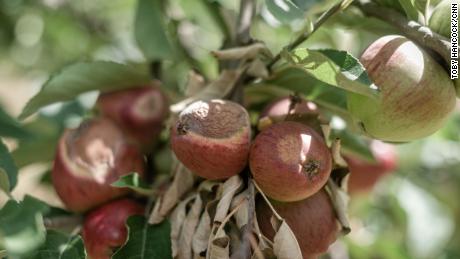
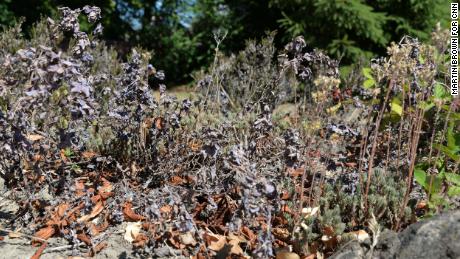
Walking through their orchard on Lathcoats Farm, the apples on many trees have been visibly scorched, their skin browned in parts, the flesh underneath turned corky. A significant proportion of the farm's harvest this year has been unsellable.

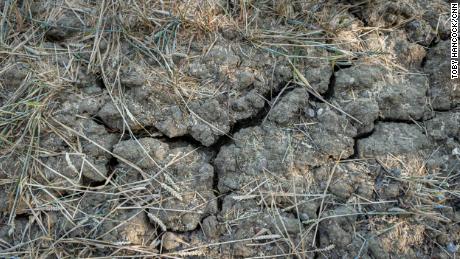
A record-breaking heat wave in July literally baked the apples on their branches, but Philip Taylor, who runs the farm with his nephew, now has bigger things to worry about. The soil under the trees is cracking with dryness -- they've had such little rain this spring and summer. Even this past winter, when rainwater typically stores up in the soil to keep it moist for months, just wasn't wet enough.

England last month had its driest July since 1935, and the southern part of the country, including Lathcoats Farm, received just 17% of its average rainfall for the month, according to the UK Met office. No meaningful amount of rain is on the horizon either.

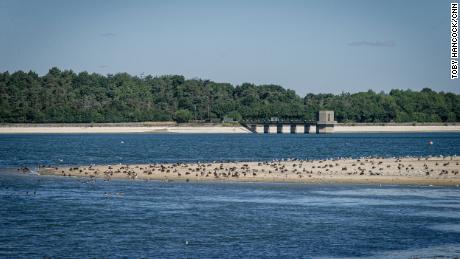
Water levels in reservoirs are dropping fast and rivers are drying up. Even the River Thames that flows through London has shrunk, its first 5 miles dried and disappeared. Thirteen rivers that the Environment Agency monitors are at their lowest levels ever recorded.

The climate crisis, driven by burning fossil fuels, is making hot weather, drought and flooding more frequent and intense in the UK, and the hotter the planet gets, the worse these impacts will be.

But for farmers of thirsty crops like apples, there is no replacement for rain straight from the sky.

"Growing apples is not going to work if we have summers like this every year," Taylor told CNN at his farm, a 40-mile drive northeast of London. "Our access to water at the moment is purely from the mains. To give apple trees enough water to produce a decent crop would be way too expensive."

Luckily, Taylor has other means of income. His family has transformed the farm into an attractive place to visit, with a café and a farm shop that sells juice made from Lathcoats' apples, fresh produce, organic bread and cakes. People also come here to pick their own fruit, making for a fun day out, for young children in particular.

Apples on many trees at Lathcoats Farm at have been visibly scorched, their skin browned in parts, the flesh underneath turned corky.

He and his nephew sell soft fruits as well, like berries and plums, which can be watered with irrigation. But even that water is becoming scarce, and they can't afford to put in some of the measures bigger farms do to shield from extreme weather.

"So as far as what we're doing about it, well, we're just sort of worrying," Taylor said. "It may be that we just go away from growing apples. Certainly, we will consider which varieties we might plant going forward. Some would be more resilient in these temperatures than some of the traditional English ones that we grow now."

3 billion liters of water lost in leaks each day

Hosepipe bans are forcing people to find less wasteful ways of replenishing their gardens and washing their cars. Filling up a paddling pool, as some English people do on hot days, is banned in many areas as well.

But it's not just consumption that's a problem, or even the lack of rain -- the United Kingdom's infrastructure is several hundred of years old and is particularly leaky. In England and Wales, 3.1 billion liters of water -- enough to fill 1,240 Olympic-sized pools -- is lost through leaks every single day.

"There's a real lack of respect for the water that we've got, this really, quite precious resource," Hannah Cloke, a climate scientists and hydrologist at the University of Reading, told CNN. "We drink it, we use it to grow our food, and yet we are still letting it leak all over the place. That's one of the biggest issues. The water companies are just letting it leak -- they've really dropped the ball there."

Low water levels expose parts of the shoreline at Hanningfield Reservoir in Essex, England.

Water UK, which represents 12 major water companies across the country, said that a lot had already been done to plug the leaks.

"Companies have increasingly been putting innovation and technology at the heart of these efforts," the organization said in a statement to CNN. "Intelligent networks, smart sensors, satellite technology and drones are all part of the armory that's being deployed to detect and fix leaks faster than ever."

The companies represented by Water UK are also planning to invest £14billion ($17 billion) in reservoirs and schemes to move water around the country, "enough to supply 10 million people," so it can be saved for particularly dry times like this one.

Another issue is that only around half of the homes in England and Wales have water meters, which allow companies to charge customers based on their actual usage. The rest just pay what the companies estimate a home of their size might use.

The wider UK has the highest per capita water consumption across Europe, using up more than 140 liters a day. Metering has proven to reduce water consumption by more than 20%. Without them, there's little incentive to cut down on use.

Cloke said that water companies might not want to expand metering, which could eat into their profits, assuming people would be more careful with their consumption.

"Water companies will want to make money from selling water, so it's in their interest to keep selling, even when there are restrictions in place," Cloke said. "We haven't got this quite right, but water companies don't have the incentive to do the right thing, environmentally speaking, and that goes for pollution and flooding, as well as droughts and leakage. It has been very much a case of 'Let's just carry on, business as usual.'"

Cracked earth in a dried out field near Chelmsford, England.

The UK's Centre for Ecology and Hydrology on Wednesday warned that drought conditions, which are now impacting much of the country, could last until at least October. The center only looks a few months ahead, and there are worries that the country could have a second, consecutive dry winter as well, even roll into next year.

That could be catastrophic, not just for households, but also for food security, already undermined by Russia's war in Ukraine and drought in other parts of Europe. It would also push food prices up even higher, fueling inflation that is already painful for millions of people in the country, as mortgage rates and rents go up, and energy prices soar.

As Taylor told CNN from his farm, it's been one thing after another.

"Everything's happened at once," he said. "You could start with Brexit and go on to Ukraine, and then Covid. And now climate change is really starting to hurt."

The Garden of England withers

On the other side of London, down south, the English county of Kent is known as the Garden of England for its green rolling hills, its fertile land and orchards that supply the nation with strawberries, apples and pears. It's also a place that attracts those with green thumbs, who move here and cultivate large gardens in their homes.

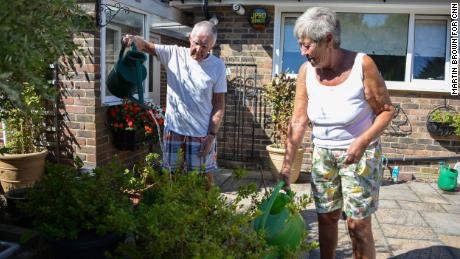
David and Margaret Miller water their plants at their home in Edenbridge.

David and Margaret Miller have lived in their home in the Kentish town of Edenbridge for around 40 years. The couple showed CNN photographs of what their garden once looked like -- a lush green oasis of geraniums, azaleas, dahlias, cannas and echinacea plants. They also brought out several certificates to show their accolades from the local Edenbridge in Bloom gardening competition, which they have won multiple times.

Now their front lawn is dried out and brown from the lack of rain. Some of their dahlias haven't blossomed at all in the heat, and the pink echinacea flowers have completely withered, their petals drooping.

The couple have made the decision to try and just water the flowers and plants they care for the most. Even though they aren't subject to a hosepipe ban yet, they have switched to watering cans "to do the right thing," Margaret Miller said. That's made what was once a 30-minute job twice as long. In this heat, sometimes they need to water their select few plants twice a day just to keep them alive.

It's not an easy job for David, who is 84 and suffering from vertigo, or Margaret, 80, who has problems with her hip. And their garden is everything to them. A hobby and a sanctuary that got them through the worst of the pandemic.

The Millers' garden was once a lush oasis but has succumbed to the heat and lack of rain.

"When you see them all withering in the heat, you feel sad," said Margaret Miller of her plants. "Because, over a period of time, you have nurtured them."

She agrees that people should conserve water as a precious resource, but she's frustrated that her garden has to suffer while the country loses so much in leaks every day.

"I feel quite cross about it, because they then come up with a reason like 'Oh, we've got a drainage system that dates back several hundred of years, and it's not the water companies' fault.' But I would have thought, in this day and age, they've got equipment that they can tell where these leaks are and fix them," she said. "I'm sure they're making plenty of money, so why don't they plow it back in? It does make me cross."

Source https://www.globalcourant.com/uk-in-drought-as-apples-burn-on-branches-and-hosepipe-bans-hit-millions/?feed_id=10902&_unique_id=62f95f996b25d

Mega Millions winning numbers drawn

The numbers were drawn Friday night for the Mega Millions, which is worth a historic $1.28 billion.

The winning numbers were 67-45-57-36-13 and the Mega ball of 14.

For only the third time in the 20-year history of the American lottery game, the big prize has reached the billion-dollar mark. The jackpot has grown to an estimated $1.28 billion -- a cash value of $648.2 million -- after no ticket matched all six numbers drawn Tuesday night, according to a press release from Mega Millions.

If won, it will be the second-largest jackpot in Mega Millions history, behind only the record $1.537 billion won in South Carolina on Oct. 23, 2018 -- the world's largest lottery prize ever won on a single ticket.

Friday night's Mega Millions drawing will mark the 30th in this jackpot run, which began on April 19.

PHOTO: A woman checks off the numbers chosen for her Mega Millions lottery tickets at a 7-Eleven convenience store in Chino Hills, California, on July 28, 2022.

A woman checks off the numbers chosen for her Mega Millions lottery tickets at a 7-Eleven convenience store in Chino Hills, California, on July 28, 2022.

Ringo Chiu/AFP via Getty Images

In the 29 drawings since the Mega Millions jackpot was last won in Tennessee on April 15, there have been over 28.1 million winning tickets at all prize levels, including 42 worth $1 million or more in 17 states across the country. Four Mega Millions jackpots have been won so far this year -- in California, New York, Minnesota and Tennessee.

Mega Millions jackpots start at $20 million and grow based on game sales and interest rates. Despite a surge in ticket sales, the odds of winning the big prize remain the same -- 1 in 303 million.

Mega Millions tickets are $2 and can be purchased in 45 U.S. states, Washington, D.C., and the U.S. Virgin Islands. Drawings are conducted at 11 p.m. ET every Tuesday and Friday at the studios of Atlanta ABC affiliate WSB-TV, supervised by the Georgia Lottery.

Winners can either take the money as an immediate cash lump sum or in 30 annual payments over 29 years.


Source https://www.globalcourant.com/mega-millions-winning-numbers-drawn/?feed_id=4187&_unique_id=62e4daef8d922