Showing posts with label bans. Show all posts

California bans the sale of new gas-powered cars by 2035

A charging port on a 2022 Lincoln Corsair Grand Touring plug-in hybrid vehicle during AutoMobility LA ahead of the Los Angeles Auto Show in Los Angeles, California, Nov. 18, 2021. Bing Guan | Bloomberg | Getty Images

California, the country's most populous state and the center of U.S. car culture, is banning the sale of new gasoline-powered vehicles starting in 2035, marking a historic step in the state's battle against climate change. The rule, issued by the California Air Resources Board on Thursday, will force automakers to speed up production of cleaner vehicles beginning in 2026 until sales of only zero-emission cars, pickup trucks and SUVs are allowed in the state. The unanimous vote comes after Gov. Gavin Newsom set a target in 2020 to accelerate the shift away from internal combustion engines. The transportation sector represents the largest source of greenhouse gas emissions in California, which has suffered from record-breaking wildfires, droughts and air pollution worsened by climate change. The decision is expected to have sweeping impacts beyond California and will likely pave the way for other states to follow suit. At least 15 states, including New Jersey, New York and Pennsylvania, have adopted California's vehicle standards on previous clean-car rules. Liane Randolph, chair of the California Air Resources Board, said the rule is one of the state's most important efforts yet to clean the air and will lead to a 50% reduction in pollution from cars and light trucks by 2040. The policy will not ban people from continuing to drive gas cars or from buying and selling them on the used market after 2035. The rule will also allow automakers to sell up to 20% plug-in hybrids, which have gas engines, by 2035. But the rule does phase out such vehicles over time, requiring 35% of total new vehicle sales to be powered by batteries or hydrogen by 2026 and 68% by 2030. More than 16% of new cars sold in California in 2022 were zero-emissions vehicles, the state said, up from 12.41% in 2021 and 7.78% in 2020. "California is once again leading the way by establishing commonsense standards that will transition to sales of all zero-polluting cars and light-duty trucks in the state," said Kathy Harris, clean vehicles advocate at the Natural Resources Defense Council.

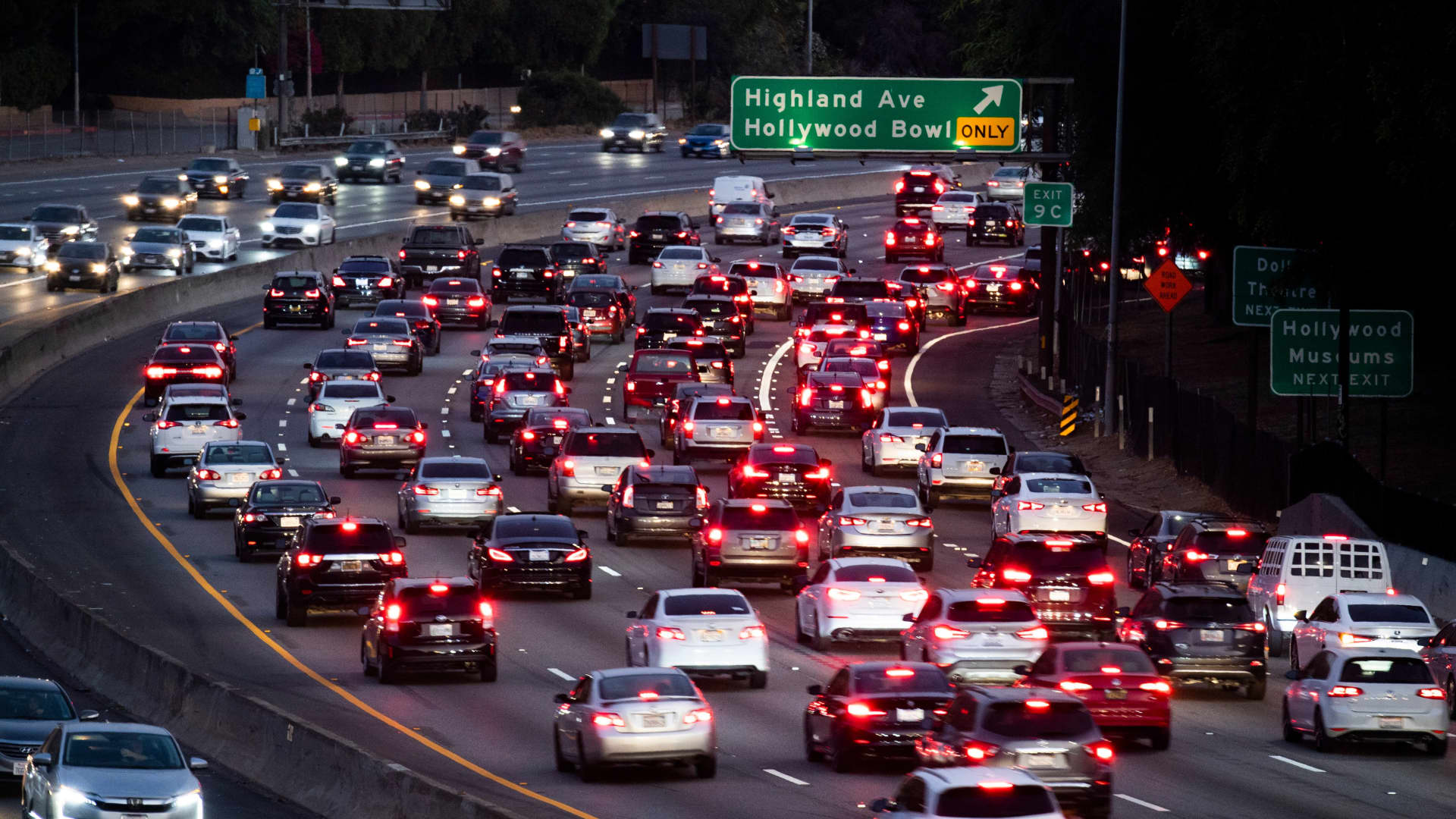
Motor vehicles drive on the 101 freeway in Los Angeles, California. Robyn Beck | Getty Images

California, home to congested freeways and the smog-filled skies over Los Angeles, has considerable authority over the country's auto industry. A federal waiver under the Clean Air Act allows the state to adopt stronger fuel economy standards than those of the federal government and it has set the precedent for the rest of the country on how to curb vehicle emissions.  California's ability to control vehicle emissions has spurred innovations like catalytic converters that convert toxic gases and pollutants in exhaust gas into less-toxic pollutants, as well as "check engine" lights. The state established the nation's first tailpipe emissions standards in 1966. The Trump administration in 2019 revoked California's authority to regulate its own air quality, but the Biden administration restored that authority earlier this year. State officials said the rule is critical to meeting the state's goal of transitioning to 100% renewable energy by 2045, adding that resulting emissions declines would lead to fewer cardiopulmonary deaths and improved health for those suffering from asthma and other illnesses.

However, meeting the timeline will face challenges, including installing enough charging stations across the state and having adequate access to materials needed to make batteries for electric vehicles. John Bozzella, president and CEO of the Alliance for Automotive Innovation, which represents major automakers, said California's mandate would be "extremely challenging" for automakers to meet. "Whether or not these requirements are realistic or achievable is directly linked to external factors like inflation, charging and fuel infrastructure, supply chains, labor, critical mineral availability and pricing, and the ongoing semiconductor shortage," Bozzella said in a statement. "These are complex, intertwined and global issues." The rule comes after President Joe Biden signed the Inflation Reduction Act earlier this month, which provides funding for electric vehicle tax credits and clean vehicle manufacturing facilities. The Biden administration also issued new nationwide limits on tailpipe emissions last year for new cars and light trucks made through 2026. Environmental groups praised the decision on Thursday, though some argued that the board needed to set even tougher targets to meet the urgency of the climate crisis. Some groups had previous urged the board to impose a rule to achieve 100% zero-emission vehicle sales by 2030, five years earlier than the actual regulation. "This rule needed to match the urgency of the climate crisis and instead leaves Californians making sputtering progress in the slow lane," Scott Hochberg, an attorney at the Center for Biological Diversity's Climate Law Institute, said in a statement. "California needs to act strongly on gas-powered cars instead of ignoring them, and shift to EVs much sooner or watch our climate stability slip away," Hochberg said. Daniel Barad, California senior policy advocate at Sierra Club, said in a statement that the rule is "a major step towards breathable air in California communities, and will be critical for the state to meet its climate goals and emission reduction targets."

"Other states should move swiftly to join California and adopt this life saving rule, which will improve air quality and help slow the climate crisis," Barad said.


#California #bans #sale #gaspowered #cars https://www.globalcourant.com/california-bans-the-sale-of-new-gas-powered-cars-by-2035/?feed_id=15832&_unique_id=6307f839529fc

Ukraine bans Independence Day celebrations fearing attacks

At least 5,587 civilians have been killed so far and 7,890 others injured In six months of conflict, according to the UN, which said the actual figures could be higher as Russian attacks in Ukraine continue for the 182nd day.

A vendor sells blue and yellow balloons in honour of the country's National Flag Day on August 23, 2022 at Maidan Square in Kiev.
A vendor sells blue and yellow balloons in honour of the country's National Flag Day on August 23, 2022 at Maidan Square in Kiev. (David Goldman / AP)
Wednesday, August 24, 2022 Ukraine bans Independence Day celebrations fearing Russian attacks Ukraine has banned public events celebrating the country's 31st Independence Day fearing renewed Russian attacks. Large gatherings are prohibited in Kiev from August 22 to 25, the city administration said. Ukraine’s Center for Strategic Communications (StratCom) said on Telegram: “The threat of massive shelling on the territory of Ukraine with S-300 missiles is obvious. Considering the arrival of several trains [from Russia] before August 20, it is clear that the Russians are preparing to attack Ukraine on August 24." Russia, Ukraine spar at UN over nuclear plant dangers Russia and Ukraine have traded accusations over who was endangering the Zaporizhzhia nuclear plant, as the United Nations urged both sides to insulate the Ukrainian facility from the ongoing conflict. Russia called the meeting at the UN Security Council to discuss the dangers that close shelling and a military presence posed to the power plant in southern Ukraine, amid fears that a damaged reactor could leak radiation across the region. Russian troops have controlled the plant for weeks and allegedly have placed arms and war supplies there, something that Moscow denies.  [embed]https://www.youtube.com/watch?v=2FDLL9kXUrU[/embed] US to give Ukraine $3 billion in military aid for years ahead The Biden administration is expected on Wednesday to announce an additional roughly $3 billion in aid to train and equip Ukrainian forces to fight for years to come, US officials said. The officials told The Associated Press that the package will fund contracts for as many as three types of drones and other weapons, ammunition and equipment that may not see the battlefront for a year or two. The total of the aid package — it is being provided under the Ukraine Security Assistance Initiative — could change, but not likely by much.   For live updates from Tuesday (August 23), click here Source: AP

Source https://www.globalcourant.com/ukraine-bans-independence-day-celebrations-fearing-attacks/?feed_id=15055&_unique_id=6305c45e5fd03

IMAX Bans Russian Film Screenings, Chain Owner Says

IMAX has banned Russian cinemas from screening Russian movies within Russia after leaving the country over its invasion of Ukraine, the head of a major cinema chain said Tuesday. IMAX Corporation, a Canadian company that provides proprietary high-resolution technology for a large-format movie experience, has left Russia on June 1 after 19 years on the market, according to the RBC news website. It is among hundreds of foreign businesses to exit Russia over its invasion of Ukraine. Alexei Vasyanin, head of Russia’s largest network Cinema Park and Formula Kino, told RBC that all IMAX employees had been fired and top executives had left Russia for London.  He noted that Russian cinemas require explicit permission from IMAX to screen movies in a high-resolution format despite the technical capabilities to do so without permission. “Unfortunately we can’t even screen Russian films in that format right now… because there’s a direct ban by the company on using the format,” Vasyanin said. Vasyanin warned that Russian chains could sue IMAX if does not return to the market with 54 cinemas around Russia that use its technology by the end of 2022. “First of all, we’ll file lawsuits. Secondly, we’ll use this equipment to screen movies in a different format,” the executive told RBC. “We have a very strict contract with them that regulates their work here. If they keep ignoring that contract by the end of the year, we’ll go to trial,” Vasyanin said. 


Source https://www.globalcourant.com/imax-bans-russian-film-screenings-chain-owner-says/?feed_id=14579&_unique_id=63047a505a21b

UK in drought as apples burn on branches and hosepipe bans hit millions

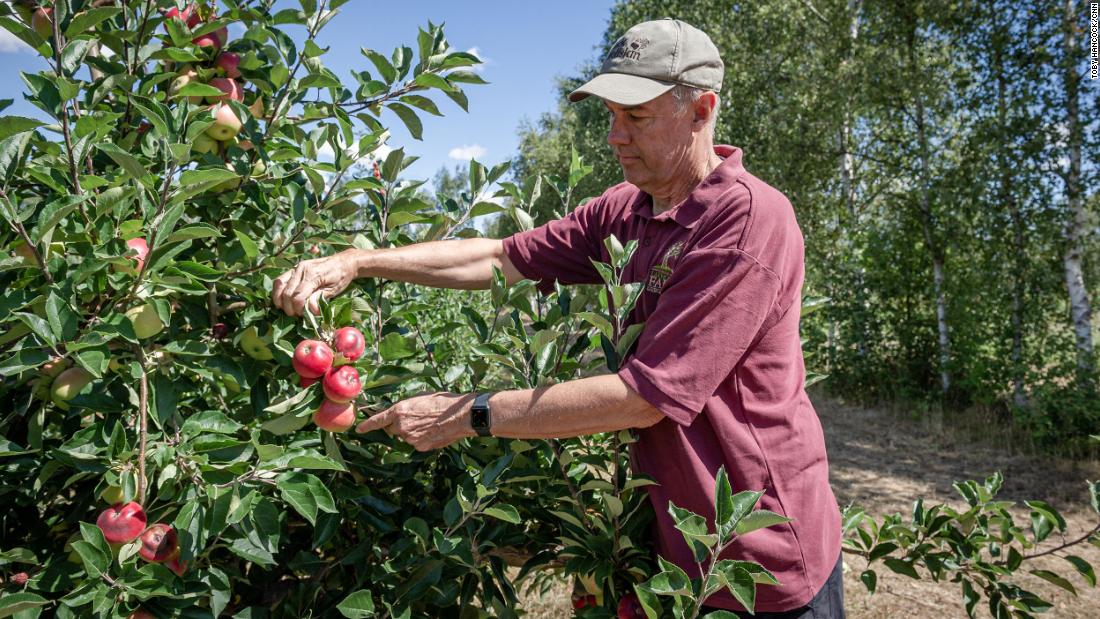
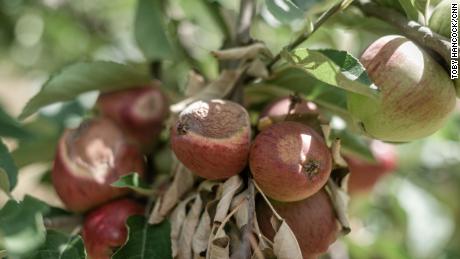
Walking through their orchard on Lathcoats Farm, the apples on many trees have been visibly scorched, their skin browned in parts, the flesh underneath turned corky. A significant proportion of the farm's harvest this year has been unsellable.

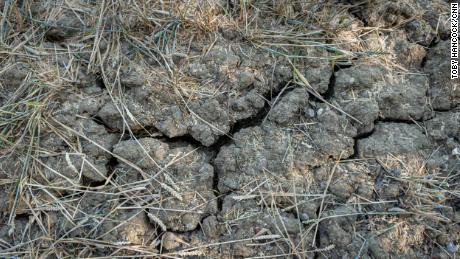
A record-breaking heat wave in July literally baked the apples on their branches, but Philip Taylor, who runs the farm with his nephew, now has bigger things to worry about. The soil under the trees is cracking with dryness -- they've had such little rain this spring and summer. Even this past winter, when rainwater typically stores up in the soil to keep it moist for months, just wasn't wet enough.

England last month had its driest July since 1935, and the southern part of the country, including Lathcoats Farm, received just 17% of its average rainfall for the month, according to the UK Met office. No meaningful amount of rain is on the horizon either.

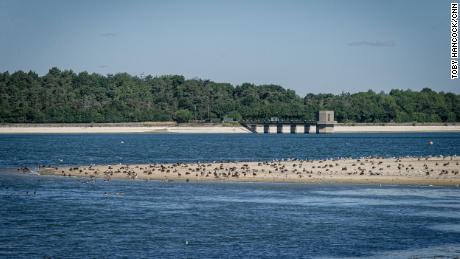
Water levels in reservoirs are dropping fast and rivers are drying up. Even the River Thames that flows through London has shrunk, its first 5 miles dried and disappeared. Thirteen rivers that the Environment Agency monitors are at their lowest levels ever recorded.

The climate crisis, driven by burning fossil fuels, is making hot weather, drought and flooding more frequent and intense in the UK, and the hotter the planet gets, the worse these impacts will be.

But for farmers of thirsty crops like apples, there is no replacement for rain straight from the sky.

"Growing apples is not going to work if we have summers like this every year," Taylor told CNN at his farm, a 40-mile drive northeast of London. "Our access to water at the moment is purely from the mains. To give apple trees enough water to produce a decent crop would be way too expensive."

Luckily, Taylor has other means of income. His family has transformed the farm into an attractive place to visit, with a café and a farm shop that sells juice made from Lathcoats' apples, fresh produce, organic bread and cakes. People also come here to pick their own fruit, making for a fun day out, for young children in particular.

Apples on many trees at Lathcoats Farm at have been visibly scorched, their skin browned in parts, the flesh underneath turned corky.

He and his nephew sell soft fruits as well, like berries and plums, which can be watered with irrigation. But even that water is becoming scarce, and they can't afford to put in some of the measures bigger farms do to shield from extreme weather.

"So as far as what we're doing about it, well, we're just sort of worrying," Taylor said. "It may be that we just go away from growing apples. Certainly, we will consider which varieties we might plant going forward. Some would be more resilient in these temperatures than some of the traditional English ones that we grow now."

3 billion liters of water lost in leaks each day

Hosepipe bans are forcing people to find less wasteful ways of replenishing their gardens and washing their cars. Filling up a paddling pool, as some English people do on hot days, is banned in many areas as well.

But it's not just consumption that's a problem, or even the lack of rain -- the United Kingdom's infrastructure is several hundred of years old and is particularly leaky. In England and Wales, 3.1 billion liters of water -- enough to fill 1,240 Olympic-sized pools -- is lost through leaks every single day.

"There's a real lack of respect for the water that we've got, this really, quite precious resource," Hannah Cloke, a climate scientists and hydrologist at the University of Reading, told CNN. "We drink it, we use it to grow our food, and yet we are still letting it leak all over the place. That's one of the biggest issues. The water companies are just letting it leak -- they've really dropped the ball there."

Low water levels expose parts of the shoreline at Hanningfield Reservoir in Essex, England.

Water UK, which represents 12 major water companies across the country, said that a lot had already been done to plug the leaks.

"Companies have increasingly been putting innovation and technology at the heart of these efforts," the organization said in a statement to CNN. "Intelligent networks, smart sensors, satellite technology and drones are all part of the armory that's being deployed to detect and fix leaks faster than ever."

The companies represented by Water UK are also planning to invest £14billion ($17 billion) in reservoirs and schemes to move water around the country, "enough to supply 10 million people," so it can be saved for particularly dry times like this one.

Another issue is that only around half of the homes in England and Wales have water meters, which allow companies to charge customers based on their actual usage. The rest just pay what the companies estimate a home of their size might use.

The wider UK has the highest per capita water consumption across Europe, using up more than 140 liters a day. Metering has proven to reduce water consumption by more than 20%. Without them, there's little incentive to cut down on use.

Cloke said that water companies might not want to expand metering, which could eat into their profits, assuming people would be more careful with their consumption.

"Water companies will want to make money from selling water, so it's in their interest to keep selling, even when there are restrictions in place," Cloke said. "We haven't got this quite right, but water companies don't have the incentive to do the right thing, environmentally speaking, and that goes for pollution and flooding, as well as droughts and leakage. It has been very much a case of 'Let's just carry on, business as usual.'"

Cracked earth in a dried out field near Chelmsford, England.

The UK's Centre for Ecology and Hydrology on Wednesday warned that drought conditions, which are now impacting much of the country, could last until at least October. The center only looks a few months ahead, and there are worries that the country could have a second, consecutive dry winter as well, even roll into next year.

That could be catastrophic, not just for households, but also for food security, already undermined by Russia's war in Ukraine and drought in other parts of Europe. It would also push food prices up even higher, fueling inflation that is already painful for millions of people in the country, as mortgage rates and rents go up, and energy prices soar.

As Taylor told CNN from his farm, it's been one thing after another.

"Everything's happened at once," he said. "You could start with Brexit and go on to Ukraine, and then Covid. And now climate change is really starting to hurt."

The Garden of England withers

On the other side of London, down south, the English county of Kent is known as the Garden of England for its green rolling hills, its fertile land and orchards that supply the nation with strawberries, apples and pears. It's also a place that attracts those with green thumbs, who move here and cultivate large gardens in their homes.

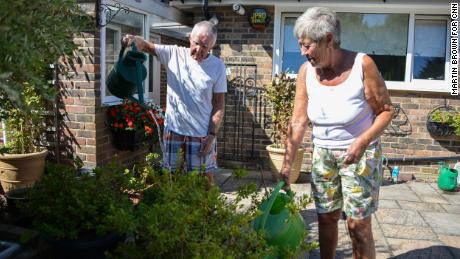
David and Margaret Miller water their plants at their home in Edenbridge.

David and Margaret Miller have lived in their home in the Kentish town of Edenbridge for around 40 years. The couple showed CNN photographs of what their garden once looked like -- a lush green oasis of geraniums, azaleas, dahlias, cannas and echinacea plants. They also brought out several certificates to show their accolades from the local Edenbridge in Bloom gardening competition, which they have won multiple times.

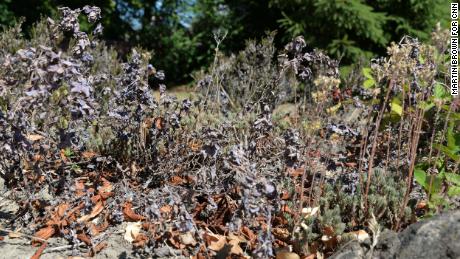
Now their front lawn is dried out and brown from the lack of rain. Some of their dahlias haven't blossomed at all in the heat, and the pink echinacea flowers have completely withered, their petals drooping.

The couple have made the decision to try and just water the flowers and plants they care for the most. Even though they aren't subject to a hosepipe ban yet, they have switched to watering cans "to do the right thing," Margaret Miller said. That's made what was once a 30-minute job twice as long. In this heat, sometimes they need to water their select few plants twice a day just to keep them alive.

It's not an easy job for David, who is 84 and suffering from vertigo, or Margaret, 80, who has problems with her hip. And their garden is everything to them. A hobby and a sanctuary that got them through the worst of the pandemic.

The Millers' garden was once a lush oasis but has succumbed to the heat and lack of rain.

"When you see them all withering in the heat, you feel sad," said Margaret Miller of her plants. "Because, over a period of time, you have nurtured them."

She agrees that people should conserve water as a precious resource, but she's frustrated that her garden has to suffer while the country loses so much in leaks every day.

"I feel quite cross about it, because they then come up with a reason like 'Oh, we've got a drainage system that dates back several hundred of years, and it's not the water companies' fault.' But I would have thought, in this day and age, they've got equipment that they can tell where these leaks are and fix them," she said. "I'm sure they're making plenty of money, so why don't they plow it back in? It does make me cross."

Source https://www.globalcourant.com/uk-in-drought-as-apples-burn-on-branches-and-hosepipe-bans-hit-millions/?feed_id=10902&_unique_id=62f95f996b25d