Showing posts with label UK. Show all posts

Liz Truss, Rishi Sunak clash in final UK leadership debate

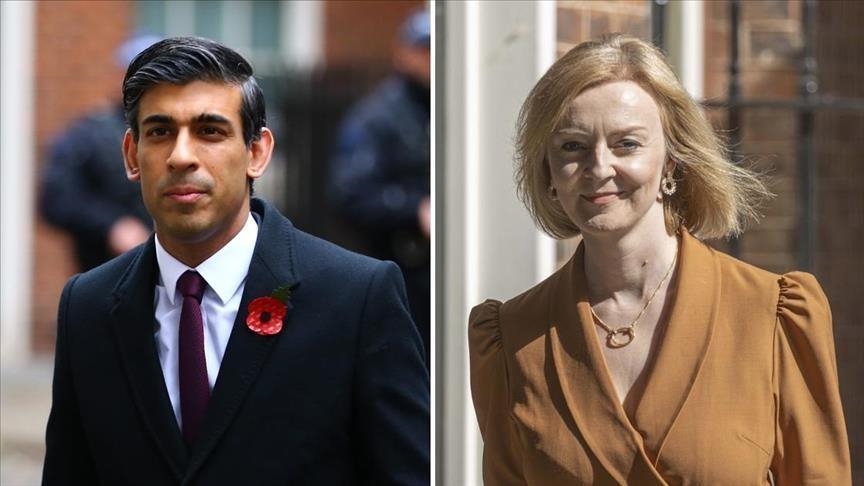
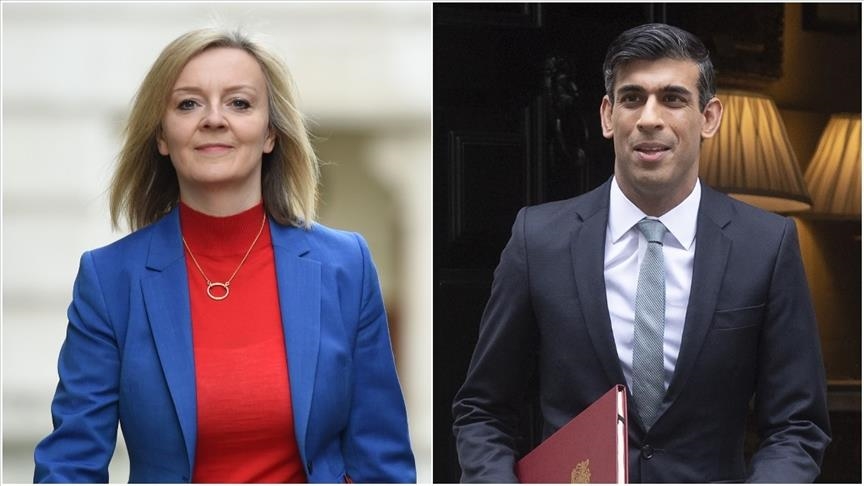
LONDON  Liz Truss and Rishi Sunak, the remaining contenders in the race to become the next leader of the Conservative Party and prime minister of the UK, faced off against each other Wednesday in the final debate before the winner is announced next week. The debate was held at Wembley Arena in north-west London and witnessed Sunak and Truss tussle over issues surrounding taxes, energy and the cost of living. Truss, the foreign secretary and frontrunner of the leadership contest, ruled out offering energy rationing to support struggling families in the coming winter despite a worsening cost of living crisis that has seen inflation skyrocket and wages plummet. Asked by moderator and radio show host Nick Ferrari whether she would rule out energy rationing, Truss responded by saying: “I do rule that out. Yes.” On the issue of introducing new windfall tax impositions, Truss said “yes, no new taxes” when asked if she would implement new tax policies as incumbent Boris Johnson did in 2019. Rishi Sunak, the former chancellor of the exchequer and self-described underdog of the race, took a more cautious approach when it came to addressing the crisis, warning that “we shouldn’t rule anything out.” “The challenges we face with this crisis are significant. Many European countries are looking at how we can all optimize our energy usage. That is a sensible thing for us to be doing as a country,” Sunak said. Sunak’s approach is reminiscent of the one taken by the French government after it warned that energy rationing may need to be implemented following Russia’s cutting off of gas supplies in reaction to international sanctions over its war against Ukraine. Under the UK government’s “worst-case scenario,” businesses and households could face electricity blackouts in the coming winter over growing uncertainty surrounding power supplies. On Sept. 5, the Conservative Party membership will select a new leader of the party as well as the new prime minister of the UK. Anadolu Agency website contains only a portion of the news stories offered to subscribers in the AA News Broadcasting System (HAS), and in summarized form. Please contact us for subscription options.

#Liz #Truss #Rishi #Sunak #clash #final #leadership #debate https://www.globalcourant.com/liz-truss-rishi-sunak-clash-in-final-uk-leadership-debate/?feed_id=18513&_unique_id=631003ec89cbb

Experts weigh in on Britain’s Conservative leadership race

LONDON 

Members of Britain’s ruling Conservative Party are currently voting to decide on their next leader, who will also become the next prime minister.

Former Chancellor of the Exchequer Rishi Sunak is facing off against Foreign Secretary Liz Truss. The race was triggered by Prime Minister Boris Johnson’s resignation following a series of scandals that critics said cast doubt on his integrity and suitability for office.

Truss is leading in internal Conservative Party membership polls by some margin, though Sunak led in the first stage of the contest with Conservative Party lawmakers.

Anadolu Agency interviewed three experts on British politics for their views on the leadership race.

Establishment politics

Michael Kandiah, a lecturer in Contemporary British History at King’s College London, told Anadolu Agency that it was “more than likely” that Truss will become prime minister.

He said Sunak had not made his case to the Conservative rank-and-file as effectively as Truss had.

“He’s much more the establishment candidate,” he added, pointing to the “increasing divide” between the Conservative parliamentary party and the grassroots.

Roger Mortimore, a professor of Public Opinion and Political Analysis at King’s College London, told Anadolu Agency that while Truss had the advantage as things stand, either candidate could still win.

“This is a politically-sophisticated electorate who will take account of the arguments they hear and of the impressions that the candidates are giving, and it is not too late for Rishi Sunak to catch up if he should prove more convincing over the next couple of weeks,” he said.

Mortimore said Truss’ advantage lied in her proposed policy of cutting taxes, and in that Sunak was blamed for Johnson’s resignation.

He said that Sunak’s best hope lied in his economic case that now is the wrong time to cut taxes due to rising inflation.

He added that all credible candidates were inevitably part of the party establishment, as there was “no substantial dissident faction in the party with a different policy agenda.”

Johnson’s shadow

Johnson’s shadow looms large over the leadership race, and Kandiah agreed that a major issue facing Sunak is his perceived role in toppling Johnson, as well as his perceived arrogance by some.

Kandiah added that while the parliamentary party was largely unwilling to let sleeping dogs lie – they were the ones to force him from office after all – the party rank-and-file saw the outrage over Partygate as being led more by the media than the wider electorate, as well as seeing a large dose of hypocrisy.

“What they would have much preferred is that they could have voted him out,” Kandiah said. “I think that’s really where the problem lies.”

Truss has aligned herself closely with Johnson, while Sunak has made clearer his ethical and economic disagreements with the prime minister.

Mortimore said that Johnson was dislodged because of “personal and leadership” issues rather than policy ones.

Conservative members “would not have pushed him out if he had not been damaging the reputation of the party and the government with personal failures and misjudgments,” he said.

End of an era?

“A week’s a long time in politics,” Kandiah said, as he began exploring the issue of whether a simple change in leadership would be enough to give the Conservatives a fighting chance of winning the next general election, which has to take place by 2024.

He was not particularly sanguine. Johnson was handed his enormous majority in 2019 by so-called Red Wall voters, former Labour voters who backed Brexit in 2016 and then Johnson three years later. Though they are older and more socially conservative, like the Conservatives’ core affluent voters, they are also to the left economically owing to their living in more deprived parts of the country.

“It’s very difficult to see them coming back for a whole variety of reasons,” Kandiah said.

Red Wall voters are among the most hard-hit by a wave of problems plaguing the government, not least the skyrocketing cost-of-living-crisis and surge in energy bills. Immigration is also a consistent concern for all Conservative voters.

“If voters are able to see that they’ve been able to do something genuine about it, that might change,” Kandiah said. “The problem really is I don’t see that happening. It’s very difficult to see another leader, simply a new face, changing the results in the medium-term, which is really what the next general election is.”

Mortimore said it all hinges on how the new leader performs until the next election.

Labour may be ahead in the polls, but their victory is not a foregone conclusion, he said, because other governments in the past have recovered from similar deficits in the polls. The key issue would most likely be the country’s economic recovery.

“The new leader has to find a way of keeping both those groups happy, or of conjuring up millions of new supporters to replace the ones who are unhappy and won’t vote Conservative again. If he or she can’t do that, they will be entirely dependent on hoping that Labour will be incompetent enough to miss an open goal,” Mortimore said.

Race and gender

The makeup of the leadership race has drawn widespread media interest, as one candidate is an ethnic minority and the other a woman. The left often sees itself as more progressive on issues of racial and gender justice than the right.

“It was always assumed that the left would be a place where racial minorities would feel more comfortable,” Kandiah said.

He added that there is a growing divide within Britain’s various ethnic minority groups, with South Asians for example beginning to be drawn more to the Conservatives than Labour.

“Even within the broader Conservative Party itself, race is not seen to be an issue,” Kandiah said. “They’ve done plenty of opinion polling of ordinary Conservative voters, and they don’t see this as a big issue. What’s also very interesting about having a woman (is that) because they’ve had two prime ministers who were women in the past, that is not seen to be a problem. So it’s not that it’s an advantage, it’s not a problem.”

“It’s an interesting social development and it’s an interesting historical development,” he said.

Mortimore said that gender was no issue in the election as “Margaret Thatcher is still widely revered by party members.”

He added that race was not an issue either.

“Certainly until a few years ago, it would have been very surprising to see a member of an ethnic minority being seriously considered as a Conservative leader, but I don’t think that is true anymore,” he said.

He continued by saying that the last few Conservative governments had more ethnic minority ministers than any previous government of any party and that Conservative members do “now seem to be comfortable with that.” Sunak himself was a very popular Chancellor until events led to his poll ratings falling, he added.

“If he loses, I’m sure it will not be because Truss is white and he is not,” Mortimore said.

Emilia Belknap, a PhD candidate in gender and politics at the University of Edinburgh, also discussed the racial and gender makeup of the Conservative leadership race with Anadolu Agency.

Belknap said that both previous women prime ministers have been Conservative, a fact used by them to “substantiate their mission for gender equality within the party.”

She added, however, that these claims come into question in terms of policy measures and the treatment of women candidates within the party, such as with maternity leave.

“If Liz Truss wins the competition, she will be the country’s third Tory (Conservative) British prime minister. If Rishi Sunak wins, he will be the UK’s first person of color standing in the premiership,” Belknap said.

Citing academic research in this field, she highlighted the difference between substantive and descriptive representation.

“In the context of the Tory leadership race, while Truss and Sunak both are members of minority groups in politics, it is crucial to place more importance on what they do for the groups they are a part of (women or people of color) as opposed to only giving recognition to what they look like. It is important that political leaders are substantive in terms of equality,” she said.

The new leader of the Conservative Party, and in turn prime minister, will be announced on Sept. 5.

Anadolu Agency website contains only a portion of the news stories offered to subscribers in the AA News Broadcasting System (HAS), and in summarized form. Please contact us for subscription options.

Source https://www.globalcourant.com/experts-weigh-in-on-britains-conservative-leadership-race/?feed_id=12449&_unique_id=62fdefb61c72a

UK issues ‘danger to life’ warning after severe flooding

LONDON 

Southern England experienced torrential rainfall and severe flooding Wednesday following weeks of dry weather.

In response to the extreme weather pattern, the Meteorological Office issued a “danger to life” flood warning covering most parts of the southeast and the capital London.

Across parts of the UK, severe flooding has left homes and businesses damaged with streets underwater. London’s Victoria train station, a major travel hub in the capital, was disrupted by flooding.

"Not long after 3 p.m. this afternoon, station colleagues at London Victoria noticed flooding at the main entrance due to heavy rainfall, with large volumes of water running down the slope leading towards the eastern concourse,” said Network Rail, one of the main operators at the station.

The southwest of England this week has experienced an uptick in thunderstorms and flooding after weeks of hot weather brought on by two successive heat waves.

The subsequent drought that followed the heat waves has made soil dry and arid, raising the risk of flooding.

On Wednesday, the Met Office issued an amber and a yellow warning that lasted throughout the day.

The warnings were made after Thames Water, a major water supplier in the UK, announced plans to impose a hosepipe ban for much of the south.

Under such a ban, people are prohibited from using a hosepipe for things such as watering their garden, filling a pool or washing their car.​​​​​​​

The months of July and August experienced the hottest summers after witnessing a record temperature of 40C (104F). Less than 10% rainfall was recorded in all regions across the southeast of England, making it the driest year since 1836.

Anadolu Agency website contains only a portion of the news stories offered to subscribers in the AA News Broadcasting System (HAS), and in summarized form. Please contact us for subscription options.
Source https://www.globalcourant.com/uk-issues-danger-to-life-warning-after-severe-flooding/?feed_id=12323&_unique_id=62fd8b80b97e6

UK in drought as apples burn on branches and hosepipe bans hit millions

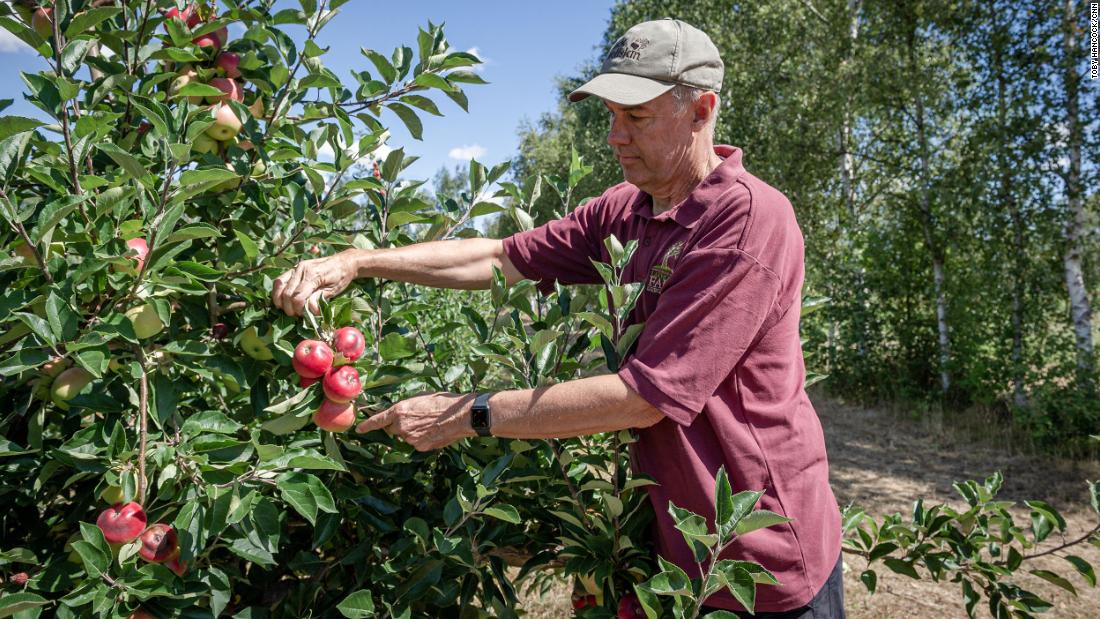
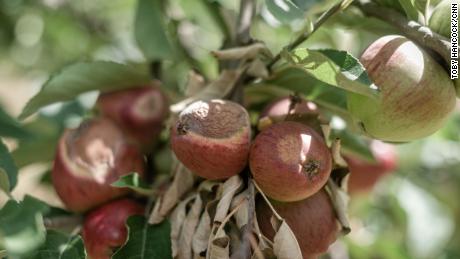
Walking through their orchard on Lathcoats Farm, the apples on many trees have been visibly scorched, their skin browned in parts, the flesh underneath turned corky. A significant proportion of the farm's harvest this year has been unsellable.

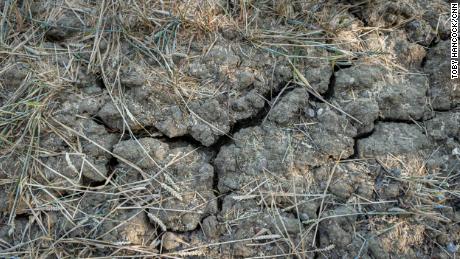
A record-breaking heat wave in July literally baked the apples on their branches, but Philip Taylor, who runs the farm with his nephew, now has bigger things to worry about. The soil under the trees is cracking with dryness -- they've had such little rain this spring and summer. Even this past winter, when rainwater typically stores up in the soil to keep it moist for months, just wasn't wet enough.

England last month had its driest July since 1935, and the southern part of the country, including Lathcoats Farm, received just 17% of its average rainfall for the month, according to the UK Met office. No meaningful amount of rain is on the horizon either.

Water levels in reservoirs are dropping fast and rivers are drying up. Even the River Thames that flows through London has shrunk, its first 5 miles dried and disappeared. Thirteen rivers that the Environment Agency monitors are at their lowest levels ever recorded.

The climate crisis, driven by burning fossil fuels, is making hot weather, drought and flooding more frequent and intense in the UK, and the hotter the planet gets, the worse these impacts will be.

But for farmers of thirsty crops like apples, there is no replacement for rain straight from the sky.

"Growing apples is not going to work if we have summers like this every year," Taylor told CNN at his farm, a 40-mile drive northeast of London. "Our access to water at the moment is purely from the mains. To give apple trees enough water to produce a decent crop would be way too expensive."

Luckily, Taylor has other means of income. His family has transformed the farm into an attractive place to visit, with a café and a farm shop that sells juice made from Lathcoats' apples, fresh produce, organic bread and cakes. People also come here to pick their own fruit, making for a fun day out, for young children in particular.

Apples on many trees at Lathcoats Farm at have been visibly scorched, their skin browned in parts, the flesh underneath turned corky.

He and his nephew sell soft fruits as well, like berries and plums, which can be watered with irrigation. But even that water is becoming scarce, and they can't afford to put in some of the measures bigger farms do to shield from extreme weather.

"So as far as what we're doing about it, well, we're just sort of worrying," Taylor said. "It may be that we just go away from growing apples. Certainly, we will consider which varieties we might plant going forward. Some would be more resilient in these temperatures than some of the traditional English ones that we grow now."

3 billion liters of water lost in leaks each day

Hosepipe bans are forcing people to find less wasteful ways of replenishing their gardens and washing their cars. Filling up a paddling pool, as some English people do on hot days, is banned in many areas as well.

But it's not just consumption that's a problem, or even the lack of rain -- the United Kingdom's infrastructure is several hundred of years old and is particularly leaky. In England and Wales, 3.1 billion liters of water -- enough to fill 1,240 Olympic-sized pools -- is lost through leaks every single day.

"There's a real lack of respect for the water that we've got, this really, quite precious resource," Hannah Cloke, a climate scientists and hydrologist at the University of Reading, told CNN. "We drink it, we use it to grow our food, and yet we are still letting it leak all over the place. That's one of the biggest issues. The water companies are just letting it leak -- they've really dropped the ball there."

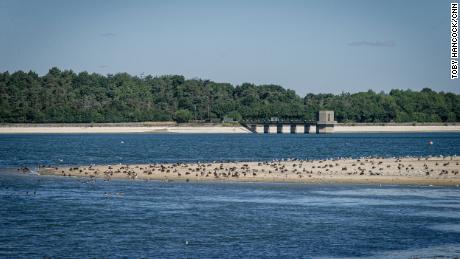
Low water levels expose parts of the shoreline at Hanningfield Reservoir in Essex, England.

Water UK, which represents 12 major water companies across the country, said that a lot had already been done to plug the leaks.

"Companies have increasingly been putting innovation and technology at the heart of these efforts," the organization said in a statement to CNN. "Intelligent networks, smart sensors, satellite technology and drones are all part of the armory that's being deployed to detect and fix leaks faster than ever."

The companies represented by Water UK are also planning to invest £14billion ($17 billion) in reservoirs and schemes to move water around the country, "enough to supply 10 million people," so it can be saved for particularly dry times like this one.

Another issue is that only around half of the homes in England and Wales have water meters, which allow companies to charge customers based on their actual usage. The rest just pay what the companies estimate a home of their size might use.

The wider UK has the highest per capita water consumption across Europe, using up more than 140 liters a day. Metering has proven to reduce water consumption by more than 20%. Without them, there's little incentive to cut down on use.

Cloke said that water companies might not want to expand metering, which could eat into their profits, assuming people would be more careful with their consumption.

"Water companies will want to make money from selling water, so it's in their interest to keep selling, even when there are restrictions in place," Cloke said. "We haven't got this quite right, but water companies don't have the incentive to do the right thing, environmentally speaking, and that goes for pollution and flooding, as well as droughts and leakage. It has been very much a case of 'Let's just carry on, business as usual.'"

Cracked earth in a dried out field near Chelmsford, England.

The UK's Centre for Ecology and Hydrology on Wednesday warned that drought conditions, which are now impacting much of the country, could last until at least October. The center only looks a few months ahead, and there are worries that the country could have a second, consecutive dry winter as well, even roll into next year.

That could be catastrophic, not just for households, but also for food security, already undermined by Russia's war in Ukraine and drought in other parts of Europe. It would also push food prices up even higher, fueling inflation that is already painful for millions of people in the country, as mortgage rates and rents go up, and energy prices soar.

As Taylor told CNN from his farm, it's been one thing after another.

"Everything's happened at once," he said. "You could start with Brexit and go on to Ukraine, and then Covid. And now climate change is really starting to hurt."

The Garden of England withers

On the other side of London, down south, the English county of Kent is known as the Garden of England for its green rolling hills, its fertile land and orchards that supply the nation with strawberries, apples and pears. It's also a place that attracts those with green thumbs, who move here and cultivate large gardens in their homes.

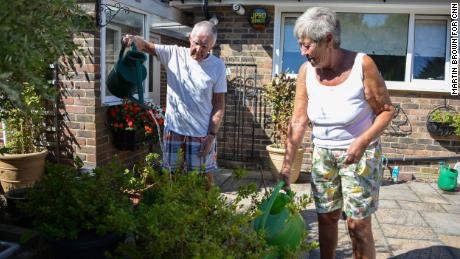
David and Margaret Miller water their plants at their home in Edenbridge.

David and Margaret Miller have lived in their home in the Kentish town of Edenbridge for around 40 years. The couple showed CNN photographs of what their garden once looked like -- a lush green oasis of geraniums, azaleas, dahlias, cannas and echinacea plants. They also brought out several certificates to show their accolades from the local Edenbridge in Bloom gardening competition, which they have won multiple times.

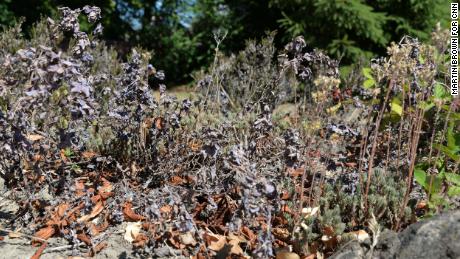
Now their front lawn is dried out and brown from the lack of rain. Some of their dahlias haven't blossomed at all in the heat, and the pink echinacea flowers have completely withered, their petals drooping.

The couple have made the decision to try and just water the flowers and plants they care for the most. Even though they aren't subject to a hosepipe ban yet, they have switched to watering cans "to do the right thing," Margaret Miller said. That's made what was once a 30-minute job twice as long. In this heat, sometimes they need to water their select few plants twice a day just to keep them alive.

It's not an easy job for David, who is 84 and suffering from vertigo, or Margaret, 80, who has problems with her hip. And their garden is everything to them. A hobby and a sanctuary that got them through the worst of the pandemic.

The Millers' garden was once a lush oasis but has succumbed to the heat and lack of rain.

"When you see them all withering in the heat, you feel sad," said Margaret Miller of her plants. "Because, over a period of time, you have nurtured them."

She agrees that people should conserve water as a precious resource, but she's frustrated that her garden has to suffer while the country loses so much in leaks every day.

"I feel quite cross about it, because they then come up with a reason like 'Oh, we've got a drainage system that dates back several hundred of years, and it's not the water companies' fault.' But I would have thought, in this day and age, they've got equipment that they can tell where these leaks are and fix them," she said. "I'm sure they're making plenty of money, so why don't they plow it back in? It does make me cross."


Source https://www.globalcourant.com/uk-in-drought-as-apples-burn-on-branches-and-hosepipe-bans-hit-millions/?feed_id=10902&_unique_id=62f95f996b25d

The UK's hottest day destroyed their homes. They fear it's a sign of worse ahead

As the sun beat down on her back garden in Dagenham, east London, the smell of smoke filled the air. Hilton passed it off as her neighbor lighting a bonfire, she told CNN.

What played out in the hours to come was far worse. As temperatures exceeded 40 degrees Celsius (104 degrees Fahrenheit) in the capital, grass fires are believed to have started in a nearby park before engulfing neighboring homes, and crossing onto the street where Hilton lives.

"The police were everywhere, banging on people's doors, screaming: 'Get out! Get out!'" Hilton said of the chaos that ensued. The blaze destroyed 14 houses and damaged six more in the area, according to local officials, turning Hilton's suburban neighborhood into the latest victim of extreme weather.

Fires around the capital destroyed dozens of shops and houses. London Fire Brigade described last Tuesday as its busiest day since World War Two, saying in a statement that the blazes were yet another example of how "we are increasingly being challenged by new extremes of weather as our climate changes."

The searing summer weather is part of a wider regional trend, climate scientists say. Heat waves have become more frequent and intense across Europe over the last four decades, according to a study published in early July.
Global warming has contributed to the pattern, as it has elsewhere in the world -- the average global temperature has risen at least 1.1 degrees Celsius since the late 19th century, due to a surge in carbon dioxide emissions and other heat-trapping greenhouse gases. Changes to the jet stream, atmosphere and sea-surface temperatures may also be fueling hotter temperatures in the region, according to the report.
On Sunday, fire services declared a major incident in Surrey, a county southwest of London, and local officials called on Londoners to cancel barbecues as firefighters continued to tackle blazes in and around the capital. "We simply can't cope with the number of fires across our city directly attributable to the heat wave we're experiencing," London mayor Sadiq Khan told Sky News.

Preparing for extremes

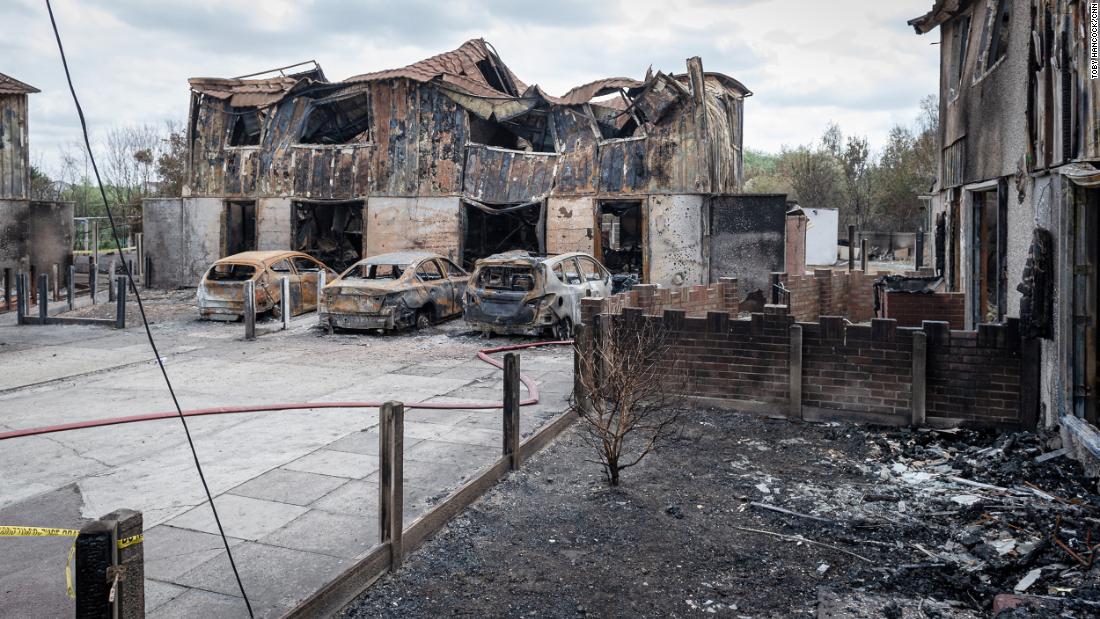
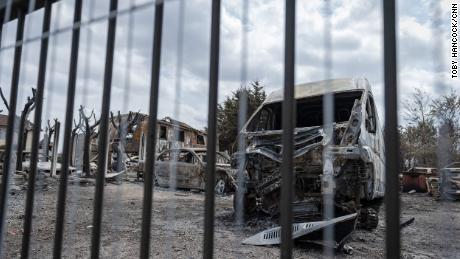
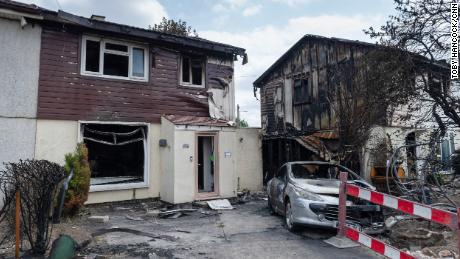
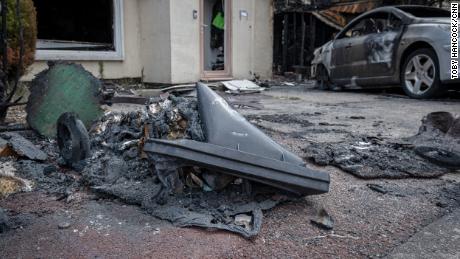
Parts of Dagenham resembled a war-zone when CNN visited last week after the fire had been extinguished there. Cars had melted down to their metal frames, homes were gutted, their windows blackened, and lumps of plastic were all that remained of garbage bins.

Burned out cars and homes in the aftermath of the wildfire that tore through Dagenham.

Around 200 residents were evacuated from the area last Tuesday, and sent to hotels and emergency shelters around the area, Darren Rodwell, council leader for Barking and Dagenham borough, told CNN.

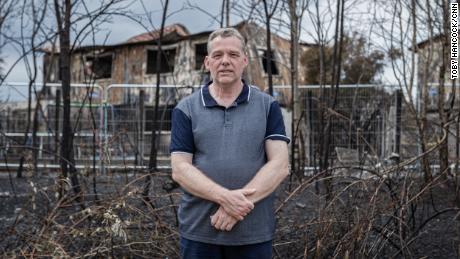
In The Leys park, which residents suspect was ground zero of last week's fire, Rodwell's anxiety about the future was palpable. Looking out over a burned, ash-colored field, he warned that extreme weather events could become the norm for the borough's residents.

"We've already seen in the last two years mass flooding, which we have never seen before ... we had about 20 floods in one day. That's global warming," he said. "We've just had the hottest day the country has ever seen. Again, linked to global warming."

After a month of little rain, much of the land is so dry that the capital is also at risk of surface water flooding, London Fire Brigade has warned.

Darren Rodwell, leader of Barking and Dagenham Council, doesn't believe London is prepared for more extreme weather events fueled by global warming.

Rodwell, from the opposition Labour Party, worries that Barking and Dagenham is not prepared for what's to come. "We've always had quite mild weather, whether it's summer or winter, but now we have these extremes and we need to prepare for it," he said. "The borough's infrastructure is around 100 years old now. We need proper investment into 21st-century infrastructure," he explained.

Buildings in the UK have long been designed to retain heat to cope with cold winters. But with summers getting warmer, some homes are becoming uncomfortable or even dangerous. Compared to cities such as New York, air conditioning systems are rarely seen aside from in newer office buildings and some public centers.

British firefighters have also warned of being unprepared for higher temperatures. The Fire Brigades Union says more than a decade of underfunding has affected the service's ability to respond. "Firefighters are at the forefront of the climate emergency," it wrote. "The demands of the job are increasing but ... 11,500 firefighter jobs have been slashed since 2010."

'We lost everything'

Barking and Dagenham, which is among the poorest areas in London, has more green space by proportion than any other borough, according to the local council. But those expanses of grass turned into kindling during the heat wave.

July's dry, hot weather caused multiple fires in The Leys park. "It was controlled and didn't approach the houses," but what happened last Tuesday was "absolutely shocking," resident Zoya Shumanska, 32, told CNN.

When Shumanska's husband, Lyuben Velov, approached their home after dropping her and their two sons at the airport last Tuesday, he noticed the roads were closed, and could see smoke and fire coming from the park.

"I went behind my house and started shouting to the police and firemen that my dog was in the house, and would they be able to save it," Velov said, adding that they did not hear him, so he "decided to jump in when no one was looking."

Zoya Shumanska's home in Dagenham was gutted in the blaze.

Velov said two firemen followed him over the fence and helped him break down the door. "If they didn't help me, I wouldn't have been able to save our dog ... I would like to thank them."

Their cats are still unaccounted for, he said. The 34-year-old is now staying with a cousin, but said he regularly visits the area to look for them, as do his neighbors.

Shumanska heard the news that their home had burned down as she waited to catch a flight to Bulgaria. The shock caused her to leave her bags in the terminal, but she later managed to make her flight, bags in hand, with a few minutes to spare -- crying only when she got on the plane.

"I loved this house," Shumanska told CNN with tears in her eyes on a video call from Bulgaria. "I was 21 years old when we bought it, and everyone told me: 'You can't buy a house because they wouldn't give you a mortgage.'"

Shumanska and Velov defied others' expectations and bought the two-story property around a decade ago. "This house is one really big achievement for me, so we want to rebuild it" with help from the insurance, she said.

A melted garbage bin in front of Shumanska's home.

"This is (because of) climate change," Shumanska said, explaining how her friends living in hotter countries told her that it was cooler where they were than it was in London -- a city famed for its mild and wet weather.

But even after losing their home, Shumanska and her family are "trying to be positive."

"We lost everything, but we are safe," she said. "We've lost all this material stuff -- absolutely everything -- but we are alive."

Before the school holidays began, Shumanska said that one of her sons had learned about the Great Fire of London, which destroyed parts of the capital in 1666. When their home burned down, "He (asked) me: 'Mummy, is this the Great Fire of London?'" she said with a laugh.


Source https://www.globalcourant.com/the-uks-hottest-day-destroyed-their-homes-they-fear-its-a-sign-of-worse-ahead/?feed_id=2574&_unique_id=62e0880a4fd9f

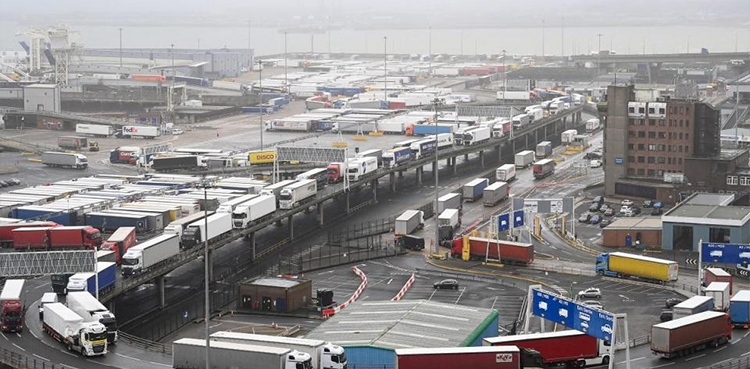
Brexit blamed as UK faces Channel port logjam

LONDON: Unions, port officials and the French authorities blamed Brexit on Saturday as thousands of holidaymakers faced long delays trying to reach Europe via the English Channel port of Dover.

UK Foreign Secretary Liz Truss laid the blame squarely on Paris, insisting: “The French authorities have not put enough people on the border.”

But officials on the other side of the Channel rejected claims that the gridlock was caused by under-staffing.

Border checks and extra paperwork for freight traffic were reintroduced when Britain left the European Union last year, ending free movement for people and goods in the bloc.

Bottlenecks of lorries at Dover have been seen since then but this summer is the first with unrestricted travel for the public since the lifting of all Covid restrictions.

French lawmaker Pierre-Henri Dumont, whose constituency includes the French Channel port of Calais, called the travel chaos “an aftermath of Brexit”.

“We have to run more checks than before,” he told BBC television, predicting it would happen again.

Port of Dover chief executive Doug Bannister initially blamed a lack of French border agency staff for the logjam which saw some holidaymakers wait six hours or longer to catch their ferries.

But he conceded there were now “increased transaction times” post-Brexit. The port was confident of handling the demand at peak periods, he added.

Brexit figurehead Boris Johnson made “taking back control” of UK borders a rallying call for his “leave” campaign in the 2016 vote on EU membership.

Since becoming prime minister, he has found that more difficult, with record numbers of migrants crossing from northern France in small boats.

The leader of Kent County Council, Roger Gough, estimated that 3,000 lorries were waiting to get to the port on Saturday morning.

Kent Police said motorists should still expect “significant delays”.

Lucy Moreton, from the ISU union that represents borders, immigration and customs staff, said the tailbacks were a “reasonably predictable” result of Brexit.

“This is the time that it’s chosen to bite,” she told the BBC.

Third country

Passengers have to go through both UK and French border checks at Dover before boarding ferries to northern France.

By 12:45 pm (1145 GMT), the Port of Dover said more than 17,000 passengers had already gone through.

Bannister said some 8,500 vehicles had left the port on Friday, with about 10,000 expected on Saturday.

Queues for the port snaked through Dover and surrounding roads, stretching kilometres (miles), with lorries backed up the M20 motorway leading to the town.

A traffic management system was rolled out on the M20 to manage the high volume of lorries backed up towards Dover.

That included closing parts of the motorway to non-freight traffic and diverting cars towards the port and the Eurotunnel by other routes.

Eurotunnel said its train shuttle services for vehicles between nearby Folkestone and Coquelles in northern France were two hours behind schedule.

The prefect of the Hauts-de-France region Georges-Francois Leclerc said France had “done its job” by increasing its border staff in Dover from 120 to 200.

He blamed the traffic jams on an accident on the M20 on Friday for the late arrival of French border agency staff at their posts in Dover.

But he suggested the port itself had not done enough to handle the increased traffic, which typically jumps from 5,000 to 10,000 vehicles daily during the busy summer.

All French staff were in position at 9:45 am (0845 GMT) instead of 8:30 am, the prefect told reporters in Lille.

“Who would have thought that because the French reinforcements were an hour late that it would derail the whole system?” he added.

“Last year there was Covid. We’re finding out about Brexit” and its impact on peak periods.

“The world has changed. The UK is now a third country to the EU”, which means much more time-consuming checks.

Comments


Source https://www.globalcourant.com/brexit-blamed-as-uk-faces-channel-port-logjam/?feed_id=1014&_unique_id=62dc5f2e9f2ef