‏إظهار الرسائل ذات التسميات News. إظهار كافة الرسائل

West Indies vice-captain Anisa Mohammed to take six-month break from cricket

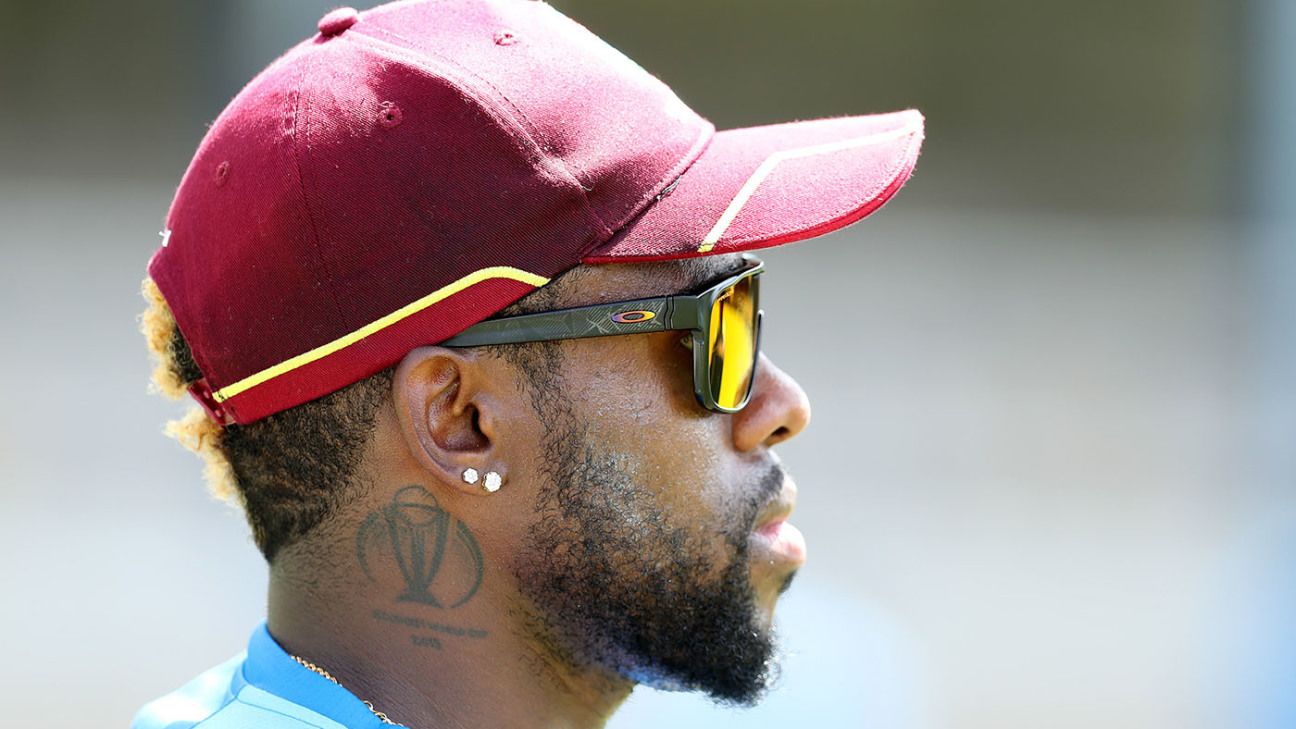
Anisa Mohammed, the West Indies vice-captain, has been granted leave from international cricket for a period of six months. "Mohammed requested to take a break from the game with immediate effect, after a hectic year of cricket both home and away," said a CWI statement, adding that the board had given Mohammed its "full support".
Offspinner Mohammed, just a few days away from her 34th birthday, hasn't played a T20I since West Indies' series at home against South Africa in September last year, but has turned out in 14 ODIs in the past 12 months. The last of them was in March this year at the 50-over World Cup in the semi-final against eventual champions Australia in Hamilton. It didn't end well for Mohammed on that occasion, as she pulled up with a hamstring injury while fielding and had to be driven from the field.

Mohammed, the highest wicket-taker in women's T20Is with 125 strikes in 117 games - to go with 180 wickets in 141 ODIs - has been a part of the action at the ongoing Women's CPL 2022, where she returned 1 for 9 in two overs in her only bowling innings, against Barbados Royals. Their second game, against Guyana Amazon Warriors, had to be called off because of rain, but Mohammed could be in the fray in the final, where Knight Riders will meet the winners of the Royals vs Amazon Warriors contest.
Prior to the WCPL, Mohammed played the women's 6ixty competition, where she turned out for Knight Riders as well. Knight Riders lost in the final to Royals then, and Mohammed finished the tournament with four wickets in four bowling innings, with an economy rate of 8.00.


#West #Indies #vicecaptain #Anisa #Mohammed #sixmonth #break #cricket https://www.globalcourant.com/west-indies-vice-captain-anisa-mohammed-to-take-six-month-break-from-cricket/?feed_id=19591&_unique_id=6312ed077c54f

Match Preview - Sri Lanka vs Afghanistan, Asia Cup 2022, Super 4

Big picture

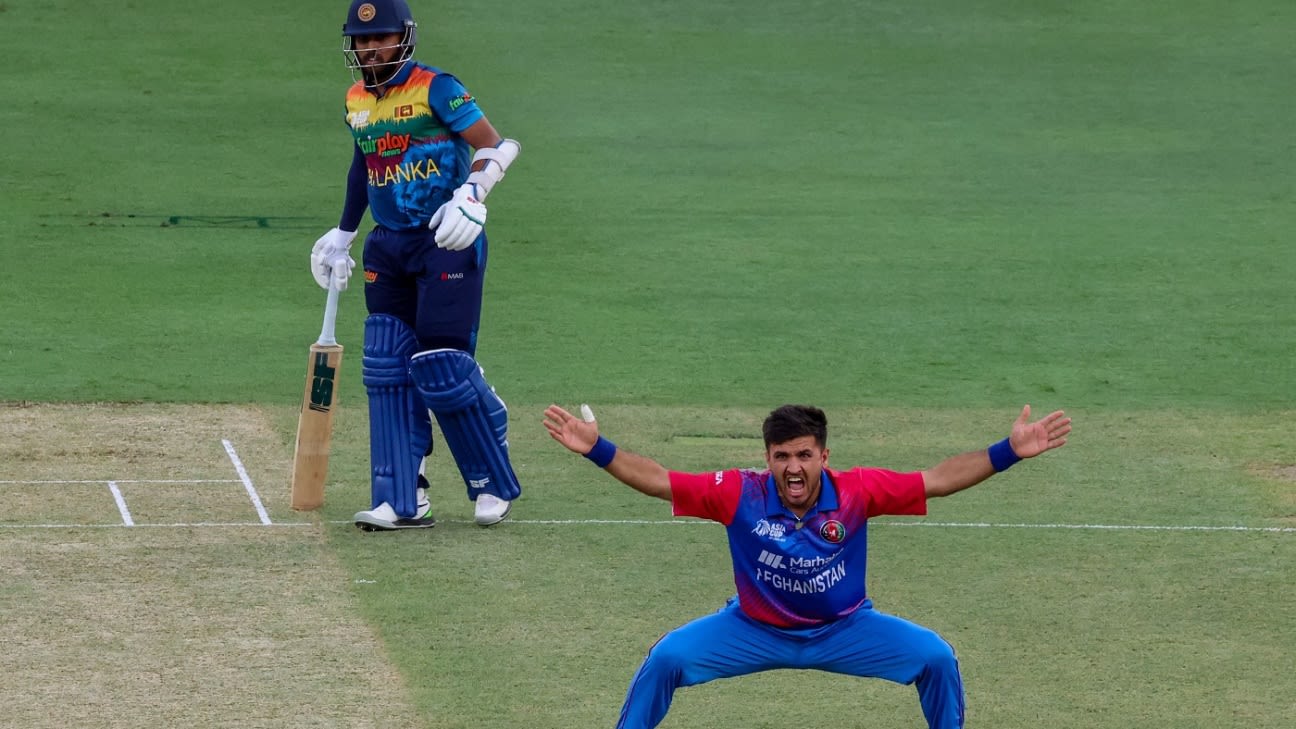
Sri Lanka can breathe easy. Or can they?

Having been blown away by Afghanistan and then having to use every ounce of firepower to get past Bangladesh, they will once again face a trial by spin. Against the Rashids and the Mujeebs. However, the current Afghanistan team is beginning to establish a new bowling order. Their fast bowlers Fazalhaq Farooqi and Naveen ul Haq have been the perfect prelude to the spin superstars. So as a batting unit, there's unlikely to be any respite.

Does the current line-up have the confidence to take on bowling straightaway? In their virtual knockout, Sri Lanka had to go for broke, for a flight was waiting to take them home otherwise. Can they replicate a similar mindset with the stakes significantly higher?

Chris Silverwood's focus is on bringing back Sri Lanka to their refreshing approach to white-ball cricket that revolutionised the ODI game in the 1990s, the kinds that gave opponents nightmares when Sanath Jayasuriya and Romesh Kaluwitharana destroyed attacks with disdain.

However, that is easier said than done. The proof lies in the pudding. Saturday will be another opportunity to test that.

Afghanistan have proved they're giant killers no more. UAE conditions are as good as home conditions. Most players are residents here, and train and play all year round on pitches such as these, and in weather far more oppressive. What they will want to guard against is complacency.

So far, they haven't been tested while batting first. How they approach it - should this scenario play out on Saturday - will be interesting to watch.

Afghanistan have the edge but having just about stopped the door from shutting them out of their own party, they will now want to barge it open.

Form guide

Pakistan: WLWLL (last five completed matches, most recent first)
Hong Kong: WWLWW

In the spotlight

On T20I debut, Asitha Fernando won Sri Lanka game that even his teammates thought had slipped away. His 10 out out of three balls helped clinch a thriller to put Sri Lanka in the Super 4s. Against Bangladesh, Asitha seemed a tad nervous and sprayed the ball around even as the Bangladesh top order took him on. He finished with 1 for 51 off his four overs. Now, he'd be looking to impress with the new ball, which is his primary skillset.
Afghanistan are slowly beginning to establish an identity beyond their globetrotting T20 superstars. Among those who putting themselves high on the radar of franchises around the T20 circuit is Rahmanullah Gurbaz. The hard-hitting 20-year-old was given out on zero in the Asia Cup opener but overturned the lbw call on review and went on to take Sri Lanka's attack to the cleaners by making an 18-ball 40 in a low-key chase. Can he rise to the occasion? Now the stakes are high, and a Super 4 game win first up could set them on the road to the final.

Pitch and conditions

The surface in Sharjah will be the same as the Pakistan v Hong Kong game. There is likely to be some rough patches and dry spots that could aid the spinners. That said, the ground dimensions are significantly smaller than Dubai, and both sides have batters than can take surfaces out of the equation. So far, there hasn't been any dew across both venues. Toss should not be a deciding factor.

Team news

Both sides have a fully fit squad of players to choose from. They are unlikely to make changes.

Sri Lanka: 1 Pathum Nissanka, 2 Kusal Mendis (wk), 3 Charith Asalanka, 4 Danushka Gunathilaka, 5 Bhanuka Rajapaksa, 6 Dasun Shanaka (capt), 7 Wanindu Hasaranga, 8 Chamika Karunaratne, 9 Maheesh Theekshana, 10 Asitha Fernando, 11 Dilshan Madushanka.

Afghanistan: 1 Hazratullah Zazai, 2 Rahmanullah Gurbaz (wk), 3 Ibrahim Zadran, 4 Najibullah Zadran, 5 Mohammad Nabi (capt), 6 Karim Janat, 7 Rashid Khan, 8 Azmatullah Omarzai, 9 Naveen-ul-Haq, 10 Mujeeb-ur-Rahman, 11 Fazalhaq Farooqi.

Stats and trivia

  • Hazratullah Zazai and Gurbaz are the second-most prolific pair for Afghanistan in T20Is. They have eight fifty-run stands in just 21 innings together, including a 37-ball 83 against Sri Lanka last week.
  • In 13 T20Is this year, Sri Lanka have conceded runs at 8.21 during the powerplay at an average of 42.73. While this average is the worst among all Full Members, their economy is third worst, behind England and West Indies.
  • Mujeeb ur Rahman has a prolific record in Sharjah: 10 wickets in four T20Is.
  • Quotes

    "Chris Silverwood is trying to bring back the positive, aggressive brand of cricket we used to play a couple of decades back. He has given us the freedom to think as adults and not be pampered." - Bhanuka Rajapaksa on Sri Lanka wanting to channel their 1990s brand of cricket

    "The way the boys have performed, the way they have adjusted and taken the responsibility upon themselves has been great to see. In the Super 4s too, our focus is on playing the same brand of aggressive cricket, but also learn from the mistakes we made and not repeat it." - Rashid Khan on Afghanistan's simple mantra going forward

    Shashank Kishore is a senior sub-editor at ESPNcricinfo


    #Match #Preview #Sri #Lanka #Afghanistan #Asia #Cup #Super https://www.globalcourant.com/match-preview-sri-lanka-vs-afghanistan-asia-cup-2022-super-4/?feed_id=19535&_unique_id=6312b4714b8ba

    Eng vs Pak, T20Is - Jason Roy set to miss out for Pakistan T20I tour, T20 World Cup

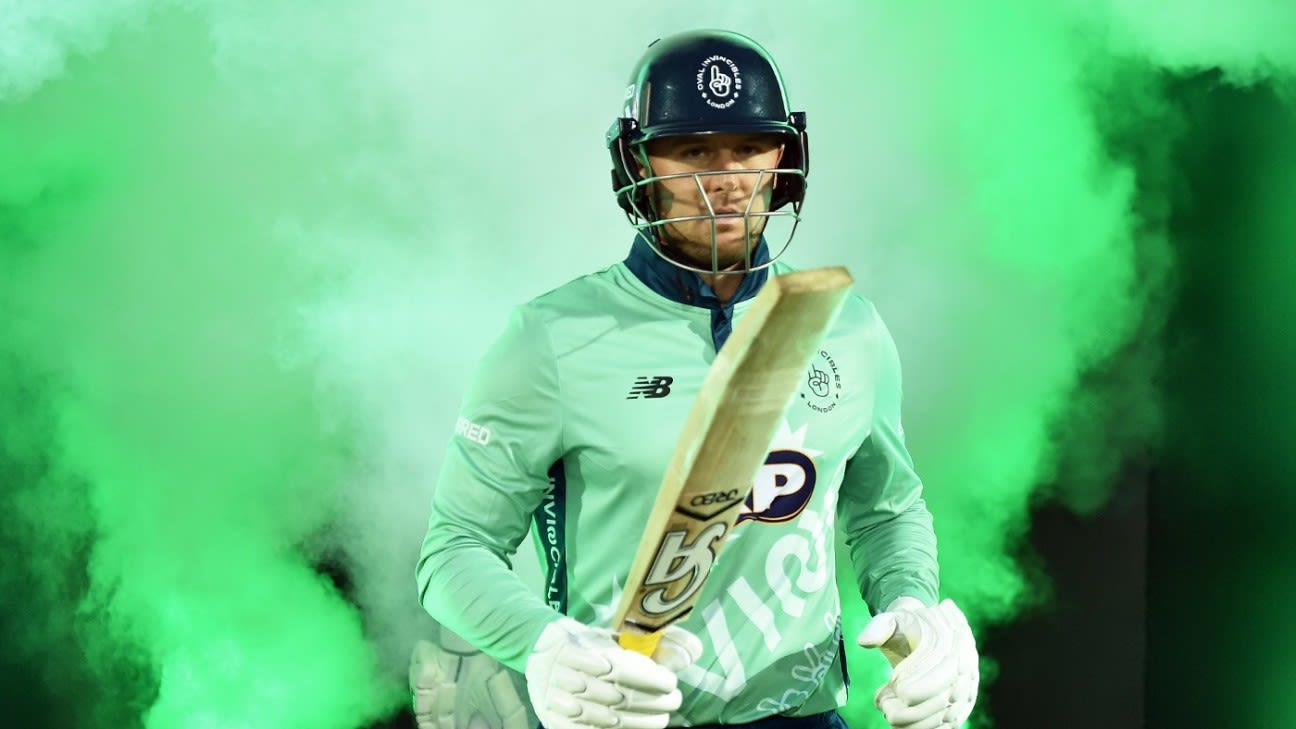
    Jason Roy is expected to be the high-profile omission from England's T20I squad for next month's tour of Pakistan, and thereafter the T20 World Cup in Australia in October, after failing to emerge from a season-long form slump.
    Roy, 32, was an integral influence within the white-ball dressing-room under Eoin Morgan's leadership, and a mainstay of the side from the moment of his debut in the wake of the 2015 World Cup. His uncompromising aggression at the top of the order has yielded nearly 5,500 white-ball runs in 171 appearances, including 1,522 at 24.15 and a strike rate of 137.61 in T20Is, and has been crucial in dictating the team's proactive approach - one that ultimately delivered glory at the 2019 50-over World Cup.

    However, Roy has struggled for form this summer, with just 78 runs at 12.66 in six T20Is, and at a subdued strike rate of 77.55. A century in the third ODI against Netherlands in Amstelveen in June boosted his ODI numbers, but he failed to reach fifty in five further appearances against India and South Africa.

    England's T20I squads are due to be announced on Friday. Jos Buttler - Morgan's successor - is still recuperating from the calf injury he sustained during Manchester Originals' Hundred captain, and will only come into contention for the second half of the tour, with Moeen Ali likely to deputise at the start of the series. Roy, however, is understood to have informed his Oval Invincibles team-mates that he has missed out on selection.
    Given the huge regard with which Roy is held in England's white-ball set-up, he could have rescued his place in the team with a strong showing for Invincibles in this year's Hundred. However, he began his campaign disastrously with three ducks in four innings, while his haul of 51 runs at 8.50 culminated in a tortuous 21 from 19 balls against Birmingham Phoenix.
    He missed Invincibles' last two matches of the competition after suffering stiffness in his lower back, including Wednesday night's decisive loss to Originals at Old Trafford, and finds his place in the England squad for the Pakistan tour taken by his domestic opening partner, Will Jacks, whose impressive run of form included a century against Southern Brave. Another of Roy's Invincibles team-mates, Jordan Cox - a star of Kent's T20 Blast victory last summer - is also understood to be under consideration as a potential bolter for that trip.
    Will Smeed, who scored the Hundred's first century - also against Brave - is another name in the frame but it is Phil Salt who seems most likely to get first crack at replacing him, initially in Pakistan and then in Australia.
    Among the current incumbents, Dawid Malan's stellar returns at the top of the order for Trent Rockets - a tournament-high 358 runs at 59.66 and a strike-rate of 172.11 - are likely to earn him a promotion to open at some stage of the Pakistan tour after his prolonged run at No. 3 in England's T20I side.
    Alex Hales, Malan's opening partner at Rockets, and a player who has been blackballed by England ever since he failed two recreational drugs tests on the eve of the 2019 World Cup, has also been mentioned for a recall. After several years of impressive displays on the global T20 circuit, Hales this summer became the first English player to pass 10,000 runs in the format.

    However, even with Morgan - his most ardent critic - now retired, a rapprochement under the new regime of Buttler and Matthew Mott seems an outside bet. It is understood no discussions have taken place between Hales and the England set-up, and there is little appetite for Hales to be recalled among senior players in the group.

    Another likely absentee from the Pakistan squad will be England's Test captain, Ben Stokes, who retired from ODI cricket this summer in a bid to focus on the other two international formats. His immediate priority, however, is the forthcoming Test series decider against South Africa at the Kia Oval next week, which concludes just days before the team is due to depart for their seven-match tour of Pakistan.
    On the bowling front, the uncapped left-arm quick Luke Wood is likely to make his England debut in Pakistan, having been an unused squad member in the Netherlands earlier this year. He has bowled with pace and penetration throughout Rockets' run to the Hundred final, with nine wickets at 24.33, and is likely to be among an abundance of seam options in an enlarged, 19-man squad.
    Mark Wood, who has missed the whole English summer through injury, is also in line for his comeback and will train with the Test squad at the Kia Oval this week as part of his preparation. A 19-man squad to tour Pakistan will be named on Friday morning, along with a 15-man squad (plus three reserves) for the T20 World Cup and the three Australia T20Is which precede it. Among those reserves will be Tymal Mills, who featured in the last T20 World Cup in the UAE but has been out of action since undergoing toe surgery earlier this month.


    #Eng #Pak #T20Is #Jason #Roy #set #Pakistan #T20I #tour #T20 #World #Cup https://www.globalcourant.com/eng-vs-pak-t20is-jason-roy-set-to-miss-out-for-pakistan-t20i-tour-t20-world-cup/?feed_id=19115&_unique_id=6311999b53402

    Asia Cup 2022 - Ban vs SL - Shakib Al Hasan

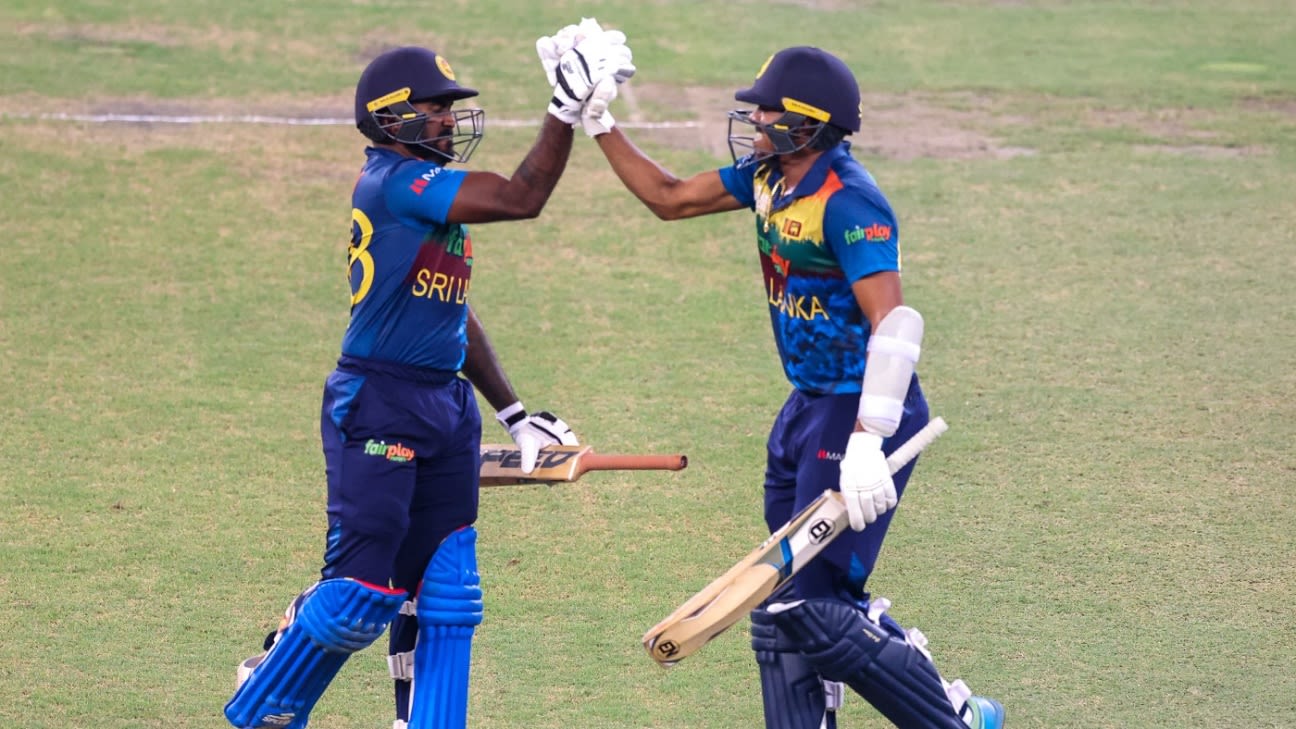
    Among Bangladesh's several errors, Shakib Al Hasan rued Mahedi Hasan's no-balls the most in their two-wicket defeat against Sri Lanka that knocked them out of the Asia Cup.
    Mahedi's first no-ball allowed Kusal Mendis, who was reprieved on four occasions, to bat beyond the seventh over. Kusal who opened the innings, top scored with a 37-ball 60 to lay the foundation for Sri Lanka's 184 chase.
    His second no-ball came in the last over when Sri Lanka needed three runs off four deliveries. In a comical turn of events, as soon as Asitha Fernando and Maheesh Theekshana ran two, they heard the buzzer that pointed to Mahedi's no-ball. Soon enough, the giant screens flashed the replay and Bangladesh knew their fate had been sealed. This moment was particularly disappointing for Shakib as he reflected on the team's performance under pressure, and their early exit from the competition.

    "No captain wants no-balls from their team," Shakib said. "It is a big crime when a spinner bowls a no-ball. We bowled a lot of wides and no-balls today. We were not disciplined. We didn't know what to do when we were under pressure. We knew Kusal (Mendis) plays spin really well, so if we could get him early, it would have set platform for our spinners to come into the game.

    "But till he was there, it was hard for our spinners to bowl. He was dropped on two, and then when he was out, it was a no-ball. The spinner bowling a no-ball is a big no-no. Our spinners usually don't bowl no-balls, but today it was proved that we break down under pressure. We are losing in crunch moments. If we won 50 per cent of the close matches, we would have a better record in this format."

    What also hurt Bangladesh was Ebadot Hossain's inconsistency in his final two overs which went for 38. The penultimate over, especially, turned the tide Sri Lanka's way as he conceded 17, including a no-ball and a wide. This undid all his good work until then. At the end of his first two overs, he had unreal figures of 3 for 13.

    "Ebadot has never played a pressure game like this, regardless of his experience," Shakib said. "He has a lot to understand. He brought us into the game after his first two overs. We thought it was going to be his day. You expect a bowler to have good rhythm and be positive when he has taken three wickets in his first two overs. It wasn't to be. He can learn a lot from this game.

    "Our plan was to get their batsmen out. That's exactly what we did. They needed 25 or 26 in the last two overs. Eight wickets down, you back your main bowlers to defend those runs against their tail."

    Looking ahead to the World Cup, Shakib underlined the importance of having to identify the best fast bowlers soon. "This was an eye-opener to see how we bowl in pressure situations," he said. "You can expect good 10-12 overs of fast bowling in this type of pitch. Only those who can deliver will be in the team.

    "It is simple math. We looked at four fast bowlers here, and we will look at more in the tri-series in New Zealand so that we have a clearer idea who can do well in Australia."

    Shakib then focused on the few positives from the tournament. Like how the move to bump up Mehidy Hasan Miraz to open the innings in his first T20I in nearly four years, worked.

    Mehidy responded with an aggressive 26-ball 38, hitting two fours and as many sixes. Shakib said this was something they had contemplated against Afghanistan too, before going in with regulars Mohammad Naim and Anamul Haque.

    "He has done well in our domestic tournaments, so we had faith in him," Shakib said of Mehidy's promotion. "Even in the first game, he was in the mix to bat in the top-order. He didn't play the first game. He showed his character today. He wasn't nervous. He was playing after three years so it wasn't easy for him. You have to give him a lot of credit, the way he handled the pressure in the first six overs."

    Shakib also asked for a bit of patience from everyone as they try to work out plans going into the T20 World Cup. For starters, he was encouraged by the team's attitude and body language.

    "I have returned to T20I captaincy with these two matches. We have a lot in mind when we make a new beginning. Our planning started with the game against Afghanistan, so there will be right and wrong.

    "We have a plan in place. We want to reach a goal slowly. But if you notice our attitude and body language in these two games, despite the poor approach in batting in the first game, I think we have improved from our last three or four series."

    Mohammad Isam is ESPNcricinfo's Bangladesh correspondent. @isam84


    #Asia #Cup #Ban #Shakib #Hasan https://www.globalcourant.com/asia-cup-2022-ban-vs-sl-shakib-al-hasan/?feed_id=19052&_unique_id=631160ff2893e

    NZ vs WI 2022 - Jess Kerr, Molly Penfold, Lauren Down return for New Zealand tour of West Indies

    Jess Kerr had withdrawn from the competition in Birmingham because of a foot injury while Down had taken time off to prioritise her well-being.
    "We've seen the success Jess has enjoyed on the international stage in her career to date and it's been encouraging to see her working her way back from injury, and training with the London Spirit over here in the Hundred in recent weeks," Ben Sawyer, New Zealand head coach, said. "It's great to see Lauren return after taking some personal time away from the game. She was flying with the bat heading into the ODI World Cup in New Zealand earlier this year only to be ruled out of the tournament with that thumb injury. So we're looking forward to welcoming her back into the environment."

    Penfold had made her international debut last year against England and was part of New Zealand's reserves for the World Cup earlier this year. "I first saw Molly bowling when I was working with Australia at the ODI World Cup and remember telling them how good I thought she was, just from watching her practice," Sawyer, who was Australia's fast bowling coach at the World Cup, said. "You could see she had all the natural attributes for fast bowling and I've been sent a few videos of her recent progress - she seems to be going really well."

    "Hayley Jensen is already over in the Caribbean playing in the CPL and she said the conditions are extremely hot and the wickets are keeping a little low - so that's what we can expect," Sawyer said.

    While Devine, Suzie Bates, Amelia Kerr, Jess Kerr, Lea Tahuhu and Maddy Green were involved in the Hundred, and Jensen is in the West Indies already, the other players had a camp in Lincoln, with assistant coach Sara McGlashan overlooking the preparations. Having done well at the Commonwealth Games by beating England to win the bronze medal, New Zealand's next big goal is the T20 World Cup in South Africa early next year.

    "I know the team took a lot of confidence from winning that bronze-medal match against England," Sawyer said. "To do it in front of a packed house at Edgbaston and to do it so convincingly will have given the whole unit so much belief.

    "This tour will be important for us to continue building on the good work done in England. We'll of course be out to win both series in the Caribbean - but will also be looking to offer opportunities to different players as we try and nail down our combinations for the T20 World Cup and refine our game-plans.

    "We'll also be giving the one-day series plenty of attention, having identified that as the format most in need of improvement."

    New Zealand and West Indies play three ODIs - part of the ICC Women's Championship - followed by five T20Is. All the games will be played at the Sir Vivian Richards Stadium in North Sound, Antigua. This is the first time New Zealand are touring the Caribbean since 2014, when the hosts won the ODIs 4-0 while New Zealand won the T20Is 2-1.

    Squad: Sophie Devine (capt), Suzie Bates, Eden Carson, Lauren Down, Izzy Gaze, Maddy Green, Brooke Halliday, Hayley Jensen, Fran Jonas, Jess Kerr, Amelia Kerr, Molly Penfold, Georgia Plimmer, Hannah Rowe, Lea Tahuhu


    #Jess #Kerr #Molly #Penfold #Lauren #return #Zealand #tour #West #Indies https://www.globalcourant.com/nz-vs-wi-2022-jess-kerr-molly-penfold-lauren-down-return-for-new-zealand-tour-of-west-indies/?feed_id=18604&_unique_id=63104614aff5d

    ICC Rankings - 2022 Asia Cup

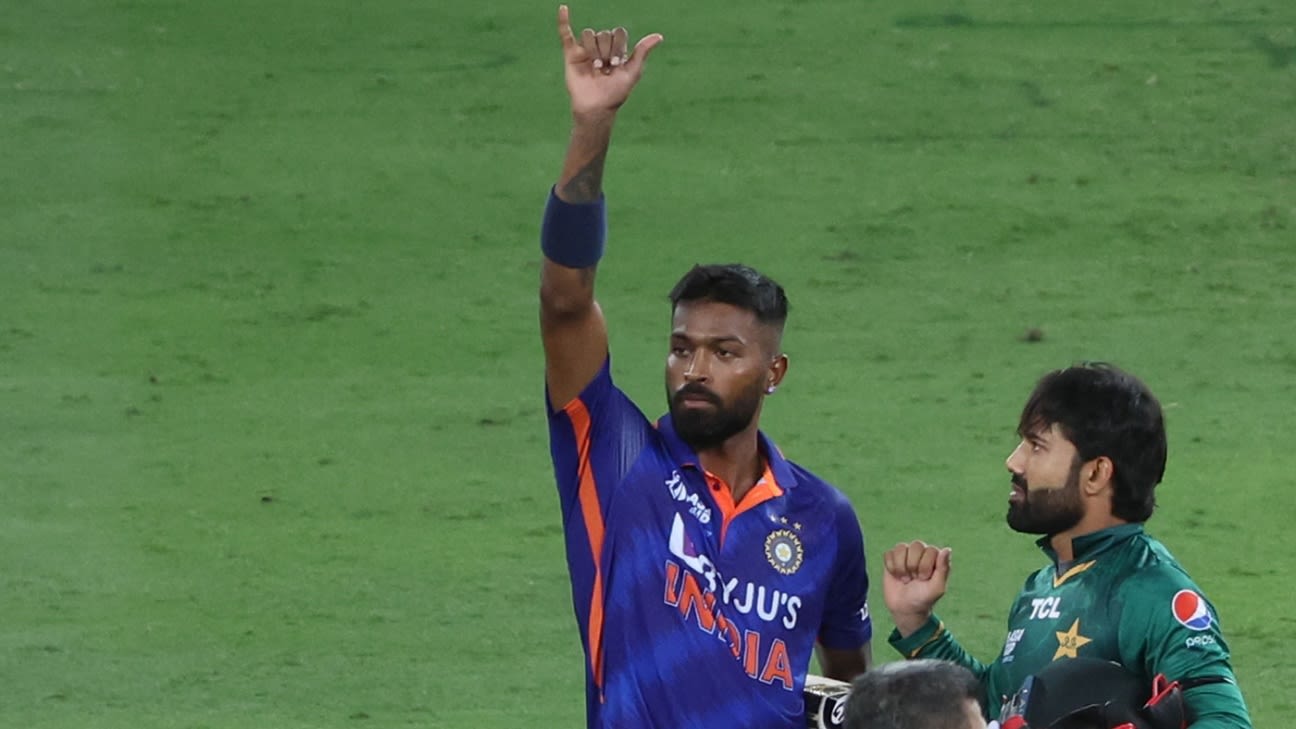
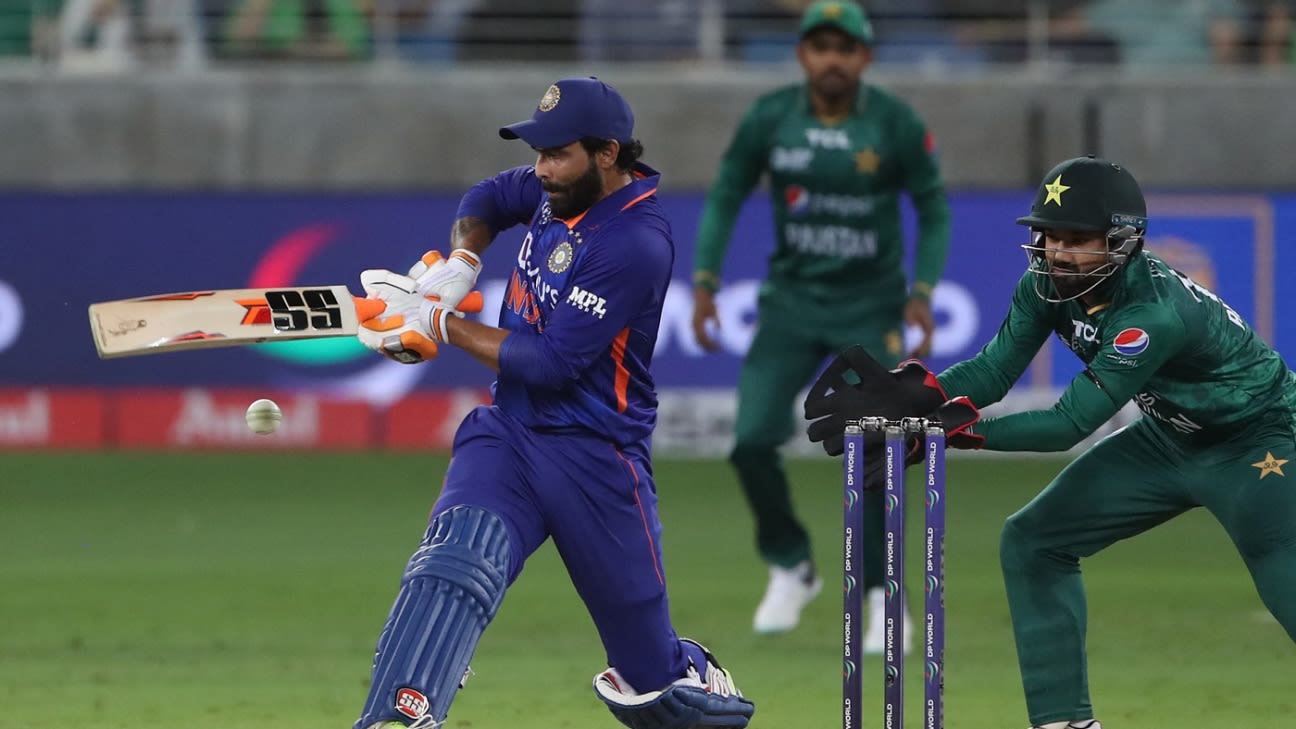
    Hardik Pandya's all-round performance in India's opening game of the 2022 Asia Cup has helped him jump eight places on the T20I allrounder's rankings to a career-best fifth position.
    Hardik was instrumental in India's five-wicket victory against Pakistan in Dubai on Sunday. Hitting the hard lengths consistently, Hardik picked up 3 for 25 in his four overs to help India dismiss Pakistan for 147 in 19.5 overs. He then shepherded a tricky chase, smashing an unbeaten 33 off 17 balls to take India over the line with two balls to spare.
    Hardik has had a successful year with both bat and ball. He led Gujarat Titans to the title in their maiden season in the IPL, and he's taken his all-round form into international cricket as well.
    Since the end of IPL 2022, Hardik has played 14 T20Is, scoring 314 runs at an average of 34.88 and taking 11 wickets with best figures of 4 for 33 against England. He also captained India in three T20Is - two against Ireland and one against West Indies - and won all three matches.
    "In bowling, my plans were pretty simple," Hardik told Star Sports after the India-Pakistan clash. "I always tell the same thing. It's just how I use it. I tell that it's important to kind of assess the situation and conditions, and use your weapon which I feel, you know, hard lengths and hitting the length is my strength. But I make sure I use it very wisely, put some doubt in the batter and ask them to play the wrong shot."

    About his batting form, Hardik said, "In batting, over the years, I have understood [that] the calmer I can stay, it's going to help me execute all the plans. Those executions, the 50-50 chances that I take, if I am calmer, it helps me to pull it off. Chases like this, you always plan overs."

    There were gains for Rashid Khan and Mujeeb Ur Rahman in the T20I rankings for bowlers after Afghanistan became the first team to qualify for the Super 4 stage of the Asia Cup. Rashid's 3 for 22 against Bangladesh helped him jump two spots over fellow wristspinners Adil Rashid and Adam Zampa on the list of T20I bowlers. He is now No. 3 with only Tabraiz Shamsi and Josh Hazlewood ahead of him.

    Mujeeb is ranked ninth - having moved up seven places - after taking five wickets in the first two games at the Asia Cup.

    In the Test rankings, Ben Stokes' efforts in England's win over South Africa in Manchester, saw him move up in all three rankings list. He is now 18th in the Test rankings for batters, 38th among bowlers, and second among allrounders.


    #ICC #Rankings #Asia #Cup https://www.globalcourant.com/icc-rankings-2022-asia-cup/?feed_id=18541&_unique_id=63100c2fa338b

    Match Preview - Bangladesh vs Sri Lanka, Asia Cup 2022, 5th Match, Group B

    Big picture


    It is a knockout match, so perhaps we should ask the tough question. Is this a real rivalry? Pull on your criss-cross deerstalker hats, Sherlocks. Get your magnifying glass. Clasp your notebooks tight. We about to investigate.

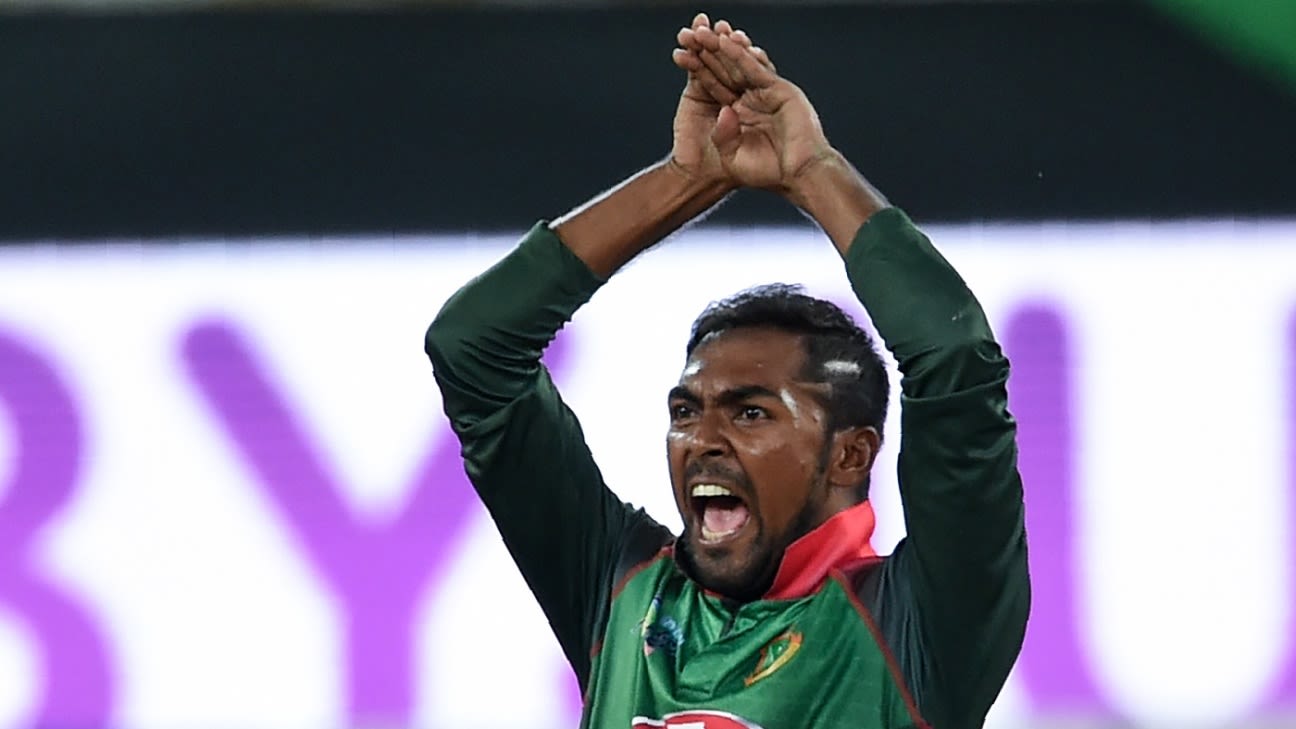
    To understand what happened between Sri Lanka and Bangladesh in the 2018 Nidahas trophy, we must roll the clock back to the previous Bangladesh Premier League, where Nazmul Islam, an unassuming slow left-arm bowler, sought to sex up his workaday act by adding a fun celebration. This is the birth of the now-infamous "Nagin dance". In Nazmul's hands, it was joyful. Innocent even. Little did he know how this was all about to blow up.
    When he claimed wickets against Sri Lanka in a limited-overs series early in that year, he busted out his celebration again. Hands cocked above his head, like a cobra, a little body-thrusting action. Why wouldn't he? But then, drama. Danushka Gunathilaka did an imitation of the dance when he got a wicket in that series.

    Gunathilaka might say it was all just a little bit of fun, sir, and he didn't mean anything by it. But then you can also see from the Bangladesh perspective, how it might have seemed a mockery.

    So when Mushfiqur Rahim hit the winning runs in a big chase against Sri Lanka in Colombo, he did the mock-Nagin dance at Gunathilaka, who was walking past him. Other Sri Lankan players then started doing it to mock Mushfiqur, I guess? Then the whole Bangladesh team started doing it, almost in solidarity with Nazmul and Mushfiqur.
    Towards the business end of the series, there was a tense game between the two sides, and after some truly wild gesticulating and on-field arguments, the Bangladesh dressing room door at the Khettarama stadium was left shattered, when they won.

    If this sounds like grown men acting childish, like a little celebration being blown way out of proportion, like fans getting riled up over meaningless theatrics, or if you've got dumber reading this preview until now, all of the above are valid feelings

    But we are chroniclers here at ESPNcricinfo. It is our job to present facts. Even when the facts are stupid.

    But we're in sports media, so I guess we should try hype this up. It could be close? If nothing else, these teams are evenly matched. Between Mustafizur Rahman, Taskin Ahmed and Mohammad Saifuddin, Bangladesh certainly have a more experienced seam attack. Sri Lanka perhaps have the better spinners in Wanindu Hasaranga and Maheesh Theekshana. On the batting front, Bangladesh have the experience of Shakib Al Hasan, Mahmudullah, and Mushfiqur. But the likes of Charith Asalanka and Kusal Mendis have prospered against Bangladesh in the past. There's not a lot to separate the teams

    Either way, whoever wins this game advances to the Super 4 round. Whoever loses returns home much earlier than their fans would have hoped.

    Form guide

    (completed matches, most recent first) Sri Lanka LWLLL Bangladesh LLWLL

    In the spotlight

    Kusal Mendis has been in excellent Test-match form recently, before extending that to the shortest format, when he dominated Sri Lanka's premier T20 domestic tournament this year, shortly before setting off to the Asia Cup. He seems to have been sent up the order to open the batting in this series. Although his T20I stats are otherwise modest, this is a position he enjoys, striking at 137 when he opens, averaging 32 (career numbers are 121 and 20). He is auditioning to play this role in the T20 World Cup in October.
    Amid Bangladesh's struggle in T20s over the last 12 months, Mahedi Hasan has been one of the rare consistent performers. He has the best economy rate in world cricket among bowlers who have played at least 25 innings, proving once again that orthodox offspin can still work. He brings out the side-arm deliveries from time to time, but is generally quite tight with his orthodoxy. Mahedi is also a decent hitter, and could even be used as an opener.

    Pitch and conditions

    It seems likely that the match will be played on a used surface, which means it might be a little more spin-friendly than tracks we have seen at this tournament. Temperatures will be scorching - likely in the low 30-degree celsius range, even in the evening.

    Team news

    Sri Lanka might just go in with the same XI, despite the big loss against Afghanistan. They may consider bringing the in-form Ashen Bandara into the middle order, however, perhaps in place of Danushka Gunathilaka. Or they might move Gunathilaka back up to the top of the order, and leave Pathum Nissanka out.

    Sri Lanka (possible): 1 Kusal Mendis (wk), 2 Pathum Nissanka, 3 Charith Asalanka, 4 Bhanuka Rajapaksa, 5 Danushka Gunathilaka, 6 Dasun Shanaka, 7 Wanindu Hasaranga, 8 Chamika Karunaratne, 9 Maheesh Theekshana, 10 Matheesha Pathirana, 11 Dilshan Madushanka

    Bangladesh have a batting quandary which could see them change the opening pair again. Mushfiqur Rahim was talked about as one of those options although he would have to agree to this unusual role. Bangladesh also could revisit their bowling attack.

    Bangladesh (probable): 1 Mohammad Naim, 2 Anamul Haque, 3 Shakib Al Hasan (capt), 4 Afif Hossain, 5 Mushfiqur Rahim (wk), 6 Mahmudullah, 7 Mosaddek Hossain, 8 Mahedi Hasan, 9 Mohammad Saifuddin, 10 Taskin Ahmed, 11 Mustafizur Rahman/Nasum Ahmed

    Stats and trivia

    • Sri Lanka have won eight of the 12 completed matches between these teams, but lost two of the last three.
  • Kusal Mendis has scores of 53, 10, 57, and 11 against Bangladesh, striking at 169 across those four innings. He has opened the batting on all those occasions, twice in Bangladesh, and twice in Colombo.
  • In five innings in the UAE so far, Mahedi Hasan hasn't been particularly penetrative, taking just three wickets. But he has been economical, even if not quite up to his standards elsewhere, conceding 7.45 an over.
  • Quotes

    "Our opening pair isn't clicking at all. We are missing Litton Das who is injured. I am hopeful the openers can bat to a plan. You can get out trying to hit the first ball, but it hurts us when nobody shows the intent. I want to see the intent. I want to see the change in mindset."
    Bangladesh team director Khaled Mahmud, when asked about the possible batting improvements against Sri Lanka.

    Andrew Fidel Fernando is ESPNcricinfo's Sri Lanka correspondent. @afidelf


    #Match #Preview #Bangladesh #Sri #Lanka #Asia #Cup #5th #Match #Group https://www.globalcourant.com/match-preview-bangladesh-vs-sri-lanka-asia-cup-2022-5th-match-group-b/?feed_id=18443&_unique_id=630fd3d993324

    Africa: Inaction to Reform the International Development System is Not an Option Anymore

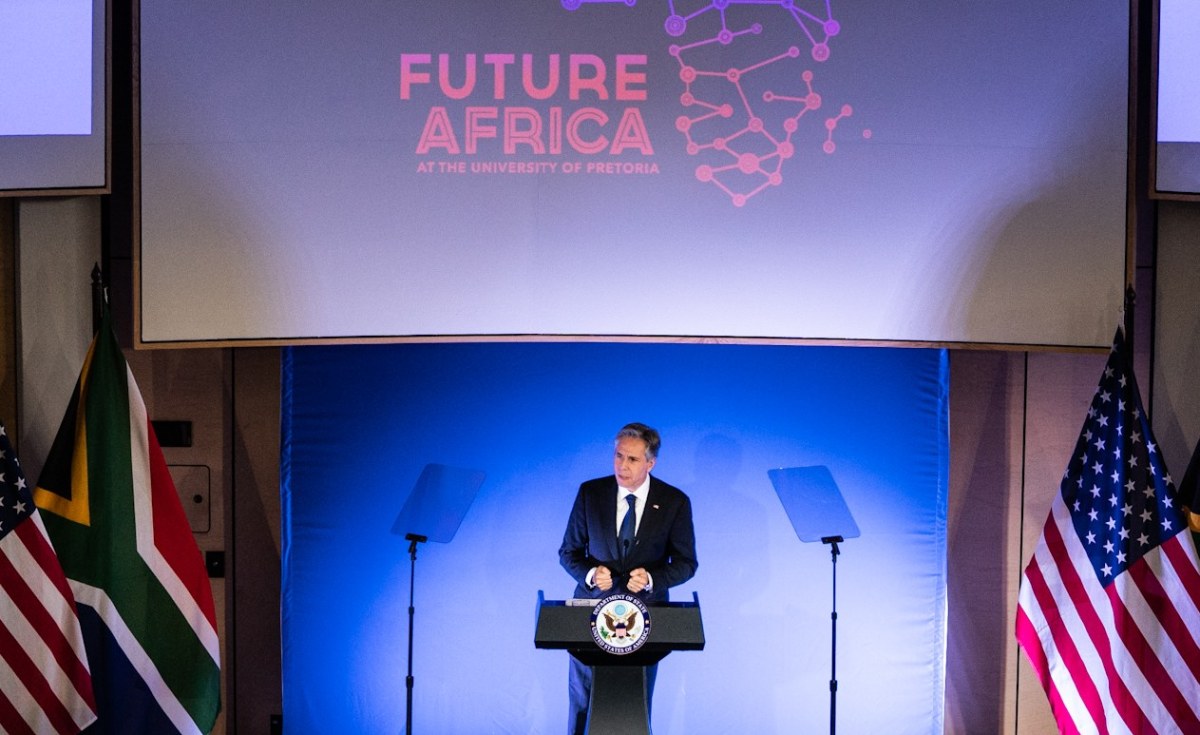
    A diplomatic offensive is unfolding in Africa: Just a few weeks after Russian Foreign Minister Sergei Lavrov's July trip to the continent, US Secretary of State Antony Blinken unveiled the US Strategy Toward Sub-Saharan Africa on his own tour. This exchange is only the most recent example of the rivalry between the United States and Russia and China, which is currently playing out more clearly on the African continent than at any other time since the Cold War.

    The new strategy is a sign that the Biden administration is motivated to show Africans how much they matter. And the next few months--with convenings ranging from the United Nations (UN) General Assembly, the UN Climate Change Conference of the Parties (COP27) in Egypt, and the US-Africa Leaders' Summit--will offer the administration the opportunity to add specifics to its new strategy.

    But for now, Africans are looking at the United States' focus on the war in Ukraine and on tensions in the Indo-Pacific, and they're wondering: Will the United States truly consider African countries as strategic partners as China and Russia claim to do?

    Clearly, African countries no longer seem to want to settle for words. Now having the choice of their alliances, these countries prioritize their national interests, as demonstrated by the seventeen African countries that abstained in March from the UN General Assembly vote to condemn Russia's invasion of Ukraine.

    Far from expressing regret, several non-aligned African countries have confirmed their positions by working with Russia as the war in Ukraine unfolded. This spring, Madagascar and Cameroon enacted military cooperation agreements with Russia while the war in Ukraine was in full swing. Even Nigeria and Egypt, countries that voted to condemn Russia, have joined UN vote abstainers Algeria and Sudan in showing interest in membership to BRICS, an economic bloc including both Russia and China. In fact, Moscow and Beijing are currently working with BRICS countries to develop a new reserve currency that would serve as an alternative to the International Monetary Fund's (IMF) special drawing rights (SDRs)--and offer Russia an avenue through which it can widen its economic influence. And finally, African countries are still planning to attend Russian President Vladimir Putin's 2023 Russia-Africa Summit and Economic Forum, which will follow up on the first edition in Sochi in 2019 that brought together African leaders from forty countries.

    Still, none of these diplomatic moves indicates that African youth dream of the Russian or the Chinese way of life. From Hollywood to Silicon Valley, and from the Massachusetts Institute of Technology to the National Aeronautics and Space Administration, the United States maintains a wonderful power of attraction. It has assets that no other global power can offer. It now must match that by sharing the benefits of its financial dominance. Africa needs more equitable access to the global financial system in order to better address its biggest development, health, food security, migration, and climate change challenges. Senegalese President Macky Sall, the current chair of the African Union, recently blamed the multilateral financial system for stalling the continent's development: "The rules set up by international institutions have put us in a straitjacket... The rules are unfair, outdated, and need to be disputed."

    Set up in a time when many people were under the colonial yoke of dying empires in the aftermath of World War II, the current international financial and development system echoes the twentieth century's global security architecture. The Bretton Woods Institutions--the IMF and the World Bank--clearly represent a world order centered on the Global North, especially because of a gentleman's agreement ensuring that the IMF head would be European and the World Bank president would be American.

    And the cracks are beginning to show.

    Limited access to the financial system

    The answer to addressing these challenges is multifaceted, but the key component is money. African countries need access to affordable credit and global financial mechanisms to help alleviate these challenges and to further develop the continent's economic potential. The African Development Bank Group (AfDB) estimated that the continent will need roughly $432 billion to support its economic recovery in 2022 and 2023.

    The only way to get access to these much-needed funds is to increase African countries' power, voice, and agency in the global financial system.

    That's because current support has faltered. For example, in August 2021, the IMF issued its largest-ever allocation of SDRs to support countries dealing with the economic consequences of the pandemic. The IMF allocates SDRs based on a country's quota--a measurement that largely reflects a nation's position in the world economy and that grants each country a percentage of voting power or access to financing. African countries, along with other members of the Global South, tend to have smaller quotas and less access to these critically needed funds under the current financial system. In the end, the IMF allocated roughly $650 billion globally; but African countries received a total of just $33 billion--which is less than what Japan, Germany, China, and the United States received individually. High-income countries have had to take it upon themselves to make up for this skewed distribution system, with a few having pledged to send their unused SDRs to low-income countries including ones in Africa. But that begs the question: Why wasn't Africa allocated SDRs fairly in the first place?

    Rumblings of reform

    It is not a new phenomenon for countries to be chafing at the current state of the global financial structure. The governance of the IMF and World Bank should be under scrutiny. For example, it is worth questioning why in the IMF, Group of Seven (G7) members have over 40 percent of the voting power; because an 85 percent majority is required to allocate SDRs, these seven developed countries wind up having a de facto insurmountable veto.

    In a similar vein at the World Bank's International Development Association (IDA), which focuses on the world's poorest countries, about 55 percent of the voting rights lie in the hands of Part I members--in other words, countries that donate funds. That has also rankled those who wish to see more equitable representation and governance in a changed world.

    Calls for reform have grown. In fact, US Treasury Secretary Janet Yellen spoke earlier this year at the Atlantic Council on the need for the Bretton Woods Institutions to modernize and become more democratic in nature in order to face this century's new challenges. Other world leaders are issuing the call too, as the Atlantic Council's GeoEconomics Center tracks in its Bretton Woods 2.0 Project.

    Beyond inaction, some of the international financial organizations' decisions have even outright disrupted democracy on the continent. For example, in June 2021, Sudanese Prime Minister Abdalla Hamdok secured debt relief from the IMF that removed subsidies on some goods and angered the public; the Sudanese military then used the public anger as a pretext to stage a coup and eventually oust Hamdok. And in the 1980s and 1990s, some African countries faced similar circumstances in which structural adjustment policies prescribed by international financial institutions like the IMF led to cuts in essential services such as education and health, leading to civilian protests and political unrest, even in the most stable democracies.

    "From an economic point of view, the results of structural adjustment [programs] are far from satisfactory," wrote the UN Educational, Scientific and Cultural Organization (UNESCO) in a 1995 study that examined how structural adjustment programs impacted education and the economy in African countries. They found that countries with these programs had an annual average growth rate of -0.53 percent, whereas countries with weak programs had 2 percent growth and non-adjusting countries had 3.5 percent growth. And with these tight economic conditions, UNESCO found that school attendance and completion dropped in adjusting countries as parents sent their children to work instead of school. Granted education's role in development, stability, and democratic governance, UNESCO urged the international community to recognize the need to protect against the "harmful effects" of structural adjustment programs.

    African initiative

    Given that competition between global and even regional powers is accelerating, inaction is not an option for Africa anymore. The absence of change from international financial institutions has encouraged various emerging markets to move forward and set up systems to rival the Western-centered institutions. For example, China launched the Asian Infrastructure Investment Bank which began operations in 2016; thirteen African countries joined the bank as members. This May, Sall called for the creation of a pan- African credit-rating agency, arguing that international financial organizations have been overstating investment risk in Africa and that as a result, African countries are forced to pay higher interest rates. He explained that while all economies suffered during the pandemic, 56 percent of African countries saw their credit rating downgraded, compared with 31 percent of countries globally over the same period.

    Refusing to wait for action from financial institutions, African countries have been setting up mechanisms for small- and medium-sized enterprises (SMEs) in reaction to the COVID-19 crisis: Côte d'Ivoire created a fund the size of 150 billion CFA francs (about $232 million) to support SMEs, and Senegal set up a financing mechanism for companies amounting to 200 billion CFA francs (about $310 million) in cash loans. Meanwhile, South Africa released 200 billion rand (then $10.8 billion) in loan guarantees.