As the sun beat down on her back garden in Dagenham, east London, the smell of smoke filled the air. Hilton passed it off as her neighbor lighting a bonfire, she told CNN.
What played out in the hours to come was far worse. As temperatures exceeded 40 degrees Celsius (104 degrees Fahrenheit) in the capital, grass fires are believed to have started in a nearby park before engulfing neighboring homes, and crossing onto the street where Hilton lives.
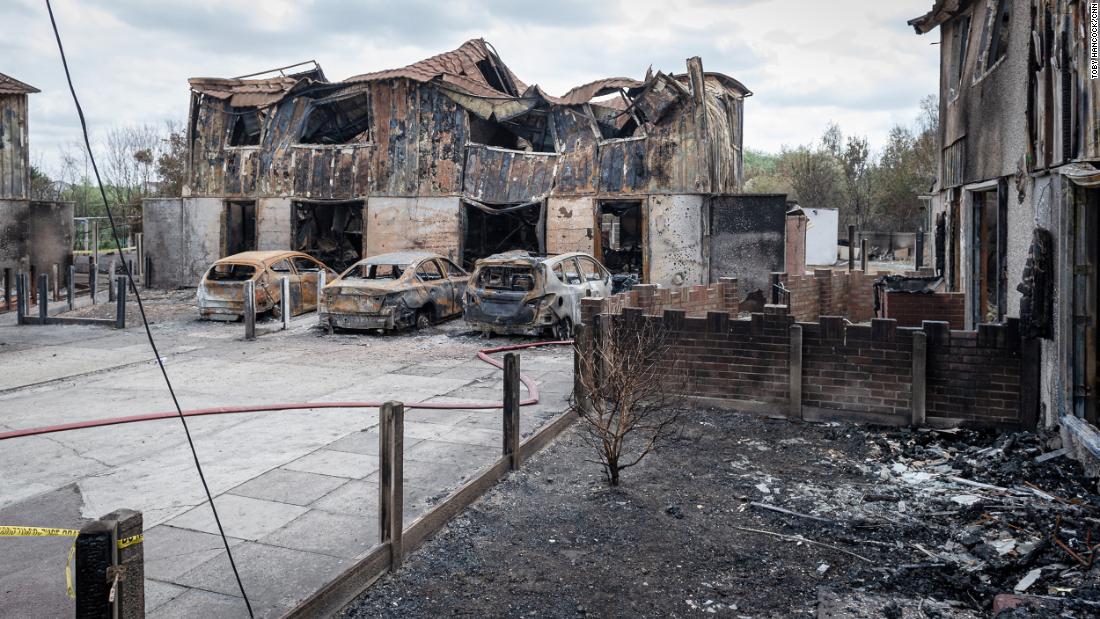
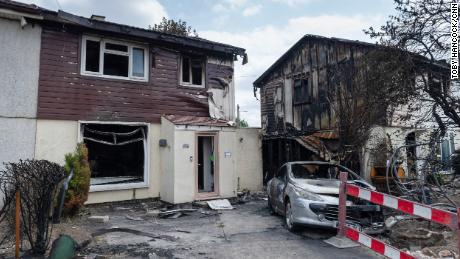
"The police were everywhere, banging on people's doors, screaming: 'Get out! Get out!'" Hilton said of the chaos that ensued. The blaze destroyed 14 houses and damaged six more in the area, according to local officials, turning Hilton's suburban neighborhood into the latest victim of extreme weather.
Fires around the capital destroyed dozens of shops and houses. London Fire Brigade described last Tuesday as its busiest day since World War Two, saying in a statement that the blazes were yet another example of how "we are increasingly being challenged by new extremes of weather as our climate changes."
The
searing summer weather is part of a wider regional trend, climate scientists say. Heat waves have become more frequent and intense across Europe over the last four decades,
according to a study published in early July.
Global warming has contributed to the pattern, as it has elsewhere in the world -- the average global temperature has risen
at least 1.1 degrees Celsius since the late 19th century, due to a surge in carbon dioxide emissions and other heat-trapping greenhouse gases. Changes to the jet stream, atmosphere and sea-surface temperatures may also be fueling hotter temperatures in the region, according to the report.
On Sunday, fire services declared a major incident in Surrey, a county southwest of London, and local officials called on Londoners to cancel barbecues as firefighters continued to tackle blazes in and around the capital. "We simply can't cope with the number of fires across our city directly attributable to the heat wave we're experiencing,"
London mayor Sadiq Khan told Sky News.
Preparing for extremes
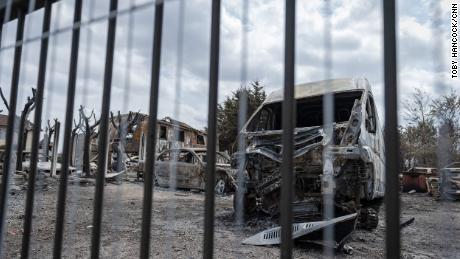
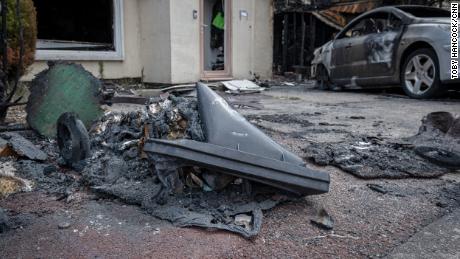
Parts of Dagenham resembled a war-zone when CNN visited last week after the fire had been extinguished there. Cars had melted down to their metal frames, homes were gutted, their windows blackened, and lumps of plastic were all that remained of garbage bins.
Around 200 residents were evacuated from the area last Tuesday, and sent to hotels and emergency shelters around the area, Darren Rodwell, council leader for Barking and Dagenham borough, told CNN.
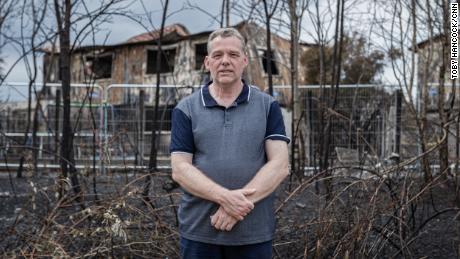
In The Leys park, which residents suspect was ground zero of last week's fire, Rodwell's anxiety about the future was palpable. Looking out over a burned, ash-colored field, he warned that extreme weather events could become the norm for the borough's residents.
"We've already seen in the last two years mass flooding, which we have never seen before ... we had about 20 floods in one day. That's global warming," he said. "We've just had the hottest day the country has ever seen. Again, linked to global warming."
After a month of little rain, much of the land is so dry that the capital is also at risk of surface water flooding, London Fire Brigade has warned.
Rodwell, from the opposition Labour Party, worries that Barking and Dagenham is not prepared for what's to come. "We've always had quite mild weather, whether it's summer or winter, but now we have these extremes and we need to prepare for it," he said. "The borough's infrastructure is around 100 years old now. We need proper investment into 21st-century infrastructure," he explained.
Buildings in the UK have long been designed to retain heat to cope with cold winters. But with summers getting warmer, some homes are becoming uncomfortable or even dangerous. Compared to cities such as New York, air conditioning systems are rarely seen aside from in newer office buildings and some public centers.
British firefighters have also warned of being unprepared for higher temperatures. The Fire Brigades Union says more than a decade of underfunding has affected the service's ability to respond. "Firefighters are at the forefront of the climate emergency," it wrote. "The demands of the job are increasing but ... 11,500 firefighter jobs have been slashed since 2010."
'We lost everything'
Barking and Dagenham, which is among the poorest areas in London, has more green space by proportion than any other borough, according to the local council. But those expanses of grass turned into kindling during the heat wave.
July's dry, hot weather caused multiple fires in The Leys park. "It was controlled and didn't approach the houses," but what happened last Tuesday was "absolutely shocking," resident Zoya Shumanska, 32, told CNN.
When Shumanska's husband, Lyuben Velov, approached their home after dropping her and their two sons at the airport last Tuesday, he noticed the roads were closed, and could see smoke and fire coming from the park.
"I went behind my house and started shouting to the police and firemen that my dog was in the house, and would they be able to save it," Velov said, adding that they did not hear him, so he "decided to jump in when no one was looking."
Velov said two firemen followed him over the fence and helped him break down the door. "If they didn't help me, I wouldn't have been able to save our dog ... I would like to thank them."
Their cats are still unaccounted for, he said. The 34-year-old is now staying with a cousin, but said he regularly visits the area to look for them, as do his neighbors.
Shumanska heard the news that their home had burned down as she waited to catch a flight to Bulgaria. The shock caused her to leave her bags in the terminal, but she later managed to make her flight, bags in hand, with a few minutes to spare -- crying only when she got on the plane.
"I loved this house," Shumanska told CNN with tears in her eyes on a video call from Bulgaria. "I was 21 years old when we bought it, and everyone told me: 'You can't buy a house because they wouldn't give you a mortgage.'"
Shumanska and Velov defied others' expectations and bought the two-story property around a decade ago. "This house is one really big achievement for me, so we want to rebuild it" with help from the insurance, she said.
"This is (because of) climate change," Shumanska said, explaining how her friends living in hotter countries told her that it was cooler where they were than it was in London -- a city famed for its mild and wet weather.
But even after losing their home, Shumanska and her family are "trying to be positive."
"We lost everything, but we are safe," she said. "We've lost all this material stuff -- absolutely everything -- but we are alive."
Before the school holidays began, Shumanska said that one of her sons had learned about the Great Fire of London, which destroyed parts of the capital in 1666. When their home burned down, "He (asked) me: 'Mummy, is this the Great Fire of London?'" she said with a laugh.