Showing posts with label Sign. Show all posts

Bangladesh Premier League - In the clutter of T20 leagues, BPL has fallen behind in race to sign big names

The Bangladesh Premier League (BPL) is lagging behind in the race to sign overseas T20 stars for the January-February window. The BPL has a window from January 6 to February 15, the dates clashing with the UAE's ILT20, South Africa's yet-to-be-named T20 league and the Australian BBL. The BBL's draft for overseas players is scheduled for August 28. The UAE and South Africa leagues have been in the news practically every day, for the big-ticket players the franchises are signing on. There has been no buzz around the BPL.

The BCB has set August 31 as the deadline for potential franchise owners' "expression of Interest" (EOI). Nizamuddin Chowdhury, the BCB chief executive, had earlier said that the board was hoping most of the previous franchise owners would return, with the BPL providing three-year contracts for them. Earlier, the franchise contracts were for just a year.

"We will try to finalise everything soon, so that the owners can start their preparation," Chowdhury had said. "They will be in a better position since it is for three years. Franchise owners usually want everything to be organised, so this time it will be quite good since we are giving the teams a longer period."

The BCB is also hoping that the BPL will not be without its share of overseas names, while all Bangladeshi cricketers would be expected to participate.

"We have to keep in mind that the member countries are looking for a window to hold domestic T20 leagues. There's going to be conflict (in scheduling) if other members' windows fall at the same time. Everyone is going to suffer, not just us," Chowdhury said. "Two or three of our most important players will be playing in our domestic league. I don't want to mention any names but those who usually play overseas will be missed in those leagues. But we are expecting foreign players to play in our league.

"There's the matter of the NOC [no-objection certificate]. There is also an understanding among member countries. Everyone abides by this rule. I don't personally think anyone will play anything other than their own competition."

There is bound to be a demand for established stars, but the franchise owners, whoever they are, will be in a race against time.

Among the ILT20's signings are Dwayne Bravo and Andre Fletcher, respectively the second-highest wicket-taker and the second-highest run-getter in the last edition of the BPL. Faf du Plessis, Moeen Ali and Sunil Narine, who formed the core of the Comilla Victorians side that won the title the last time, are all unavailable. Du Plessis will play for the CSK-owned franchise in South Africa, while the ILT20 has announced the names of Moeen and Narine. Andre Russell, who played for Minister Group Dhaka, is also on the ILT20's list of signings, while Mujeeb Ur Rahman, who represented Fortune Barishal, will be playing in South Africa.

For the BPL, if the EOI list is revealed on August 31, and roughly another month is required to get through the official procedures for the franchises to sign up, the players' draft or auction can't be held till October. With several T20 leagues running at the same time, and player demand being at an unprecedented high, the BPL would have benefitted from having a more settled appearance about it.

Historically, the BPL franchises have been known to pay well, but there is another niggle. As several player agents told us, because of the laws of the land in Bangladesh, the players end up paying higher taxes than they do elsewhere. It might sound like a trifle, but the lack of nightlife options in most cities in Bangladesh is something that has bothered overseas players in the past.

So what does the BPL do? If the big stars don't come, the tournament will lose its sheen. The ILT20 and the South African leagues have appeared as gamechangers, and with the windows almost set in stone for the next few years, the BPL will have to up its game, somehow, to remain relevant.

Mohammad Isam is ESPNcricinfo's Bangladesh correspondent. @isam84


Source https://www.globalcourant.com/bangladesh-premier-league-in-the-clutter-of-t20-leagues-bpl-has-fallen-behind-in-race-to-sign-big-names/?feed_id=10979&_unique_id=62f9acf861524


Buttler, Miller, McCoy, Bosch sign up for Paarl Royals

In a continuing sign of T20 franchise owners gravitating towards players they already know and trust, Paarl Royals snapped up the South African duo of David Miller and uncapped allrounder Corbin Bosch, England's new white-ball captain Jos Buttler and West Indies fast bowler Obed McCoy. All four have worked for these owners before - in the IPL with Rajasthan Royals - and will continue to do so now in the upcoming CSA T20 League
According to tournament rules, a team can sign a maximum of one capped South African, three overseas players and an uncapped player ahead of the players auction. So far, the Durban franchise - owned by the same group that manages Lucknow Super Giants and comprising the same core of players who helped take LSG to the knockout stages of IPL 2022 - and MI Cape Town have announced their picks.
Buttler bossed this year's IPL for the Royals, scoring a whopping 863 runs, an average of 57.53 and a strike rate of 149.05. He hit four centuries and smashed 45 sixes and was also the leading run-getter of the competition.
Miller, who was part of the IPL title-winning Gujarat Titans, amassed a total of 449 runs at a strike rate of 141.19. He was eighth in the list of leading run-getters this season - and second behind captain Hardik Pandya for the Titans.
McCoy, who represented Royals in the IPL this year, chipped in with 11 wickets from seven matches at an economy over nine. Early this month, he picked up his career-best figures of 6 for 17 for West Indies against India in the second T20I which the hosts won by five wickets.

The uncapped South African Bosch joined the Rajasthan franchise this IPL as a replacement for injured fast bowler Nathan Coulter-Nile, but didn't get to play a single match. The 27-year old, who plays for the Titans in domestic cricket, is a seam-bowling allrounder who bats in the lower-middle order. Having made his T20 debut in 2014, he has played only 30 games, scoring 151 runs at a strike rate of 120.80 and picking up 18 wickets at an economy of 8.16. He has also played 24 first-class games and 21 List A games.

The CSA release on Wednesday also said the player auction would take place "in the next few weeks" before the league begins in January 2023. All six franchises have been bought by groups that own teams in the IPL and the league is likely to allow four overseas players in the playing XI with no requirements for transformation as of now.


Source https://www.globalcourant.com/buttler-miller-mccoy-bosch-sign-up-for-paarl-royals/?feed_id=10510&_unique_id=62f820d2b6ed9

The launch of the Iranian satellite "Khayam" is a concrete sign of the expansion of Tehran-Moscow cooperation


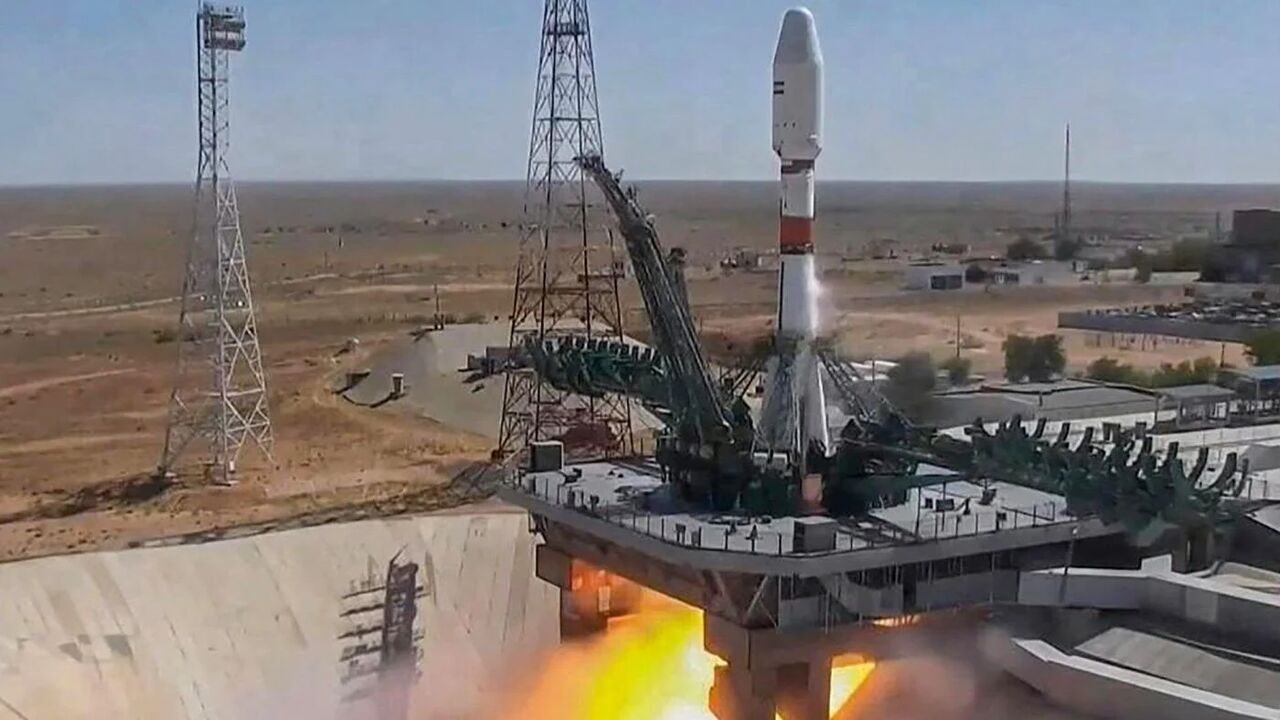
According to IRNA's report on Wednesday, this American media, regarding the successful launch of the Iranian Khayam satellite from the Baikonur base in Kazakhstan, added: A Russian rocket launched Iran's surveillance satellite into Earth orbit on Tuesday, which according to analysts, undermined Iran's ability to collect information. It strengthens and is a tangible sign of the expansion of relations between Iran and Russia, which are facing Western sanctions.

According to this newspaper, Russia is seeking to form a closer alliance with Iran, and Iran has said that the launch of this satellite is part of the space cooperation agreement between the two countries.

Yury Borisov, the head of the Russian Federal Space Agency (Roscosmos) described the launch of this satellite as a success and called it an important milestone in the bilateral cooperation between Iran and Russia and said that this launch opens the way for the implementation of new and even bigger projects.

He added that the successful launch of this satellite in line with the interests and orders of Iran has become an important milestone in the bilateral cooperation between Russia and Iran and opens the way for the implementation of new and even bigger projects.

The New York Times wrote: The Iranian Space Agency has announced that the Khayyam satellite is equipped with a high-resolution camera. On the other hand, some independent experts have said that this satellite will significantly strengthen Iran's ability to monitor sites, including possible military targets in Israel (the Zionist regime) and the Middle East.

An expert from an American non-partisan organization known as the "Missile Defense Support Coalition" has described this satellite, which has the ability to send clearer images of the earth, as an important challenge for the Zionist regime.

He considered the launch of this satellite as a real development for Iran and stated that for the first time Iran has a high resolution satellite.

The New York Times wrote: The Iranian Aerospace Organization emphasizes that this satellite is not for military purposes, and in its August 7 statement, it announced that the purpose of launching this satellite is to help agricultural programs, water resources, and other environmental applications.

The satellite that was launched on Tuesday was named after Omar Khayyam, a famous medieval Persian scientist and poet. Russia's Baikonur space base in Kazakhstan, from where the satellite was launched, has been used for space launches for decades and was opened when Kazakhstan was part of the former Soviet Union.

According to IRNA, the successful launch of the indigenous satellite "Khayyam" and the progress of the Islamic Republic of Iran in this field have attracted the attention of the regional and international media.

In their reports, these media have mentioned the success of the Iranian satellite in being placed in an orbit 500 kilometers from the earth's surface, the close relations between Moscow and Tehran in the face of Western sanctions, and described "Khayyam" as the newest and most advanced satellite in the family of Iranian satellites. They said that by launching into space, like the previous satellites of Omid, Sina, Misbah and Noor, it has been placed in the earth's orbit.


Source https://www.globalcourant.com/the-launch-of-the-iranian-satellite-khayam-is-a-concrete-sign-of-the-expansion-of-tehran-moscow-cooperation/?feed_id=8935&_unique_id=62f34ebb12c23

The UK's hottest day destroyed their homes. They fear it's a sign of worse ahead

As the sun beat down on her back garden in Dagenham, east London, the smell of smoke filled the air. Hilton passed it off as her neighbor lighting a bonfire, she told CNN.

What played out in the hours to come was far worse. As temperatures exceeded 40 degrees Celsius (104 degrees Fahrenheit) in the capital, grass fires are believed to have started in a nearby park before engulfing neighboring homes, and crossing onto the street where Hilton lives.

"The police were everywhere, banging on people's doors, screaming: 'Get out! Get out!'" Hilton said of the chaos that ensued. The blaze destroyed 14 houses and damaged six more in the area, according to local officials, turning Hilton's suburban neighborhood into the latest victim of extreme weather.

Fires around the capital destroyed dozens of shops and houses. London Fire Brigade described last Tuesday as its busiest day since World War Two, saying in a statement that the blazes were yet another example of how "we are increasingly being challenged by new extremes of weather as our climate changes."

The searing summer weather is part of a wider regional trend, climate scientists say. Heat waves have become more frequent and intense across Europe over the last four decades, according to a study published in early July.
Global warming has contributed to the pattern, as it has elsewhere in the world -- the average global temperature has risen at least 1.1 degrees Celsius since the late 19th century, due to a surge in carbon dioxide emissions and other heat-trapping greenhouse gases. Changes to the jet stream, atmosphere and sea-surface temperatures may also be fueling hotter temperatures in the region, according to the report.
On Sunday, fire services declared a major incident in Surrey, a county southwest of London, and local officials called on Londoners to cancel barbecues as firefighters continued to tackle blazes in and around the capital. "We simply can't cope with the number of fires across our city directly attributable to the heat wave we're experiencing," London mayor Sadiq Khan told Sky News.

Preparing for extremes

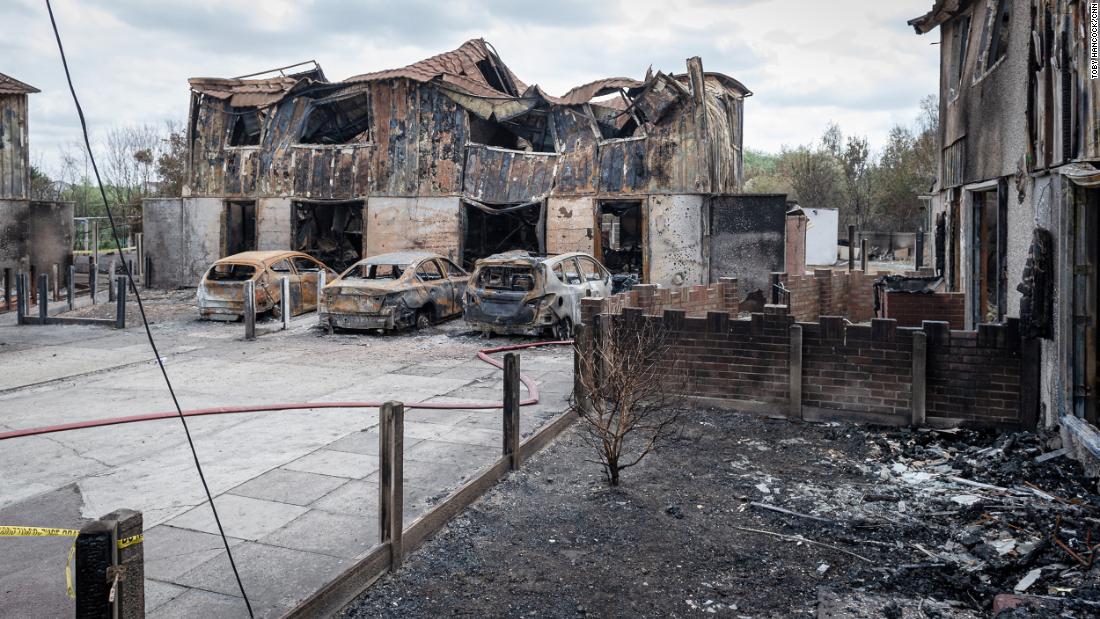
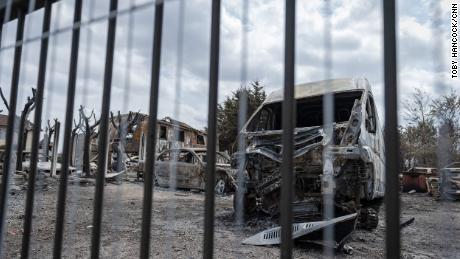
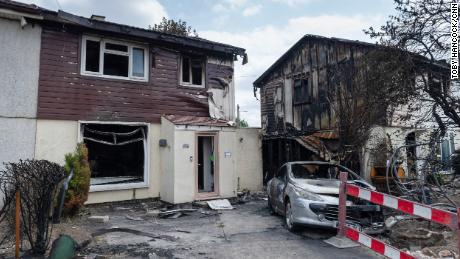
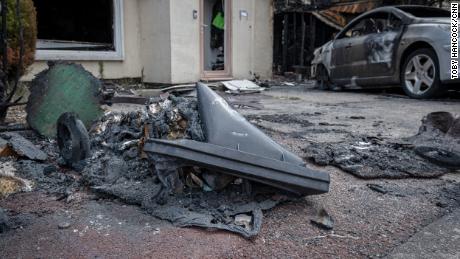
Parts of Dagenham resembled a war-zone when CNN visited last week after the fire had been extinguished there. Cars had melted down to their metal frames, homes were gutted, their windows blackened, and lumps of plastic were all that remained of garbage bins.

Burned out cars and homes in the aftermath of the wildfire that tore through Dagenham.

Around 200 residents were evacuated from the area last Tuesday, and sent to hotels and emergency shelters around the area, Darren Rodwell, council leader for Barking and Dagenham borough, told CNN.

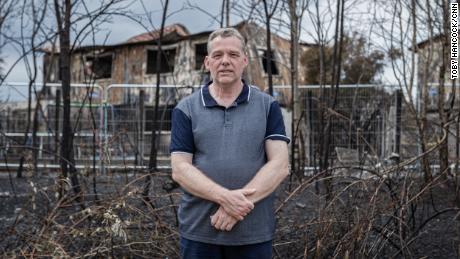
In The Leys park, which residents suspect was ground zero of last week's fire, Rodwell's anxiety about the future was palpable. Looking out over a burned, ash-colored field, he warned that extreme weather events could become the norm for the borough's residents.

"We've already seen in the last two years mass flooding, which we have never seen before ... we had about 20 floods in one day. That's global warming," he said. "We've just had the hottest day the country has ever seen. Again, linked to global warming."

After a month of little rain, much of the land is so dry that the capital is also at risk of surface water flooding, London Fire Brigade has warned.

Darren Rodwell, leader of Barking and Dagenham Council, doesn't believe London is prepared for more extreme weather events fueled by global warming.

Rodwell, from the opposition Labour Party, worries that Barking and Dagenham is not prepared for what's to come. "We've always had quite mild weather, whether it's summer or winter, but now we have these extremes and we need to prepare for it," he said. "The borough's infrastructure is around 100 years old now. We need proper investment into 21st-century infrastructure," he explained.

Buildings in the UK have long been designed to retain heat to cope with cold winters. But with summers getting warmer, some homes are becoming uncomfortable or even dangerous. Compared to cities such as New York, air conditioning systems are rarely seen aside from in newer office buildings and some public centers.

British firefighters have also warned of being unprepared for higher temperatures. The Fire Brigades Union says more than a decade of underfunding has affected the service's ability to respond. "Firefighters are at the forefront of the climate emergency," it wrote. "The demands of the job are increasing but ... 11,500 firefighter jobs have been slashed since 2010."

'We lost everything'

Barking and Dagenham, which is among the poorest areas in London, has more green space by proportion than any other borough, according to the local council. But those expanses of grass turned into kindling during the heat wave.

July's dry, hot weather caused multiple fires in The Leys park. "It was controlled and didn't approach the houses," but what happened last Tuesday was "absolutely shocking," resident Zoya Shumanska, 32, told CNN.

When Shumanska's husband, Lyuben Velov, approached their home after dropping her and their two sons at the airport last Tuesday, he noticed the roads were closed, and could see smoke and fire coming from the park.

"I went behind my house and started shouting to the police and firemen that my dog was in the house, and would they be able to save it," Velov said, adding that they did not hear him, so he "decided to jump in when no one was looking."

Zoya Shumanska's home in Dagenham was gutted in the blaze.

Velov said two firemen followed him over the fence and helped him break down the door. "If they didn't help me, I wouldn't have been able to save our dog ... I would like to thank them."

Their cats are still unaccounted for, he said. The 34-year-old is now staying with a cousin, but said he regularly visits the area to look for them, as do his neighbors.

Shumanska heard the news that their home had burned down as she waited to catch a flight to Bulgaria. The shock caused her to leave her bags in the terminal, but she later managed to make her flight, bags in hand, with a few minutes to spare -- crying only when she got on the plane.

"I loved this house," Shumanska told CNN with tears in her eyes on a video call from Bulgaria. "I was 21 years old when we bought it, and everyone told me: 'You can't buy a house because they wouldn't give you a mortgage.'"

Shumanska and Velov defied others' expectations and bought the two-story property around a decade ago. "This house is one really big achievement for me, so we want to rebuild it" with help from the insurance, she said.

A melted garbage bin in front of Shumanska's home.

"This is (because of) climate change," Shumanska said, explaining how her friends living in hotter countries told her that it was cooler where they were than it was in London -- a city famed for its mild and wet weather.

But even after losing their home, Shumanska and her family are "trying to be positive."

"We lost everything, but we are safe," she said. "We've lost all this material stuff -- absolutely everything -- but we are alive."

Before the school holidays began, Shumanska said that one of her sons had learned about the Great Fire of London, which destroyed parts of the capital in 1666. When their home burned down, "He (asked) me: 'Mummy, is this the Great Fire of London?'" she said with a laugh.


Source https://www.globalcourant.com/the-uks-hottest-day-destroyed-their-homes-they-fear-its-a-sign-of-worse-ahead/?feed_id=2574&_unique_id=62e0880a4fd9f

Russia and Ukraine sign grain exports deal

Ministers from both countries signed an agreement brokered by the United Nations and Turkey in Istanbul.

Russia has so far been blocking maritime access to those ports, meaning that millions of tons of Ukrainian grain has not been exported to the many countries that rely on it.

"Today, there is a beacon on the Black Sea. A beacon of hope -- a beacon of possibility -- a beacon of relief -- in a world that needs it more than ever," UN Secretary-General Antonio Guterres said Friday.

Ukraine's harvest becomes the new battlefield, as fires blacken its arable heartlands

"Promoting the welfare of humanity has been the driving force of these talks," he said. "The question has not been what is good for one side or the other. The focus has been on what matters most for the people of our world. And let there be no doubt -- this is an agreement for the world."

Guterres said the deal will bring relief for developing countries and help stabilize global food prices, "which were already at record levels even before the war -- a true nightmare for developing countries."

The World Food Programme (WFP) estimates that 47 million people have moved into a stage of acute hunger as a consequence of the Ukraine war, and Western officials have accused Russia of using food as a weapon during its invasion.

The deal will also allow the unimpeded access of Russian fertilizers to global markets. Russia is a major producer of fertilizers, which are vital to maximizing food production, and the cost of the product has spiralled since the invasion.

Turkish President Recep Tayyip Erdogan said "millions of people will be relieved of this danger of hunger" as a result of the deal.

"In the coming days we will see the start of ship traffic and many countries will have a breath of fresh air," Erdogan said.

How will this deal work?

As part of the deal signed Friday, grain ships would navigate through a safe corridor in the Black Sea under the direction of Ukrainian pilots, and then pass through the Bosphorus strait -- an important shipping corridor in north-west Turkey -- in order to reach global markets.

Vessels would be inspected before they arrive in Ukraine by Russian, Ukrainian and Turkish officials, to ensure weapons are not being smuggled into Ukraine.

The ships will be monitored by a Joint Coordination Centre (JCC) which will be established immediately in Istanbul and include representatives from Ukraine, Russia and Turkey.

Both parties have agreed that there should be no attacks on any of the vessels going from those ports out of territorial waters into the Black Sea by any party.

Before the deal was signed, the Ukrainian government warned Russia against any provocations. "No transport escort by Russian ships and no presence of Russian representatives in our ports," Mykhailo Podolyak, adviser to the Ukrainian president's chief of staff tweeted on Friday.

"In case of provocations, an immediate military response," he added.

Podolyak also added that Ukraine was not signing an agreement with Russia, but with Turkey and the UN. He also said inspections of ships would be carried out in Ukrainian waters, by joint groups, if necessary.

The Black Sea will not be de-mined; a lengthy and complex process that the UN's mining experts, as well as Turkey and Ukraine, agreed was a non-starter. Naval mines in the Black Sea have provided a significant obstacle in efforts to restart grain exports, with Ukraine and Russia accusing each other of mining the waters.

Why are grain exports so important?

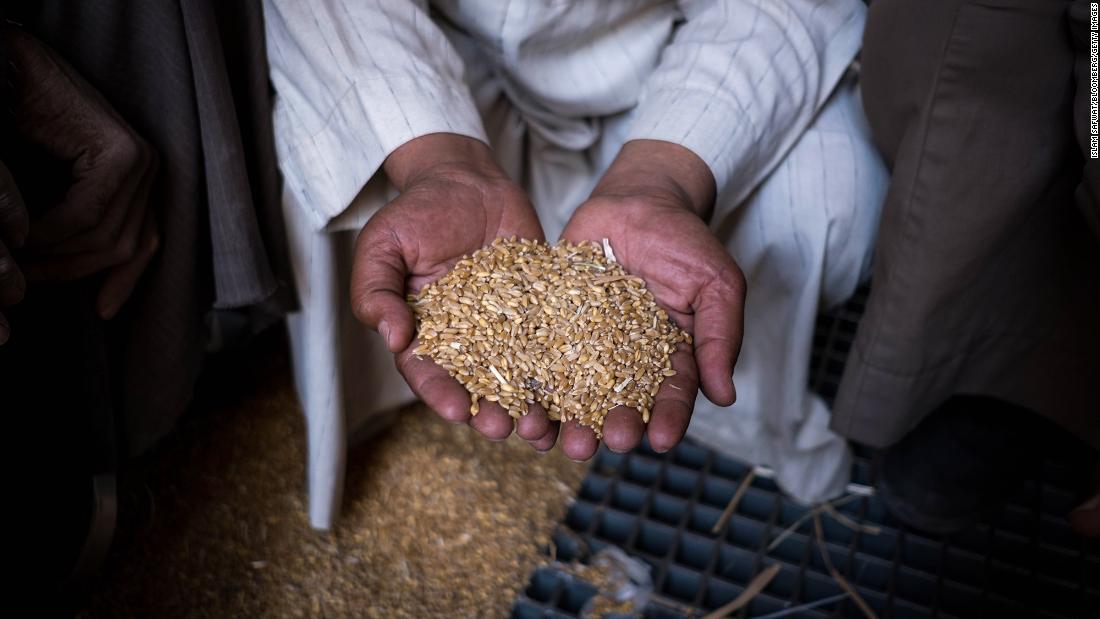
Ukraine and Russia are both significant suppliers of food to the world. In normal times, Ukraine -- known as one of the globe's breadbaskets -- would export around three-quarters of the grain it produces. According to data from the European Commission, about 90% of these exports were shipped by sea, from Ukraine's Black Sea ports.

The war and its impact on grain exports therefore has major implications, particularly in the global South which relies heavily on them. Between disrupting Ukrainian agricultural production and blocking the export of products that remain, Russia's war in Ukraine could push 49 million people into famine or famine-like conditions, the United Nations warned last month.

The World Food Programme (WFP) estimates that 47 million people have moved into a stage of acute hunger as a consequence of the Ukraine wa
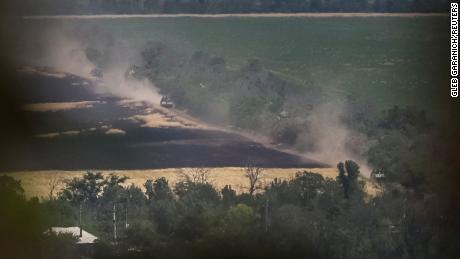
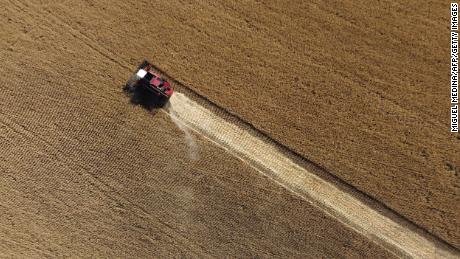
This year's harvest is underway in Ukraine, adding further urgency to negotiations. Fields have come under attack in recent days, leaving farmers racing to save their crops.

Storage issues have also hampered farmers; last month, a grain storage silo was destroyed in the city of Mykolaiv, which Ukraine says Russia hit with air-based cruise missiles.

The UN is hoping that under the deal, a monthly export of 5 million tons of grain would leave the ports each month, a figure comparable to pre-war levels.

How has the war impacted Ukraine's harvests?

While the ability to export grain to the Black Sea is a major breakthrough, the amount Ukraine can ship has been severely affected by war.

The President of the Ukrainian Grain Association, Mykola Horbachov, said on Friday that unblocking Ukrainian ports is the only way to prevent a global food crisis and save Ukrainian agricultural producers. He said the Russians had stolen about 500,000 tons of grain in occupied territories, and approximately 1 million tons of grain remains in the elevators under the control of the occupiers.

Earlier this month, Ukraine's grain traders' union said it expected a grain and oilseed harvest of 69.4 million tons, marginally higher than previous forecasts but far below the 106 million tons harvested last year.

Deputy Agriculture Minister Taras Vysotskiy said the grain harvest could be at least 50 million tons, compared to 86 million tons in 2021. At least half that output is earmarked for export, according to the traders' union.

The production and export of wheat in an already tight global market may be most at risk. French consultancy Agritel said this month it expects Ukraine to harvest 21.8 million tons of wheat this summer compared to 32.2 million last year.

Ukraine's Infrastructure Minister, Oleksandr Kubrakov, described the deal that he signed at the Istanbul ceremony as "a great support for the Ukrainian economy."

Will Russia stick to the deal?

Western officials have accused Russia of deliberately strangling the global supply chain during the country's war in Ukraine. European Commission Chief Ursula von der Leyen has said that food was part of the Kremlin's "arsenal of terror," and the US accused it of having "weaponized" food.

The US and other Western nations have hailed Friday's agreement. But US State Department spokesman Ned Price cautioned on Thursday, when an agreement was reached in principle, that Washington would focus on "holding Russia accountable for implementing this agreement."

British Foreign Secretary Liz Truss said Friday: "The UK and our allies have been pushing hard to reach this point. Now this agreement must be implemented, and we will be watching to ensure Russia's actions match its words."

Correction: A previous version of this story misstated Taras Vysotskiy's position in the Ukrainian government. He is deputy agriculture minister.


Source https://www.globalcourant.com/russia-and-ukraine-sign-grain-exports-deal/?feed_id=1006&_unique_id=62dc5ea2b906a