Showing posts with label race. Show all posts

In the Tory leadership race, white is what’s right

To the world, the UK's Conservative party wants to broadcast an image of diversity by fielding minority candidates. But there’s a lot else at play.

Several British and international media outlets and pundits have commented recently on how the ongoing Tory leadership race was “surprisingly” diverse as the party fielded a number of candidates of colour who hail from minority backgrounds.

Indeed, in the final leg of the race stands Rishi Sunak, the Indian origin former chancellor who, since betraying his old boss Boris Johnson, now seeks to take the top seat at Downing Street.

These pundits are perhaps only surprised by Tory diversity because of a history of racism that has tainted the party to the extent that it has merited the authoring of several books.

Johnson himself is no stranger to allegations of racism, particularly the racialised abuse he heaped on Muslim women who cover themselves - he compared them to bank robbers and letterboxes. That outburst led to a 375 percent spike in anti-Muslim incidences in the week after he made those hateful remarks.

In a party such as this, how is it that it is fielding contenders from diverse ethnic backgrounds for the post of prime minister? Are the Tories simply misunderstood? Or is there something else at play?

Pandering to the base

The answer, of course, is whiteness. Before we press on, it is important to caveat that I am not blaming white people writ large for all the ills of the world. Rather, I am talking about a concept, one that thrives on the insecurities of those seeking a greater station in their adoptive home - the UK - far from their brown or black origins.

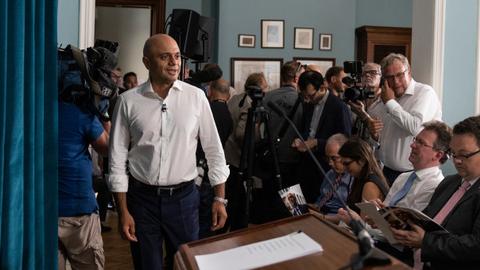
Take the former home secretary and chancellor, Sajid Javid, for instance. As a Tory politician from a Pakistani Muslim background, Javid has reached well beyond what many British Muslims can hope to achieve. He rose the social ladder despite job discrimination against Muslim men and women and anti-Muslim attitudes reaching unprecedented levels in recent years. He has held several senior offices of state, and has even vied for the government’s top job.

Yet there is a reason why many British Pakistanis speak of him in unflattering terms, referring to him as a “coconut”, “Uncle Tom”, and a “House Muslim” – leading the politician to rant that he was being subjected to racist abuse through the use of these terms, likely in order to silence criticism and debate from the community he has repeatedly claimed he is representative of.

Javid has long been known to downplay his Pakistani identity, and especially his Muslimness. He has gone out of his way to talk about how his family tradition is to “snog” under mistletoe every Christmas and to say that he practises no religion, which is of course entirely his right. However, if he chooses to abandon his Muslim identity and heritage, he is then similarly disqualified from commenting on anti-Muslim hatred as a “native” in order to provide cover to his Tory colleagues, including Johnson. 

Yet Javid did so, once more donning the Muslim cloak during an interview with Andrew Marr in 2019 in order to contradict another British Muslim Tory politician, Baroness Sayeeda Warsi, who has repeatedly gone on the record criticising her own party for having an anti-Muslim sentiment.

Returning to prime ministerial frontrunner Rishi Sunak, again we find many examples of how this son of African Hindu migrants of Indian origin has done his level best to pander to the baser instincts of the Little Englanders that he thinks his future prospects rely on, all while playing up his East African and Indian roots in campaign videos.

Despite Sunak and his family being obvious beneficiaries of immigration that gave him so many opportunities in the United Kingdom and elsewhere, Sunak was not only avidly pro-Brexit – with all the tropes that campaign relied on by portraying Britain being at breaking point – but has since doubled down with anti-migrant rhetoric, pledging to crackdown on migration while doubling the number of foreigners deported over minor crimes. While getting rid of a criminal element is never a bad thing, there are distasteful undertones here, especially as the UK migration system is already infamous for its lack of fairness and its discriminatory policies.

Sunak has also gone a step further, targeting Muslims in yet more dogwhistle anti-Muslim hatred by vowing to widen the definition of “Islamist terrorism” and would add “vilification” of the UK to the definition of extremism if elected by the party membership. In other words, and if Sunak had his way, many of us who have actively criticised British foreign policy and military adventurism in Afghanistan, Iraq and elsewhere could find ourselves being accused of vilifying our country and being branded as extremists, deserving of punishment.

Diversity as a masquerade

There are obviously a number of reasons why people like Sunak and Javid behave the way they do, but primary among them is the quest for acceptance in a society where they have frequently been exposed to racist abuse, with both having described the pain it causes.

Rather than stand up to that racism, taking advantage of their positions of power and influence to ensure it not only does not happen to them again, but is stamped out wherever it is found across society, these politicians have instead decided that racism is part and parcel of the system they have aligned themselves with and continue to seek to serve.

They have internalised these racist attitudes that have stung them personally so deeply, and normalised it to such a degree that they not only cover up for them, but they also engender them by proposing new policies, each more radical than the next, in a desperate attempt to prove that they are not as brown – in the cases of the two men mentioned above – as their chosen audience thinks they are. They are malleable. They know how to “get with the programme”. They will desperately try to prove that, even as prime minister, they will know their place and will not rock the boat.

Far from the Tories being diverse, they have in fact only shown that there truly is a glass ceiling in British politics for people of colour and different cultural and religious beliefs that do not align with the white establishment. Their most diverse candidates are positively falling over themselves to prove how assimilated rather than integrated they are, simply showing that, after all, you really can have different shades of white.

Disclaimer: The viewpoints expressed by the authors do not necessarily reflect the opinions, viewpoints and editorial policies of TRT World.

We welcome all pitches and submissions to TRT World Opinion – please send them via email, to opinion.editorial@trtworld.com

Source: TRT World


Source https://www.globalcourant.com/in-the-tory-leadership-race-white-is-whats-right/?feed_id=13156&_unique_id=62ffe48633339

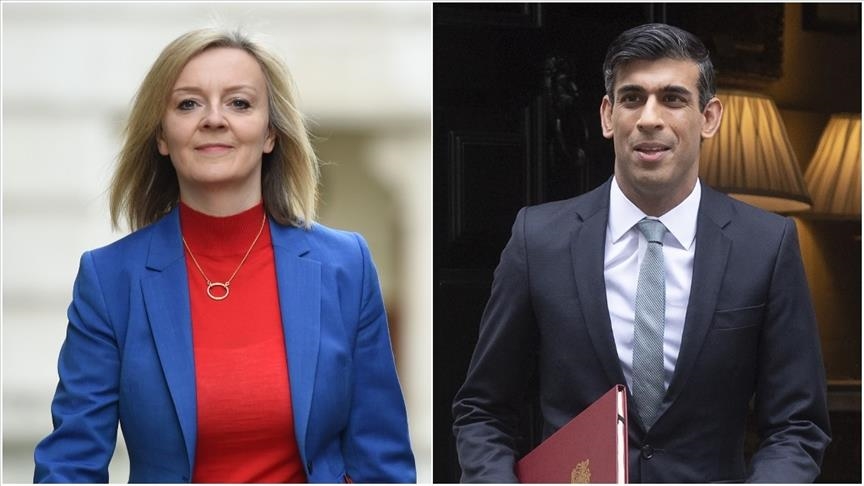
Experts weigh in on Britain’s Conservative leadership race

LONDON 

Members of Britain’s ruling Conservative Party are currently voting to decide on their next leader, who will also become the next prime minister.

Former Chancellor of the Exchequer Rishi Sunak is facing off against Foreign Secretary Liz Truss. The race was triggered by Prime Minister Boris Johnson’s resignation following a series of scandals that critics said cast doubt on his integrity and suitability for office.

Truss is leading in internal Conservative Party membership polls by some margin, though Sunak led in the first stage of the contest with Conservative Party lawmakers.

Anadolu Agency interviewed three experts on British politics for their views on the leadership race.

Establishment politics

Michael Kandiah, a lecturer in Contemporary British History at King’s College London, told Anadolu Agency that it was “more than likely” that Truss will become prime minister.

He said Sunak had not made his case to the Conservative rank-and-file as effectively as Truss had.

“He’s much more the establishment candidate,” he added, pointing to the “increasing divide” between the Conservative parliamentary party and the grassroots.

Roger Mortimore, a professor of Public Opinion and Political Analysis at King’s College London, told Anadolu Agency that while Truss had the advantage as things stand, either candidate could still win.

“This is a politically-sophisticated electorate who will take account of the arguments they hear and of the impressions that the candidates are giving, and it is not too late for Rishi Sunak to catch up if he should prove more convincing over the next couple of weeks,” he said.

Mortimore said Truss’ advantage lied in her proposed policy of cutting taxes, and in that Sunak was blamed for Johnson’s resignation.

He said that Sunak’s best hope lied in his economic case that now is the wrong time to cut taxes due to rising inflation.

He added that all credible candidates were inevitably part of the party establishment, as there was “no substantial dissident faction in the party with a different policy agenda.”

Johnson’s shadow

Johnson’s shadow looms large over the leadership race, and Kandiah agreed that a major issue facing Sunak is his perceived role in toppling Johnson, as well as his perceived arrogance by some.

Kandiah added that while the parliamentary party was largely unwilling to let sleeping dogs lie – they were the ones to force him from office after all – the party rank-and-file saw the outrage over Partygate as being led more by the media than the wider electorate, as well as seeing a large dose of hypocrisy.

“What they would have much preferred is that they could have voted him out,” Kandiah said. “I think that’s really where the problem lies.”

Truss has aligned herself closely with Johnson, while Sunak has made clearer his ethical and economic disagreements with the prime minister.

Mortimore said that Johnson was dislodged because of “personal and leadership” issues rather than policy ones.

Conservative members “would not have pushed him out if he had not been damaging the reputation of the party and the government with personal failures and misjudgments,” he said.

End of an era?

“A week’s a long time in politics,” Kandiah said, as he began exploring the issue of whether a simple change in leadership would be enough to give the Conservatives a fighting chance of winning the next general election, which has to take place by 2024.

He was not particularly sanguine. Johnson was handed his enormous majority in 2019 by so-called Red Wall voters, former Labour voters who backed Brexit in 2016 and then Johnson three years later. Though they are older and more socially conservative, like the Conservatives’ core affluent voters, they are also to the left economically owing to their living in more deprived parts of the country.

“It’s very difficult to see them coming back for a whole variety of reasons,” Kandiah said.

Red Wall voters are among the most hard-hit by a wave of problems plaguing the government, not least the skyrocketing cost-of-living-crisis and surge in energy bills. Immigration is also a consistent concern for all Conservative voters.

“If voters are able to see that they’ve been able to do something genuine about it, that might change,” Kandiah said. “The problem really is I don’t see that happening. It’s very difficult to see another leader, simply a new face, changing the results in the medium-term, which is really what the next general election is.”

Mortimore said it all hinges on how the new leader performs until the next election.

Labour may be ahead in the polls, but their victory is not a foregone conclusion, he said, because other governments in the past have recovered from similar deficits in the polls. The key issue would most likely be the country’s economic recovery.

“The new leader has to find a way of keeping both those groups happy, or of conjuring up millions of new supporters to replace the ones who are unhappy and won’t vote Conservative again. If he or she can’t do that, they will be entirely dependent on hoping that Labour will be incompetent enough to miss an open goal,” Mortimore said.

Race and gender

The makeup of the leadership race has drawn widespread media interest, as one candidate is an ethnic minority and the other a woman. The left often sees itself as more progressive on issues of racial and gender justice than the right.

“It was always assumed that the left would be a place where racial minorities would feel more comfortable,” Kandiah said.

He added that there is a growing divide within Britain’s various ethnic minority groups, with South Asians for example beginning to be drawn more to the Conservatives than Labour.

“Even within the broader Conservative Party itself, race is not seen to be an issue,” Kandiah said. “They’ve done plenty of opinion polling of ordinary Conservative voters, and they don’t see this as a big issue. What’s also very interesting about having a woman (is that) because they’ve had two prime ministers who were women in the past, that is not seen to be a problem. So it’s not that it’s an advantage, it’s not a problem.”

“It’s an interesting social development and it’s an interesting historical development,” he said.

Mortimore said that gender was no issue in the election as “Margaret Thatcher is still widely revered by party members.”

He added that race was not an issue either.

“Certainly until a few years ago, it would have been very surprising to see a member of an ethnic minority being seriously considered as a Conservative leader, but I don’t think that is true anymore,” he said.

He continued by saying that the last few Conservative governments had more ethnic minority ministers than any previous government of any party and that Conservative members do “now seem to be comfortable with that.” Sunak himself was a very popular Chancellor until events led to his poll ratings falling, he added.

“If he loses, I’m sure it will not be because Truss is white and he is not,” Mortimore said.

Emilia Belknap, a PhD candidate in gender and politics at the University of Edinburgh, also discussed the racial and gender makeup of the Conservative leadership race with Anadolu Agency.

Belknap said that both previous women prime ministers have been Conservative, a fact used by them to “substantiate their mission for gender equality within the party.”

She added, however, that these claims come into question in terms of policy measures and the treatment of women candidates within the party, such as with maternity leave.

“If Liz Truss wins the competition, she will be the country’s third Tory (Conservative) British prime minister. If Rishi Sunak wins, he will be the UK’s first person of color standing in the premiership,” Belknap said.

Citing academic research in this field, she highlighted the difference between substantive and descriptive representation.

“In the context of the Tory leadership race, while Truss and Sunak both are members of minority groups in politics, it is crucial to place more importance on what they do for the groups they are a part of (women or people of color) as opposed to only giving recognition to what they look like. It is important that political leaders are substantive in terms of equality,” she said.

The new leader of the Conservative Party, and in turn prime minister, will be announced on Sept. 5.

Anadolu Agency website contains only a portion of the news stories offered to subscribers in the AA News Broadcasting System (HAS), and in summarized form. Please contact us for subscription options.

Source https://www.globalcourant.com/experts-weigh-in-on-britains-conservative-leadership-race/?feed_id=12449&_unique_id=62fdefb61c72a

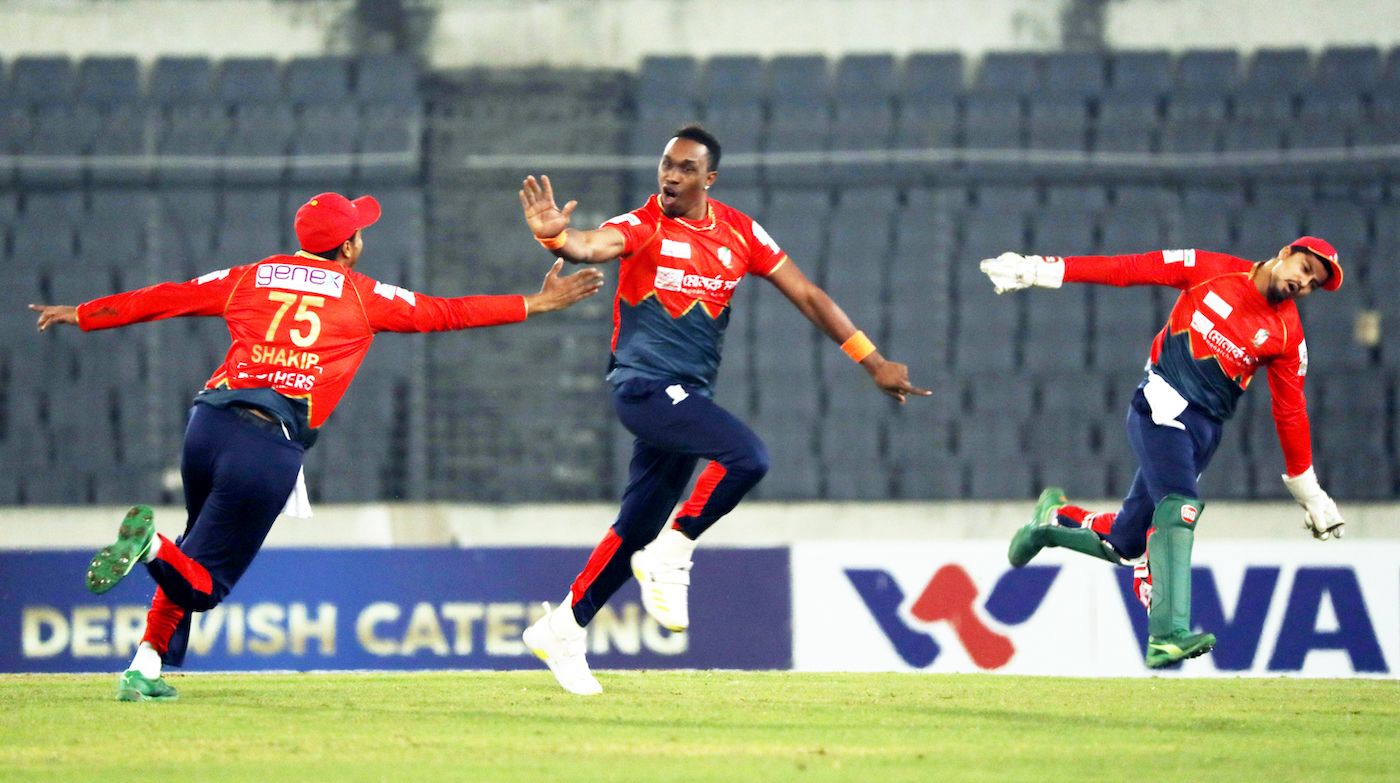
Bangladesh Premier League - In the clutter of T20 leagues, BPL has fallen behind in race to sign big names

The Bangladesh Premier League (BPL) is lagging behind in the race to sign overseas T20 stars for the January-February window. The BPL has a window from January 6 to February 15, the dates clashing with the UAE's ILT20, South Africa's yet-to-be-named T20 league and the Australian BBL. The BBL's draft for overseas players is scheduled for August 28. The UAE and South Africa leagues have been in the news practically every day, for the big-ticket players the franchises are signing on. There has been no buzz around the BPL.

The BCB has set August 31 as the deadline for potential franchise owners' "expression of Interest" (EOI). Nizamuddin Chowdhury, the BCB chief executive, had earlier said that the board was hoping most of the previous franchise owners would return, with the BPL providing three-year contracts for them. Earlier, the franchise contracts were for just a year.

"We will try to finalise everything soon, so that the owners can start their preparation," Chowdhury had said. "They will be in a better position since it is for three years. Franchise owners usually want everything to be organised, so this time it will be quite good since we are giving the teams a longer period."

The BCB is also hoping that the BPL will not be without its share of overseas names, while all Bangladeshi cricketers would be expected to participate.

"We have to keep in mind that the member countries are looking for a window to hold domestic T20 leagues. There's going to be conflict (in scheduling) if other members' windows fall at the same time. Everyone is going to suffer, not just us," Chowdhury said. "Two or three of our most important players will be playing in our domestic league. I don't want to mention any names but those who usually play overseas will be missed in those leagues. But we are expecting foreign players to play in our league.

"There's the matter of the NOC [no-objection certificate]. There is also an understanding among member countries. Everyone abides by this rule. I don't personally think anyone will play anything other than their own competition."

There is bound to be a demand for established stars, but the franchise owners, whoever they are, will be in a race against time.

Among the ILT20's signings are Dwayne Bravo and Andre Fletcher, respectively the second-highest wicket-taker and the second-highest run-getter in the last edition of the BPL. Faf du Plessis, Moeen Ali and Sunil Narine, who formed the core of the Comilla Victorians side that won the title the last time, are all unavailable. Du Plessis will play for the CSK-owned franchise in South Africa, while the ILT20 has announced the names of Moeen and Narine. Andre Russell, who played for Minister Group Dhaka, is also on the ILT20's list of signings, while Mujeeb Ur Rahman, who represented Fortune Barishal, will be playing in South Africa.

For the BPL, if the EOI list is revealed on August 31, and roughly another month is required to get through the official procedures for the franchises to sign up, the players' draft or auction can't be held till October. With several T20 leagues running at the same time, and player demand being at an unprecedented high, the BPL would have benefitted from having a more settled appearance about it.

Historically, the BPL franchises have been known to pay well, but there is another niggle. As several player agents told us, because of the laws of the land in Bangladesh, the players end up paying higher taxes than they do elsewhere. It might sound like a trifle, but the lack of nightlife options in most cities in Bangladesh is something that has bothered overseas players in the past.

So what does the BPL do? If the big stars don't come, the tournament will lose its sheen. The ILT20 and the South African leagues have appeared as gamechangers, and with the windows almost set in stone for the next few years, the BPL will have to up its game, somehow, to remain relevant.

Mohammad Isam is ESPNcricinfo's Bangladesh correspondent. @isam84


Source https://www.globalcourant.com/bangladesh-premier-league-in-the-clutter-of-t20-leagues-bpl-has-fallen-behind-in-race-to-sign-big-names/?feed_id=10979&_unique_id=62f9acf861524

Kenya's Odinga ahead in tight presidential race

One-time opposition leader Raila Odinga ahead in race for presidency against incumbent deputy president William Ruto, official results show.

Supporters of Raila Odinga, celebrate in the street ahead of contested presidential election results in Kisumu port city.
Supporters of Raila Odinga, celebrate in the street ahead of contested presidential election results in Kisumu port city. (AFP)

Veteran opposition leader Raila Odinga is leading Kenya's presidential race, official election results showed, pushing deputy president William Ruto into second place.

With just over 26 percent of votes counted, Odinga had 54 percent and Ruto had 45 percent, according to results provided by the Kenyan election commission and displayed on a large screen at a national tallying center in the capital, Nairobi, at midday on Saturday.

Ruto and Odinga are in a tight race to succeed President Uhuru Kenyatta, who has reached his two-term limit. Kenyatta fell out with Ruto after the last election and has endorsed Odinga.

East Africa's wealthiest nation and most vibrant democracy held presidential, parliamentary and local elections on Tuesday.

Official vote tallying has been proceeding slowly, fuelling public anxiety.

Election commission chairman Wafula Chebukati blamed party agents, who are allowed to scrutinise results forms before they are added to the final tally.

"Agents in this exercise cannot proceed ... as if we are doing a forensic audit," he told a news briefing on Friday.

"We are not moving as fast as we should. This exercise needs to be concluded as soon as possible."

Representatives from Odinga and Ruto's coalitions did not immediately respond to requests for comment.

Violence in previous polls 

Reuters news agency and other media outlets have been tallying results forms from 291 constituencies posted on the election commission website. 

These have not yet been verified, and this tally is running well ahead of the official one.

As of 2100 GMT, Reuters had tallied 241 forms, which showed Ruto in the lead with nearly 52.3 percent of the vote, compared to 47 percent for Odinga. Two other candidates had less than 1 percent between them.

Thirty other forms could not be included in the count because they were unreadable or were missing information such as signatures, constituency names, or totals.

The forms Reuters is tallying are preliminary and the results subject to change. 

After the forms are uploaded to the commission's website, Kenyan election law requires that they are physically brought to the national tallying centre, where party representatives can examine them for any discrepancies.

The process was designed as a safeguard against the kind of rigging allegations that have triggered violence after previous polls. 

More than 1,200 people were killed after a disputed 2007 election and more than 100 killed after a disputed 2017 election.

The winning candidate must receive 50 percent of the national vote plus one, and at least 25 percent of the vote from 24 of 47 counties.

The commission has until Tuesday to declare a winner.

Source: Reuters


Source https://www.globalcourant.com/kenyas-odinga-ahead-in-tight-presidential-race/?feed_id=10545&_unique_id=62f848e638919

Kenya votes in closely watched election race

Kenyans are praying for a peaceful transition of power after almost a decade under President Uhuru Kenyatta, but concerns about vote-rigging linger.

More than 22 million people are registered to vote in an election taking place.
More than 22 million people are registered to vote in an election taking place. (Reuters)

Kenyans have lined up to vote in a high-stakes election, with the East African powerhouse on edge as two political heavyweights battle it out in a fiercely contested race for the presidency.

Kenyans are praying for a peaceful transition of power after almost a decade under President Uhuru Kenyatta, but concerns about vote-rigging linger in a nation still haunted by previous election disputes that descended into deadly violence.

More than 22 million people are registered to vote in an election taking place on Friday, with the economy and corruption key talking points.

Deputy president and erstwhile heir apparent William Ruto, 55, is pitted against Raila Odinga, the 77-year-old veteran opposition leader now backed by his longtime rival Kenyatta after a stunning shift in political allegiances

Polling stations opened from 6:00 am (0300 GMT) and are due to close at 5:00 pm (1400 GMT).

But neither candidates wins more than 50 percent of the votes, Kenya would be forced to hold a run-off for the first time in its history.

READ MORE: Key faces, talking points: What to know about Kenya's presidential election

[embed]https://www.youtube.com/watch?v=ZiHdFUODw08[/embed]

Pleas for peaceful vote

Despite mudslinging on the hustings and widespread disinformation, campaigning passed off largely peacefully in contrast to previous polls.

Pressure is on the Independent Electoral and Boundaries Commission (IEBC) to ensure a free and fair vote in all six polls — for the presidency as well as for senators, governors, lawmakers, woman representatives and some 1,500 county officials.

But already, the election has run into some hitches, with six IEBC officials arrested on Monday and the commission suspending several local polls because of erroneous ballot papers.

Both Odinga and Ruto have called for a peaceful vote, but fears remain that if the losing candidate challenges the outcome — as widely expected — the discord could erupt into street fighting.

Security is tight, with more than 150,000 officers being deployed.

The trauma of the 2007 election, which was followed by a horrific bout of politically motivated ethnic clashes that killed more than 1,100 people, still looms large.

And Odinga's challenge to the 2017 election result that saw then foe Kenyatta re-elected was met with a heavy-handed police response that left dozens dead.

The Supreme Court ordered a rerun in 2017, citing widespread irregularities.

No presidential election outcome has gone uncontested since 2002, and there will be an anxious wait for this year's results which are not expected for several days.

READ MORE: Kenya top court rules against president's bid for constitution change

Source: TRTWorld and agencies


Source https://www.globalcourant.com/kenya-votes-in-closely-watched-election-race/?feed_id=8543&_unique_id=62f222b08add3

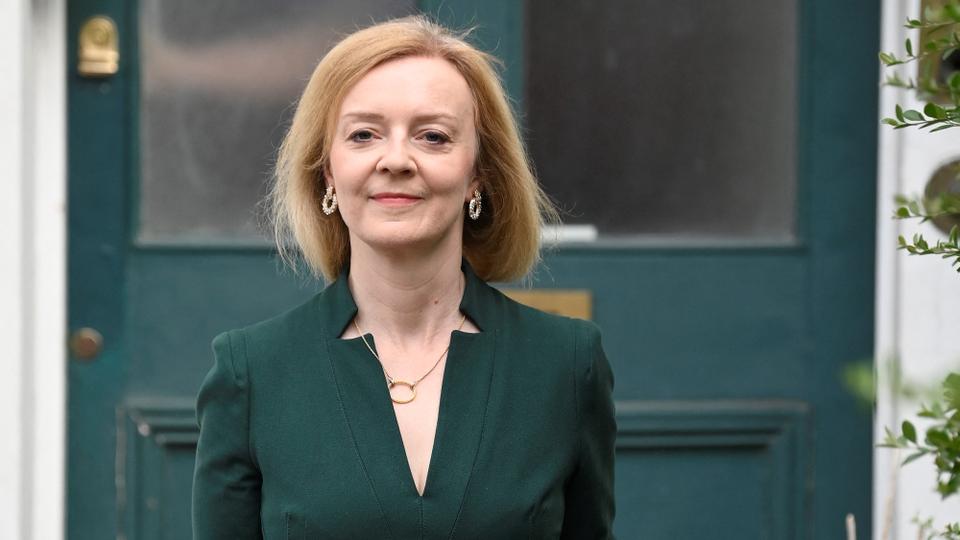
Truss pledges to ditch all EU laws by 2023 amid UK leadership race

Liz Truss said she would not follow the “outdated EU law and frameworks” and will seize opportunities that the UK may have in the future.

British Foreign Secretary and Conservative leadership candidate Liz Truss leaves her house in London, Britain, July 20, 2022.
British Foreign Secretary and Conservative leadership candidate Liz Truss leaves her house in London, Britain, July 20, 2022. (Reuters)

Liz Truss, the leading candidate to succeed Boris Johnson as British prime minister, promised to scrap all remaining European Union laws that still apply in Britain by 2023 if she wins the Conservative Party leadership contest.

Foreign Secretary Truss is up against former finance minister Rishi Sunak in a race to court the 200,000 members of the Conservative Party who over the course of the summer will vote to choose the country's new prime minister.

Britain's relationship with Europe remains of great concern to the Conservative Party membership, generally characterised as more eurosceptic than the wider population.

Hoping to tap into that, Truss, who campaigned for 'remain' in the 2016 referendum but is now seen as the heir to Johnson's pro-Brexit position, promised to purge all remaining EU laws from the statute books.

To avoid uncertainty and confusion as Britain untangled itself from the EU after 40 years of membership, the government automatically carried over thousands of EU laws and regulations into British law so that they would still apply after Brexit.

"EU regulations hinder our businesses and this has to change," Truss said in a statement. The statement said she was setting out her credentials as the "Brexit delivery" prime minister.

"In Downing Street, I will seize the chance to diverge from outdated EU law and frameworks and capitalise on the opportunities we have ahead of us."

Sunak: UK faces national emergency on 'five fronts'

Separately, Rishi Sunak, in the running to become the next prime minister, would put the government on a crisis footing from "day one" of taking office, he said in an interview with The Times on Friday.

Over the next week, Sunak intends to argue that Britain is facing a national emergency on five fronts including the economy, the National Health Service and migration, the newspaper reported.

Inflation is the "number one challenge we face," Sunak told the newspaper, adding that under Truss' plans, interest rates in the country could rise significantly.

Sunak has said he plans to cut taxes but only once inflation - now running at almost 10 percent — is brought under control. He accused his rivals of making "fairy tale" promises about tax cuts.

The government has already set out its intention to replace or repeal existing EU laws but had not set a timeframe.

Truss's deadline of 2023 is earlier than a similar pledge made by Sunak, who campaigned for Brexit in 2016 but has been vilified by some corners of the Conservative Party for raising taxes to their highest level in decades.

Sunak said EU law would be scrapped or reformed by the next election, which is expected in 2024. Truss leads Sunak by 62 percent to 38 percent among Conservative Party members, according to a YouGov poll on Thursday.

Source: Reuters


Source https://www.globalcourant.com/truss-pledges-to-ditch-all-eu-laws-by-2023-amid-uk-leadership-race/?feed_id=482&_unique_id=62db35d4344ab