‏إظهار الرسائل ذات التسميات 2022_Russia_Ukraine_news. إظهار كافة الرسائل

August 24, 2022 Russia-Ukraine news

The threat of nuclear calamity has hung for months over Russia’s half-year war in Ukraine.

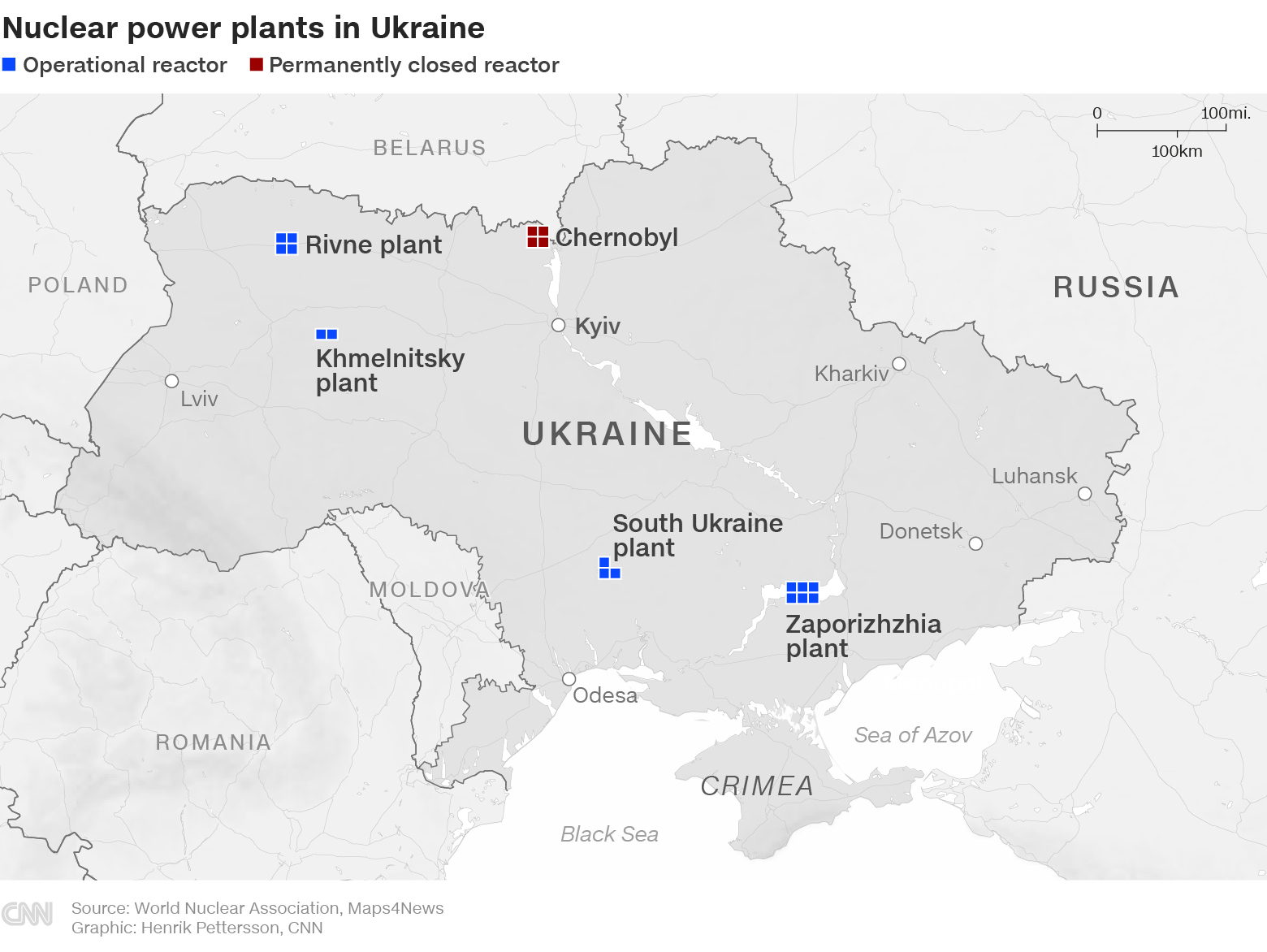
Those fears were renewed in the last two weeks after shelling intensified around the massive Zaporizhzhia nuclear power plant, Europe’s largest, which has been under Russian control since March.

Attacks at the complex, which have ramped up as fighting flares in Ukraine’s south, have sparked concerns about the specter of nuclear disaster, leading the United Nations’ watchdog and world leaders to demand that a mission be allowed to visit the site and assess the damage.

There's been a barrage of accusations made by each side about security and military action at and around the plant. The lack of independent access to the plant makes it impossible to verify what is happening there. Over the past month, a number of rockets and shells have landed on the territory of the plant, according to satellite imagery analyzed by CNN.

So just how real is the risk that the fighting poses?

Nuclear experts are keen to defuse some of the more alarmist warnings, explaining that the main threat is closest to the plant itself and doesn’t justify Europe-wide alerts. Experts are particularly wary of any comparisons to the 1986 Chernobyl disaster, a repeat of which is incredibly unlikely, they said.

“It’s not very likely that this plant will be damaged,” Leon Cizelj, president of the European Nuclear Society, told CNN. “In the very unlikely case that it is, the radioactive problem would mostly affect Ukrainians that live nearby,” rather than spreading throughout eastern Europe as was the case with Chernobyl, he said.
Russia's invasion triggered fears about nuclear safety at the start of the war

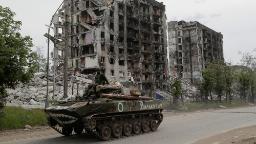
In late February and March, the Russian occupation of Chernobyl in northern Ukraine triggered fears that safety standards inside the exclusion zone could be compromised.

During the first week of the war, the plant and its surrounding territory fell into the hands of Russian troops. They withdrew on March 31, according to Ukraine's nuclear operator.

Ukraine’s government said that Russian forces had looted and destroyed a lab close to the abandoned nuclear plant, which was used to monitor radioactive waste.


#August #RussiaUkraine #news https://www.globalcourant.com/august-24-2022-russia-ukraine-news/?feed_id=15475&_unique_id=6306f984d90fe

Russia's Gazprom announces reduction of gas flow through Nord Stream 1 pipeline again


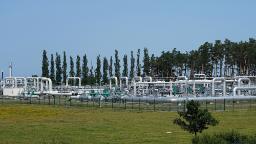
Russian state-owned energy company Gazprom says it will have to further reduce gas flow through the Nord Stream 1 pipeline on Wednesday as it halts another turbine for repairs.

This comes days after Gazprom resumed gas shipments through the Nord Stream 1 pipeline, a vital artery linking Russia's vast gas reserves to Europe via Germany. The pipeline had been shut 10 days for scheduled maintenance, and many had feared Russia would not resume deliveries once the work was done.

“Due to the expiration of prescribed time before overhaul (in line with the Rostekhnadzor notification and taking into account the technical condition of the relevant machine), Gazprom is shutting down one more gas turbine produced by Siemens at the Portovaya [compressor station],” the company said in a statement on Monday. 

“The daily throughput of the Portovaya CS from 7:00 am (Moscow time) July 27 will be up to 33 million cubic meters,” the statement added.

The head of Germany’s gas regulator, Klaus Muller, confirmed the move in a tweet on Monday. 

“According to our information, there is no technical reason for a reduction in gas deliveries via Nord Stream 1,“ the German Ministry of Economy insisted in a tweet on Monday. 

“If Russian gas deliveries via Nord Stream 1 continue at this low level, a storage level of 95% by November is hardly achievable without additional measures,“ Germany's regulatory office for gas and electricity said in a statement Monday.  

The country’s Economics Minister Robert Habeck had previously called on Germans to reduce gas consumption in order to get the gas storage facilities as full as possible for the winter. 

Germany’s current total gas inventories are at 65.9%, according to the daily figures provided by the government. 

The reduction in the gas through the Nord Stream 1 pipeline will also affect the transfer of gas to other European countries such as France, Austria and the Czech Republic.

Wholesale prices have risen noticeably as a result of the reduction in gas supplies and have recently settled at a higher level, Germany’s regulatory office said, warning that “businesses and private consumers must prepare for significantly high gas prices.”

The Nord Stream 1 pipeline delivers 55 billion cubic meters of gas per year, or nearly 40% of the bloc's total pipeline imports from Russia.

Kremlin spokesperson Dmitry Pesko said on Monday that a repaired gas turbine for Nord Stream 1 gas pipeline will be installed after all the technical procedures are fulfilled, after which the gas flow to Europe will resume “to the extent that is technologically possible.” 

Peskov insisted that the issues with gas supply have nothing to do with politics.

“There is no politics here. These are the consequences of the restrictions that the Europeans themselves have introduced, and the Europeans themselves suffer from these restrictions,” he said, adding that Russia does not want Europe to give up Russian gas.

Moscow will continue to be a “reliable gas supplier," he said.

Read more here on why it matters.


Source https://www.globalcourant.com/russias-gazprom-announces-reduction-of-gas-flow-through-nord-stream-1-pipeline-again/?feed_id=2174&_unique_id=62df5ca80ca57