‏إظهار الرسائل ذات التسميات Alphabet_Class_A. إظهار كافة الرسائل

YouTube removes video by Tesla investors using kids in FSD Beta test

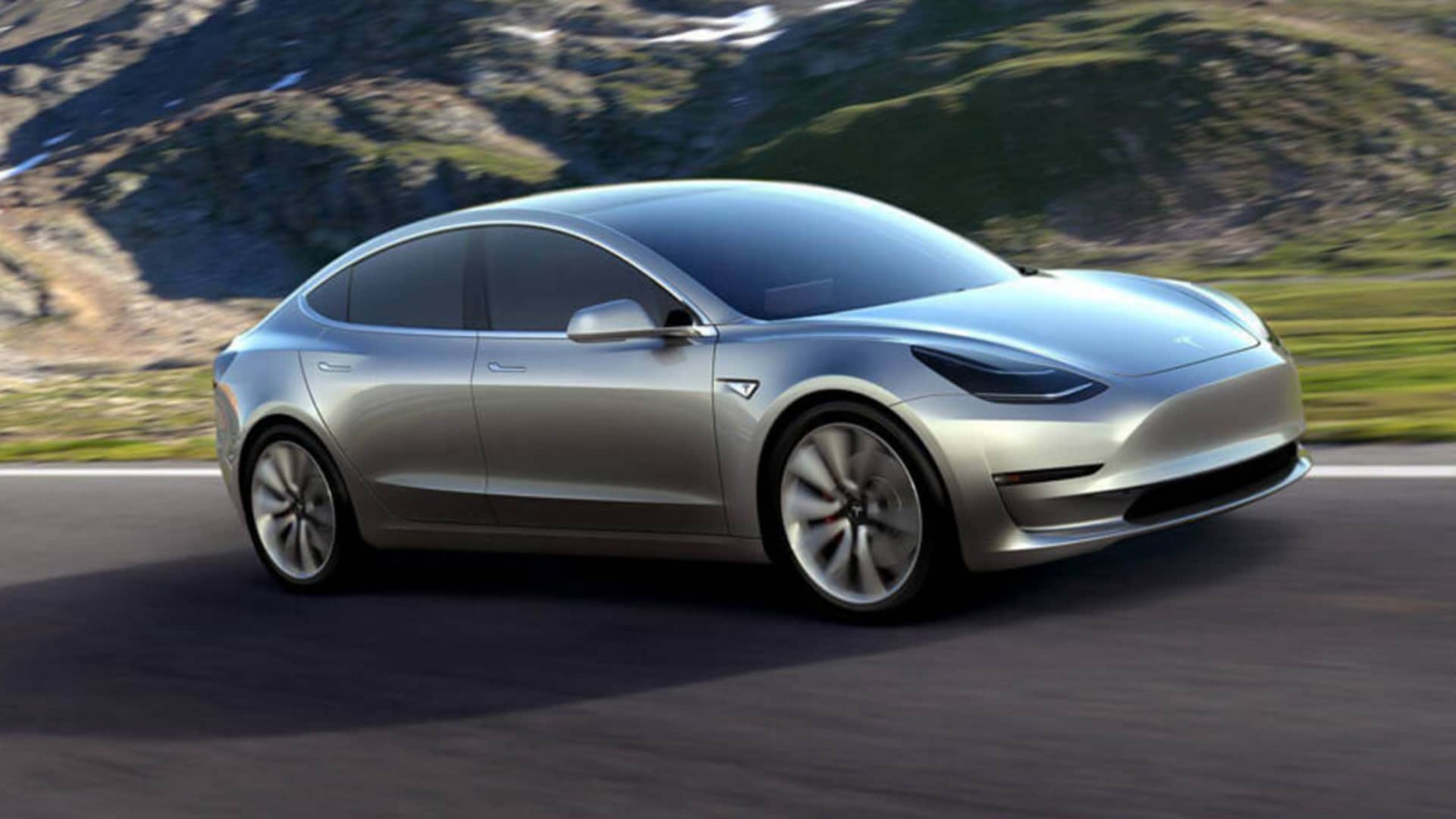
Tesla Model 3

Source: Tesla

YouTube has removed a pair of videos from its platform which showed Tesla drivers conducting amateur vehicle safety tests using their own children in place of mannequins in the road or the driveway.

The tests were to determine if a slow-moving Tesla equipped with the company's latest driver assistance systems would automatically avoid colliding with pedestrians — in this case children — walking or standing still in the road.

After CNBC reached out, a YouTube spokesperson, Elena Hernandez, wrote in an e-mail Friday night:

"YouTube doesn't allow content showing a minor participating in dangerous activities or encouraging minors to do dangerous activities. Upon review, we determined that the videos raised to us by CNBC violate our harmful and dangerous policies, and as a result we removed the content."

The specific policy that YouTube cited is pertaining to harmful and dangerous content. The company removes videos that encourage dangerous or illegal activities that risk serious physical harm or death when it is aware of them. The spokesperson said, "Specifically, we don't allow content showing or encouraging minors in harmful situations that may lead to injury, including dangerous stunts, dares, or pranks."

Tesla markets its driver assistance systems in the U.S. as a standard package called Autopilot and a premium option called Full Self-Driving (or FSD) that costs $12,000 up front or $199 per month. It also offers some drivers access to an experimental program called Full Self-Driving Beta if they attain a high score on the company's in-vehicle safety tests.

None of these systems make Tesla cars self-driving, nor safe to use without a driver behind the steering wheel, attentive to the road and able to steer, brake, or accelerate on short notice. Tesla's owners manuals caution drivers that the systems do not make their cars autonomous.

Driver: 'I was prepared to take over at any time'

In a video posted on Aug. 14, a Tesla owner and investor in the Elon Musk-led company, Tad Park, drove a Model 3 vehicle at eight miles per hour towards one of his children on a road in the San Francisco Bay Area. No one was hurt in the test.

The video had tens of thousands of views before YouTube, a division of Alphabet's Google, removed it. Alphabet also owns Waymo, the autonomous vehicle technology developer and robotaxi operator.

Park is the CEO of Volt Equity, and portfolio manager of an autonomous driving technology focused ETF called VCAR. "I have experienced the product myself, and believe in my investments," Park told CNBC. "We did extensive safety precautions so that kids were never in danger." 

In a follow-up email, Park wrote, "First we tried on a mannequin, then we tried with a tall basketball player, then finally one kid stood and my other kid crossed the street."

He said the car was never traveling more than eight miles an hour, and explained, "We made sure the car recognized the kid. Even if the system completely failed, I was prepared to take over at any time. I had a sense of when I was going to need to brake if the car was not sufficiently slowing down."

The tests were a success in Park's view, because the car slowed and did not strike any object, pedestrian or his kids. Asked if he would do it again, he said: "I do not think further tests are necessary, but if I did, yes, I would do this test again."

"That being said, I wouldn't recommend people to deliberately try this at home," he added.

Park conducted the tests in part as a rebuttal against a national advertising campaign from software company founder Dan O'Dowd criticizing Tesla's driver assistance features.

The video, now removed, was posted on a YouTube channel named Whole Mars Catalog, which is run by Omar Qazi, a shareholder and major promoter of Tesla on social networks. Tesla CEO Elon Musk frequently interacts with the blog and Qazi on Twitter.

In addition to YouTube, CNBC reached out to the California DMV and National Highway Traffic Safety Administration to ask whether such videos are safe or legal.

NHTSA said on Aug. 16, "NHTSA advises the public that it could be highly dangerous for anyone to attempt to test vehicle technologies on their own. No one should risk their life, or the life of anyone else, to test the performance of vehicle technology." 

The agency also noted, "As NHTSA has stated consistently, no vehicle available for purchase today is capable of driving itself. The most advanced vehicle technologies available for purchase today provide driver assistance and require a fully attentive human driver at all times performing the driving task and monitoring the surrounding environment."

The California DMV told CNBC via email: "As advanced vehicle technologies become more widely available, DMV shares the same concerns as other traffic safety stakeholders about the potential for driver misunderstanding or misuse of these features. DMV has previously indicated to Tesla and continues to emphasize the importance of providing clear and effective communication to customers, buyers and the general public about the capabilities, limitations and intended use of any vehicle technology."

The California DMV recently alleged that Tesla is engaging in deceptive marketing or false advertising where its driver assistance systems are concerned. It is also in the midst of a lengthy safety related review of Tesla's technology including FSD Beta.

Police in the town where Park conducted the test drive did not respond in time for publication. Tesla did not immediately return a request for comment.


Source https://www.globalcourant.com/youtube-removes-video-by-tesla-investors-using-kids-in-fsd-beta-test/?feed_id=13296&_unique_id=630064e11f546

Pinterest (PINS) Q2 2022 earnings

Pinterest shares jumped on better-than-expected user numbers even as earnings and revenue missed estimates and the company gave weak guidance for the third quarter.

Activist investor Elliott Management confirmed separately that it's Pinterest's top investor and said it has "conviction in the value-creation opportunity" at the company. 

Here's how the company did.

  • Earnings: 11 cents adjusted per share vs. 18 cents per share expected, according to Refinitiv.
  • Revenue: $666 million vs. $667 million expected, according to Refinitiv.

Pinterest said global monthly active users declined by 5% from a year earlier to 433 million. While that sort of drop-off is alarming for a social media app that relies on eyeballs to attract advertisers, analysts were expecting a steeper decline to 431 million.

The company's financials were gloomy, following a trend in the social media market. Facebook parent Meta, Twitter, and Snap all reported second-quarter earnings that missed on the top and bottom lines, and all attributed a weak online advertising market to their bleak results.

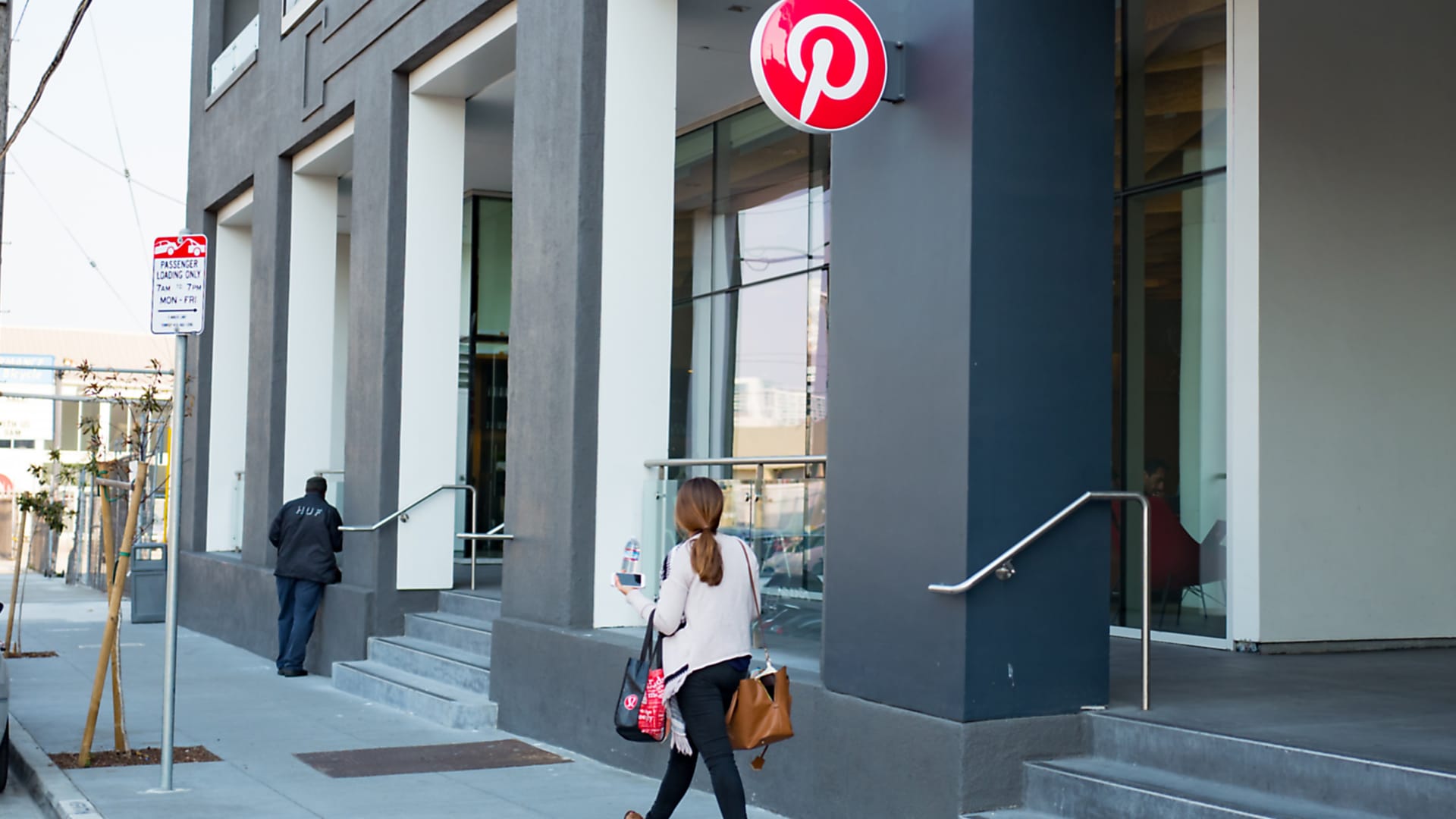
A woman walks past sign at the headquarters of Pinterest in the South of Market neighborhood of San Francisco.

Smith Collection | Gado | Archive Photos | Getty Images

More troubling than its second-quarter results was Pinterest's commentary about what's expected this quarter. The company said it estimates third-quarter revenue will grow "mid-single digits on a year-over-year percentage basis," below analysts' projections for sales growth of 12.7%.

In a letter to investors, Pinterest said economic challenges are leading marketers to reel in spending.

"The macroeconomic environment has created meaningful uncertainty for our advertiser partners," Pinterest said in the letter." The company said it saw "lower than expected demand from U.S. big box retailers and mid-market advertisers, who pulled back ad spend due to concerns about weakening consumer demand."

Pinterest said that its third-quarter guidance takes into account "slightly greater foreign exchange headwinds" than the previous quarter.

In June, Pinterest co-founder Ben Silbermann stepped down as the company's CEO, and was replaced by Bill Ready, previously the leader of Google's commerce unit. Pinterest's hiring of Ready pointed to a deeper push into e-commerce and online retail.

Elliott's involvement with the company was reported in July by The Wall Street Journal, which said at the time that the firm had built a stake of over 9% in the company. After Pinterest's results were released on Monday, Elliott confirmed it's the company's biggest shareholder and said it's pleased with Ready's progress.

"As the market-leading platform at the intersection of social media, search and commerce, Pinterest occupies a unique position in the advertising and shopping ecosystems, and CEO Bill Ready is the right leader to oversee Pinterest's next phase of growth," Elliott said in a statement.

WATCH: Earnings Exchange looks at Pinterest, Caterpillar and JetBlue


Source https://www.globalcourant.com/pinterest-pins-q2-2022-earnings/?feed_id=5433&_unique_id=62e8b422b3c48

Amazon (AMZN) Q2 2022 earnings

Amazon shares climbed more than 11% in extended trading on Thursday after the company reported better-than-expected second-quarter revenue and gave an optimistic outlook.

Here's how the company did:

  • EPS: Loss of 20 cents
  • Revenue: $121.23 billion vs. $119.09 billion expected, according to Refinitiv

Here's how other key Amazon segments did during the quarter:

  • Amazon Web Services: $19.7 billion vs. $19.56 billion expected, according to StreetAccount
  • Advertising: $8.76 billion vs. $8.65 billion expected, according to StreetAccount

Revenue growth of 7% in the second quarter topped estimates, bucking the trend among its Big Tech peers, which all reported disappointing results prior Thursday. Apple, along with Amazon, beat expectations.

Amazon said it expects to post third-quarter revenue between $125 billion and $130 billion, representing growth of 13% to 17%. Analysts were expecting sales of $126.4 billion, according to Refinitiv.

Amazon has been contending with higher costs, as pandemic-driven expansion left the company with too many workers and too much warehouse capacity.

"Despite continued inflationary pressures in fuel, energy, and transportation costs, we're making progress on the more controllable costs we referenced last quarter, particularly improving the productivity of our fulfillment network," CEO Andy Jassy said in a statement.

Amazon shaved its headcount by 99,000 people to 1.52 million employees as of the end of the second quarter after almost doubling in size during the pandemic.

Amazon recorded a $3.9 billion loss on its Rivian investment after shares of the electric vehicle maker plunged 49% in the second quarter. That brings its total loss on the investment this year to $11.5 billion.

Because of the Rivian writedown, Amazon had an overall loss of $2 billion in the quarter. Analysts' EPS estimates varied dramatically, making it difficult to compare actual results to a consensus number.

Rivian CEO RJ Scaringe and Udit Madan stand in front of the new Amazon EV van powered by Rivian. Amazon and Rivian unveil their final custom Electric Delivery Vehicles (EDV) to begin using them for customer deliveries, in Chicago, Illinois, July 21, 2022.

Jim Vondruska | Reuters

Amazon's core e-commerce business continues to suffer as online sales are no longer flourishing like they were at the height of the Covid-19 shutdown. The company's online stores segment declined 4% year over year. Physical store sales continued to rebound from the year-ago period, growing 12%.

Amazon's ad business is a bright spot in an otherwise gloomy quarter for online advertising, and shows the company is picking up share in one of its fastest-growing businesses.

Ad revenue climbed 18% in the period. Facebook, meanwhile, recorded its first ever drop in revenue and forecast another decline for the third quarter. At Alphabet, advertising growth slowed to 12%, and YouTube showed a dramatic deceleration to 4.8% from 84% a year earlier.

Among the other top tech companies, Microsoft also reported disappointing results this week. Apple beat on the top and bottom lines, lifting the stock in after-hours trading.

Amazon's cloud segment continues to hum along. Sales at Amazon Web Services jumped 33% from a year earlier to $19.74 billion, above the $19.56 billion projected by Wall Street.

Operating income, which excludes the investment-related loss, shrank to $3.3 billion from $7.7 billion a year earlier. AWS generated operating income of $5.7 billion, accounting for all of Amazon's profit plus some in the period.

The upbeat results could also help improve the mood around Jassy, who replaced Jeff Bezos as CEO a little over a year ago. Jassy's first year on the job has been marred by challenges, including an ongoing labor battle, the market downturn, growing regulatory pressure and an exodus of top talent.

He's also under pressure to show he can return Amazon's core retail business to the growth investors have become accustomed to seeing, a difficult task given the macro pressures the company faces, such as soaring inflation and slowing consumer discretionary spending.

WATCH: The first look at Amazon and Rivian's electric delivery vans


Source https://www.globalcourant.com/amazon-amzn-q2-2022-earnings/?feed_id=3550&_unique_id=62e30440daefe

Apple Q3 2022 earnings preview: Macroeconomic concerns dominate

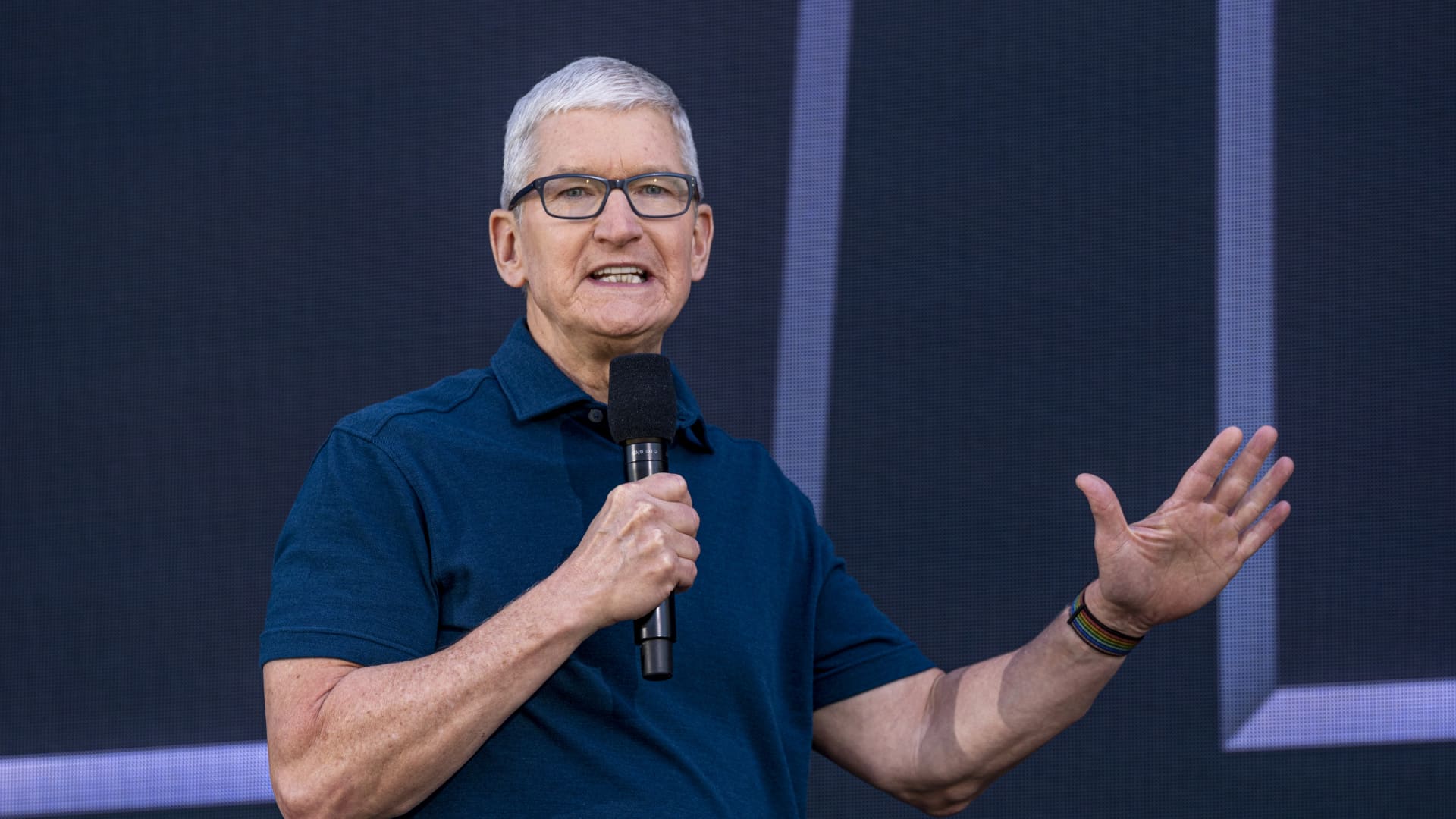
Tim Cook, chief executive officer of Apple Inc., speaks during the Apple Worldwide Developers Conference at Apple Park campus in Cupertino, California, US, on Monday, June 6, 2022.

David Paul Morris | Bloomberg | Getty Images

Apple reports earnings on Thursday for the quarter ended in June.

The third quarter of Apple's fiscal year is typically the company's smallest by sales. The quarter is in the back half of the iPhone's annual refresh cycle as investors start to look forward to the release of a new model, which boosts sales starting in late September or October.

This year, analysts and investors will be closely watching Apple's earnings in the face of many new macroeconomic trends, including declining consumer confidence, rising interest rates, and decades-high inflation.

So far, Apple's sales have remained strong, partially because its customers are a fairly well-off group/ But any signs that people are putting off Mac and iPhone purchases because of inflation or recession fears could have implications for the whole economy.

Apple also has significant exposure to China, both as a market to sell its products and as the country where most of its products are assembled. Several Apple factories in China had production shifted or suspended at times during the June quarter because of Covid lockdowns.

Analysts polled by FactSet expect Apple to report $82.8 billion in sales, which would be under 2% growth from the same quarter last year and the slowest growth quarter since the start of the pandemic.

Analysts are also expecting $1.16 in earnings per share, which would be a 10.7% decline on an annual basis. Gross margin will also decline from 43.7% last quarter — high for Apple historically — to between 42% and 43%, the company said in April.

Supply issues and China lockdowns

In April, the story for Apple wasn't about demand: it was about supply. "Right now, our main focus, frankly speaking, is on the supply side," Apple CEO Tim Cook told analysts.

Apple warned of a $4 billion to $8 billion revenue hit stemming from supply issues, including chip shortages and production snags. Some analysts say that Apple will signal that it managed the supply chain well and the revenue hit will end up on the low-end of Apple's guide.

"We believe the company has managed its supply chain better than it planned a quarter ago, while it continued to gain share in an otherwise difficult quarter for smartphones and PCs," Deutsche Bank analyst Sidney Ho wrote in a recent note.

That could be good for iPad sales, which have taken a hit in the past few quarters as Apple prioritized parts for iPhones and other products.

"We also anticipate improving iPad sales in part due to improving supply and believe Apple's $4 billion to $8 billion supply headwind commentary for the June quarter was more likely at the lower-end of this range," Canaccord Genuity analyst T. Michael Walkley wrote in a note this month.

Apple has grappled with shutdowns in urban China, including in Shanghai. Covid restrictions could have hurt Apple's iPhone sales in China early in the quarter, but could have charged sales in June as people left lockdown ready to spend.

Analysts polled by FactSet predict that Apple's Greater China sales will be around $13.79 billion, which would be a decline from the $14.56 billion in sales from a year ago.

September quarter demand

Can Apple remain a safe haven?

Overall, analysts are still confident in Apple as an efficient company with a strong cash balance, loyal customers, and competitive products.

But can Apple remain a safe haven as other tech stocks drop and the markets recede? Apple is down nearly 15% so far in 2022, but that's better than the Nasdaq, which is down 18%.

"Apple remains a best of breed consumer electronics company able to invest through cycles, and with 60%+ of revenue more staples-like in nature, strong brand loyalty, and continued product/services innovation, we believe it is better insulated relative to peers during a downturn," Morgan Stanley's Huberty wrote.

One key for Apple investors in a downturn will be the growth of its services businesses, which makes overall hardware sales growth less crucial. Apple services, which include monthly subscriptions, payment fees, warranties, search licensing fees from Google, and revenue from the iPhone App Store, also offer higher margins than its core hardware business.

Apple's services business is predicted to be up 12% on an annual basis, according to analysts surveyed by FactSet.

That's a slower growth rate than the 17% annualized growth it posted in its second quarter, and a significant decline from the 27% growth Apple posted in its services business in 2021.

JP Morgan's Samik Chatterjee believes that Apple's plan to buy back shares will buoy the stock, even if its earnings underwhelm. Apple's board authorized $90 billion in additional share buybacks and dividends in April.

"We believe the resilience of the earnings estimates in the backdrop of macro deterioration, including both inflation and adverse FX, will continue to drive investors to prefer Apple with strong cash generation and balance sheet that will allow it to offset any earnings dilution on account of the macro through buybacks," Chatterjee wrote in a note.


Source https://www.globalcourant.com/apple-q3-2022-earnings-preview-macroeconomic-concerns-dominate/?feed_id=2486&_unique_id=62e033a980637