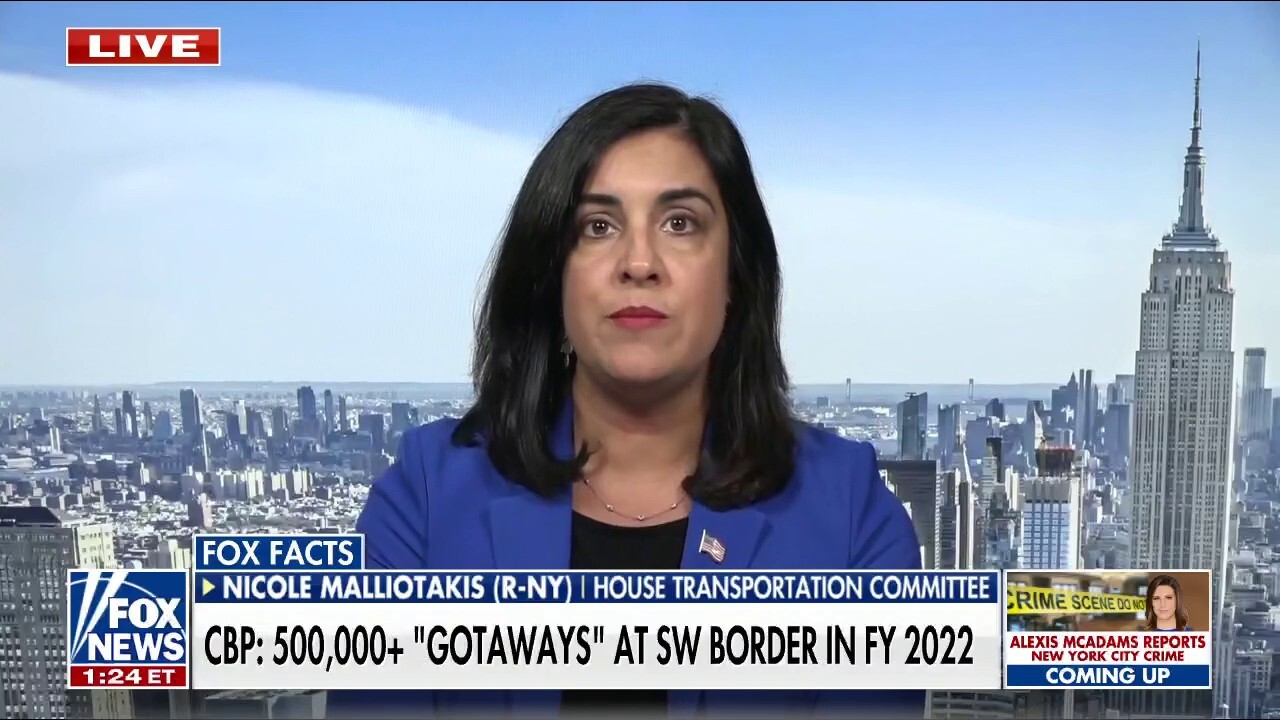
Rep. Nicole Malliotakis, R-N.Y. ripped Gov. Kathy Hochul's soft-on-crime bail reform policies on "Fox News Live" Sunday, urging New Yorkers to elect a new governor to begin seeing change in the communities.
2 MORE MIGRANT BUSES FROM TEXAS ARRIVE IN NYC AS BORDER CRISIS CONTINUESREP. NICOLE MALLIOTAKIS: This is a really terrible situation and should be eye-opening for the people in New York to elect a new governor because it was the governor's bail reform policy that is releasing people back onto the streets, including those individuals. New York City has a sanctuary policy that protects people in this country illegally committing crimes. I represent a community very diverse. We have a large immigrant population, including my own parents, but they were never incentivized with free hotel rooms that the taxpayers are paying for, free college, free education, and also the things that I mentioned before. They were never incentivized in this manner. They were only given the opportunity to come here and work hard, and I don't know why this mayor is rolling out the red carpet and offering to pay for people to be placed in hotel rooms when New Yorkers are really struggling right now with cost of living, with inflation, they're leaving our state in droves because they can't afford to live here. Now they want them to foot the bill for all these other expenses that the mayor and the governor incentivize.CLICK HERE TO GET THE FOX NEWS APPWATCH THE FULL INTERVIEW BELOW
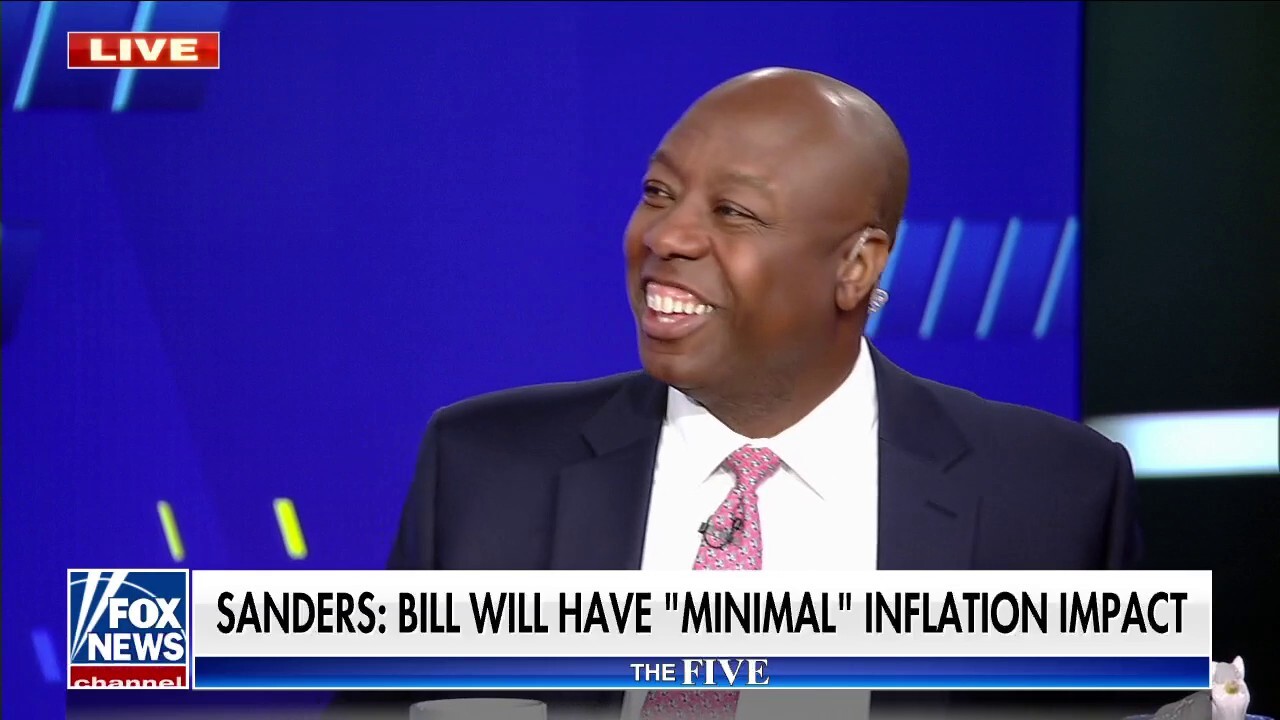
Sen. Tim Scott, R-S.C., laid out why he believes a $750 billion-dollar spending package won't help the economy Monday on "The Five."
SEN. TIM SCOTT:If you have all four of those departments together, you will still have a bigger IRS and the scariest part for our viewers is there’s 87,000 new employees hunting for taxes from people making less than $200,000. It’s not the billionaires and millionaires. It is middle-income families, low-income families, and entrepreneurs who are trying to figure out how to keep their employees working and invest in their future.
I call it the "Inflation Seduction Act." It literally has nothing to do with reducing inflation and when Bernie Sanders, Tim Scott, and Ted Cruz are all on the same side, that tells you that whatever they are selling we are not buying.
The package aims to confront climate crisis, control health care costs, and tax corporations.
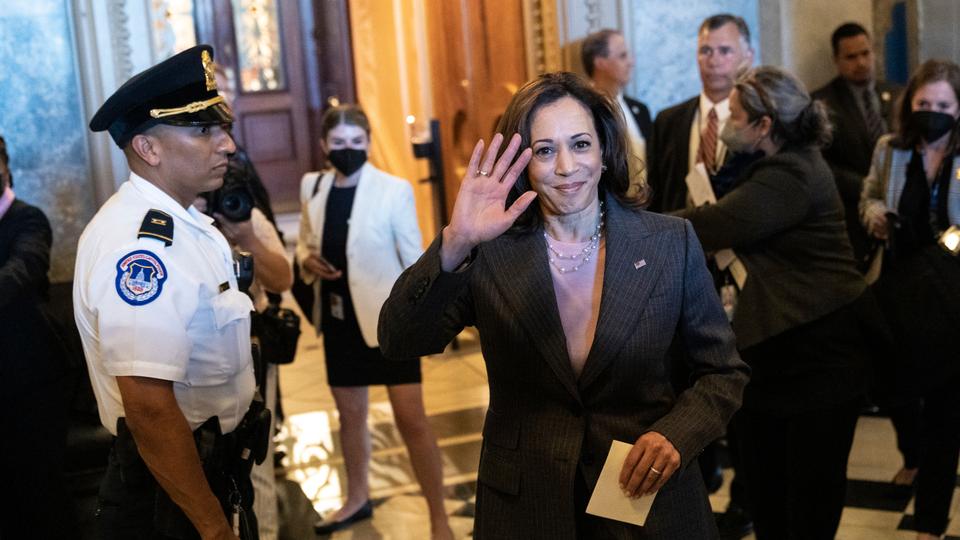
Vice President Kamala Harris waves as she departs the Senate after passage of the Inflation Reduction Act at the U.S. Capitol August 7, 2022 in Washington, DC.
(AFP)
Democrats pushed their election-year economic package to Senate passage, a hard-fought compromise less ambitious than President Joe Biden’s original domestic vision but one that still meets deep-rooted party goals of slowing global warming, moderating pharmaceutical costs and taxing immense corporations.
The estimated $740 billion package heads next to the House, where lawmakers are poised to deliver on Biden's priorities, a stunning turnaround of what had seemed a lost and doomed effort that suddenly roared back to political life. Cheers broke out as Senate Democrats held united, 51-50, with Vice President Kamala Harris casting the tie-breaking vote after an all-night session.
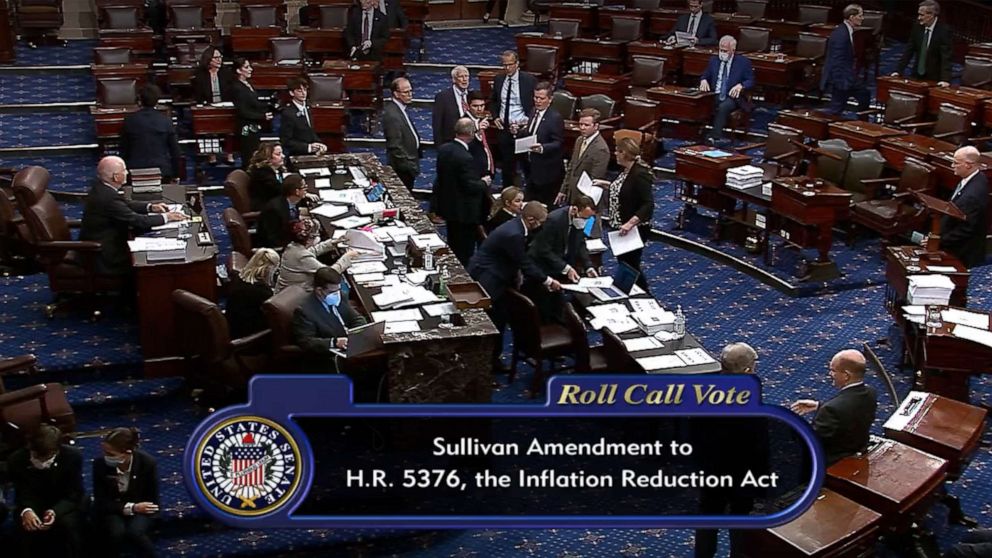
Senators engaged in a round-the-clock marathon of voting that began on Saturday and stretched late into Sunday afternoon. Democrats swatted down some three dozen Republican amendments designed to torpedo the legislation.
The bill ran into trouble midday over objections to the new 15 percent corporate minimum tax that private equity firms and other industries disliked, forcing last-minute changes.
Despite the momentary setback, the “Inflation Reduction Act” gives Democrats a campaign-season showcase for action on coveted goals. It includes the largest-ever federal effort on climate change — close to $400 billion — caps out-of-pocket drug costs for seniors on Medicare to $2,000 a year and extends expiring subsidies that help 13 million people afford health insurance. By raising corporate taxes and reaping savings from the long-sought goal of allowing the government to negotiate drug prices for Medicare, the whole package is paid for, with some $300 billion extra revenue for deficit reduction.
Barely more than one-tenth the size of Biden’s initial 10-year, $3.5 trillion Build Back Better initiative, the new package abandons earlier proposals for universal preschool, paid family leave and expanded child care aid. That plan collapsed after conservative Sen. Joe. Manchin, D-W.Va., opposed it, saying it was too costly and would fuel inflation.
Inflation Reduction Act
Nonpartisan analysts have said the 755-page “Inflation Reduction Act” would have a minor effect on surging consumer prices.
Republicans said the new measure would undermine an economy that policymakers are struggling to keep from plummeting into recession. They said the bill's business taxes would hurt job creation and force prices skyward, making it harder for people to cope with the nation's worst inflation since the 1980s.
In an ordeal imposed on most budget bills like this one, the Senate had to endure an overnight “vote-a-rama” of rapid-fire amendments.
It was the bill's chief protection for the 180 million people with private health coverage they get through work or purchase themselves. Under special procedures that will let Democrats pass their bill by simple majority without the usual 60-vote margin, its provisions must be focused more on dollar-and-cents budget numbers than policy changes.
But the thrust of Democrats' pharmaceutical price language remained. That included letting Medicare negotiate what it pays for drugs for its 64 million elderly recipients, penalizing manufacturers for exceeding inflation for pharmaceuticals sold to Medicare and limiting beneficiaries out-of-pocket drug costs to $2,000 annually.
The bill also caps Medicare patients' costs for insulin, the expensive diabetes medication, at $35 monthly. Democrats wanted to extend the $35 cap to private insurers but it ran afoul of Senate rules. Most Republicans voted to strip it from the package, though in a sign of the political potency of health costs seven GOP senators joined Democrats trying to preserve it.
The measure's final costs were being recalculated to reflect late changes, but overall it would raise more than $700 billion over a decade.
The money would come from a 15 percent minimum tax on a handful of corporations with yearly profits above $1 billion, a 1 percent tax on companies that repurchase their own stock, bolstered IRS tax collections and government savings from lower drug costs.
The Senate on Sunday passed the Inflation Reduction Act (IRA) along party lines, 51-50, handing Democrats a crucial legislative win as the midterm cycle ramps up.
Vice President Kamala Harris cast the tie-breaking vote with all Democrats in support of the legislation and all Republicans opposed. The proposal was passed via the budget reconciliation process, which allows it to be passed with a simple majority rather than the 60 votes typically needed to overcome a filibuster.
The passage of the sprawling climate, tax and health care legislation now sets up a vote in the Democratic-controlled House, where the bill is expected to pass before President Joe Biden signs it into law.
Included in the bill, supporters say, are measures to support job creation, raise taxes on large corporations and the wealthy, allow Medicare to negotiate down some prescription drug costs, expand the Affordable Care Act health care program and invest in combating climate change by implementing tax credits for clean energy initiatives, among other things.
The legislation's tax provisions, prescription drug-pricing reform, as well as boosted IRS tax enforcement measures, are anticipated to raise an estimated revenue of $739 billion -- $300 billion of which Democrats say would go toward reducing the deficit.
The plan would reduce federal budget deficits by $102 billion over 10 years, according to the nonpartisan Congressional Budget Office.
The bill passed the Senate after a punishing, approximately 16-hour "vote-a-rama," in which any senator could introduce an amendment to the bill as part of the budget reconciliation process.
The amendment process fueled painful votes for each party.
Vulnerable Democratic incumbents up for reelection this year had to dance around a vote on the Biden administration's decision to scrap Title 42, a Trump-era order using coronavirus concerns to prevent migrants from entering the country while seeking asylum. Republicans, meanwhile, mostly voted against a Democratic amendment that would have capped out-of-pocket insulin costs at $35 a month for people with private health insurance.
The IRA passage marks the culmination of grueling negotiations between Senate Majority Leader Chuck Schumer, D-N.Y., and Sen. Joe Manchin, D-W.Va., who had been a consistent obstacle to cobbling together a Democrats-only social spending bill via reconciliation.
The pathway for a successful vote was cemented late last week when Sen. Kyrsten Sinema, D-Ariz., another key centrist, signed on after winning some tweaks to the bill.
Senator Patrick Leahy is wheeled to an elevator from the Senate floor during amendment votes, also called the "vote-a-rama", on the Inflation Reduct Act 2022, at the U.S. Capitol building in Washington, Aug. 7, 2022.
Ken Cedeno/Reuters
Among the changes Sinema won were the eliminations of tax provisions targeting wealthy hedge fund managers and private equity executives. The Senate rules official also scrapped a provision intended to reprimand drug companies that raise the prices of some prescription drugs faster than inflation for patients with private insurance.
Still, the bill's passage marks a major step toward President Biden's campaign promises to tackle climate change, reform prescription drug pricing and other issues; and it gives Democrats a new legislative win to run on heading into the November midterms, in an environment where many voters have soured on Biden's handling of the economy and historic inflation.
The IRA also extends a streak of achievements for Biden and congressional Democrats, including passage of a bipartisan anti-gun violence bill and legislation to boost the domestic semiconductor industry.
"This bill is going to change America for decades," Schumer crowed after final passage.
"This vote crystalizes the contrast of the midterms. Senate Democrats have taken a historic step to lower costs like prescription drug prices, tackle inflation and address working families' most pressing concerns. Every Republican voted against the bill because it holds Big Oil, Big Pharma and other corporations that have been jacking up prices accountable, and finally makes them pay their fair share," added Sen. Gary Peters, D-Mich., the chair of Senate Democrats' campaign arm.
Republicans have already forecasted that they'll paint Democrats as uncaring about Americans' financial burdens at a time of rapid price hikes while passing billions of dollars in new spending.
"This idea that this massive tax increase will just somehow be absorbed by corporate America when they will pass those costs along to consumers, and it will make inflation worse," Senate Minority Whip John Cornyn, R-Texas, said last week.
Senate Democrats passed their first procedural vote on the Inflation Reduction Act on Saturday.
The motion to proceed on the $739 billion climate, tax and health care bill passed in a 51 to 50 vote. Vice President Kamala Harris cast the tie-breaking vote.
Now, Republicans and Democrats have up to 10 hours each to debate the spending bill, though it's not yet clear how much of the allotted debate time each side will use. After that, they'll move ahead to the consideration of amendments in a marathon session dubbed the "vote-a-rama."
Senators can offer an unlimited amount of amendments, and Republicans have already pledged to bring up several on issues like immigration, the border, energy and crime.
"What will vote-a-rama be like? It'll be like hell," Sen. Lindsey Graham, R-S.C., told reporters on Friday.
Senate Majority Leader Chuck Schumer, D-N.Y., said on Saturday the amendments won't discourage Democrats.
"These efforts will not deter us," he said during remarks on the Senate floor. "No matter how long it takes, the Senate is going to stay in session to finish this bill."
"We are not leaving until the job is done," he added.
Democrats are fast-tracking the legislation through a process known as reconciliation, which allows them to pass the bill through a simple majority vote. All 50 members of their caucus need to back the bill in order for it to pass, with Vice President Harris acting as a tiebreaker.
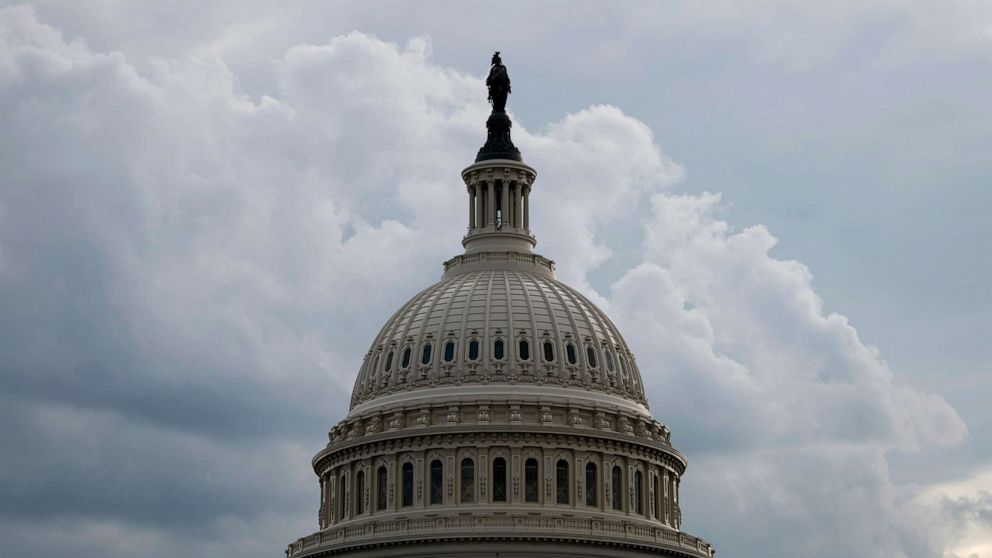
A general view of the U.S. Capitol Dome, in Washington, D.C., July 6, 2022.
Graeme Sloan/Sipa USA via AP, FILE
Sen. Kyrsten Sinema, D-Ariz., cleared the way for the Inflation Reduction Act to move forward when she announced her support on Thursday after tax provisions targeting wealthy hedge fund managers and private equity executives she opposed were removed from the bill.
Sinema, who was the last Democratic holdout, said she'd sign on "subject to the parliamentarian's review."
On Saturday, the parliamentarian gave the green light to most of the drug pricing provisions in the bill, except for a provision that aimed to penalize drug companies that raise the prices of some prescription drugs faster than inflation for patients with private insurance.
"Democrats have received extremely good news: for the first time, Medicare will finally be allowed to negotiate prescription drug prices, seniors will have free vaccines and their costs capped, and much more. This is a major victory for the American people," Schumer said.
Sen. Ron Wyden, D-Ore., said the parliamentarian also signed off on his committee's clean energy tax package, which includes consumer credits for Americans to make energy efficiency improvements to their homes and for those who purchase electric vehicles.
President Joe Biden celebrated the movement on the bill, which encompasses key portions of his agenda. It's a "game changer for working families and our economy," he said on Friday.
The White House said Saturday it was "heartened to see the Senate make progress" on the Inflation Reduction Act.
Republicans are expected to be unanimous in their opposition to the Inflation Reduction Act, and have heavily criticized Sen. Joe Manchin, D-W.Va., for striking up the deal with Schumer.
On the floor on Saturday, Senate Minority Leader Mitch McConnell, R-Ky., slammed the bill's climate provisions and drug pricing plans.
"American families don't want Democrats policing what kinds of clothes and clothes driers they can put in their homes. What they want is for Democrats to start actually policing our city streets," said McConnell.
- ABC News' Trish Turner and Allison Pecorin contributed to this report.
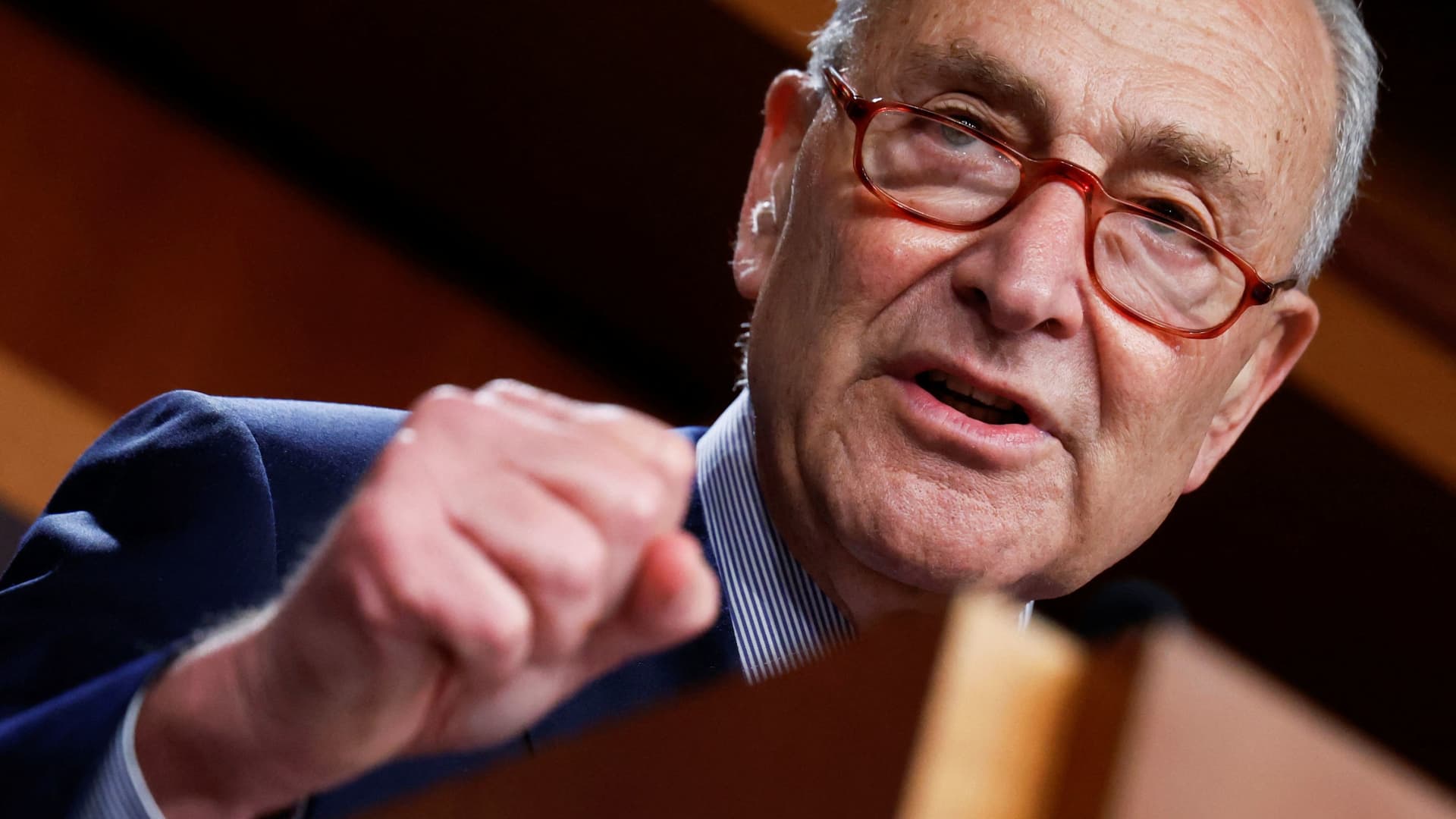
U.S. Senate Majority Leader Chuck Schumer (D-NY) holds his weekly news conference after the Democratic caucus party luncheon at the U.S. Capitol in Washington, August 2, 2022.
Jonathan Ernst | Reuters
The $430 billion climate change, health-care and tax bill passed by the U.S. Senate on Saturday delivers a major win for Democrats, and will help reduce the carbon emissions that drive climate change while also cutting costs for the elderly.
Democrats hope the bill, which they pushed through the Senate over united Republican opposition, will boost their chances in the Nov. 8 midterm elections, when Republicans are favored to recapture the majority in at least one chamber of Congress.
The package, called the Inflation Reduction Act, is a dramatically scaled-back version of a prior bill backed by Democratic President Joe Biden that was blocked by maverick Senate Democrats Joe Manchin and Kyrsten Sinema as too expensive.
"It's what the American people want," Senate Majority Leader Chuck Schumer told reporters. "We're prioritizing the middle class, working families, those struggling to get to the middle class, instead of what Republicans do: prioritize those at the very top."
The Senate's partisan 51-50 vote, with the tiebreaking vote coming from Vice President Kamala Harris, sends the legislation on to the Democratic-controlled House of Representatives, which is expected to pass it on Friday, after which Biden could sign it into law.
Republicans blasted the bill as a spending "wish list" that they argued would hurt an economy weighed down by inflation, saying it would kill jobs, raise energy costs and undermine growth at a time when the economy is facing a potential recession.
"Senate Democrats are misreading the American people's outrage as a mandate for yet another reckless taxing-and-spending spree," top Senate Republican Mitch McConnell said on Saturday. "Democrats want to ram through hundreds of billions of dollars in tax hikes and hundreds of billions of dollars in reckless spending -- and for what?"
About half of Americans -- some 49% -- support the bill, including 69% of Democrats and 34% of Republicans, according to a Reuters/Ipsos poll conducted Aug. 3 and 4. The most popular element of the bill is giving Medicare the power to negotiate drug prices, which 71% of respondents support, including 68% of Republicans.
Economists, who say the legislation could help the Federal Reserve combat inflation, do not expect a sizeable impact on the economy in the coming months.
Climate focus
With $370 billion in climate-focused spending, it would become the most consequential climate change bill ever passed by Congress.
The bill offers businesses and families billions in incentives to encourage purchases of electric vehicles and energy-efficient appliances, as well as to spur new investments in wind and solar power that would double the amount of new, clean electricity-generating capacity coming online in the United States by 2024, according to modeling by the Repeat Project at Princeton University.
That would help put the U.S. on course to meet its pledge to slash its greenhouse gas emissions in half by 2030 below 2005 levels, made at last year's Glasgow climate summit.
While environmental groups largely embraced the bill, they noted that compromises secured by Manchin, who represents coal-producing West Virginia, would prolong U.S. use of fossil fuels.
Those provisions include rules that would only allow the federal government to authorize new wind and solar energy developments on federal land when it is also auctioning rights to drill for oil and natural gas.
Drug costs
The legislation would lower drug costs for the government, employers and patients, said Juliette Cubanski, deputy director of the Medicare program at the Kaiser Family Foundation.
"Perhaps the biggest effect would be for people with prescription drug coverage through Medicare," she said.
A key change is the provision allowing the federal Medicare health plan for older and disabled Americans to negotiate lower prescription drug prices.
The pharmaceutical industry says price negotiation would stifle innovation. Negotiated prices for 10 of the costliest drugs for Medicare would apply starting in 2026, with that number rising until it caps at 20 a year in 2029.
The nonpartisan Congressional Budget Office estimates Medicare would save $101.8 billion over 10 years by negotiating drug prices.
The provision also introduces a $2,000 annual cap on out-of-pocket costs for the elderly through the Medicare program.
Tax provisions
The bill also imposes a new excise tax on stock buybacks, a late change after Sinema raised objections over another provision that would have imposed new levies on carried interest, currently a tax loophole for hedge fund and private equity financiers. The provision was dropped.
The excise tax is expected to raise an additional $70 billion in tax revenue per year, lawmakers said. That is more than the carried interest provision had been forecast to raise.
A report by the nonpartisan Congressional Budget Office released prior to that last change estimated the measure would reduce the federal deficit by a net $101.5 billion over the next decade.
That was about one-third of the $300 billion in deficit reduction predicted by Senate Democrats, but excluded a projected $204 billion revenue gain from increased Internal Revenue Service enforcement.
Lawmakers from both sides of the aisle shared their condolences after the tragic deaths of Rep. Jackie Walorski, R-Ind., her district director, and her communications director.
Walorski, 58, and her staffers, communications director Emma Thompson, 28, and district director Zachary Potts, 27, were all killed in a Wednesday head-on collision in Elkhart County, Indiana.
"It is with a heavy heart that I am sharing this statement from the Office of Congresswoman Jackie Walorski," House Minority Leader Kevin McCarthy, R-Calif., wrote on Twitter.
"Dean Swihart, Jackie’s husband, was just informed by the Elkhart County Sheriff’s office was killed in a car accident this afternoon," the statement from Walorski’s office shared by McCarthy read. "She has returned home to be with her Lord and Savior, Jesus Christ. Please keep your family in her thoughts and prayers. We will have no further comment at this time."
House Minority Whip Steve Scalise, R-La., said he was devastated "to hear the horrible news of the passing of Jackie Walorski and her two staffers."
"She was a dear friend who loved serving the people of Indiana in Congress," Scalise wrote. "My prayers are with her loving husband Dean, the rest of her family, and the families of the two staffers."
Prominent Democrats also shared their condolences following the deaths of Walorski and her two staffers, including Rep. Eric Swalwell, D-Calif., who said the news of the deaths was "the worst news."
"Just the worst news. Rest In Peace Jackie, a 2012 classmate, and her loyal staff Zachary r[and] Emma," Swalwell wrote. "Our office is praying for the families of Rep. Walorski, Zachary Potts, and Emma Thomson."
"I'm shocked and saddened to hear of the tragic death of Congresswoman Jackie Walorski," Transportation Secretary Pete Buttigieg wrote. "My thoughts and prayers are with her family and the other victims of this terrible crash."
The news of the deaths saw an outpouring of thoughts, prayers, and condolences from Walorski’s colleagues in Congress and beyond, across the political spectrum.
Walorski represented Indiana’s 2nd District since 2013 and was known as a bridge-building moderate.
"On August 3, 2022 at approximately 12:32 PM the Elkhart County Sheriff’s Office responded to a two vehicle crash on SR 19 south of SR 119," the sheriff's office told Fox News Digital.
"A northbound passenger car traveled left of center and collided head on with a southbound sports utility vehicle. All three occupants in the southbound vehicle died as a result of their injuries: Jackie Walorski, 58, Elkhart, Indiana Zachery Potts, 27, Mishawaka, Indiana Emma Thomson, 28, Washington, DC The sole occupant of the northbound vehicle, Edith Schmucker, 56, Nappanee, Indiana was pronounced deceased at the scen," the office continued. "The Elkhart County Coroner’s Office and the Elkhart County Sheriff’s Office are conducting the investigation. No additional information will be released at this time."
Fox News Digital’s Andrew Mark Miller contributed reporting.
Houston Keene is a politics reporter for Fox News Digital. Story tips can be sent to Houston.Keene@Fox.com and on Twitter: @HoustonKeene
Lawmakers on both sides of the aisle praised the White House on Monday after it was announced that the leader of al Qaeda, Ayman al Zawahiri, had been killed by a drone strike in Afghanistan.
Republicans and Democrats, alike, were quick to commend President Biden for taking action against the 71-year-old terrorist. Zawahiri, a one-time surgeon, had led al-Qaeda since the 2011 death of Osama bin Laden.
"Congratulations to the Biden Administration and all those brave Americans involved in the successful counterterrorism operation against al Qaeda leader Ayman al Zawahiri," said Sen. Lindsey Graham, R-S.C. "This is a significant event in the War on Terror. All those involved have delivered a strong message that America never forgets."
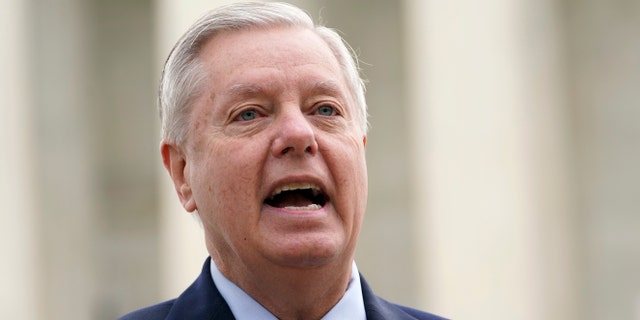
FILE - Sen. Lindsey Graham, R-S.C., speaks during a news conference outside the Supreme Court in Washington, Thursday, April 22, 2021. (AP Photo/Susan Walsh, File)
Zawahiri, who helped plan the September 11, 2001, terrorist attacks, was killed on Saturday by a drone strike in Kabul.
"The news of the successful hit on Ayman al-Zawahiri stopped me in my tracks," said Rep. Elissa Slotkin, D-Mich. "Targeting one senior leader does not end the capacity of an organization to attack, but it does send a message that, while it may take years, we do not forget those who attack us. I commend the President for making the tough call and the national security team for this success.
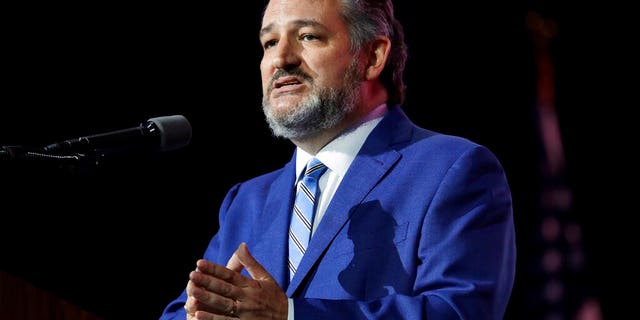
Sen. Ted Cruz, R-Texas, echoed the sentiment in a statement released to the public.
"All Americans will breathe easier today knowing Ayman al-Zawahiri, the leader of Al-Qaeda, has been eliminated," said Cruz. "This strike should be a message to terrorists near and far: if you conspire to kill Americans, we will find and kill you."
Sen. Ted Cruz, R-Texas, speaks during the Leadership Forum at the National Rifle Association Annual Meeting at the George R. Brown Convention Center Friday, May 27, 2022, in Houston. (AP Photo/Michael Wyke)
Although much of the response was positive, it was still not totally devoid of partisanship.
Some Democrats were quick to use the moment to score political points against Republicans, particularly former President Donald Trump.
"Trump recently hosted a Saudi-backed golf tournament and ridiculously said that nobody has gotten to the bottom of 9/11," said Rep. Ted Lieu, D-Calif. "Under Joe Biden, the United States killed Ayman al Zawahiri, one of the master planners of 9/11."
A few Republicans, meanwhile, called the "victory lap" being taken by Biden and lawmakers ridiculous.
"Zawahiri is credited in planning 9-11 …. but most Americans don’t know or have forgotten who he is, but once they know they will be glad he’s dead," said Rep. Marjorie Taylor Greene, R-GA. "But Joe’s victory lap is ridiculous."
Haris Alic covers Congress and politics for Fox News Digital. You can contact him at haris.alic@fox.com or follow him on Twitter at @realharisalic.
Reuters exclusively reported dozens of former Republican and Democratic officials announced a new national political third party yesterday to appeal to millions of voters they say are dismayed with what they see as America’s dysfunctional two-party system.
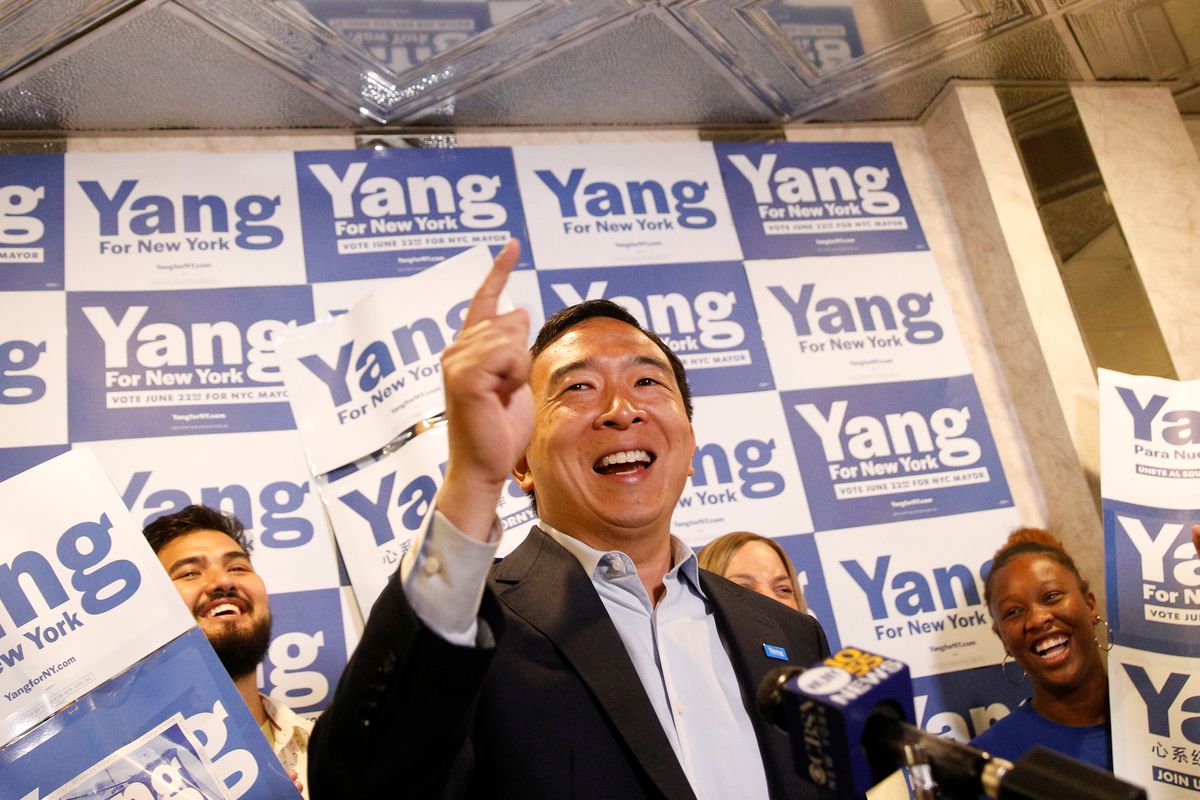
The new party, called Forward, will initially be co-chaired by former Democratic presidential candidate Andrew Yang and Christine Todd Whitman, the former Republican governor of New Jersey. The new party is being formed by a merger of three political groups that have emerged in recent years as a reaction to America’s increasingly polarized and gridlocked political system.