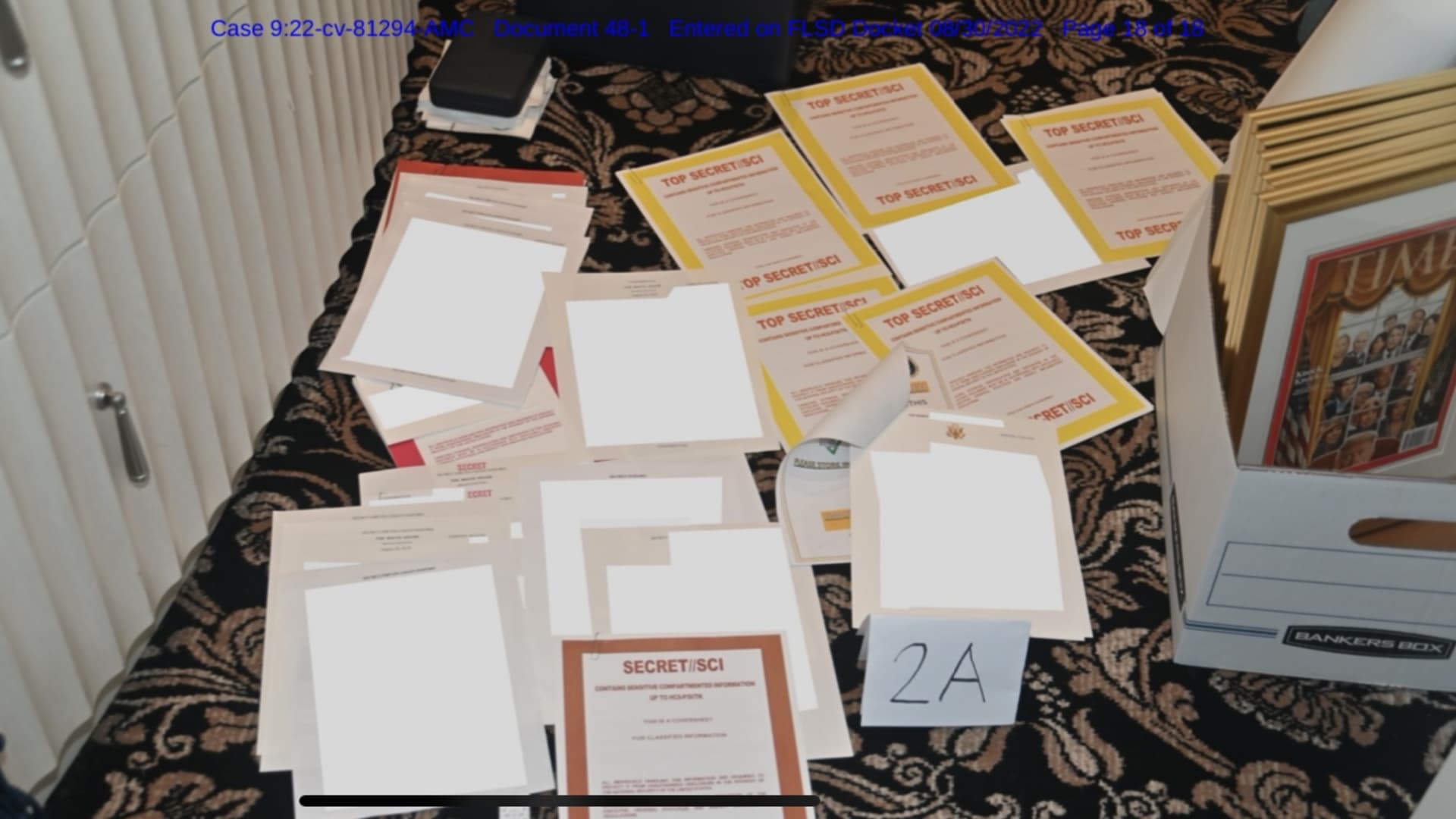
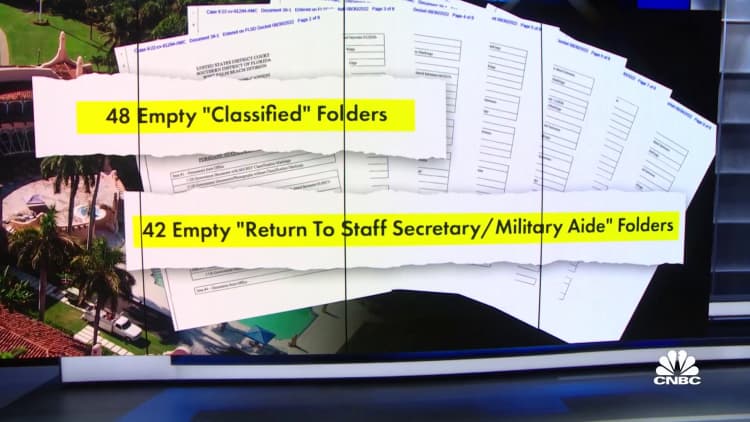
FBI agents found four dozen empty document folders marked "CLASSIFIED" during their raid last month of former President Donald Trump's residence at his Mar-a-Lago club, a newly unsealed court file revealed Friday.
Agents found 43 of those empty folders marked classified in Trump's office, according to the Department of Justice's inventory of the seized items, filed in U.S. District Court for the Southern District of Florida.
The remaining five empty folders with that marking were found in containers in a storage room.
The FBI also found another 42 empty folders marked "Return to Staff Secretary/Miliary [sic] Aide," during the Aug. 8 raid, which was authorized to search for government documents removed from the White House when Trump left office in Jan. 2021, the filing said.
Documents seized by FBI from Mar-a-Lago
Source: Department of Justice
Twenty-eight of those empty folders were found in Trump's office, while another 14 were in a storage room elsewhere, the document shows.
And FBI agents found more than 10,000 government documents and photographs without classification markings, the filing shows. Among those were hundreds of photos and news articles, along with gifts, clothing, and books.
The bombshell revelations raise the prospect that the DOJ has not yet recovered the documents that would have been in the empty folders.
The DOJ is investigating possible crimes related to the removal of those and other government documents from the White House when Trump left office in Jan. 2021.
By law, such records must be turned over to the National Archives and Records Administration.
CNBC Politics
Read more of CNBC's politics coverage:
It was signed by Miami U.S. Attorney Juan Gonzalez, and Jay Bratt, the chief of the counterintelligence and export control section of the national security division of the Justice Department.
"The seized materials will continue to be used to further the government's investigation, and the investigative team will continue to use and evaluate the seized materials as it takes further investigative steps, such as through additional interviews and grand jury practice," that notice says.
"It is important to note, 'review' of the seized materials is not a single investigative step but an ongoing process in this active criminal investigation," the document says.
Trump's spokesman in a series of tweets about the inventory of the seized items again criticized the raid.
"The new 'detailed' inventory list only further proves that this unprecedented and unnecessary raid of President Trump's home was not some surgical, confined search and retrieval that the Biden administration claims, it was a SMASH AND GRAB," wrote the spokesman, Taylor Budowich.
"These document disputes should be resolved under the Presidential Records Act, which requires cooperation and negotiation by NARA [National Archives and Records Administration], not an armed FBI raid," Budowich added.
Trump in a lawsuit filed in late August asked Cannon to appoint an independent watchdog, known as a special master, to review the items seized in the search before the DOJ is allowed to continue using the documents in the investigation.
Trump's lawyers have said a special master could check to see if some documents would be prohibited from being used in the probe because they are protected by either attorney-client privilege or executive privilege.
The DOJ has opposed the appointment of a special master, saying that it would delay the investigation, and that Trump does not own the documents.
Cannon, during a court hearing in Florida on that dispute Thursday, said she will issue a ruling on the special master request in "due course."
Cannon, a Trump appointee, previously shared her "preliminary intent" to grant Trump's request for a special master. The judge suggested in Thursday's hearing that she is still considering that appointment, news outlets reported.
The Department of Justice released a version of the document it used to convince a judge to issue a warrant to seize documents from former President Donald Trump's Mar-a-Lago residence. The affidavit, which a judge ordered the Justice Department to release, lays out why the FBI felt there was probable cause that crimes had been committed.
Despite redactions, the affidavit includes many new details and clues about why the FBI and the National Archives worried about "a lot of classified records" mixed in with other things at Trump's house, which is also a private club and resort.
The first redaction in the document, on the first page, is the name of the FBI agent who wrote and signed this 32-page affidavit.
We also definitively see the FBI is conducting a criminal investigation, although it does not specifically name former President Donald Trump as the target, and that the National Archives referred the potentially illegal activity after retrieving 15 boxes of documents, which intermingled classified documents with other things from Trump in January.
The affidavit is redacted to shield the identities of witnesses, details about a federal grand jury, and to hide specifics about the ongoing investigation. Magistrate Judge Bruce Reinhart ruled the redactions were "narrowly tailored to serve the Government’s legitimate interest in the integrity of the ongoing investigation."
The FBI was initially investigating the 15 boxes already turned over by Trump. They wanted to know how those boxes got to Mar-a-Lago, whether classified documents were stored improperly and whether people who should not have seen classified information saw these documents.
The FBI agent who signed the affidavit ****cites experience and training with counterintelligence and espionage investigations and the use and storage of sensitive information.
What’s not clear is what led the FBI to believe there were additional documents at Mar-a-Lago. CNN has reported that at some point the DOJ began to suspect the Trump team was not being truthful and a witness came forward.
The agent says this affidavit is not exhaustive of the facts known by the FBI. It simply establishes probable cause for the search. It also, conversely, does not allege a crime against Trump or anyone else. This is common boilerplate language often found in FBI affidavits.
Read 18 U.S. Code § 793 here. It concerns “gathering, transmitting or losing defense information.”
The system of classifying information as sensitive or classified is not set out in law. Rather, the rules are spelled out in a presidential executive order. The most recent update came during the Obama administration, with Executive Order 13526. Read it.
This page outlines some of the different classifications of information. Even though we get very little information about the specific nature of classified documents Trump had, we can infer from the inclusion of these definitions that the documents at Mar-a-Lago ranged from Top Secret -- requiring special storage -- to even more restrictive sub-classifications that required special access.
CNN’s Katie Bo Lillis laid out the various classifications here.
HUMINT involves human intelligence, and disclosing identities could put sources who provide information to the US at risk in foreign countries.
NOFORN is an important designation because it signifies information that is not supposed to be given to foreign governments or individuals without an OK from the agency that developed or obtained the intelligence.
Here we learn the sections of federal law and regulations that may have been violated.
The Code of Federal Regulations — or CFR — is published annually by federal agencies. 32 C.F.R Parts 2001 and 2003 are federal regulations from the National Archives related to the handling of classified national security information.
But the affidavit also cites Title 18 of the US Code — that’s federal law. 18 US § 1519 has to do with the “destruction, alteration, or falsification of records in Federal investigations and bankruptcy.” Read it.
18 US Code § 2071 has to do with the “concealment, removal, or mutilation generally” of federal documents or property. Read it.
The PRA is the Presidential Records Act, passed by Congress in the aftermath of Richard Nixon’s failed attempt to take presidential documents with him out of the White House after Watergate. For an explanation of why the American public, and not the former president, own Trump’s presidential documents, click here.
A good portion of what we have learned about this case, including the first news of the search itself, has come either from Trump’s own statements or disclosures by his allies.
We’re getting heavily into redactions here.
Here’s that CBS affiliate report. Remember, this is two days before President Joe Biden took office. The images of moving trucks at Mar-a-Lago were captured by news helicopters keeping watch on Trump’s soon-to-be permanent address.
Points 24-37 in the affidavit establish probable cause. Starting on this page we shift to “Provision of the Fifteen Boxes to NARA.”
An important date here. By early May 2021, a few months after Trump left office, the Archives had already established that it was missing documents covered under the Presidential Records Act and was told 12 boxes had been “found” and were ready for pick up at Mar-a-Lago. See a full timeline of what we know.
After the affidavit was released, Trump responded on Truth Social, calling it "a total public relations subterfuge by the FBI & DOJ.”
This is important. The FBI identified 184 classified documents in the 15 boxes given by Trump to the Archives. These included 92 documents classified SECRET and 25 documents classified TOP SECRET.
The documents have additional markings, such as NOFORN, and also handwritten notes by Trump.
“Based on my training and experience, I know that documents classified at these levels typically contain” national defense information, the affidavit says.
We have entered a new portion of the affidavit, which outlines that there was classified information in the 15 boxes of presidential records Trump turned over to the Archives in January 2022.
The Justice Department left unredacted Trump’s claim, through his lawyers, that he could issue some sort of blanket declassification order. It also describes a claim from Kash Patel, a former Trump national security aide who was named as one of Trump’s designees to the National Archives in June.
CNN’s Jeremy Herb noted: The investigator who wrote the affidavit cited a May article from right-wing website Breitbart, in which Patel claimed reports that the National Archives found classified material at Mar-a-Lago were “misleading” because Trump had declassified the materials.
The rest of the section in the affidavit, however, is classified, so it’s not clear why federal investigators cited Patel’s comments.
Since the FBI’s search, Trump has pointed to a January 19, 2021, memo in which he declassified documents related to the FBI’s Russia investigation. There’s no evidence, however, that those materials were what the FBI was looking for when it searched Mar-a-Lago earlier this month.
More important clues.
A DOJ lawyer says the documents in the 15 boxes were removed from a secure facility at the White House on January 20, 2021, the day Trump left office.
The lawyer specifically told Trump’s lawyers the documents were not handled appropriately and asks Trump’s attorney to secure and preserve the room at Mar-a-Lago where the 15 boxes had been stored.
If nothing else, we know Trump’s lawyers saw DOJ’s request.
The DOJ has redacted its arguments laying out probable cause for the August search at Mar-a-Lago. CNN’s Marshall Cohen, Tierney Sneed and Jeremy Herb reported that in a legal brief also made public Friday, prosecutors wrote that these details had to be redacted because they would provide a "road map" to the investigation and that revealing "this information could thus adversely impact the government's pursuit of relevant evidence." Read more here.
Here are some new details. The FBI was looking at more than a storage room and Trump’s “45 Office.” They also focused on his “residential suite” and a room identified as Pine Hall. Here’s a picture of Pine Hall from the Library of Congress. It’s described as “antechamber to the owner’s suite.”
The FBI took pains to make clear that Mar-a-Lago club members would not be disturbed by the search.
The conclusion asks for a search warrant, which was granted and then kept under seal. Read key lines from that document here.
Two teams of agents were sent to Mar-a-Lago. The Case Team was the main group of agents on the case and they were planning to search the storage room. A second team, the Privilege Review Team, searched Trump’s office and sought to separate any documents with information that could be considered “attorney-client privileged” and keep those away from the Case Team.
Earlier this week, Trump’s legal team asked for a “special master” to review the materials that were retrieved under the search warrant. Their request is still pending.
The affidavit was submitted on August 5, a Friday. The search was conducted the next Monday, August 8.
This May letter from Trump’s attorney complained there had been public reporting about the DOJ investigation into Trump’s handling of classified documents. It argued that he voluntarily handed over documents, which may be an oversimplification.
Trump’s lawyer argued the president has sweeping “unfettered” authority to declassify documents — and that neither presidents nor former presidents can be prosecuted with regard to classified documents. That’s the heart of Trump’s defense so far.
Trump’s lawyer demanded that his letter arguing Trump had “unfettered” ability to de-classify documents be presented to any judge considering the matter. On that request, the FBI complied.
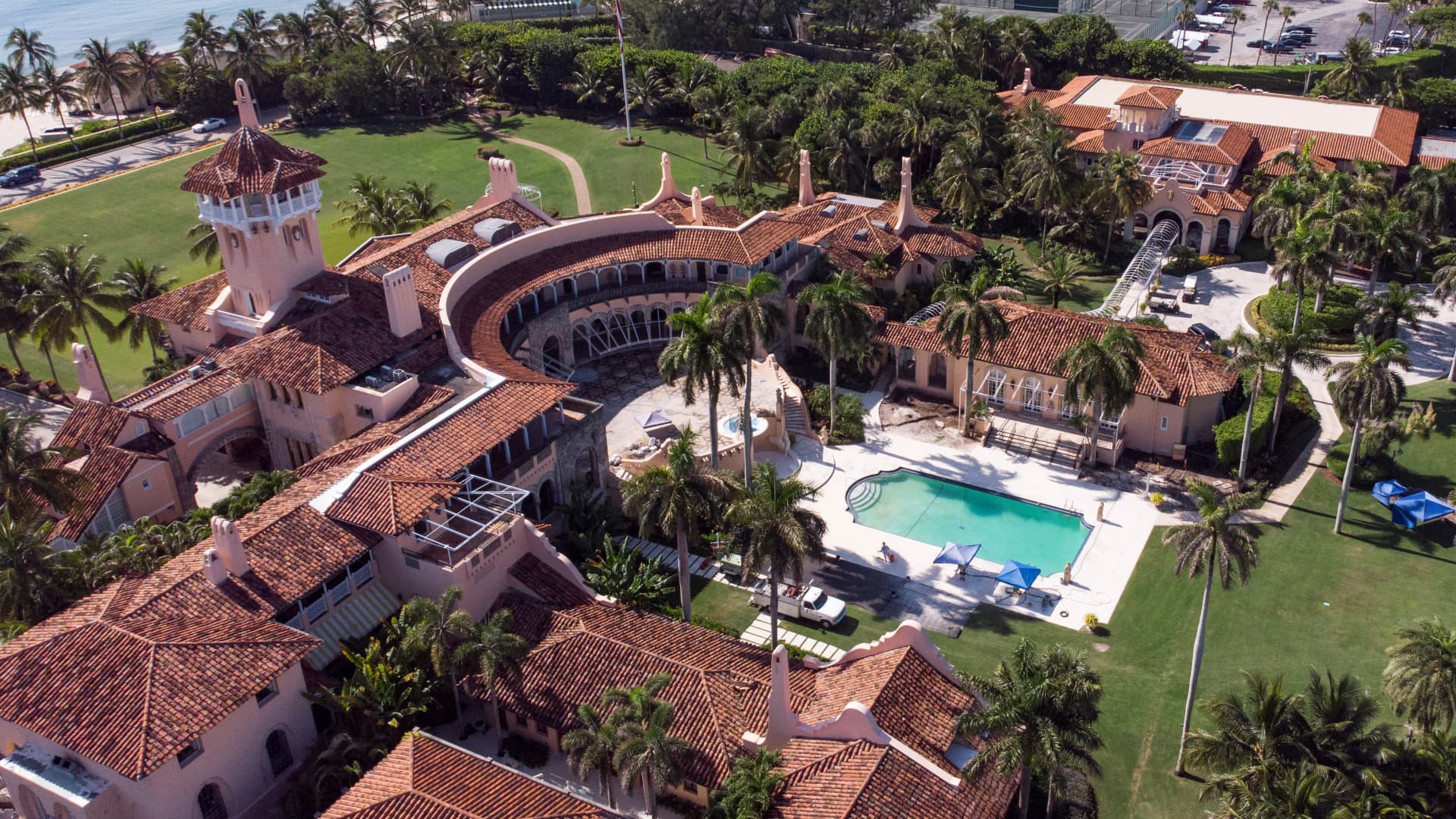
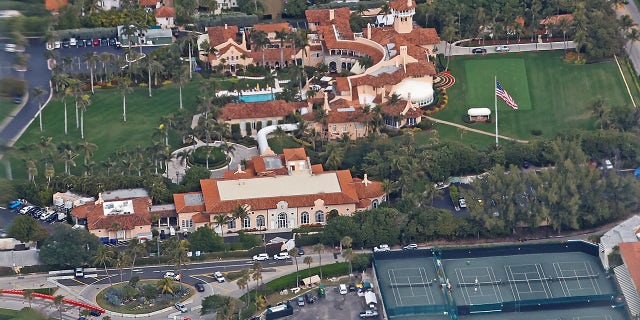
Here’s a description of Mar-a-Lago, Trump’s sprawling 58-bedroom Florida estate. The FBI promised that the search, according to the affidavit, would not extend beyond areas used by Trump.
The first thing the FBI wanted to do was seize any classified documents and the boxes or containers that held them. The last was any evidence of “knowing alteration, destruction, or concealment” of records.
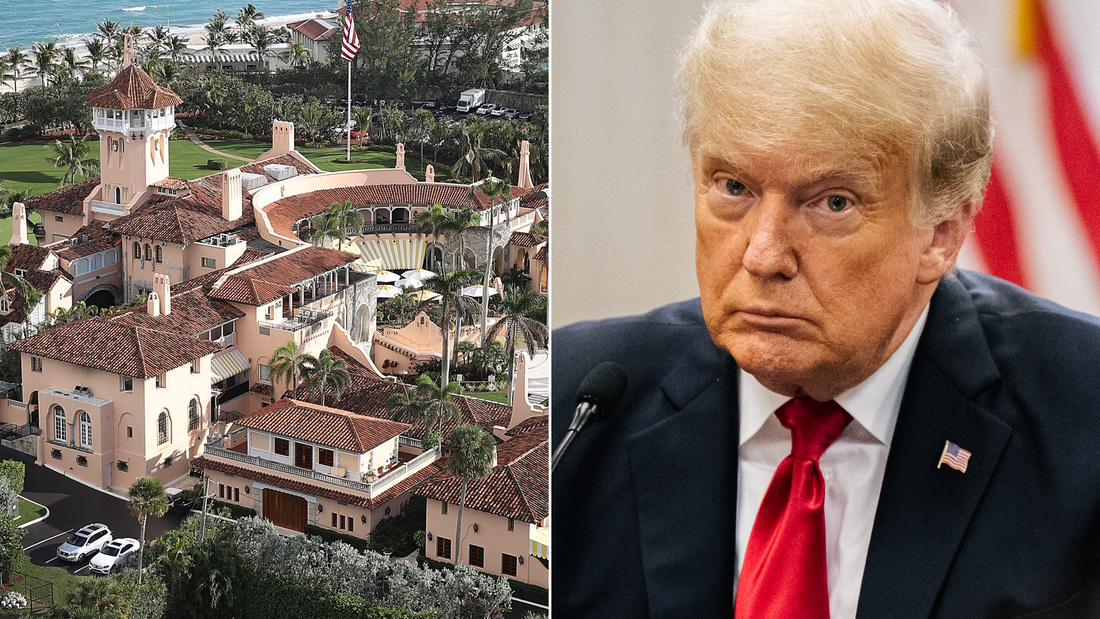
An aerial view of former U.S. President Donald Trump's Mar-a-Lago home after Trump said that FBI agents raided it, in Palm Beach, Florida, U.S. August 15, 2022.
Marco Bello | Reuters
A federal judge appointed by former President Donald Trump ordered him Tuesday to answer several key questions about his new lawsuit related to the FBI raid on his Florida home, including why her court should be the one hearing the case and to more precisely explain what he wants her to do.
Judge Aileen Cannon also ordered Trump to tell her how his suit affects another pending case involving the same search warrant before a federal magistrate judge in the same court, and whether the Department of Justice has been served with his lawsuit yet.
Cannon also wants to know if Trump is seeking any injunctions related to material seized in the raid until the lawsuit is resolved.
Cannon's order came a day after Trump filed suit in U.S. District Court for the Southern District of Florida, asking her to appoint a so-called special master to review documents seized Aug. 8 in the FBI raid on his Mar-a-Lago resort residence in Palm Beach.
The judge, whom Trump appointed to that court in 2020, gave him and his lawyers until Friday to answer her questions.
Trump wants to block the DOJ from examining the seized documents until a special master looks at them. The step is typically taken when there is a chance that some evidence should be withheld from prosecutors because of various legal privileges.
The DOJ is conducting a criminal investigation related to the documents being removed from the White House when Trump left office in January 2021. By law, presidential records are required to be turned over to the National Archives.
A warrant authorizing the FBI's search-and-seizure operation at Mar-a-Lago shows that the DOJ is probing potential violations of laws related to espionage and obstruction of justice. Multiple sets of documents marked top secret were seized in the raid.
Trump claims the raid was illegal and motivated by a desire to harm his chances of regaining the White House if he decides to run again.
CNBC Politics
Read more of CNBC's politics coverage:
Cannon in her order Tuesday wrote: "The Court is in receipt of Plaintiff's Motion for Judicial Oversight and Additional Relief."
"To facilitate appropriate resolution, on or before August 26, 2022, Plaintiff shall file a supplement to the Motion further elaborating on the following: (1) the asserted basis for the exercise of this Court's jurisdiction, whether legal, equitable/anomalous, or both; (2) the framework applicable to the exercise of such jurisdiction;" Cannon wrote.
The judge also told Trump's team to detail "the precise relief sought, including any request for injunctive relief pending resolution of the Motion; (4) the effect, if any, of the proceeding before Magistrate Judge Bruce E. Reinhart; and (5) the status of Plaintiff's efforts to perfect service on Defendant."
Reinhart signed the warrant authorizing the raid. He is considering requests by media outlets to unseal an affidavit that the DOJ filed, which laid out the need for the search and events leading up to it.
Earlier Tuesday, the National Archives posted online a letter that said classified material was found in boxes that Trump turned over to that agency in January.
The material, which spans 700 pages, includes ones related to top secret, sensitive compartmented information and special access programs, the National Archives letter said.
Former US president's attorneys say materials taken from Trump's Florida residence were “presumptively” covered by executive privilege and the FBI review should be overseen by a "special master".
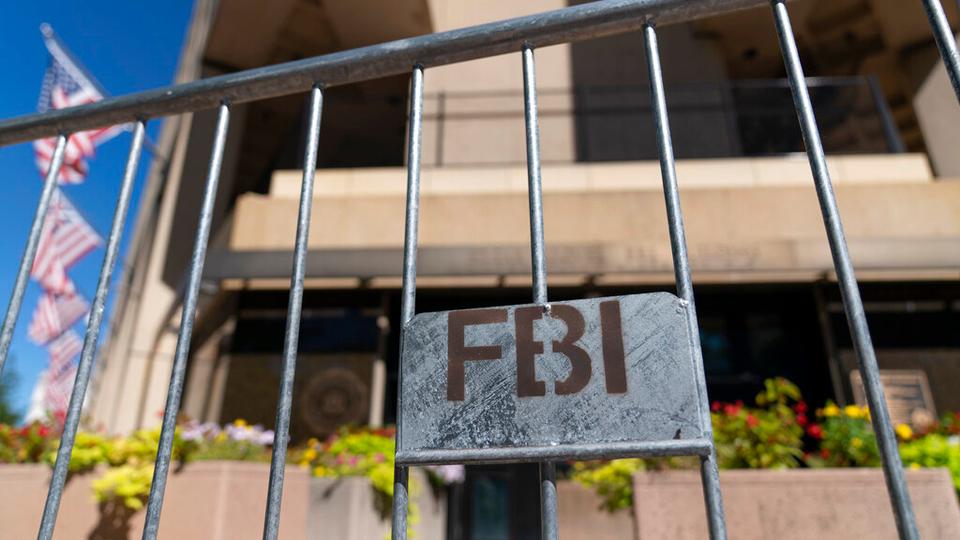
The Federal Bureau of Investigation building headquarters as seen in Washington, US, on August 13, 2022.
(AP)
Lawyers for former President Donald Trump have asked a federal judge to prevent the FBI from continuing a review of documents recovered from his Florida estate earlier this month until a neutral "special master" can be appointed.
The attorneys asserted in a court filing on Monday, their first since the FBI search of Mar-a-Lago two weeks ago, that the sets of documents taken from the residence were “presumptively” covered by executive privilege.
“This matter has captured the attention of the American public. Merely ‘adequate’ safeguards are not acceptable when the matter at hand involves not only the constitutional rights of President Trump, but also the presumption of executive privilege,” the attorneys wrote.
Trump's court motion, filed in a federal court in West Palm Beach, Florida, also demanded that the US Justice Department provide him with a more-detailed property receipt outlining the items the FBI seized from his Mar-a-Lago home during its August 8 search, and asked investigators to return any items that were not within the scope of the search warrant.
Separately on Monday, a federal judge acknowledged that redactions to an FBI affidavit spelling out the basis for the search might be so extensive as to make the document “meaningless” if released to the public.
A written order from US Magistrate Judge Bruce Reinhart largely restates what he said in court last week, when he directed the Justice Department to propose redactions about the information in the affidavit that it wants to remain secret. That submission is due Thursday at noon.
Justice Department officials have sought to keep the entire document sealed, saying disclosing any portion of it risks compromising an ongoing criminal investigation, revealing information about witnesses and divulging investigative techniques. They have advised the judge that the necessary redactions to the affidavit would be so numerous that they would strip the document of any substantive information and make it effectively meaningless for the public.
Reinhart acknowledged that possibility in his Monday order, adding, “I may ultimately reach that conclusion after hearing further from the Government.”
READ MORE:US judge to consider partially unsealing affidavit behind Trump home raid
[embed]https://www.youtube.com/watch?v=2aSJccrT7dg[/embed]
Call for releasing materials
Several news organizations, including The Associated Press, have urged the judge to unseal additional records tied to this month's search of Mar-a-Lago, when FBI officials said they recovered 11 sets of classified documents, including top secret records, from the Florida estate.
Of particular interest is the affidavit supporting the search, which presumably contains key details about the Justice Department's investigation examining whether Trump retained and mishandled classified and sensitive government records.
Trump and some of his supporters have also called for the document to be released, hoping it will expose what they contend was government overreach.
In his written ruling, Reinhart said the Justice Department had a compelling interest in preventing the affidavit from being released in its entirety. But he said he did not believe it should remain fully sealed, and said he was not persuaded by the department's arguments that the redaction process “imposes an undue burden on its resources."
READ MORE: US Justice Department opposes disclosure of affidavit on Trump's house raid
Source: AP
A federal judge said that parts of the affidavit used to obtain a search warrant for former President Donald Trump's resort home Mar-a-Lago can be unsealed, NBC News reported Thursday.
The decision from U.S. Magistrate Judge Bruce Reinhart came after the Department of Justice asked him not to unseal the highly sensitive document, which details the government's view that it had probable cause to believe the search of Mar-a-Lago would turn up evidence of illegality.
The government's investigation into the records seized from Trump's Palm Beach, Florida, residence is still in its "early stages," argued Jay Bratt, head of a DOJ counterintelligence team, NBC reported.
The affidavit contains "substantial grand jury" information in a case with "national security overtones," Bratt reportedly said in the hearing.
Reinhart disagreed, saying he believed "there are portions of it that can be unsealed."
An aerial view of former U.S. President Donald Trump's Mar-a-Lago home after Trump said that FBI agents raided it, in Palm Beach, Florida, U.S. August 15, 2022.
Marco Bello | Reuters
In a written order later Thursday, Reinhart wrote, "As I ruled from the bench at the conclusion of the hearing, I find that on the present record the Government has not met its burden of showing that the entire affidavit should remain sealed."
The judge gave the government a week to file proposed redactions to the affidavit.
The prosecutors had previously urged the court to reject calls from media outlets and other entities to disclose the affidavit, which supported the search warrant used by FBI agents in the Aug. 8 raid on Mar-a-Lago.
Trump has publicly called for the affidavit to be released without redactions, though his lawyers have not yet filed a motion asking the judge to do so.
The former president "has made his view clear that the American people should be permitted to see the unredacted affidavit related to the raid and break-in of his home," his spokesman Taylor Budowich said on Twitter after the hearing. His tweets praised Reinhart for rejecting "the DOJ's cynical attempt to hide the whole affidavit from Americans," but insisted that "no redactions should be necessary."
The search warrant itself had been publicly released with the DOJ's approval last week. That document and attachments indicated that the agents were looking for materials related to three criminal statutes, one of which was part of the Espionage Act.
Attorney General Merrick Garland, who said he personally approved the warrant, supported its disclosure in light of the "substantial public interest in this matter."
But the affidavit "presents a very different set of considerations," federal prosecutors wrote in a court filing Monday.
The still-sealed document contains "critically important and detailed investigative facts" about witnesses and other "highly sensitive information" related to the ongoing criminal probe, which "implicates national security," the prosecutors wrote.
If disclosed, the affidavit would be "highly likely to compromise future investigative steps," said the filing, which was signed by Bratt, the head of the Counterintelligence and Export Control Section of the DOJ's National Security Division.
The current criminal investigation stems from a probe of government records that were transferred to Mar-a-Lago instead of the National Archives after Trump left office in 2021.
FBI agents sought all records and other evidence "illegally possessed" in violation of three criminal statutes, according to the search warrant and property receipt released last week. The agents seized 20 boxes of items and other materials, including multiple sets of documents marked top secret and classified, the property receipt showed.
None of the three statutes — Title 18 of the United States Code, Sections 793, 1519 and 2071 — hinge on whether the documents in question were classified.
Specifically, CNN and the other outlets are asking for the US District Court for the Southern District of Florida to unseal the entire record filed with the court, including all probable cause affidavits filed in support of the search warrant. These lay out why investigators believe that there is probable cause that a crime was committed and the evidence of that crime existed in recent days at the site where the search was sought.
The request was filed after the Justice Department submitted its own request with the federal court to unseal certain warrant materials. In remarks announcing the request, Attorney General Merrick Garland said the Justice Department is seeking the release of the "search warrant and property receipt" from the FBI's search.
In the unsealing filing by CNN and the other outlets with the court, they pointed to "the historic importance of these events."
"Before the events of this week, not since the Nixon Administration had the federal government wielded its power to seize records from a former President in such a public fashion," the outlets said in the filing.
The filing said that "tremendous public interest in these records in particular outweighs any purported interest in keeping them secret."
"The Media Intervenors certainly do not seek these records for any illegitimate purpose," the outlets said. "To the contrary, public access to these records will promote public understanding of this historically significant, unprecedented execution of a search warrant in the residence of a former President."
The Department of Justice filed a motion on Monday opposing the release of the affidavit that was used to justify the search of former President Donald Trump's Mar-a-Lago home.
"If disclosed, the affidavit would serve as a roadmap to the government’s ongoing investigation, providing specific details about its direction and likely course, in a manner that is highly likely to compromise future investigative steps," the 13-page filing says.
"The fact that this investigation implicates highly classified materials further underscores the need to protect the integrity of the investigation and exacerbates the potential for harm if information is disclosed to the public prematurely or improperly."
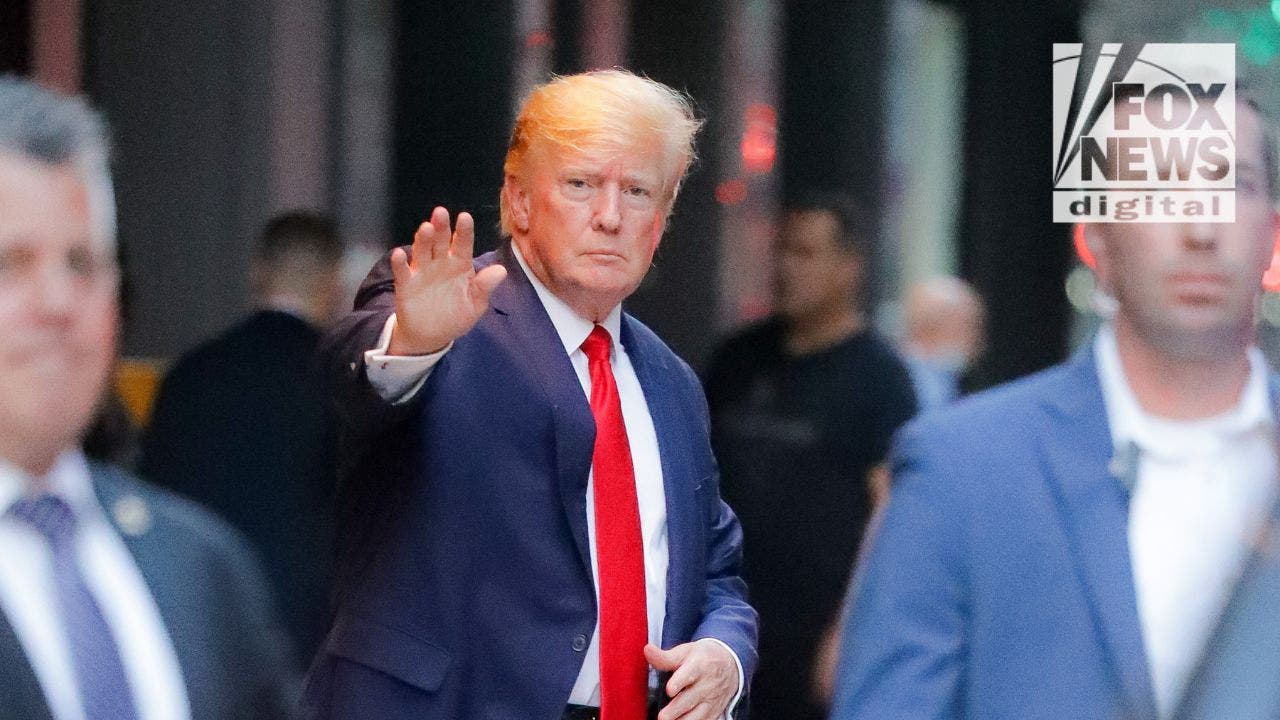
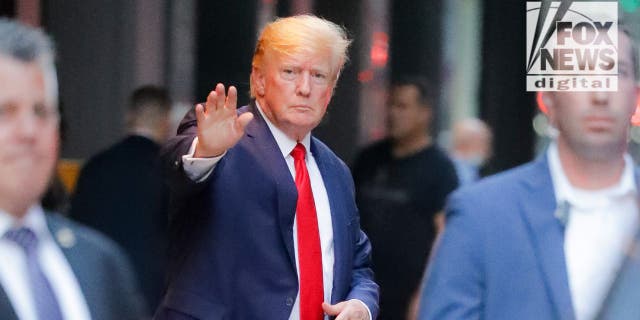
Donald Trump leaves New York City after the FBI raid on his Mar-a-Lago resort.
(Felipe Ramales: Fox News Digital)
A judge unsealed the search warrant and property receipt on Friday, which revealed that FBI agents seized approximately 20 boxes of items from Trump's home, including one set of documents marked as "Various classified/TS/SCI documents," which refers to top secret/sensitive compartmented information.
"The government determined that these materials could be released without significant harm to its investigation because the search had already been executed and publicly acknowledged by the former President, and because the materials had previously been provided to the former President through counsel," the Justice Department wrote in Monday's filing.
"Disclosure at this juncture of the affidavit supporting probable cause would, by contrast, cause significant and irreparable damage to this ongoing criminal investigation."
Mar-a-Lago in Palm Beach is seen on Jan. 20, 2021.
(Reuters/Carlos Barria)
Trump has called the raid an "assault on a political opponent," saying that FBI agents took three of his passports during the raid.
"There has never been a time like this where law enforcement has been used to break into the house of a former president of the United States, and there is tremendous anger in the country — at a level that has never been seen before, other than during very perilous times," Trump told Fox News Digital in an exclusive interview.
The Justice Department said Monday that it does not oppose the release of other documents, such as cover sheets for the warrant and the government's motion to seal.
Other lawmakers have also called for the release of the affidavit and other documents supporting the search warrant from Trump's home.
Democratic and Republican leaders of the Senate Intelligence Committee sent a letter to Attorney General Merrick Garland and Director of National Intelligence Avril Haines on Sunday, requesting the specific intelligence documents seized from Mar-a-Lago.
Sen. Lindsey Graham, R-S.C., tweeted on Monday afternoon that it is "imperative the Justice Department release the affidavit justifying the raid."