‏إظهار الرسائل ذات التسميات Zimbabwe. إظهار كافة الرسائل

Recent Match Report - Zimbabwe vs Australia 1st ODI 2022

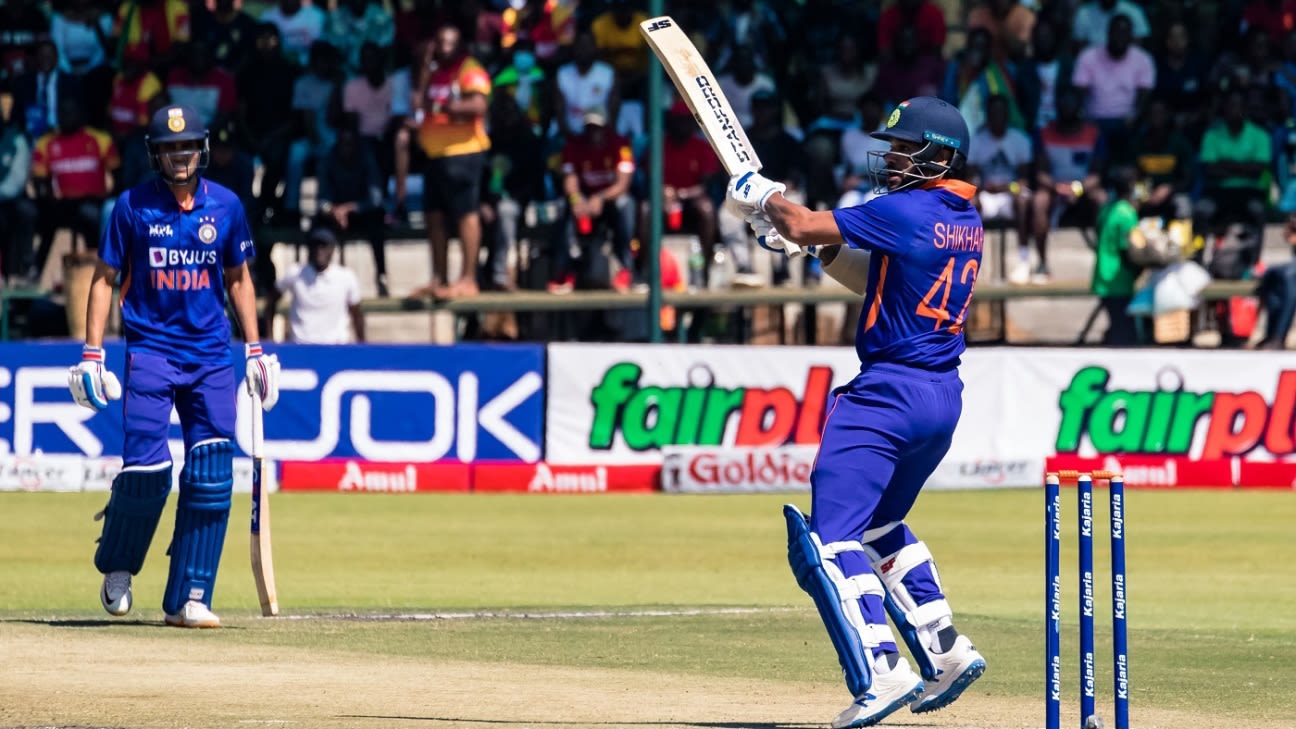
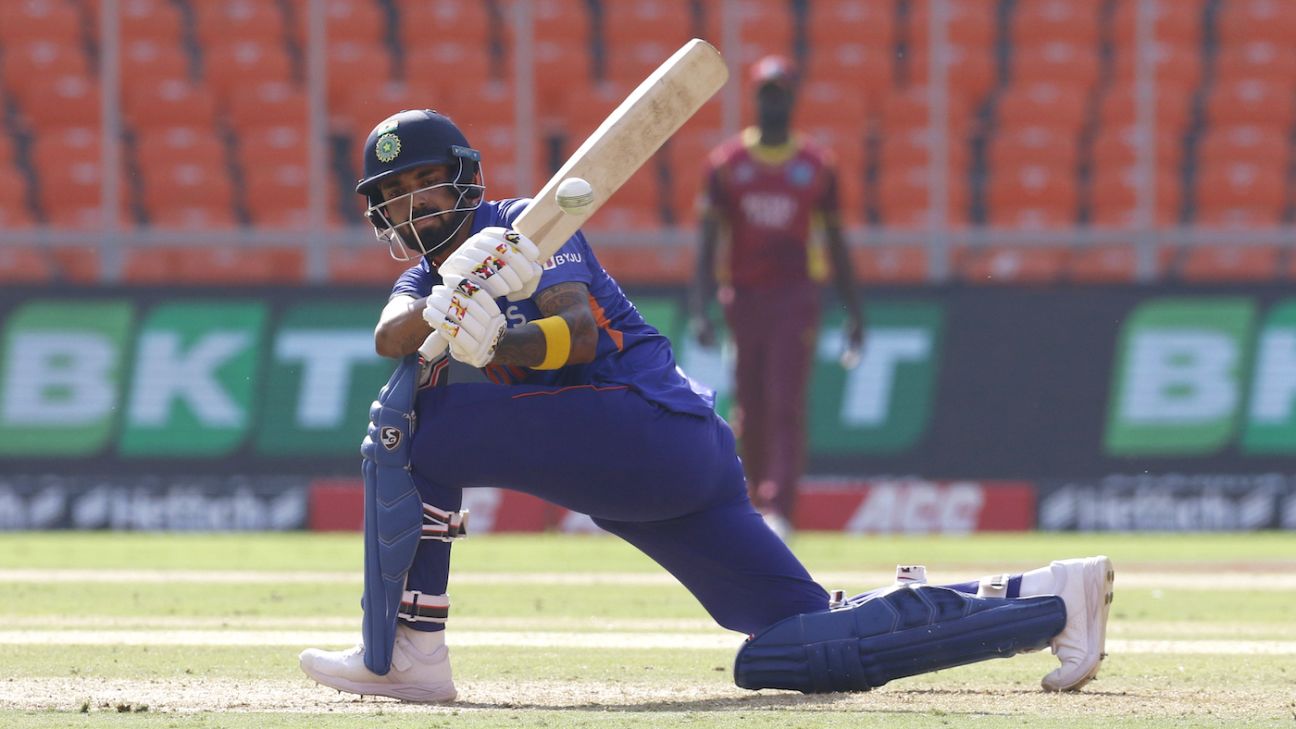
Australia 201 for 5 (Warner 57, Smith 48*, Burl 3-60) beat Zimbabwe 200 (Madhevere 72, Green 5-33, Zampa 3-57) by five wickets

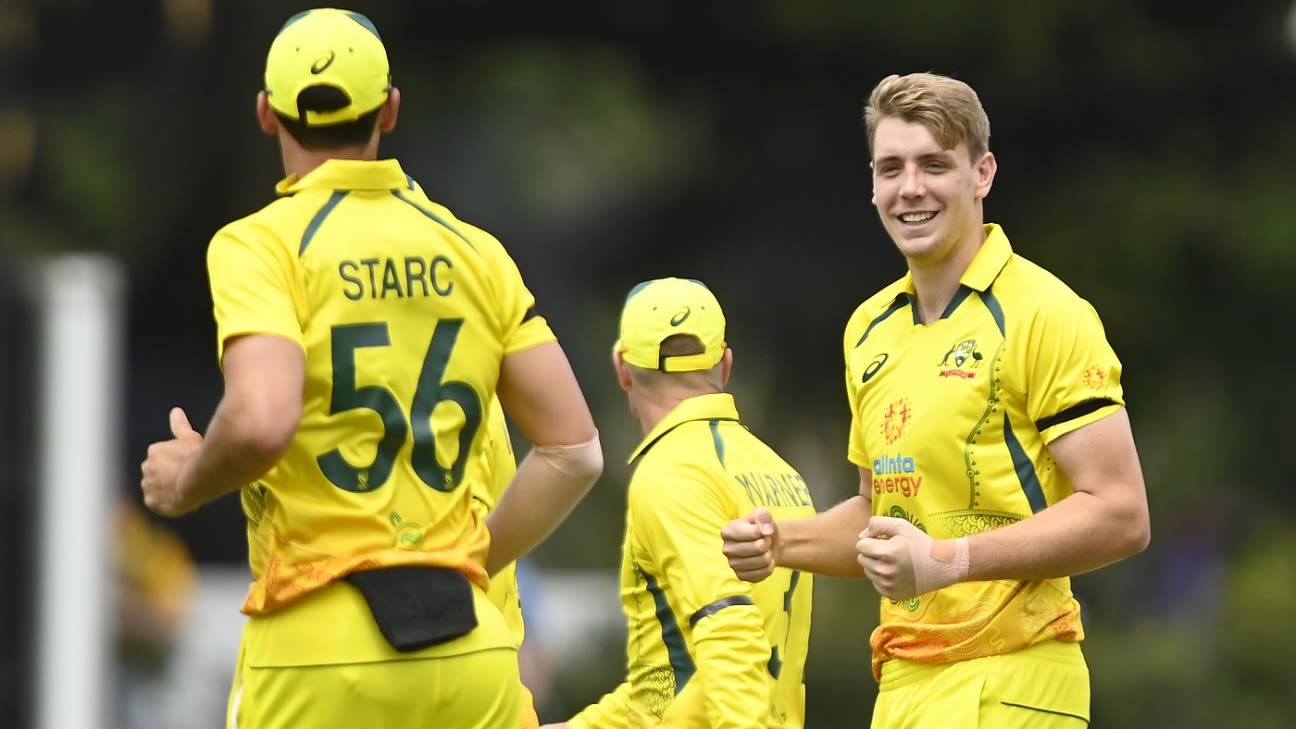
The first five-wicket haul of Cameron Green's international career set Australia up for a comfortable victory over Zimbabwe in the first ODI in Townsville to mark the early start to their season, although they needed to work hard to break the back of the visitors' batting.
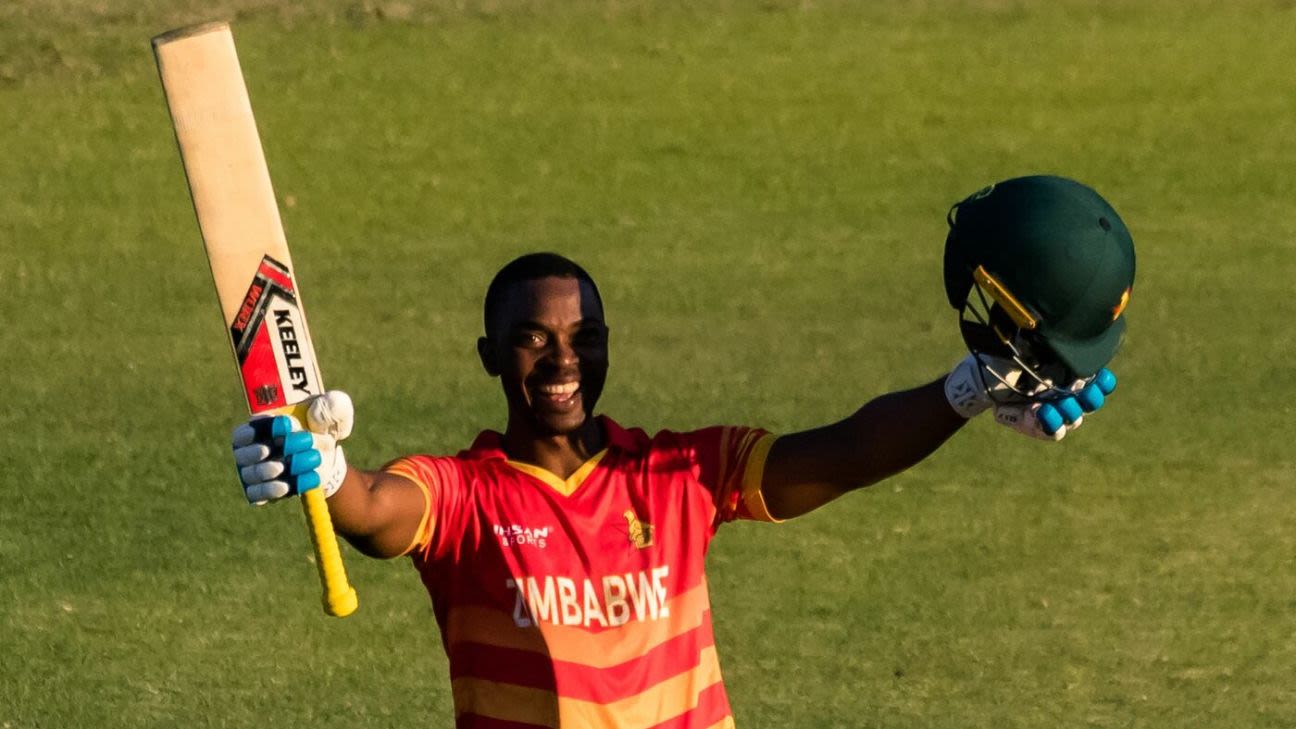
Wessly Madhevere's career-best 72 held Zimbabwe together, though they were never able to really cut loose, as the innings fell away rapidly in the closing stages, losing 6 for 15 as Green's wicket tally quickly swelled after he had earlier claimed the key wicket of the in-form Sikandar Raza.
A target of 201 was always unlikely to cause too many concerns, and it was duly knocked off with more than 16 overs to spare amid a flurry of boundaries by Glenn Maxwell. David Warner lived a charmed life in making a half-century, but Steven Smith played a controlled innings to ensure the loss of three wickets to Ryan Burl from some casual strokeplay did not become a problem.
On a day where tributes were paid to former Australia allrounder Andrew Symonds, who died in a car accident in May, one of this generation's finest all-round prospects added another milestone to the early stages of his career.

Green had one wicket from seven ODIs before this outing, but he is being viewed as a key figure as Australia build towards the 2023 ODI World Cup in India, having been entrusted as the third frontline quick to allow a very long batting order. He caused problems throughout with his extra bounce, with two batters being caught at fine leg while unable to control short deliveries.

Unsurprisingly, Aaron Finch had put Zimbabwe in with the early start, as Australia kept the scoring rate on a tight leash during the first ten overs. But the visiting openers did well to withstand the opening spells. Mitchell Marsh made the breakthrough shortly after the powerplay when Innocent Kaia offered a return catch, but Zimbabwe steadily increased the tempo with Tadiwanashe Marumani getting the benefit of his early hard work.
However, with a maiden half-century in sight, Marumani advanced at Adam Zampa and was beaten which led to a few overs of caution. Madhevere and Tony Munyonga then produced a boundary apiece against Zampa in the 25th over, only for Smith to pull off a spectacular running catch from mid-off to remove Munyonga as he aimed down the ground again.

The in-form Raza, who has enjoyed a stunning run against Bangladesh and India in recent weeks, was tied down by Australia's quicks before falling to a short delivery from Green which he top-edged to fine leg removing a major threat with nearly 20 overs to go.

Madhevere, who would not have played but for an elbow injury suffered by Sean Williams in nets on Saturday, continued to anchor the innings and brought up his half-century from 67 balls while captain Regis Chakabva provided some extra momentum heading into the final ten overs with a spritely display. However, Madhevere's stay came to a rather soft end, when he prodded a return catch to Zampa off his final delivery.

The innings quickly lost its way after that as Green struck four times in two overs, making good use of the short ball, although he looked somewhat sheepish as his fourth and fifth wickets were snaffled by Maxwell at deep midwicket.

Australia made a steady start to the chase before left-armer Richard Ngarava, who caused a few problems, forced Finch to drag into his stumps via an inside edge.

The 17th over, bowled by Raza, brought a lot of action involving Warner, who was firstly dropped at point when Marumani spilled a simple chance. Then there were bizarre scenes when Zimbabwe reviewed for a caught behind that was given not out, and Warner was so sure he had edged it that he was almost off the field when the third umpire decided there was no conclusive evidence to overturn.

When Warner faced Raza's next over, he pulled the first six of the match over deep square leg and then went to hit a 57-ball fifty, but did not go much further when he swung across the line. Raza's celebration certainly had some feeling about it, and perhaps a few words.

Smith had looked in good touch from the moment he arrived in the middle, and unfurled some well-timed drives between ticking the scoreboard over. He lost a flurry of partners as Australia's middle order tried to attack Burl's legspin, with Alex Carey well caught at long-on then Marcus Stoinis and Marsh falling in the same over.

However, Maxwell crunched his first ball for four - and thrice cleared the fence later on - as his 32 off nine balls hastened the finish which came with consecutive sixes.

Andrew McGlashan is a deputy editor at ESPNcricinfo


#Match #Report #Zimbabwe #Australia #1st #ODI https://www.globalcourant.com/recent-match-report-zimbabwe-vs-australia-1st-odi-2022/?feed_id=16903&_unique_id=630b34fa08b98


Africa: 'Identity is Not Static - It Has Come to Us as a Process'

In April 2022, the Centre for Human Rights (CHR) and the Centre for Sexualities, AIDS, and Gender (CSA&G) at the University of Pretoria together with the Center for Gender Studies and Feminist Futures (CGS) and the Center for Conflict Studies (CCS) at the Philipps-University Marburg launched the first edition of the Pretoria-Marburg Queer Conversations. The conversations come from common interests in work on LGBTIQ+ and queer identities among the centres.

This six-event series, themed Scholarly and Activist Perspectives on LGBTIQ+ Lived Realities in Africa, creates a monthly space for in-depth discussions that bring together scholars and LGBTQI+ activists.

On July 7, at the fourth event of the series focusing on Queering Perspectives on Power Dynamics -  Dr. Rudo Chigudu, an African feminist, activist-scholar, and artist committed to social justice and community self-determination, led a conversation on LGBTQI+ identities with a specific focus on Zimbabwe.

Dr. Chigudu says her thesis was built on two foundational ideas - frustration and curiosity. Frustration that when people spoke about the LGBTI category, there was a general tendency to really just make blanket statements and really talk about the category as a mass group, rather than a recognition of the individual categories that are within the group and in Zimbabwe, the LGBTI category was really just about gay men. So the invisibility of other categories frustrated her.

Her curiosity came from the fact that for the longest time, she would hear African leaders talk about how homosexuality was un-African. Her frustration was how rather than advancing the realities and needs of LGBTQI+ identifying peoples on the continent, so much resources and research went into proving that homosexuality is not un-African.

"My frustration really there was how much time and energy was going into that rather than advancing the realities and needs of LGBTI identifying peoples on the continent. My issue was that we are here now, we are present now at this moment, and we exist now. So whether or not historically you can find ancestors four or 500 years ago, you have to contend with the fact that you have people who identify in this manner at this moment on the continent, can we engage that?", says Chigudu.

Chigudu says that even though there was an increasing number of scholars, activists, and bloggers writing about African lesbians, they were being constructed largely as passive victims trapped in a history of political homophobia and the abusive hegemony of Western ethnocentric discourses that have objectified, erased, or even violated African women's bodies. There was a narrative largely around violence.

"We had a narrative of murdered and raped lesbians that was the dominant narrative. And whilst it's factual, that a lot of harm and injury has come to lesbian women on the continent, my discomfort was that this limited reading of reducing lesbian identifying women to only these victims of violence", adds Chigudu.