Showing posts with label passes. Show all posts

US House of Representatives passes Inflation Reduction Act in narrow vote

HOUSTON, Texas 

The US House of Representatives passed the Inflation Reduction Act on Friday along party lines.

The legislation that passed in a 220-207 vote secured a huge win for President Joe Biden and the Democratic party months before the midterm elections in November.

"It is a resounding victory for America's families starting at their kitchen table," House Speaker Nancy Pelosi told House members. "Our Inflation Reduction Act is a robust cost-cutting package that meets the moment, ensuring that our families thrive and that our planet survives."

The Democratic party came together from all sides to praise the bill which addressed a multitude of issues beyond inflation, including taking aggressive action on climate change, lowering medical and prescription drug costs and reducing the national deficit.

The plan includes a record $369 billion in spending on climate change and energy policies projected to slash US carbon emissions by roughly 40% by 2030.

It also allocates $64 billion to reduce health insurance costs by locking in lower premiums under the Affordable Care Act, saving 13 million families an average of $800 per year.

The bill will also cap drug costs at $2,000 and allow the federal government to negotiate lower prices for prescription drugs.

It would be funded by imposing a 15% corporate tax on wealthy corporations. The plan also spends $80 billion to boost the Internal Revenue Service's enforcement and compliance divisions which are expected to yield $124 billion in revenue.

While the measure will not immediately affect rising gas and food prices, it does seek to reduce the deficit by $300 billion in the next 10 years, with total provisions of the bill estimated to raise $737 billion, as well as reduce the overall deficit by nearly $2 trillion in the next two decades.

The bill narrowly passed the Senate in a 50-50 vote with the deciding tie-breaking vote cast by Vice President Kamala Harris.

It now goes to Biden's desk to be signed into law.

Anadolu Agency website contains only a portion of the news stories offered to subscribers in the AA News Broadcasting System (HAS), and in summarized form. Please contact us for subscription options.

Source https://www.globalcourant.com/us-house-of-representatives-passes-inflation-reduction-act-in-narrow-vote/?feed_id=10209&_unique_id=62f70de876051


Noted singer Shivamogga Subbanna passes away

Shivamogga Subbanna, the first Kannadiga to win a National Award for playback singing, died after suffering a heart attack in Bengaluru

Shivamogga Subbanna, the first Kannadiga to win a National Award for playback singing, died after suffering a heart attack in Bengaluru

National award-winning Sugama Sangeetha singer Shivamogga Subbanna passed away here on Thursday night following a cardiac arrest. He was 83.

Mr. Subbanna became popular with the rendering of songs written by Jnanpith Award-winning Kannada writer Kuvempu. He became a household name in Karnataka after he sang Baarisu Kannada Dindimava, written by Kuvempu.

He went on to receive a national award for the song Kaadu Kudure Odi Banditta in the film Kaadu Kudure. He was the first Kannada playback singer to get a national award.

He was also an advocate and a notary.

He is survived by wife, son, and daughter S. Bageshree, who is Resident Editor of The Hindu, Karnataka.


Source https://www.globalcourant.com/noted-singer-shivamogga-subbanna-passes-away/?feed_id=9691&_unique_id=62f58472f07fb

US Congress passes $280B chip bill to counter China

The legislation — passed by both Senate and House of Representatives — was headed to US President Joe Biden's desk for signing.

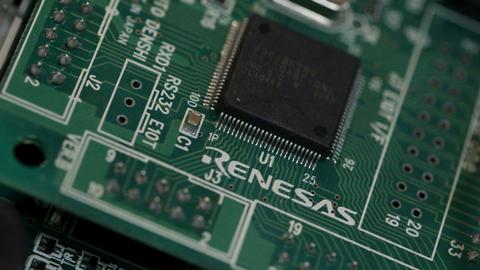
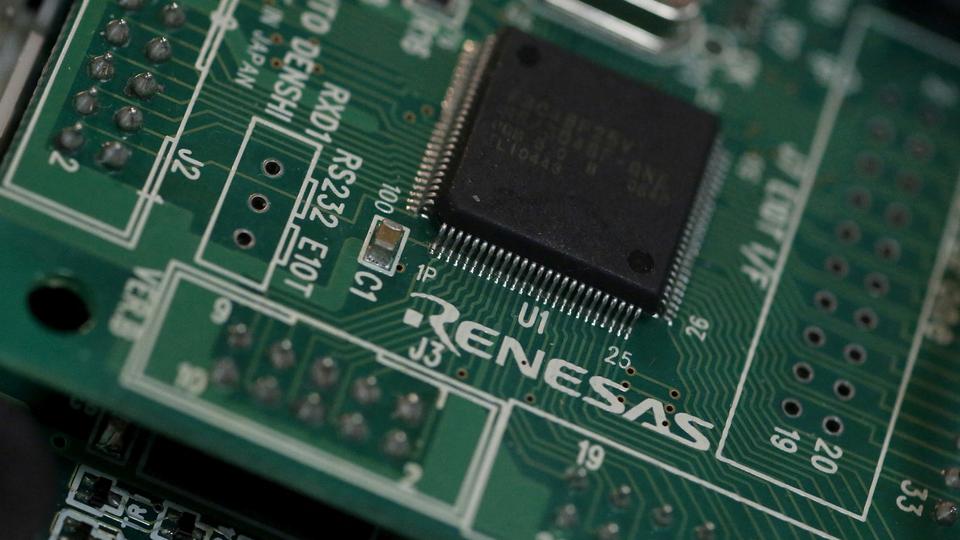
A Renesas Electronics Corp's chip is pictured at the company's office in Tokyo, March 21, 2013.
A Renesas Electronics Corp's chip is pictured at the company's office in Tokyo, March 21, 2013. (Reuters)

The House passed a $280 billion package to boost the semiconductor industry and scientific research in a bid to create more high-tech jobs in the United States and help it better compete with international rivals, namely China.

The “Chips and Science Act” authorises about $52 billion in government subsidies for US semiconductor production and research, and an investment tax credit for chip plants estimated to be worth $24 billion.

The approved bill by a solid margin of 243-187, sending the measure to President Joe Biden to be signed into law and providing the White House with a major domestic policy victory. Twenty-four Republicans voted for the legislation.

“Today, the House passed a bill that will make cars cheaper, appliances cheaper, and computers cheaper," Biden said. “It will lower the costs of every day goods. And it will create high-paying manufacturing jobs across the country and strengthen US leadership in the industries of the future at the same time."

Republicans argued the government should not spend billions to subsidise the semiconductor industry and GOP leadership in the House recommended a vote against the bill, telling members the plan would provide enormous subsidies and tax credits "to a specific industry that does not need additional government handouts.”

Increasing deficits

The bill provides more than $52 billion in grants and other incentives for the semiconductor industry as well as a 25 percent tax credit for those companies that invest in chip plants in the US. It calls for increased spending on various research programs that would total about $200 billion over 10 years, according to the Congressional Budget Office.

The CBO also projected that the bill would increase deficits by about $79 billion over the coming decade.

A late development in the Senate — progress announced by Wednesday night by Democrats on a $739 billion health and climate change package — threatened to make it harder for supporters to get the semiconductor bill over the finish line, based on concerns about government spending that GOP lawmakers said would fuel inflation.

Some Republicans criticised the bill as not tough enough on China, and GOP leaders emphasised that point in recommending a “no” vote. Their guidance acknowledged the threat China poses to supply chains in the US, but said the package "will not effectively address that important challenge."

Zhao Lijian, a Chinese foreign ministry spokesman, commenting before the House vote, said the US “should not put in place obstacles for normal science, technology and people-to-people exchanges and cooperation” and "still less should it take away or undermine China’s legitimate rights to development.”

Source: TRTWorld and agencies


Source https://www.globalcourant.com/us-congress-passes-280b-chip-bill-to-counter-china/?feed_id=3571&_unique_id=62e31be48b5f0

China competitiveness and chip bill passes House, goes to Biden

U.S. House Speaker Nancy Pelosi (D-CA) holds her weekly news conference with reporters on Capitol Hill in Washington, July 14, 2022.

Elizabeth Frantz | Reuters

The House on Thursday passed bipartisan legislation to boost U.S. competitiveness with China by allocating billions of dollars toward domestic semiconductor manufacturing and science research.

The bill passed 243-187, with no Democrats voting against the bill. Twenty-five Republicans voted for the legislation, even after a last-minute push by GOP leaders to oppose it.

The bill, which passed the Senate on Wednesday, now heads to the White House for President Joe Biden to sign into law.

Lawmakers pushed to quickly approve the package before they depart Washington, D.C., for the August recess. But the final vote came after years of wrangling on Capitol Hill, with the legislation taking numerous forms, and names, in both chambers of Congress.

The ultimate version, known as the Chips and Science Act, includes more than $52 billion for U.S. companies producing computer chips, as well as billions more in tax credits to encourage investment in chip manufacturing. It also provides tens of billions of dollars to fund scientific research, and to spur the innovation and development of other U.S. technologies.

House Speaker Nancy Pelosi, D-Calif., called the bill "a major victory for American families and the American economy."

But House Republican Leader Kevin McCarthy, R-Calif., urged his colleagues to "reject this deeply flawed bill" and "start from scratch" in floor remarks before the vote.

The Senate passed the bill Wednesday in a 64-33 vote, drawing support from 17 Republicans. Among those yea votes was Senate Minority Leader Mitch McConnell, R-Ky., who previously warned that Republicans would not back the China competition bill if Democrats continued to pursue an unrelated reconciliation package.

CNBC Politics

Read more of CNBC's politics coverage:

Hours after Wednesday's bipartisan Senate vote, Senate Majority Leader Chuck Schumer, D-N.Y., and Sen. Joe Manchin, D-W.Va., revealed that they have struck a deal on a sweeping reconciliation bill. They hope to pass that package next week with just a simple majority in the Senate, which is evenly split between Republicans and Democrats with Vice President Kamala Harris casting any tiebreaking votes.

Shortly after that deal was announced, House Republican leaders urged their members to vote down the Chips and Science Act. They argued against giving multibillion-dollar subsidies to chipmakers at a time of historically high inflation, while also noting the timing of the Democrats' reconciliation deal.

"The partisan Democrat agenda has given us record inflation, and now they are poised to send our country into a crushing recession," the office of House Minority Whip Steve Scalise, R-La., said in a memo Wednesday night.

Some Republicans who opposed the bill said it lacked "guardrails" to prevent any of the funding from winding up in China's hands. Other critics have argued that the U.S. would have to spend many billions more to have a real chance at competing with the world's leading chipmakers.

But the bill's advocates say it is vital to America's economy and national security to build more chips, which are increasingly critical components in a vast array of products including consumer electronics, automobiles, health-care equipment and weapons systems.

The chips have been in short supply during the Covid-19 pandemic. Factory shutdowns at the beginning of the outbreak sidelined chip production in Asia while consumer demand for autos and upgraded home electronics that need the chips surged during the lockdowns. The U.S. share of global chip production also has fallen sharply in recent decades, while China and other nations have invested heavily in the industry.

The U.S. also makes few of the most advanced types of semiconductors, which are largely produced in Taiwan, the epicenter of rising political tensions with China.

Read more about tech and crypto from CNBC Pro

Much modern warfare requires sophisticated semiconductors — each Javelin missile launching system contains hundreds, for instance — leading U.S. defense officials to worry about the nation's reliance on foreign producers for its chip supply.

Biden has also blamed the chip shortage for the sky-high inflation that has dogged his presidency. A lack of chips available for new-car manufacturing has been linked to soaring prices for used cars, which are pushing inflation higher.

"America invented the semiconductor. It's time to bring it home," Biden said this week.


Source https://www.globalcourant.com/china-competitiveness-and-chip-bill-passes-house-goes-to-biden/?feed_id=3522&_unique_id=62e2e335eb890