Health providers say the gap in funding and rising inflation will force them to either have short staff, prolong waiting times for care or cut back patient care from other areas.
UK inflation is at a 40-year high of 10.1 percent with dire predictions that rates could climb to 18 percent or more next year.
(Reuters Archive)
UK hospital bosses have warned that patient care may have to be cut to offset huge increases in energy bills over the winter months.
Most hospital groups contacted by the medical journal BMJ on Wednesday said they expected bills to at least double, as the price hikes kicked in.
The National Health Service Confederation (NHS), which represents health providers in the publicly funded National Health Service, said there would be a knock-on effect.
"The gap in funding from rising inflation will either have to be made up by fewer staff being employed, longer waiting times for care or other areas of patient care being cut back," the group's senior acute lead, Rory Deighton, told the BMJ.
"A failure to properly compensate the NHS for inflation will only heighten pressure on our health service as we move towards a winter that we know will be particularly challenging this year."
UK inflation is at a 40-year high of 10.1 percent with dire predictions that rates could climb to 18 percent or more next year.
Other affected categories
Last week households were told that their gas and electricity bills would go up by 80 percent from October, with further rises set for next year.
But non-domestic customers are not covered by the energy price cap, making them more vulnerable to the surge in wholesale prices.
Businesses across the board have warned the huge increases could force many to close if the government does nothing to help.
The BMJ said bosses at Great Ormond Street Children's Hospital in London told it that they expected an energy bill of about $756,000 a month in January and February next year.
At the same time last year, it was about $405,322
Sheffield Children's Hospital in northern England has anticipated a rise of nearly 130 percent in its total bill for 2022-23.
But Nottingham University Hospital in central England has budgeted for a 214-percent rise in gas and electricity this year, it added.
NHS England set aside $1.7 billion to cover an expected $560-million increase in energy bills. But the estimate was made in May and prices have risen again, prompting concern it may not be enough.
Health service near 'breaking point'
The NHS, created in 1948 to provide free healthcare and paid out of general taxation, is a cherished British institution.
But the system, which costs $220 billion a year to run and employs some 1.2 million people in England alone, has long faced significant under-funding.
Deighton's boss, chief executive Matthew Taylor, told The Guardian this week that the NHS was "in its worst state in living memory".
One experienced A&E doctor wrote on the UnHerd website this month that the service was "at breaking point", with patients at risk.
Health experts say the crisis is decades in the making but has been exacerbated by squeezed budgets over the last 12 years of the Conservative government, Brexit and the coronavirus pandemic.
Source: AFP
I’m a veteran journalist who spent a wide-ranging career covering business, politics and social issues, the last two decades focusing on the blend of diverse life skills I call successful aging.
I have written extensively on aging topics, spoken at conferences, radio and TV shows, and launched several entrepreneurial ventures, discovering along the way that the path to aging well also requires an unexpected entrepreneurial vision. I spent 20 years as a writer and editor at Long Island’s daily newspaper, Newsday, helping to found Act 2, a weekly section for 50-plus readers. I created Roelresources.com, a website offering practical advice and inspirational essays for people ages 40 and above. I have been a volunteer and consultant to AARP Long Island, writing articles, advocating for seniors, and developing action plans for the AARP Age-Friendly Communities initiative.
I am active in programs and organizations that support seniors, such as the National Aging In Place Council and the Senior Umbrella Network. I have developed a special expertise in family caregiving, as one of four brothers who took care of their mother for almost 25 years. I regularly collaborate with many professionals who provide services and support for older Americans, and I am completing a book for caregivers on Long Island, “The Caregiving Navigator/How to Plan, What to do, and Where to Turn When Caring for you Aging Loved Ones. And Yourself,” scheduled for publication in early 2021.
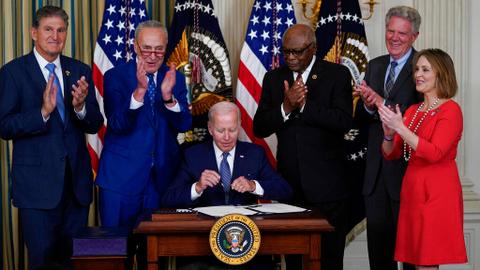
The $430 billion Inflation Reduction Act aims to cut domestic greenhouse gas emissions, lower drug costs and tax corporations.
"Every single Republican in Congress voted against this bill," says Biden.
(AP)
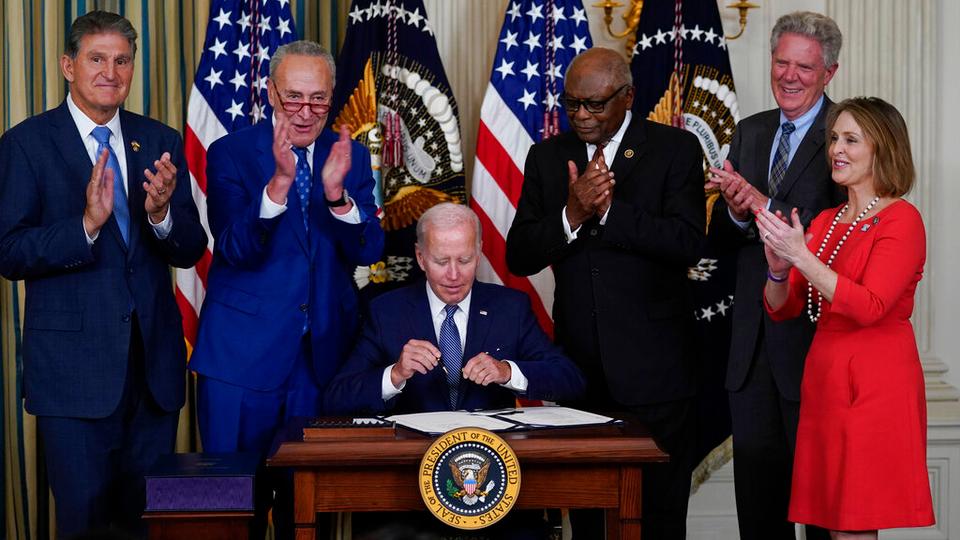
President Joe Biden has signed into law a $430 billion bill that is seen as the biggest climate package in US history, designed to cut domestic greenhouse gas emissions as well as lower prescription drug prices.
Biden was joined by Democratic leaders including Senator Joe Manchin of West Virginia, whose support was crucial to the passage of the Inflation Reduction Act along party lines after he had initially opposed a similar measure.
"Joe, we never had a doubt," Biden said of Manchin on Tuesday at the White House.
Biden used the event to criticise Republicans as he sought to use a string of Democratic-led legislative victories to help boost Democrats in congressional midterm elections in November.
"In this historic moment, Democrats sided with the American people and every single Republican sided with the special interests," said Biden.
"Every single Republican in Congress voted against this bill," he added.
It will also allow Medicare to negotiate lower drug prices for the elderly and ensure that corporations and the wealthy pay the taxes they owe.
Democrats say it will help combat inflation by reducing the federal deficit.
Senate Republican leader Mitch McConnell said the new law will have the opposite impact.
"Democrats robbed Americans last year by spending our economy into record inflation. This year, their solution is to do it a second time. The partisan bill President Biden signed into law today means higher taxes, higher energy bills, and aggressive IRS audits," he said, referring to the Internal Revenue Service.
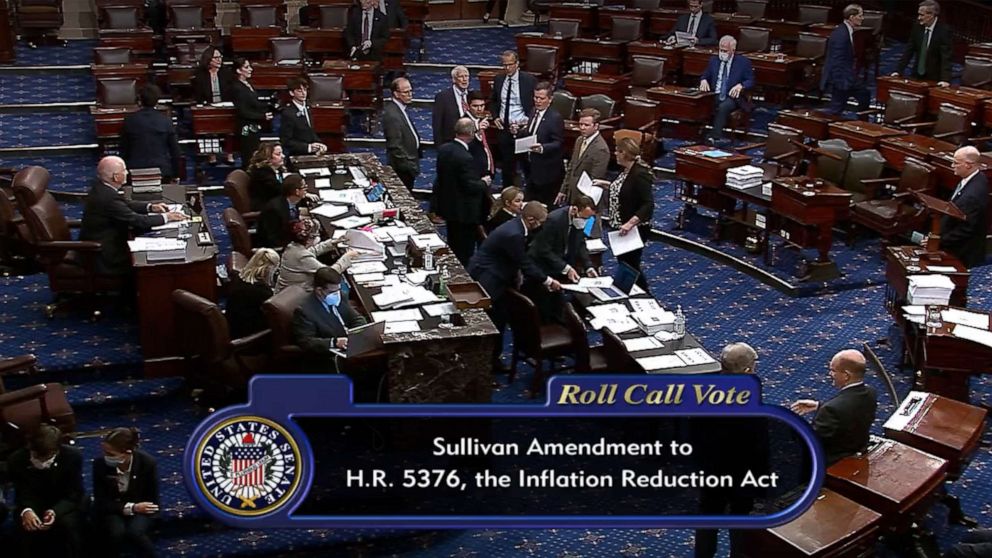
The Senate on Sunday passed the Inflation Reduction Act (IRA) along party lines, 51-50, handing Democrats a crucial legislative win as the midterm cycle ramps up.
Vice President Kamala Harris cast the tie-breaking vote with all Democrats in support of the legislation and all Republicans opposed. The proposal was passed via the budget reconciliation process, which allows it to be passed with a simple majority rather than the 60 votes typically needed to overcome a filibuster.
The passage of the sprawling climate, tax and health care legislation now sets up a vote in the Democratic-controlled House, where the bill is expected to pass before President Joe Biden signs it into law.
Included in the bill, supporters say, are measures to support job creation, raise taxes on large corporations and the wealthy, allow Medicare to negotiate down some prescription drug costs, expand the Affordable Care Act health care program and invest in combating climate change by implementing tax credits for clean energy initiatives, among other things.
The legislation's tax provisions, prescription drug-pricing reform, as well as boosted IRS tax enforcement measures, are anticipated to raise an estimated revenue of $739 billion -- $300 billion of which Democrats say would go toward reducing the deficit.
The plan would reduce federal budget deficits by $102 billion over 10 years, according to the nonpartisan Congressional Budget Office.
The bill passed the Senate after a punishing, approximately 16-hour "vote-a-rama," in which any senator could introduce an amendment to the bill as part of the budget reconciliation process.
The amendment process fueled painful votes for each party.
Vulnerable Democratic incumbents up for reelection this year had to dance around a vote on the Biden administration's decision to scrap Title 42, a Trump-era order using coronavirus concerns to prevent migrants from entering the country while seeking asylum. Republicans, meanwhile, mostly voted against a Democratic amendment that would have capped out-of-pocket insulin costs at $35 a month for people with private health insurance.
The IRA passage marks the culmination of grueling negotiations between Senate Majority Leader Chuck Schumer, D-N.Y., and Sen. Joe Manchin, D-W.Va., who had been a consistent obstacle to cobbling together a Democrats-only social spending bill via reconciliation.
The pathway for a successful vote was cemented late last week when Sen. Kyrsten Sinema, D-Ariz., another key centrist, signed on after winning some tweaks to the bill.
Senator Patrick Leahy is wheeled to an elevator from the Senate floor during amendment votes, also called the "vote-a-rama", on the Inflation Reduct Act 2022, at the U.S. Capitol building in Washington, Aug. 7, 2022.
Ken Cedeno/Reuters
Among the changes Sinema won were the eliminations of tax provisions targeting wealthy hedge fund managers and private equity executives. The Senate rules official also scrapped a provision intended to reprimand drug companies that raise the prices of some prescription drugs faster than inflation for patients with private insurance.
Still, the bill's passage marks a major step toward President Biden's campaign promises to tackle climate change, reform prescription drug pricing and other issues; and it gives Democrats a new legislative win to run on heading into the November midterms, in an environment where many voters have soured on Biden's handling of the economy and historic inflation.
The IRA also extends a streak of achievements for Biden and congressional Democrats, including passage of a bipartisan anti-gun violence bill and legislation to boost the domestic semiconductor industry.
"This bill is going to change America for decades," Schumer crowed after final passage.
"This vote crystalizes the contrast of the midterms. Senate Democrats have taken a historic step to lower costs like prescription drug prices, tackle inflation and address working families' most pressing concerns. Every Republican voted against the bill because it holds Big Oil, Big Pharma and other corporations that have been jacking up prices accountable, and finally makes them pay their fair share," added Sen. Gary Peters, D-Mich., the chair of Senate Democrats' campaign arm.
Republicans have already forecasted that they'll paint Democrats as uncaring about Americans' financial burdens at a time of rapid price hikes while passing billions of dollars in new spending.
"This idea that this massive tax increase will just somehow be absorbed by corporate America when they will pass those costs along to consumers, and it will make inflation worse," Senate Minority Whip John Cornyn, R-Texas, said last week.