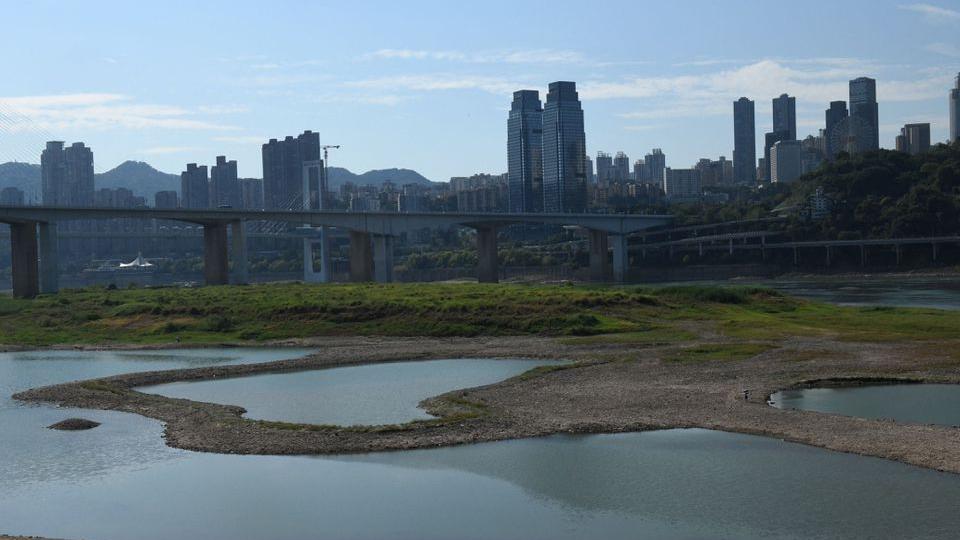
Power rationing that forced factories in China’s southwest to shut down has been extended due to low water at hydroelectric dams.
State weather forecasters issued a heat "red alert" for the 11th consecutive day, as extreme weather continues to play havoc with power supplies and damage crops.
(Reuters)
China's scorched southwestern
regions have extended curbs on power consumption as they
deal with dwindling hydropower output and surging household
electricity demand during a long drought and heatwave.
State weather forecasters issued a heat "red alert" for the
11th consecutive day on Monday, as extreme weather continues to
play havoc with power supplies and damage crops.
They also
raised the national drought alert to "orange" - the
second-highest level.
The drought has already "severely affected" mid-season rice
and summer corn in some southern regions, the ministry of
agriculture said on Sunday.
The National Meteorological Center said as many as 62
weather stations, from Sichuan in the southwest to Fujian on the
southeastern coast, recorded record temperatures. The
situation could improve starting Wednesday as a cold front moves
into China via Xinjiang.
The region of Chongqing, which hit temperatures of 45
degrees Celsius late last week,
announced that opening hours at more than 500 malls and other
commercial venues would be shortened starting Monday to ease
power demand.
Two malls on the list contacted by Reuters news agency confirmed that they had received the government notice and would
abide by the new opening hours. Two hotels on the list said they
were still operating normally but were restricting air
conditioner use.
READ MORE:China issues national drought alert after weeks of extreme heatFurther measures
In neighbouring Sichuan province, a major hydropower
generator, authorities also extended existing curbs on
industrial power consumers until August 25, financial news service
Caixin said on Sunday. Power generation in Sichuan is at just
half the normal level.
It cited firms in the battery industry as saying that
industrial power users in the cities of Yibin and Suining had
been told to remain closed until Thursday.
A Sichuan-based pesticide producer, Lier Chemical Co Ltd
, confirmed in a notice on Monday that output
restrictions at two of its production bases in the province
would continue until August 25th.
Toyota Motor Corp gradually resumed operations at
its Sichuan plant in China on Monday using a power generator
after suspending operations last week, the company's
spokesperson said.
Other regions have also sent 50 emergency power generating
vehicles to Sichuan since last Thursday to help alleviate
shortages.
Several plants in Sichuan and Chongqing, including those of
top battery maker CATL and the electric vehicle
giant BYD, have been only able to partially operate
in recent weeks because of power shortages.
READ MORE:Several dead, missing after flash floods in northwest China
Source: Reuters
The moves are part of a "common pattern for Beijing", according to analysts, who fear more disruptions of agricultural and food trade can be expected in the coming days.
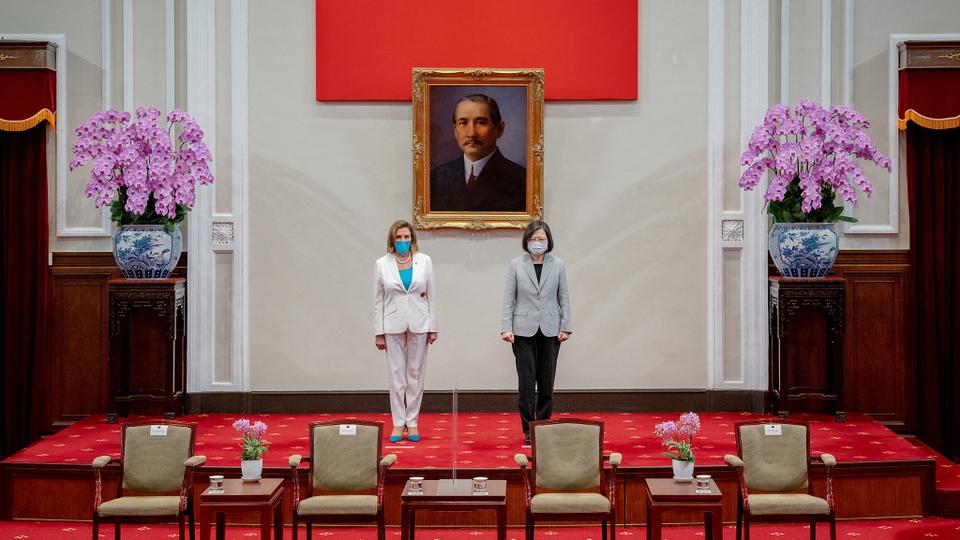
Nancy Pelosi has met with Taiwanese President Tsai Ing-wen, who presented the US House speaker with a civilian honour.
(Reuters)
China has rolled out curbs on the import of fruit and fish from Taiwan, while halting shipments of sand to the island in the wake of a visit by US House Speaker Nancy Pelosi.
China's Customs Administration said on Wednesday it would suspend some citrus fruit imports from Taiwan over alleged "repeated" detection of excessive pesticide residue, and the import of fish owing to positive coronavirus tests on packages.
In a separate notice, the Commerce Ministry added it would also "suspend the export of natural sand to Taiwan" from Wednesday, without providing details.
Natural sand is generally used for producing concrete and asphalt, and most of Taiwan's imported sand and gravel comes from China.
The moves are part of a "common pattern for Beijing", said Even Pay, an agriculture analyst at consultancy Trivium China.
More disruptions of agricultural and food trade can be expected in the coming days, she added.
"When diplomatic or trade tensions are running high, Chinese regulators typically take an extremely strict approach to compliance... looking for any issues that can be used to justify a trade ban," she said.
The trip by Pelosi, who is second in line to the presidency and the highest-profile elected US official to visit Taiwan in 25 years, has ignited a diplomatic firestorm.
China is Taiwan's biggest trading partner and export market, with bilateral trade growing 26 percent on-year to $328 billion in 2021, official data shows.
It is not the first time Beijing has taken aim at the island's exports.
China banned pineapple imports in March 2021, citing the discovery of pests, in a move that was widely seen as politically driven.
Beijing has ramped up pressure on Taiwan since President Tsai Ing-wen took office in 2016, as she views the island as a de facto sovereign nation and not part of "one China".
On top of the latest bans, Taipei's Council of Agriculture said Tuesday that China had cited regulatory breaches in suspending the import of other Taiwanese goods, including fishery products, tea and honey.
Meanwhile, Chinese authorities also announced planned live-fire military drills encircling Taiwan, in a move Taipei's defence ministry said threatened key ports and urban areas.
At some points, the zone of Chinese operations will come within 20 kilometres (12.4 miles) of Taiwan's shoreline, according to coordinates shared by the People's Liberation Army.