Most member companies of the American Chambers of Commerce in Taiwan said there has been no significant disruption to business despite escalating tensions between China and Taiwan in recent weeks, according to a survey.
China started conducting military exercises around Taiwan in recent weeks, but 77% of respondents said they have not faced "appreciable disruption" to their business, said Andrew Wylegala, the president of AmCham Taiwan.
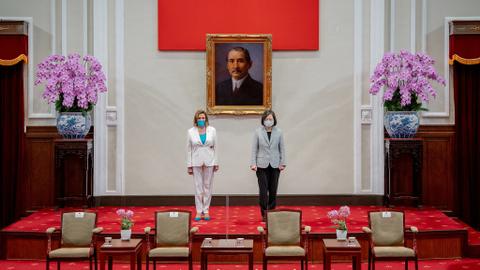
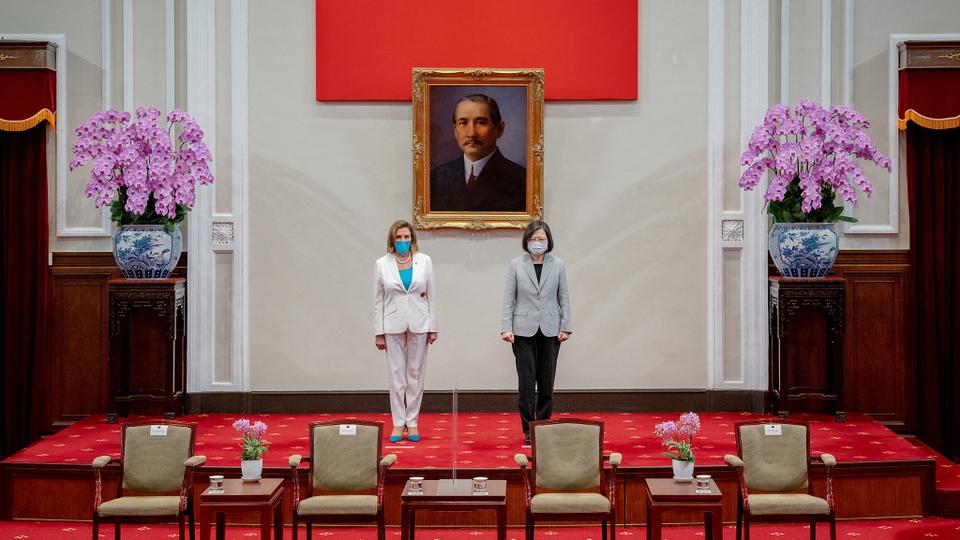
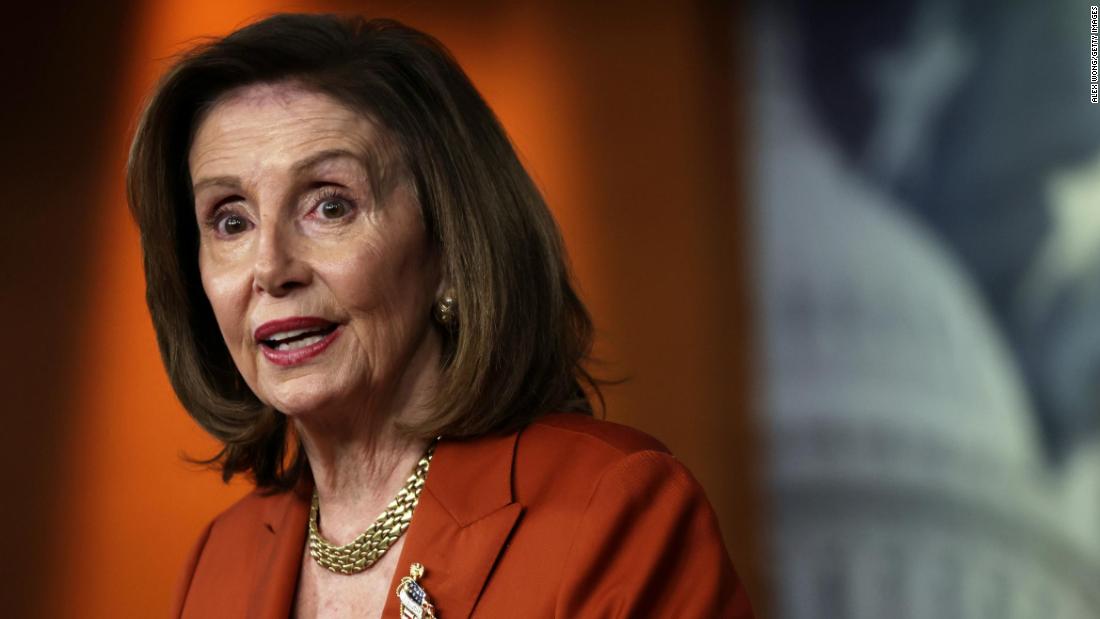
China launched military drills after U.S. House Speaker Nancy Pelosi's visit to Taiwan despite warnings from China for weeks not to visit the island.
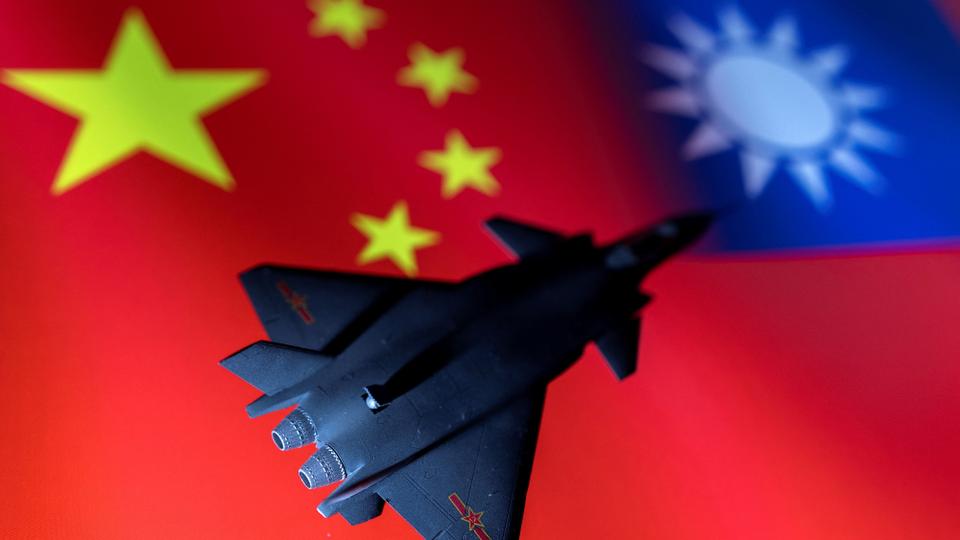
Taiwan is a self-ruled democracy, but Beijing considers the island part of its territory and a breakaway province.
Nevertheless, though there hasn't been "panic" or an "exodus" of business in Taiwan, almost half of its members are predicting "some kind of dislocation and disruption" as China continues its military drills, said Wylegala.
There has been "no panic in the short term, but an appropriate degree of concern going forward," Wylegala said on CNBC's "Capital Connection" on Friday.
AmCham Taiwan conducted the survey of 529 member organizations from Aug. 8 to 17, just days after Pelosi's visit to Taipei.
According to the survey, 17% of respondents said they had already experienced disruption to their business, a third of which reported facing higher shipping or insurance costs and supply chain delays.
AmCham Taiwan also said 46% of companies surveyed expect to see increased Chinese military activity from 2022 to 2023 that would affect their operations. The remaining respondents do not anticipate being affected, or are uncertain if they would be.
Read more about China from CNBC Pro
According to the business association, respondents raised the following when asked about the specific "spectrum of threats" they were worried about: concerns about disinformation and psychological campaigns targeting Taiwan; constraints or barriers on the island's periphery; and "sanctions, travel bans, boycotts, and embargoes against Taiwan products and people."
U.S.-Taiwan trade talks
The U.S. and Taiwan on Wednesday agreed to start talks on a trade and economic initiative as the U.S. continues to bolster its support for the island in light of rising tensions with China.
However, the likelihood of a free trade deal — which is broader in nature and something that Taiwan has been pushing for — remains unknown.
Wylegala said that Taiwan "has done a wonderful job as a partner of the U.S." and recent tensions have made a stronger case for a bilateral trade agreement.
The U.S.-Taiwan Initiative on 21st-Century Trade that was announced in June is "not a free trade agreement per se," Wylegala said, but it is nevertheless a "stepping stone,'' he added.
"Four years ago, we had no channels of economic discussions underway. And now we have four separate agreements and others waiting in the wings," he added.
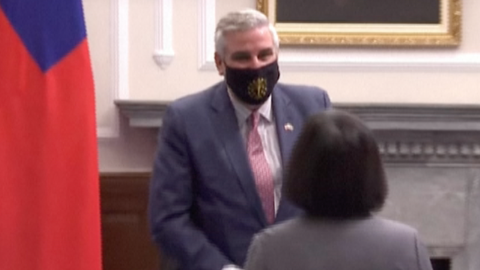
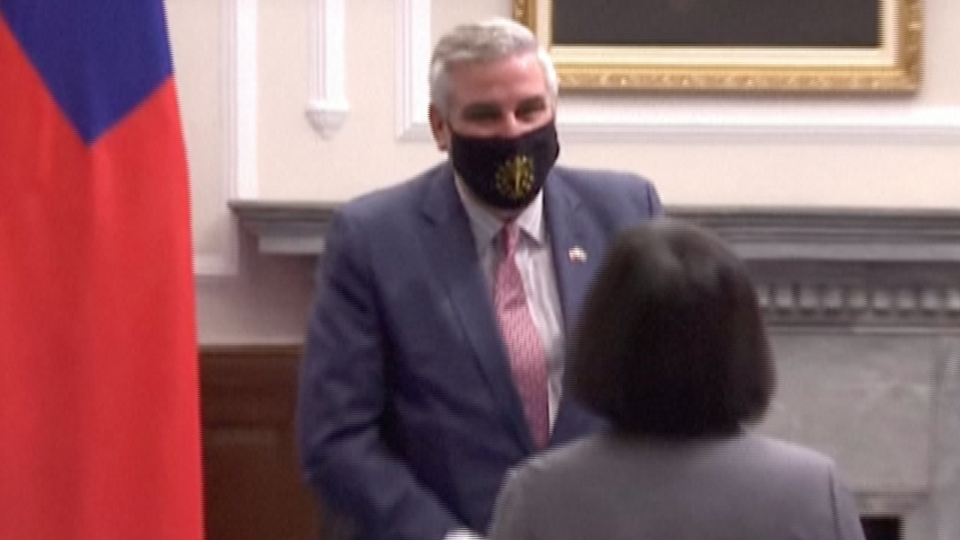
Indiana's Republican governor met with Taiwan's President Tsai Ing-wen after two recent high-profile visits by US politicians that drew China's ire and its military drills.
Eric Holcomb landed in Taiwan on Sunday for an "economic development trip".
(AFP)
Indiana's Republican governor, Eric Holcomb, has met Taiwan's president, days after Washington announced trade talks with Taipei.
The meeting comes amid rising US-China tensions since Beijing staged huge military drills in retaliation for US House Speaker Nancy Pelosi's visit to Taiwan earlier this month.
Holcomb landed in Taiwan on Sunday for an "economic development trip".
In her meeting with Holcomb on Monday, President Tsai Ing-wen directly referenced Beijing's drills and called for like-minded countries to continue supporting Taiwan.
"Taiwan has been confronted by military threats from China in and around the Taiwan Strait. At this moment democratic allies must stand together and boost cooperation across all areas," she said.
Holcomb said the United States and Taiwan "share so many common values and interests and goals".
"We will continue to seek to build a strategic partnership with you," he said.
READ MORE: US says it doesn't support Taiwan's independenceTrade talksHolcomb is also expected to meet representatives of Taiwan's world-leading semiconductor industry before leaving on Wednesday for South Korea.
Alongside South Korea, Taiwan makes some of the world's smallest and most advanced computer chips – a commodity that is vital for electronics but in short supply worldwide.
Holcomb's visit comes on the heels of the announcement of trade talks between Washington and Taipei in the coming months as a senior US diplomat warned Beijing will continue to put pressure on Taiwan.
Taiwan and China split in 1949 after the Communists won a civil war on the mainland.
Beijing sees official American contact with Taiwan as encouragement to make the island’s decades-old de facto independence permanent, a step US leaders say they don’t support.
READ MORE: China sanctions Taiwanese 'independence diehard' officials
Source: AFP
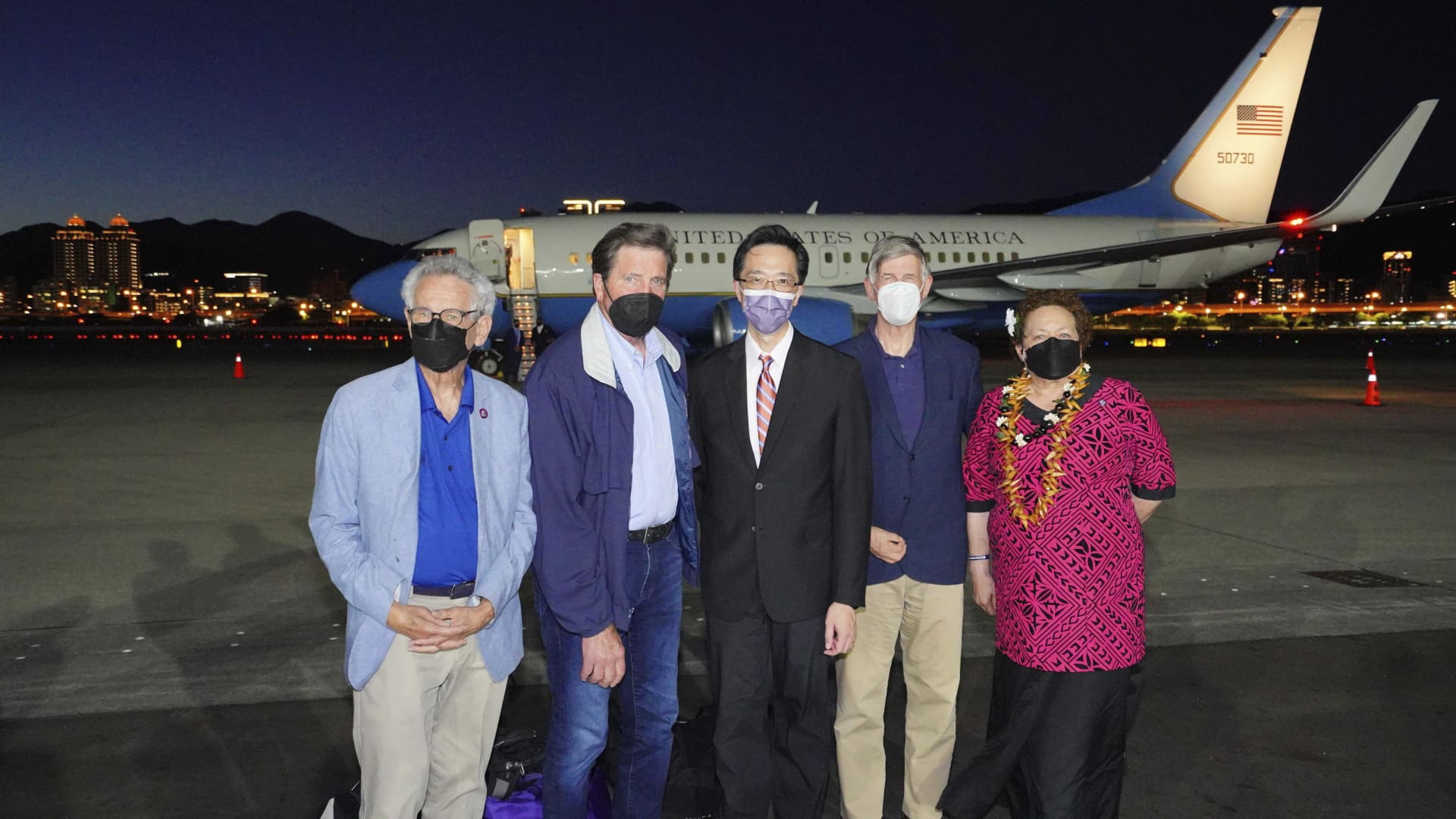
In this photo released by the Taiwan Ministry of Foreign Affairs, from left, U.S. Democratic House member Alan Lowenthal from California, Democratic House members John Garamendi, Donald Yu-Tien Hsu, Director-General, dept. of North American Affairs, Taiwan's Ministry of Foreign Affairs, Democratic House member Don Beyer from Virginia and Republican Rep. Aumua Amata Coleman Radewagen, a delegate from American Samoa pose for a photo after arriving on a U.S. government plane at Songshan airport in Taipei, Taiwan on Sunday, Aug 14, 2022.
Taiwan Ministry of Foreign Affairs | via AP
A delegation of U.S. lawmakers arrived in Taiwan on Sunday for a two-day trip during which they will meet President Tsai Ing-wen, the second high-level group to visit while there are military tensions between the self-ruled island and China.
Beijing, which claims democratically governed Taiwan as its own territory, has conducted military drills around the island to express its anger over U.S. House of Representatives Speaker Nancy Pelosi's visit to Taipei in early August.
The de facto U.S. embassy in Taipei said the delegation is being led by Senator Ed Markey, who is being accompanied by four House lawmakers on what it described as part of a larger visit to the Indo-Pacific region.
Taiwan's presidential office said the group would meet Tsai on Monday morning.
"Especially at a time when China is raising tensions in the Taiwan Strait and the region with military exercises, Markey leading a delegation to visit Taiwan once again demonstrates the United States Congress' firm support for Taiwan," it said in a statement.
Markey chairs the Senate Foreign Relations East Asia, Pacific, and International Cybersecurity Subcommittee. The co-leaders of the visit are Representative John Garamendi of the congressional Nuclear Weapons and Arms Control Working Group and Representative Don Beyer, a spokesperson for Markey said.
Markey's office said the lawmakers "will reaffirm the United States' support for Taiwan as guided by the Taiwan Relations Act, U.S. - China Joint Communiques, and Six Assurances, and will encourage stability and peace across the Taiwan Strait."
The group will meet "with elected leaders and members of the private sector to discuss shared interests including reducing tensions in the Taiwan Strait and expanding economic cooperation, including investments in semiconductors," Markey's office said.
Taiwan's Foreign Ministry published pictures of four of the group being met at Taipei's downtown Songshan airport having arrived on a U.S. air force transport jet, while Markey arrived at the Taoyuan international airport.
"The delegation will meet with senior Taiwan leaders to discuss U.S.-Taiwan relations, regional security, trade and investment, global supply chains, climate change, and other significant issues of mutual interest," the de facto U.S embassy said.
While China's drills around Taiwan have abated, it is still carrying out military activities.
Eleven Chinese military aircraft crossed the Taiwan Strait's median line or entered Taiwan's air defense zone on Sunday, Taiwan's Defence Ministry said. Thirteen planes crossed the strait on Saturday, the ministry said.
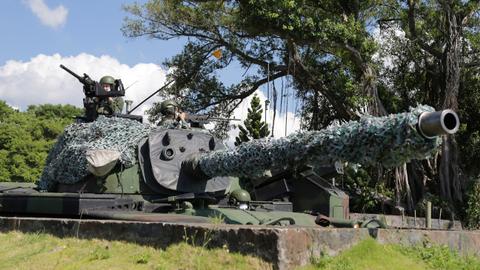
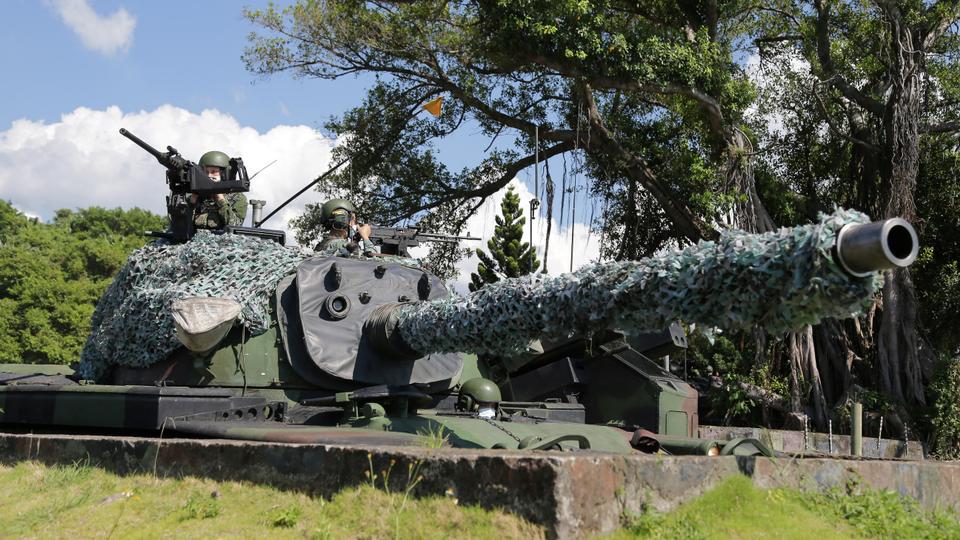
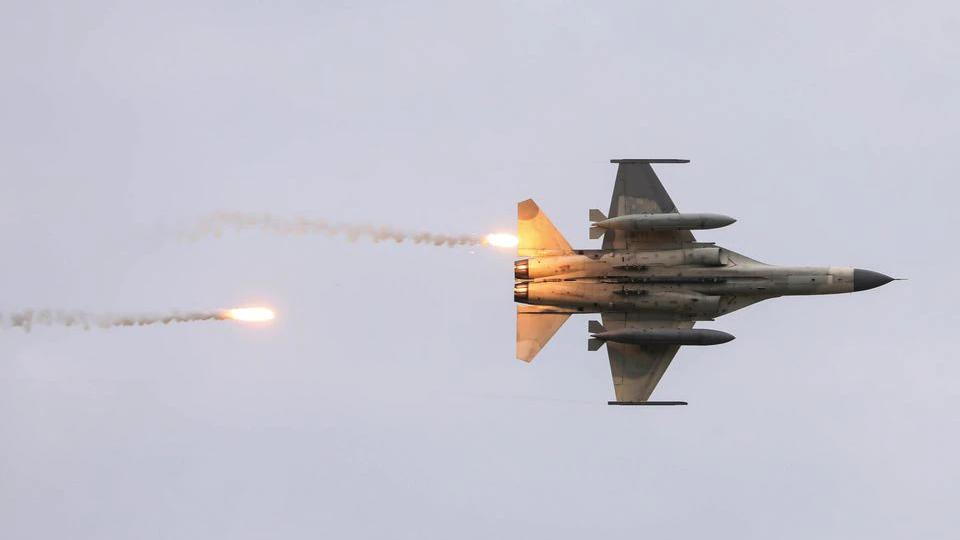
Taipei fires howitzers and target flares as part of the military exercise in the island's southernmost county of Pingtung, says army.
Taiwan held a similar drill on Tuesday in Pingtung and both included the deployments of hundreds of troops, says military.
(Reuters)
Taiwan's army has held another live-fire drill after Beijing ended its largest-ever military exercises around the island, as it vowed to bring the island under its control.
Taiwan fired howitzers and target flares as part of the drill on Thursday morning, Lou Woei-jye, the spokesperson for Taiwan's Eighth Army Corps, told the AFP news agency.
"We have two goals for the drills, the first is to certify the proper condition of the artillery and their maintenance condition and the second is to confirm the results of last year," Lou said, referring to annual drills.
The exercise in Taiwan's southernmost county of Pingtung began at 0830 am local time (0030 GMT) and lasted about an hour, he said.
Artillery tucked in from the coast was lined up side by side, with armed soldiers in units firing the howitzers out to sea one after the other, a livestream showed.
Taiwan held a similar drill on Tuesday in Pingtung. Both included the deployments of hundreds of troops, the military said.
The military has played down their significance, saying they were already scheduled and were not in response to China's war games.
Beijing has raged at a trip to Taiwan last week by US House Speaker Nancy Pelosi — the highest-ranking elected American official to visit in decades — staging days of air and sea drills around the island that raised tensions to their highest level in years.
Taiwan has accused China of using the Pelosi visit as an excuse to kickstart drills that would allow it to rehearse for an "invasion".
The latest exercise came after China's military indicated its own drills had come to an end on Wednesday, saying its forces "successfully completed various tasks" in the Taiwan Strait while vowing to continue patrolling its waters.
But in the same announcement, China added that it would "continue to carry out military training and prepare for war".
In a separate white paper published on Wednesday, China's Taiwan Affairs Office said Beijing would "not renounce the use of force" against Taiwan and reserved "the option of taking all necessary measures".
"We are ready to create vast space for peaceful reunification, but we will leave no room for separatist activities in any form," it said in the paper.
Beijing considers Taiwan as its inseparable province. Taiwan says it is an independent country and already enjoys diplomatic ties with at least 14 countries.
Interactions between Washington and Taipei have grown significantly since the tenure of former US president Donald Trump, with former and sitting lawmakers making trips to the island home to more than 25 million people.
The US formally recognised China in 1979 and shifted diplomatic relations from Taipei to Beijing, and accepted Taiwan as part of the mainland under Washington's One China policy.
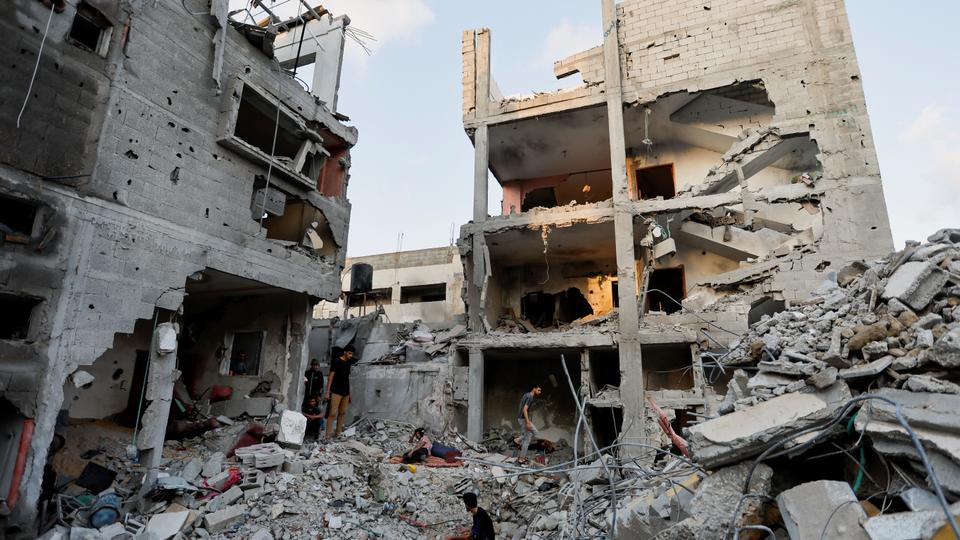
Fresh Israeli strikes came a little more than a year after an 11-day war between Israel and Palestine in May 2021, which killed at least 250 Palestinians in Gaza and 13 in Israel.
The Israeli attacks are the worst in Gaza since a war last year that devastated the impoverished territory home to some 2.3 million Palestinians.
(Reuters)
At least 29 people, including six children, have been killed in Israeli air strikes on Gaza.
Earlier on Sunday, the Palestinian Health Ministry put the number of people killed at 32, but a further ministry statement brought the number down to 29, including six children and four women.
The ministry said that the victims had been killed since Friday in Israeli strikes that also wounded 253 people.
Israeli authorities deny blame and say the children were killed on Saturday by a rocket fired by Palestinian fighters towards Israel that fell short. The claim could not be independently verified.
In response, the Islamic Jihad group said it had fired rockets at West Jerusalem from Gaza on Sunday. Witnesses report hearing rocket sirens and explosions in Israeli communities.
The group said in a statement they had "fired rockets" at the city, marking the first time West Jerusalem was targeted in this round of violence.
Israeli warplanes launched airstrikes on Gaza on Saturday citing an "imminent threat of attack" by the Islamic Jihad group.
At least seven people, including a child, were killed in one attack on Rafah in south Gaza, local authorities said on Sunday.
Meanwhile, Al-Quds Brigades said in a statement that Khaled Mansour, a senior leader of the Islamic Jihad group, was killed in the attack on Rafah.
The attacks came amid rising tensions across Palestinian territories since Monday, when Israeli forces detained Bassam al-Saadi, a senior leader of Islamic Jihad, in a raid in the occupied West Bank city of Jenin.
The Israeli army said on Sunday that twenty members of the Islamic Jihad group were arrested overnight by security forces in the occupied West Bank.
The United States says that China's decision to halt cooperation in a number of critical areas, including climate change, over Taiwan was "fundamentally irresponsible."
China has conducted a series of huge military drills around Taiwan that have been roundly condemned by the United States and other Western allies.
(Reuters)
The United States has condemned China for cutting off bilateral cooperation in a number of key areas, and said Beijing can ease tensions over Taiwan by ending its "provocative" military drills.
National Security Council spokesperson John Kirby said on Friday that China's decision to halt engagement on climate change and other issues was "fundamentally irresponsible."
"They think they're punishing us by shutting down this channel," Kirby told reporters.
"They're actually punishing the whole world because the climate crisis doesn't recognize geographic boundaries and borders," he said. "It's truly a global and existential crisis.
"The world's largest emitter now is refusing to engage on critical steps necessary to combat the climate crisis, which actually impacts our partners from rising sea levels in the Pacific Islands and fires across Europe," Kirby added.
China said it was ending cooperation with the United States on a litany of key issues including climate change, anti-drug efforts and military talks, as relations between the two superpowers nosedive over Taiwan.
Beijing has reacted furiously to a visit by US House Speaker Nancy Pelosi to Taiwan, which it claims as its territory and has vowed to retake — by force if necessary.
Since Thursday, China has conducted a series of huge military drills around Taiwan that have been roundly condemned by the United States and other Western allies.
Kirby said China can "go a long way to taking the tensions down simply by stopping these provocative military exercises and ending the rhetoric."
Suspected drones fly over heavily fortified Kinmen islands, Taipei says, as China displays new show of force in Taiwan Strait.
Drones may have been intended to gather intelligence on Taiwan's security deployment in its outlying islands, a Taiwanese official says.
(Reuters Archive)
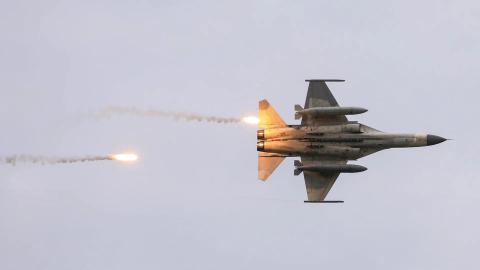
Taiwan has fired flares to drive away unidentified aircraft, probably drones, that flew above the area of its Kinmen islands, the Defence Ministry said, as China geared for a massive military drill following US politician Nancy Pelosi's controversial trip to the island state.
Major General Chang Zone-sung of the Army's Kinmen Defence
Command told the Reuters news agency that the drones came in a pair and
flew into the Kinmen area twice on Wednesday night, at around 9 PM and 10 PM [local time].
"We immediately fired flares to issue warnings and to drive
them away. After that, they turned around. They came into our
restricted area and that's why we dispersed them," he said.
The heavily fortified Kinmen islands are just off the
southeastern coast of China, near the city of Xiamen.
"We have a standard operating procedure. We will react if
they come in," Chang said, adding that the alert level there
remained "normal".
Chang said he believed the drones were intended to gather
intelligence on Taiwan's security deployment in its outlying
islands.
Last week, Taiwan's military fired flares to warn away a
drone that "glanced" its Matsu archipelago off the coast of
China's Fujian province and was possibly probing its defences,
Taiwan's Defence Ministry said.
On Thursday, Taiwan also reported its website suffered cyber attacks and went offline temporarily, adding it was working closely with other authorities to enhance cyber security.
Earlier this week, several government websites, including the presidential office, were subject to overseas cyber attacks, some of which authorities said were launched by China and Russia.
Taiwan has been on alert as China conducts a series of military exercises in response to a visit to the island this week by US House of Representatives Speaker Pelosi.
Beijing considers Taiwan as its inseparable part, but the latter has maintained its self-rule since 1949 and enjoys diplomatic ties with at least 14 countries.
Interactions between Washington and Taipei have grown significantly since the tenure of former US president Donald Trump, with former and sitting lawmakers making trips to the island home to more than 25 million people.
The US formally recognised China in 1979 and shifted diplomatic relations from Taipei to Beijing, and accepted Taiwan as part of the mainland under Washington's One China policy.
The moves are part of a "common pattern for Beijing", according to analysts, who fear more disruptions of agricultural and food trade can be expected in the coming days.
Nancy Pelosi has met with Taiwanese President Tsai Ing-wen, who presented the US House speaker with a civilian honour.
(Reuters)
China has rolled out curbs on the import of fruit and fish from Taiwan, while halting shipments of sand to the island in the wake of a visit by US House Speaker Nancy Pelosi.
China's Customs Administration said on Wednesday it would suspend some citrus fruit imports from Taiwan over alleged "repeated" detection of excessive pesticide residue, and the import of fish owing to positive coronavirus tests on packages.
In a separate notice, the Commerce Ministry added it would also "suspend the export of natural sand to Taiwan" from Wednesday, without providing details.
Natural sand is generally used for producing concrete and asphalt, and most of Taiwan's imported sand and gravel comes from China.
The moves are part of a "common pattern for Beijing", said Even Pay, an agriculture analyst at consultancy Trivium China.
More disruptions of agricultural and food trade can be expected in the coming days, she added.
"When diplomatic or trade tensions are running high, Chinese regulators typically take an extremely strict approach to compliance... looking for any issues that can be used to justify a trade ban," she said.
The trip by Pelosi, who is second in line to the presidency and the highest-profile elected US official to visit Taiwan in 25 years, has ignited a diplomatic firestorm.
China is Taiwan's biggest trading partner and export market, with bilateral trade growing 26 percent on-year to $328 billion in 2021, official data shows.
It is not the first time Beijing has taken aim at the island's exports.
China banned pineapple imports in March 2021, citing the discovery of pests, in a move that was widely seen as politically driven.
Beijing has ramped up pressure on Taiwan since President Tsai Ing-wen took office in 2016, as she views the island as a de facto sovereign nation and not part of "one China".
On top of the latest bans, Taipei's Council of Agriculture said Tuesday that China had cited regulatory breaches in suspending the import of other Taiwanese goods, including fishery products, tea and honey.
Meanwhile, Chinese authorities also announced planned live-fire military drills encircling Taiwan, in a move Taipei's defence ministry said threatened key ports and urban areas.
At some points, the zone of Chinese operations will come within 20 kilometres (12.4 miles) of Taiwan's shoreline, according to coordinates shared by the People's Liberation Army.
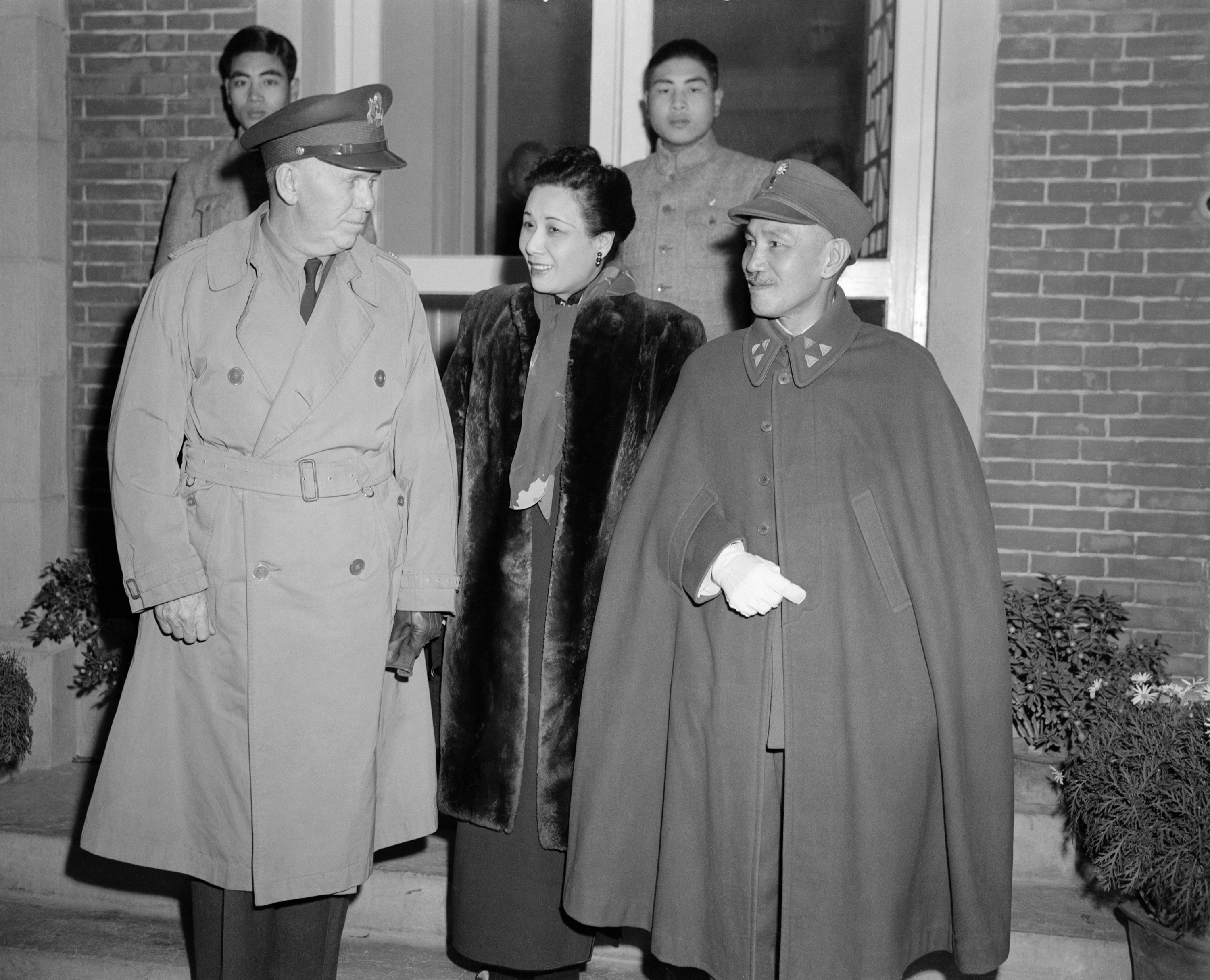
US Ambassador to China Gen. George C. Marshall with Nationalist leader Chiang Kai-Shek (right), and his wife, Soong Mei-ling, in China in 1943. (Bettmann/Getty Images)
During the Chinese civil war, the United States backed the ruling Nationalist government, led by the Kuomintang. The Soviet Union supported the Chinese Communist Party, which eventually took power and established the People's Republic of China.
The US continued to support the Kuomintang, or KMT, government after it retreated to Taiwan following its defeat. The US provided the KMT with development assistance to build its economy and initially shunned the People's Republic as an ideological and military adversary.
But following a diplomatic conflict between Beijing and Moscow in the 1960s — known as the Sino-Soviet split — relations between the US and the People's Republic began to thaw.
By 1979, the US had joined a growing list of nations to formally switch diplomatic recognition from Taipei to Beijing.
The One China policy: In what is known as the "One China" policy, Washington recognizes the People's Republic of China as the sole legitimate government of China. It also acknowledges Beijing's position that Taiwan is part of China. However, the US has never accepted the Communist Party's claim of sovereignty over the island.
Meanwhile, the US continues to retain close unofficial ties with Taiwan under the terms of the decades-old Taiwan Relations Act, facilitating commercial, cultural and other exchanges through the American Institute in Taiwan — the de facto US Embassy in Taipei.
Strategic ambiguity: The US maintains close unofficial ties with Taiwan, and is bound by law to provide Taiwan with defensive arms.But it remains deliberately vague on whether it would defend Taiwan in the event of a Chinese invasion, a policy known as ��strategic ambiguity.”
This is meant to dissuade any such invasion by keeping open the possibility of a US military response. At the same time, it's meant to avoid giving Taiwan the sort of assurance that could prompt it to declare official independence. The goal is to preserve the status quo and to avoid a war in Asia — and so far it appears to have worked, allowing Washington to walk the tightrope of relations with both sides.
Biden's remarks: But under Biden, some observers say that "strategic ambiguity" has become somewhat less ambiguous. Since taking office, Biden has said on three occasions the US would be willing to intervene militarily should the Chinese attack Taiwan — though the White House has rushed to walk back his remarks each time.
Stocks across the board tumbled as jitters about an escalation in regional tension with US House Speaker Nancy Pelosi set to begin a trip to Taiwan, adding to fears about the risk of global recession.
The week began with China, Europe and the United States reporting weakening factory activity, with that in the US decelerating to its lowest level since August 2020.
(Reuters Archive)
Asian shares have been mostly lower amid concerns about regional stability as an expected visit by US House Speaker Nancy Pelosi to Taiwan prompted threats from Beijing.
Benchmarks headed downward across the board in the region in early trading on Tuesday, including Japan, China, South Korea and Australia.
US long-term Treasury yields dropped to a four-month low, pulling the US dollar down, amid a bid for safer assets after China threatened repercussions in the event of the visit by Pelosi to the self-ruled island, which China claims as its territory. Crude oil also sank.
Japan's benchmark Nikkei 225 declined 1.4 percent to 27,594.73. South Korea's Kospi slipped 0.5 percent to 2,439.62. Hong Kong's Hang Seng dropped 2.5 percent to 19,675.87, while the Shanghai Composite dove 2.3 percent to 3,186.27.
Meanwhile, Australian stocks pared declines and the Aussie dollar weakened after the central bank raised the key rate by an as-expected 50 basis points, with markets interpreting changes to the accompanying policy statement as dovish.
Taiwan visit tensions
China sees Taiwan as its own territory and has repeatedly warned of “serious consequences” if the reported trip to the island goes ahead.
Pelosi has said she is visiting Singapore, Malaysia, South Korea and Japan for talks on a variety of topics, including trade, Covid-19, climate change and security.
While there have been no official announcements, local media in Taiwan reported Pelosi will arrive on Tuesday night, making her the highest-ranking elected US official to visit in more than 25 years.
The week began with China, Europe and the United States reporting weakening factory activity, with that in the US decelerating to its lowest level since August 2020.
That sank crude, with Brent futures edging down to $99.27 a barrel on Tuesday after losing almost $4 overnight.
US West Texas Intermediate futures also eased to $93.26, extending Monday's almost $5 slide.
The benchmark 10-year US Treasury yield fell as low as 2.53 percent in Tokyo trade, the lowest since April 5, amid wagers the slowdown could spur the US Federal Reserve to ease off the policy-tightening pedal.
The bonds also benefited from safety-seeking demand before Pelosi's Taiwan visit.
That helped the US dollar slide as low as 130.40 yen for the first time since June 6. The euro jumped as high as $1.0294, a level not seen since July 5.
The Taiwan dollar slipped to its lowest level in more than two years on the weaker side of 30 per US dollar.
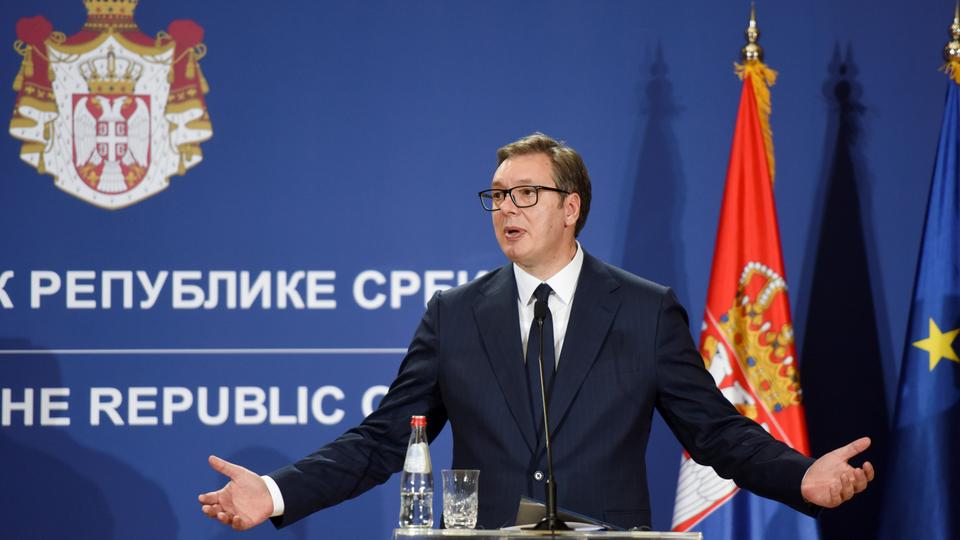
Serbia's President Vucic said the following period will be a very difficult political struggle.
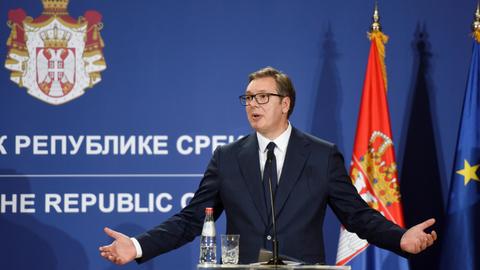
Serbian President Aleksandar Vucic speaks during a news conference in Belgrade, Serbia, June 10, 2022.
(Reuters)
Serbian President Aleksandar Vucic has said he hoped the tension with Kosovo would be resolved by Monday.
Vucic met with Serbian Chief of Staff Milan Mojsilovic and the commander of the NATO Force in Kosovo (KFOR) in Belgrade, Serbia.
Following the meeting, Vucic noted on late Sunday that he is hoping to find a solution with Kosovo in the coming period.
"I believe that, for the short term, we will have good news. I can't say what will happen next. But this will de-escalate [tensions] if not tonight then tomorrow," Vucic said.
He also noted that this is a chance to gain time for talks.
Pointing out that the coming weeks and months will be a very difficult political struggle, Vucic said, "I would like to thank those who have controlled themselves, especially the Kosovo Serbs."
"I want to reiterate once again that we will not surrender and Serbia will win," he said.
Earlier Vucic defined the tensions as a "complex situation" and blamed Kosovo for the escalating tensions over the license plates and ID cards.
Gunfire has been heard in northern Kosovo, a day before the country enforces a contentious law. Journalist Haris Alija has more from Kosovo’s capital Pristina pic.twitter.com/bHlHSnPqkj
Fourteen years after Kosovo declared independence from Serbia, some 50,000 Serbs living in the north use license plates and documents issued by Serbian authorities, refusing to recognise institutions under the capital, Pristina.
The government of Prime Minister Albin Kurti said it would give Serbs a transitional period of 60 days starting Aug 1 to get Kosovo license plates, a year after giving up trying to impose them due to similar protests.
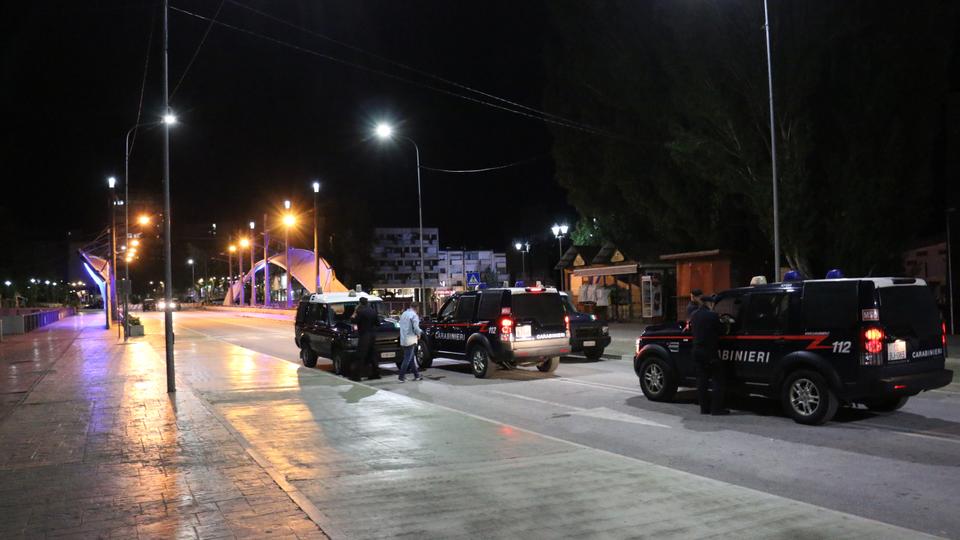
Kosovo police said they closed two border crossings in the volatile north after local Serbs blocked roads and fired shots at police in protest at an order to switch Serb car license plates to Kosovar ones within two months.
NATO's forces in Kosovo are prepared to intervene if stability is endangered in the north of Kosovo, KFOR said in a press release as tensions are running high.
But, after meeting with high ranking EU and US officials Kosovo government released a statement to delay the decisions.
Kosovo's Prime Minister Albin Kurti released a statement that the postponement is conditioned to the removal of all barricades and complete restoration of freedom of movement in Kosova's volatile town of Mitrovica.
NATO's forces in Kosovo announced they are ready to intervene if stability in northern Kosovo is threatened.
Kosovo police closed the Brnjak and Jarinje border crossings to Serbia, in the north of Kosovo, after local Serbs blocked the roads before the beginning of the application of reciprocal measures by the Government of Kosovo.
(AA)
NATO's forces in Kosovo are prepared to intervene if stability is endangered in the north of Kosovo, KFOR said in a press release.
Tensions between Pristina and Belgrade are running high as air raid sirens were heard for more than three hours in the small border town of Mitrovica.
"The NATO-led KFOR mission is monitoring closely and is prepared to intervene if stability is jeopardised, in accordance with its mandate, coming from UNSC Resolution 1244 of 1999," the statement said on late Sunday.
The commander of KFOR is in contact with all of his main interlocutors, Serbian and Kosovar senior defence officials to calm the tensions, the statement said.
"KFOR will take whatever measures are necessary to keep a safe and secure environment in Kosovo at all times, in line with its UN mandate," it added.
Fourteen years after Kosovo declared independence from Serbia, some 50,000 Serbs living in the north use license plates and documents issued by Serbian authorities, refusing to recognise institutions under the capital, Pristina.
Kosovo has been recognised as an independent state by more than 100 countries but not by Serbia or Russia.
Kosovo police said they closed two border crossings in the volatile north after local Serbs blocked roads and fired shots at police in protest at an order to switch Serb car license plates to Kosovar ones within two months.
The government of Prime Minister Albin Kurti said it would give Serbs a transitional period of 60 days starting Aug 1 to get Kosovo license plates, a year after giving up trying to impose them due to similar protests.
The government also decided that as of Aug 1, all citizens from Serbia visiting Kosovo would have to get an extra document at the border to grant them permission to enter.
A similar rule is applied by Belgrade authorities to Kosovars who visit Serbia.
The protesters parked trucks filled with gravel and other heavy machinery on roads leading to the two border crossings, Jarinje and Bernjak, in a territory where Serbs form a majority.
As a consequence, Kosovo police said they had to close the border crossings. “We call on all citizens to use other border crossings,” the police said on their Facebook page.
Police said there were shots fired "in the direction of police units but fortunately no one was wounded".
It also said angry protesters beat up several Albanians passing on the roads that had been blocked and that some cars had been attacked.
A year ago, after local Serbs blocked the same roads over license plates, Kosovo’s government deployed special police forces and Belgrade flew fighter jets close to the border.
Fragile peace
Tensions between the two countries are now at their highest in years and Kosovo’s fragile peace is maintained by a NATO mission which has 3,770 troops on the ground. Italian peacekeepers were visible in and around Mitrovica on Sunday.
The two countries committed in 2013 to a dialogue sponsored by the European Union to try to resolve outstanding issues but little progress has been made.
Kosovo, which is predominantly inhabited by Albanians, broke away from Serbia in 1999 and declared its independence in 2008. It is recognized by more than 100 countries, including the US, UK, France, Germany, and Türkiye. Serbia has not recognized this and continues to lay claim to the territory.
Already stuck in a trade war, Beijing and Washington increasingly risk open conflict over Taiwan, with little sign of resolution on either front.
While this was Biden's fifth talk with Xi since becoming president a year and a half ago, it's getting hard to mask deepening mistrust between the two countries.
(Reuters)
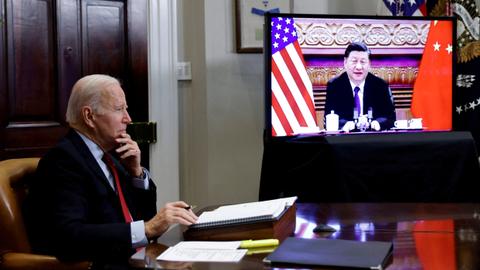
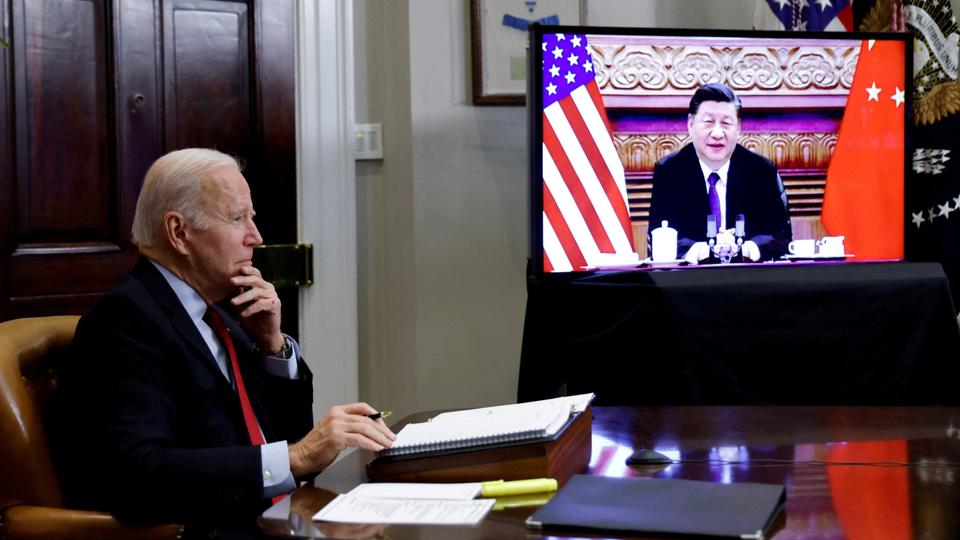
Xi Jinping and Joe Biden have held two hours of "candid and in-depth" talks, in which the Chinese president warned his US counterpart not to "play with fire" amid mounting tensions over Taiwan, state media reported.
The virtual summit lasting over two hours took place on Thursday as Beijing and Washington increasingly risk open conflict over the self-ruling island, which China considers part of its territory.
"Those who play with fire will eventually get burned," Xinhua quoted Xi as telling Biden on Thursday. "I hope the US side fully understand that," he was quoted as saying.
"The position of the Chinese government and people on the Taiwan issue is consistent,'" Xi was quoted as saying.
"It is the firm will of the over 1.4 billion Chinese people to firmly safeguard China's national sovereignty and territorial integrity."
While this was Biden's fifth talk with Xi since becoming president a year and a half ago, it's getting hard to mask deepening mistrust between the two countries.
"Tensions over China's aggressive, coercive behaviour in the Indo-Pacific" will be high on the agenda, said White House National Security Council spokesman John Kirby.
The latest flashpoint is a possible trip by Biden ally and speaker of the House of Representatives, Nancy Pelosi, to the island, which Beijing claims is part of China but has its own distinct, democratic government.
Although US officials frequently visit Taiwan, separated by a narrow strip of water from the Chinese mainland, Beijing considers a Pelosi trip as a major provocation.
She's second in line to the US presidency and given her position may travel with military transport.
Washington will "bear the consequences" if the trip, which Pelosi has yet to confirm, goes ahead, China warned on Wednesday.
And the dispute around Pelosi is the tip of an iceberg, with US officials fearing that Xi is mulling use of force to impose control over Taiwan.
Once considered unlikely, an invasion, or lesser form of military action, is increasingly seen by China watchers as possible - perhaps even timed to boost Xi's prestige when he moves later this year into a third term.
Biden's contradictory comments on whether the United States would defend Taiwan - he said in May that it would, before the White House insisted there was no change in the hands-off "strategic ambiguity" policy - have not helped the tension.
While Kim has increasingly threatened his rivals with nuclear weapons, it’s unlikely that he would use them first against the superior militaries of the US and its allies, observers say.
Kim's military has test-launched nuclear-capable missiles that place both the US mainland and South Korea within striking distance.
(AP)
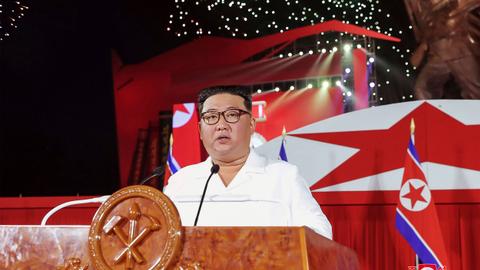
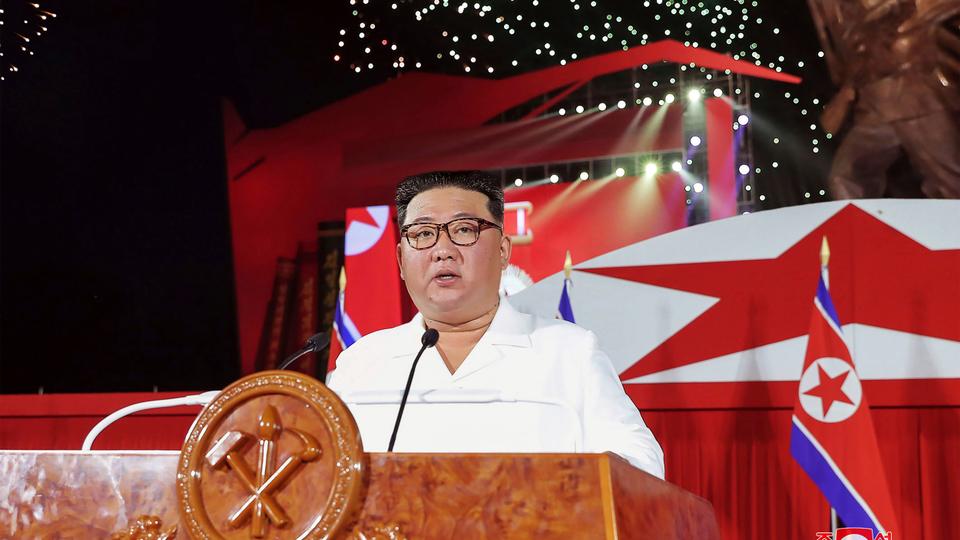
North Korean leader Kim Jong Un has warned he’s ready to use his nuclear weapons in potential military conflicts with the United States and South Korea, state media has said.
Kim’s speech on Wednesday to war veterans on the 69th anniversary of the end of the 1950-53 Korean War was apparently meant to boost internal unity in the impoverished country amid pandemic-related economic difficulties.
“Our armed forces are completely prepared to respond to any crisis and our country’s nuclear war deterrent is also ready to mobilise its absolute power dutifully, exactly and swiftly in accordance with its mission,” Kim said in his speech, according to the official Korean Central News Agency.
While Kim has increasingly threatened his rivals with nuclear weapons, it’s unlikely that he would use them first against the superior militaries of the US and its allies, observers say.
Kim accused the United States of “demonising” North Korea to justify its hostile policies.
He said US-South Korea military drills targeting North Korea show the US's “double standards” and “gangster-like” aspects because it brands North Korea’s routine military activities — an apparent reference to its missile tests — as provocations or threats.
Kim also alleged the new South Korean government of President Yoon Suk Yeol is led by “confrontation maniacs” and “gangsters" who have gone further than previous South Korean conservative governments.
Since taking office in May, the Yoon government has moved to strengthen Seoul's military alliance with the United States and bolster its capacity to neutralise North Korean nuclear threats including a preemptive strike capability.
Moon Hong-sik, a deputy spokesperson at the South Korean Defence Ministry, reiterated on Thursday an earlier position that South Korea has been boosting its military capacity and joint defence posture with the United States to cope with escalating North Korean nuclear threats.
In April, Kim said North Korea could preemptively use nuclear weapons if threatened, saying they would “never be confined to the single mission of war deterrent."
Kim's military has also test-launched nuclear-capable missiles that place both the US mainland and South Korea within striking distance.
US and South Korean officials have repeatedly said in the past few months that North Korea is ready to conduct its first nuclear test in five years.
Kim is seeking greater public support as his country’s economy has been battered by pandemic-related border shutdowns, US-led sanctions and his own mismanagement.
Experts say North Korea will likely intensify its threats against the United States and South Korea as the allies prepare to expand summertime exercises.
In recent years, the South Korean and US militaries have cancelled or downsized some of their regular exercises to support now-stalled US-led diplomacy aimed at convincing North Korea to give up its nuclear program in return for economic and political benefits.
North Korea has said it won't return to talks with the United States unless it first abandons its hostile polices on the North, in an apparent reference to US-led sanctions and US-South Korean military drills.