‏إظهار الرسائل ذات التسميات market. إظهار كافة الرسائل

ICC eyes $4 billion-plus media rights money for Indian market

The ICC are about to discover how much their cricket is worth when they open bids for the Indian market from various broadcasters on Friday. At stake are the rights to broadcast ICC events - men's and women's - for the next four or eight years, on TV and digital, straight to your device of choice. And given the massive amounts generated by the bidding for the IPL, there's an expectation that the ICC could benefit from the big money swirling around the game.

Here's what you need to know about the bidding.

Why do I even need to know about ICC rights when all I care about is who my team plays next?
Because, ultimately, the money from these rights forms a chunk of the money that makes the rich (India, England and Australia) richer but keeps the game going in the smaller member countries. So, if you care about that, you probably better care about this too.

Fine, so what's being bid for?
A whole bunch of events from 2023-31: 16 men's events (over eight years between 2023-31) and six women's events (over four years - between 2023-27). World Cups, Champions Trophy, T20 World Cups, U19 World Cups, you name it, every ICC event - men and women - you watch until 2031 will be part of this deal.

Brought to me by?
As ESPNcricinfo understands it, one or more of Disney Star*, Sony, Zee, Viacom and Amazon.

And am I watching it on my phone, TV, tablet?
Either, both, all. For the first time, the ICC has unpacked its rights. No longer is it selling one set of TV rights to the highest bidder; it is now selling its rights as separate packages of TV only, digital only, and TV and digital combined. All three are for four or eight years. In case any of the packages are sold for only four years, the ICC will open another window to sell the rights for the second four-year period.

That sounds like bidding could get complicated.
That's exactly what four of the main broadcasters in the running thought, and several emails were sent to the ICC about the lack of transparency in the process. And as a symbolic protest, they didn't initially attend some training sessions - or "mock auctions" as they called them - designed to familiarise them with the process.

Expand.
Disney Star, Zee, Sony and Viacom expressed various concerns over the transparency of the bidding process. TL;DR: the broadcasters were unhappy with the fact that the bids were not going to be shared once opened, among those who bid; that there was no clarity about how close the highest bids needed to be to trigger a second round of bidding; and they wanted to know more about how the ICC would judge a bid for a four-year deal against a bid for an eight-year deal.

What happened next?
The four broadcasters eventually did go ahead and put in bids, and according to some reports, the clarity they wanted has been given. For example, according to a report in the Times of India, broadcasters have been told that if a bid is within 10% of the highest bid/combination bid, it will trigger a second round of bidding - only this time through an e-auction (more on that shortly).

There has also been some more information around a pre-determined multiplier, which will be used to judge an eight-year bid against a four-year one. The ICC will look at the best bids for both tenures and then look at the ratio between the two, compare that with the multiplier, believed to be set at 2.8. If the ratio for eight years exceeds the multiplier, then the ICC will pick the winner for the eight-year bid. If the ratio is less, then the highest bid for four years will be selected.

I'm sorry, what?
Here's an example. If the best four-year number is 100 and the best eight-year number is 270, the ratio is 2.7 (270/100). That is below the 2.8 multiplier set by the ICC. So in this case, the ICC will go with the highest bidder for four years. But if the best bid for four years is 100 and the highest bid for eight years is 300, then the ratio of 3 means the ICC will pick the highest bid for eight years.

Does that mean there could be an e-auction, like the one at the IPL?
Only, as we say, if the second-best bid is within 10% of the best bid; the first round of bidding is the old-school, sealed-bid methodology, which the ICC says has worked best for years (some broadcasters wanted an e-auction from the start, after the success of the IPL). The ICC also argue that the unbundled nature of their rights offering means that it is too complex for a simple e-auction process. In fact, at first they had ruled out an e-auction but have since stepped back from that. The e-auction, if needed, will take place a few days later.

Why have they gone to the Indian market first?
In short: money. It is cricket's biggest market and as the IPL rights proved, there is massive appetite among the biggest broadcasters there for more cricket content. The ICC is banking on the belief that since two different broadcasters - Disney Star and Viacom - have won the TV and digital rights respectively for next five-year cycle of the IPL, both as well as other participants will bid aggressively to bag the second biggest rights in cricket, that of the ICC.

Underpinning this is also simple maths: by unbundling its package of rights into men's and women's events, into digital and TV, by going into different territories, they stand to make much more money than they have in previous cycles.

I'm not sure how it has taken this long to get to the crux of this: how much money are they expecting to make?
Nobody can be certain but here are some facts. In the last cycle, the ICC sold its rights for just over US$2 billion. But that was a different, linear world: that figure was for all rights on all platforms globally. For this cycle, the ICC is believed to have a benchmark figure in mind, an "asking price" of $1.44 billion for a four-year deal and $4 billion (1.44 multiplied by 2.8) for an eight-year deal. That is double the last deal for eight years, and it is only a benchmark figure - so the minimum they expect - and it is only for the India market.

Expectations have risen not just because of the way broadcasting and the digital landscape has changed since the last cycle, but because there is more content. There were six men's events in the previous eight-year cycle, whereas there will be one annually in this next cycle. Six of the eight events fall in the Indian time zone; India play host to three men's event; four of the eight events in the next cycle take place during the Diwali festive season when the Indian market is usually in spending mood.

Separate women's rights will help. An element of development still remains, in that the highest bid will not necessarily guarantee the winner. The ICC is keen to find the right broadcasting partner who can promote women's cricket globally. The highest bidder(s) will make a presentation in front of the Media Rights Advisory Group (MRAG) - formed specifically to adjudicate the bidding - to showcase how they aim to help women's cricket grow, and that will not just be limited to the global events but the overall game.

*Disney Star and ESPNcricinfo are part of the Walt Disney Company.


#ICC #eyes #billionplus #media #rights #money #Indian #market https://www.globalcourant.com/icc-eyes-4-billion-plus-media-rights-money-for-indian-market/?feed_id=15867&_unique_id=630818cdc8dae

3 Dead, Dozens Injured at Armenian Market Explosion

An explosion that set off a fire at a market in the Armenian capital Yerevan on Sunday killed three people and injured dozens of others, officials announced.

The fire ripped through the market at Surmalu, said the first reports.

"After preliminary data, an explosion happened which set off a fire," said the emergency situations ministry in a statement, giving a toll of three dead and around 40 people hospitalized. 

They also reported that a nearby building had collapsed and published the names of 25 people loved ones were trying to contact, saying they might be trapped under its ruins.

As the search for survivors continued, rescue workers were using a digger to clear away rubble, an AFP journalist at the scene reported.

They had so far pulled 10 survivors from the rubble and recovered one body, said the ministry statement.

The wholesale market at Surmalu is normally very busy on Sunday afternoons, which is when the blast happened.

The cause of the fire has not yet been established, but local news reports, citing witnesses, said the explosion happened at a place that stored fireworks. The authorities have so far made no statement on what might have caused the fire.

Photos and videos posted on social media showed a thick column of black smoke over the market and what appeared to be a series of detonations can be heard.

Bomb scare

A number of volunteers were also helping at the scene, scrambling to move piles of twisted concrete blocks and metal bars with their bare hands.

Nearby, firefighters kept their hoses trained on the smoking ruins, soaking them down with water.

In all, 200 firefighters and medical workers were sent to the scene, as well as fire engines and construction site equipment.

The disaster comes at a time when the country is already going through a difficult period.

Armenia, a small country with around 3 million inhabitants, is still recovering from the 2020 war with Azerbaijan, which ended in a heavy defeat which in turn sparked a political crisis.

Reflecting the current tensions, the Yerevan metro system was evacuated shortly after the blast following a bomb scare, officials said, adding that no device had been find.

Armenia's neighbor, Russia, said via its embassy that it was trying to establish if any of its citizens were victims of the blast.

It offered its condolences to the families and loved ones of those killed in the disaster.


Source https://www.globalcourant.com/3-dead-dozens-injured-at-armenian-market-explosion/?feed_id=10965&_unique_id=62f9a0fd88a7d

Dow futures are flat after Wednesday's market rally

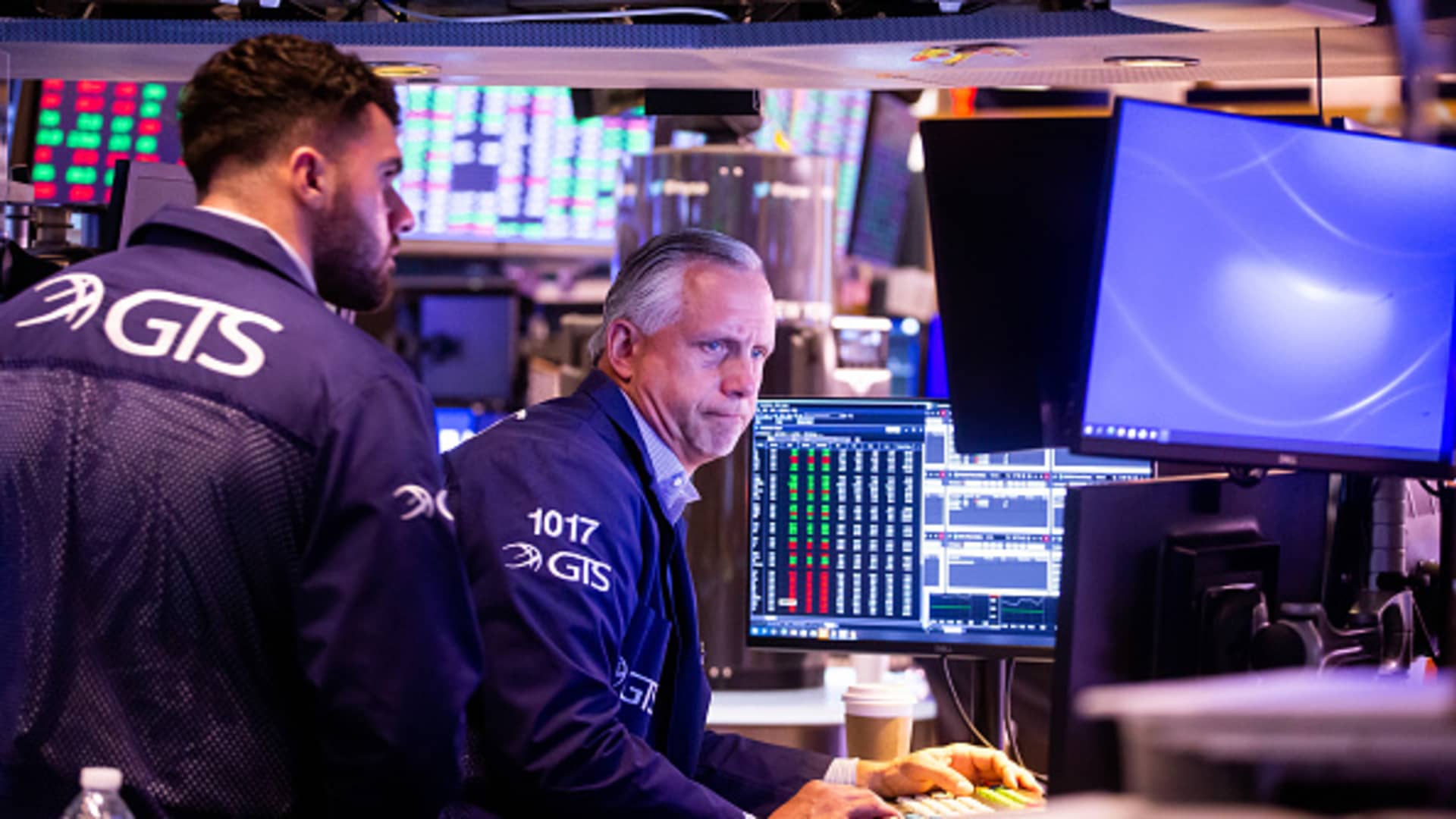
Dow futures were flat in overnight trading on Wednesday after all the major averages posted sharp gains on the back of a better-than-expected July inflation report.

Futures tied to the Dow Jones added 0.02% or 6 points, while S&P 500 futures and Nasdaq 100 futures inched 0.07% and 0.13% lower, respectively.

Disney added 6.7% in late trading after posting stronger-than-anticipated subscriber numbers and topping earning estimates on the top and bottom lines. Shares of Sonos slumped more than 19% after missing analysts' expectations.

Wednesday's regular trading session saw all the major indexes rally, with the Dow Jones Industrial Average jumping 535.10 points, or 1.63%, to close at 33,309.51. The S&P 500 added 2.13% to 4,210.24 and hit its highest level since early May, while the Nasdaq Composite gained 2.89% to 12,854.80, its highest close since late April.

The moves came after the headline consumer price index for July came in at 8.5%, slightly cooler than the 8.7% expected by analysts surveyed by Dow Jones, and raised questions as to whether inflation has hit its peak and the Federal Reserve will need to hike rates as aggressively as anticipated when it meets next month.

Beaten-up tech shares that have borne the brunt of this year's selloff drove Wednesday's market rally as shares of Meta Platforms and Netflix jumped 5.8% and 6.2%, respectively. Battered chip names such as Nvidia and Advanced Micro Devices jumped nearly 6% and 4%, respectively.

"For today, we're rallying, and I think it's really because inflation has been such an overhang for investors and for the market," Lindsey Bell, Ally Invest's chief markets and money strategist told CNBC's "Closing Bell" on Wednesday. "And I think what investors are thinking today is maybe the peak really has been put in the past."

Earnings season continues Thursday with reports from Rivian, Warby Parker, Poshmark and more. July producer price index data is also slated for Thursday.


Source https://www.globalcourant.com/dow-futures-are-flat-after-wednesdays-market-rally/?feed_id=9236&_unique_id=62f43b8cb1350

Market outlook 'too volatile' to chase stock, bond rallies, asset manager says

Investors should eschew chasing recent rallies in stocks and bonds given the current economic uncertainty, according to the chief investment officer of Swiss asset manager Prime Partners.

Francois Savary said it was hugely difficult to have clear economic visibility due to the particulars of the current investment cycle, such as the Covid-19 recovery and the Ukraine war.

"One of the key factors that supported the rally, which was a strong bond market during the month of July, has disappeared to a certain extent," he told CNBC's "Street Signs Europe" on Monday.

Additionally, while the second-quarter earnings season has been robust so far, a key issue looming is how much analysts will revise their third-quarter earnings forecasts. "So we consider that the two elements that can support a further rally in the equity market are not clearly there," Savary said.

As such, he said investors should "absolutely not" be chasing the rally in equities that has been underway since mid-July. The S&P 500 is up almost 13% from its July lows, closing at 4,140 on Monday, but remains down since the start of the year.

On bonds, Savary said, "we all know it's very difficult to make money on the bonds side. I would not chase the bond rally that we experienced over the last two months."

Corporate, government and high-yield bond funds saw sizeable inflows last month. The U.S. 10 Year Treasury yield — which moves inversely prices — has slipped to trade around 2.76% on Tuesday after topping 3.48% in mid-June.

Investors in global markets are navigating a whirlwind of inflationary pressures, recession risks and central bank tightening cycles, with even juggernauts such as Berkshire Hathaway and SoftBank posting investment losses in the June quarter.

Stock picks and investing trends from CNBC Pro:

"It's a very difficult market environment," Savary told CNBC. "You need to have some hedge funds [and] some kind of decorrelating strategy that are in your portfolio."

Keeping some investment in stocks will provide partial protection from inflation, he said, however investors will need to be tactical and observe the latest economic figures.

Meanwhile cash, Savary said, is useful for providing flexibility.

"It's interesting to have some cash to check because everything is possible in this kind of environment. We could have a recession, but you could also get a slow but satisfactory rate of growth in the coming 12 months," he said.

For now, Savary said the market has priced in a recession. "But the numbers are not telling you that there is a recession, so we need to be nimble and to check what is happening week-by-week and month-by-month, and we should have more visibility by the early fall, in the U.S. in particular."

U.S. gross domestic product fell for the first two quarters of the year, meeting a common definition of a recession, although the NBER defines it differently and the White House insists the U.S. is not currently in recession.

Investors will be looking to U.S. inflation data out Wednesday for further clues on the state of the world's largest economy. It comes after the jobs report for last month showed unexpected strength and increased expectations of a 75 basis points rate hike in September.


Source https://www.globalcourant.com/market-outlook-too-volatile-to-chase-stock-bond-rallies-asset-manager-says/?feed_id=8522&_unique_id=62f213a04a7dc

Morgan Stanley on market bottom and tech stocks, Nasdaq


Source https://www.globalcourant.com/morgan-stanley-on-market-bottom-and-tech-stocks-nasdaq/?feed_id=6763&_unique_id=62ec6ff0a8078