Showing posts with label Environment. Show all posts

Mississippi governor declares emergency amid Jackson water crisis

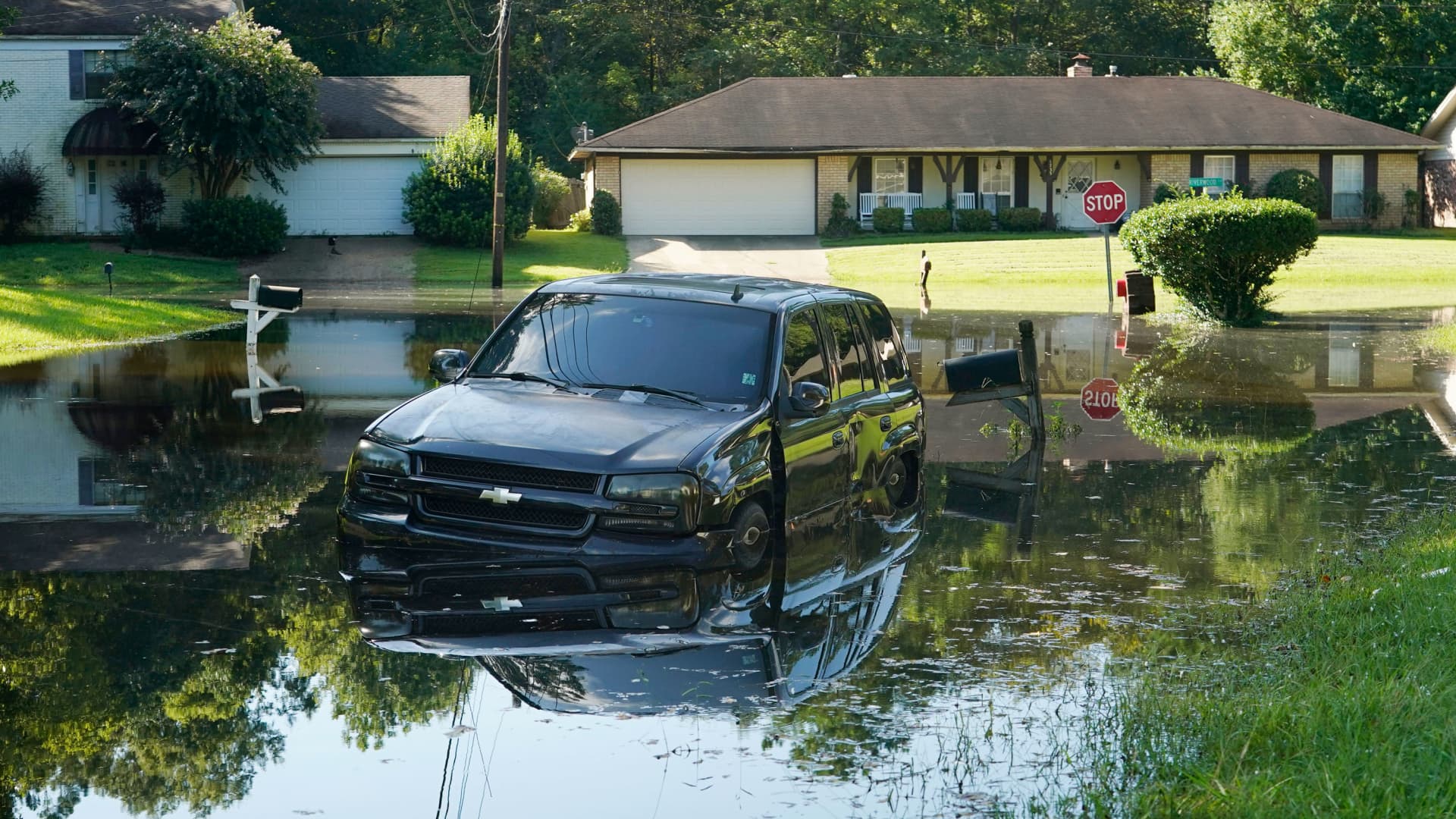
An SUV rests in flood waters in this northeast Jackson, Miss., neighborhood, Monday, Aug. 29, 2022. Rogelio V. Solis | AP

Residents of Jackson, Mississippi, the state's capital and largest city, do not have access to reliable drinking water for the near future after the city's main water treatment facility failed on Monday. The state has issued a state of emergency for Jackson and has activated the Mississippi National Guard. It's also distributing drinking and non-drinking water to up to 180,000 people until the system is fixed. Gov. Tate Reeves said during an emergency briefing Monday night that the city would be without "reliable running water at scale" indefinitely and that there isn't enough water to flush toilets or fight fires. "Do not drink the water. In too many cases, it is raw water from the reservoir being pushed through the pipes," Reeves warned residents. "Be smart, protect yourself, protect your family." Officials blamed the problem on longstanding issues at the O.B. Curtis water treatment plant, which has been in crisis for years due to old infrastructure and inadequate resources to update it. The city also said that recent rainfall and flooding of the Pearl River caused complications at the plant. City officials said the flooding had created issues at the plant, which is located near a reservoir that flows into the Pearl River. City residents have been subject to a boil-water notice since last month after tests found cloudiness in water samples. The water problem grew worse this week when businesses and homes endured little to no water pressure and officials warned that the water from the taps was untreated. Officials on Monday said the water shortage is likely to last the next couple of days.

Reservoir police observe the water release from the Ross Barnett Reservoir Spillway onto the Pearl River, Sunday, Aug. 28, 2022, in Rankin County, Miss. Rogelio V. Solis | AP

The governor said the exact cause of failure was unknown, adding that the treatment plant had been inadequately staffed and operated for years. Reeves said the plant's two primary pumps had stopped working, which left the system to depend on unreliable backup pumps. "It's not operating anywhere near capacity," Reeves said of the plant. "We might find out [Tuesday] it's not operating at all. We'll find out." The water crisis is affecting the roughly 150,000 people who live in Jackson and the 30,000 who live in surrounding communities that rely on the same water treatment facility. Jackson is about 82% Black, according to U.S. Census data. In addition to the unreliable water system, the city has been grappling with crime and problematic infrastructure.

The Mississippi Emergency Management Agency is distributing water to residents and the state is overseeing efforts to begin emergency repairs and maintenance to get the water system up and running, the governor said.


#Mississippi #governor #declares #emergency #Jackson #water #crisis https://www.globalcourant.com/mississippi-governor-declares-emergency-amid-jackson-water-crisis/?feed_id=17974&_unique_id=630e76ecc8d08

EPA waives fuel rule in 4 states after Indiana refinery fire

CHICAGO -- The Environmental Protection Agency temporarily lifted a federal rule for fuel sales in four states in response to a fire last week at an Indiana oil refinery that could affect prices and supply.

The emergency waiver was granted Saturday for Indiana, Illinois, Michigan and Wisconsin, EPA Administrator Michael Regan said. In a letter to state officials, Regan said the agency determined the waiver is necessary “to minimize or prevent disruption of an adequate supply of gasoline to consumers.”

The waiver lifts a Clear Air Act requirement that lower-volatility gasoline be sold in the states during summer months to limit ozone pollution. It is in effect until Sept. 15, the EPA said.

BP said its refinery in Whiting, Indiana, experienced an electrical fire Wednesday. No one was hurt, and the fire was put out, but it forced at least a partial shutdown of the refinery along Lake Michigan's shoreline about 15 miles (24 kilometers) southeast of Chicago, according to the company.

Governors in all four states requested the EPA waivers, according to the EPA's letter. Michigan Gov. Gretchen Whitmer's office said the refinery provides about 20% to 25% of the gasoline, jet fuel and diesel used by Michigan, Wisconsin, Indiana and Illinois.

BP spokeswoman Christina Audisho said the company was working with local and state agencies and was still assessing when affected units can restart.


#EPA #waives #fuel #rule #states #Indiana #refinery #fire https://www.globalcourant.com/epa-waives-fuel-rule-in-4-states-after-indiana-refinery-fire/?feed_id=17064&_unique_id=630bb3dc6aacd

More polio virus detected in upstate New York wastewater

The virus that causes polio has been found in wastewater samples from another upstate New York county, prompting state health officials to warn of expanding “community spread” of the life-threatening virus

ALBANY, N.Y. -- State health officials in New York are warning of expanding “community spread” of the polio virus after it was found in wastewater samples from another upstate county.

The state Department of Health said Friday the polio virus was detected in four samples from Sullivan County, two each in July and August. Sullivan County is several dozen miles northwest of Rockland County, where officials on July 21 announced the first case of polio in the United States in nearly a decade. The unidentified young adult was unvaccinated.

The Sullivan County samples are genetically-linked to the case of paralytic polio in Rockland County.

State Health Commissioner Dr. Mary T. Bassett again urged residents to make sure they are immunized, saying “one New Yorker paralyzed by polio is already too many."

“The polio in New York today is an imminent threat to all adults and children who are unvaccinated or not up to date with their polio immunizations," Bassett said in a prepared release.

The virus has now been identified in wastewater samples in three contiguous counties north of New York City: Rockland, Orange and Sullivan. The polio virus also has been found in New York City sewage.

Officials have said that it is possible that hundreds of people in the state have gotten polio and don’t know it. Most people infected with polio have no symptoms but can still give the virus to others for days or weeks.

Polio was once one of the nation’s most feared diseases, with annual outbreaks causing thousands of cases of paralysis. The disease mostly affects children.


#polio #virus #detected #upstate #York #wastewater https://www.globalcourant.com/more-polio-virus-detected-in-upstate-new-york-wastewater/?feed_id=16252&_unique_id=630920d01be02

California bans the sale of new gas-powered cars by 2035

A charging port on a 2022 Lincoln Corsair Grand Touring plug-in hybrid vehicle during AutoMobility LA ahead of the Los Angeles Auto Show in Los Angeles, California, Nov. 18, 2021. Bing Guan | Bloomberg | Getty Images

California, the country's most populous state and the center of U.S. car culture, is banning the sale of new gasoline-powered vehicles starting in 2035, marking a historic step in the state's battle against climate change. The rule, issued by the California Air Resources Board on Thursday, will force automakers to speed up production of cleaner vehicles beginning in 2026 until sales of only zero-emission cars, pickup trucks and SUVs are allowed in the state. The unanimous vote comes after Gov. Gavin Newsom set a target in 2020 to accelerate the shift away from internal combustion engines. The transportation sector represents the largest source of greenhouse gas emissions in California, which has suffered from record-breaking wildfires, droughts and air pollution worsened by climate change. The decision is expected to have sweeping impacts beyond California and will likely pave the way for other states to follow suit. At least 15 states, including New Jersey, New York and Pennsylvania, have adopted California's vehicle standards on previous clean-car rules. Liane Randolph, chair of the California Air Resources Board, said the rule is one of the state's most important efforts yet to clean the air and will lead to a 50% reduction in pollution from cars and light trucks by 2040. The policy will not ban people from continuing to drive gas cars or from buying and selling them on the used market after 2035. The rule will also allow automakers to sell up to 20% plug-in hybrids, which have gas engines, by 2035. But the rule does phase out such vehicles over time, requiring 35% of total new vehicle sales to be powered by batteries or hydrogen by 2026 and 68% by 2030. More than 16% of new cars sold in California in 2022 were zero-emissions vehicles, the state said, up from 12.41% in 2021 and 7.78% in 2020. "California is once again leading the way by establishing commonsense standards that will transition to sales of all zero-polluting cars and light-duty trucks in the state," said Kathy Harris, clean vehicles advocate at the Natural Resources Defense Council.

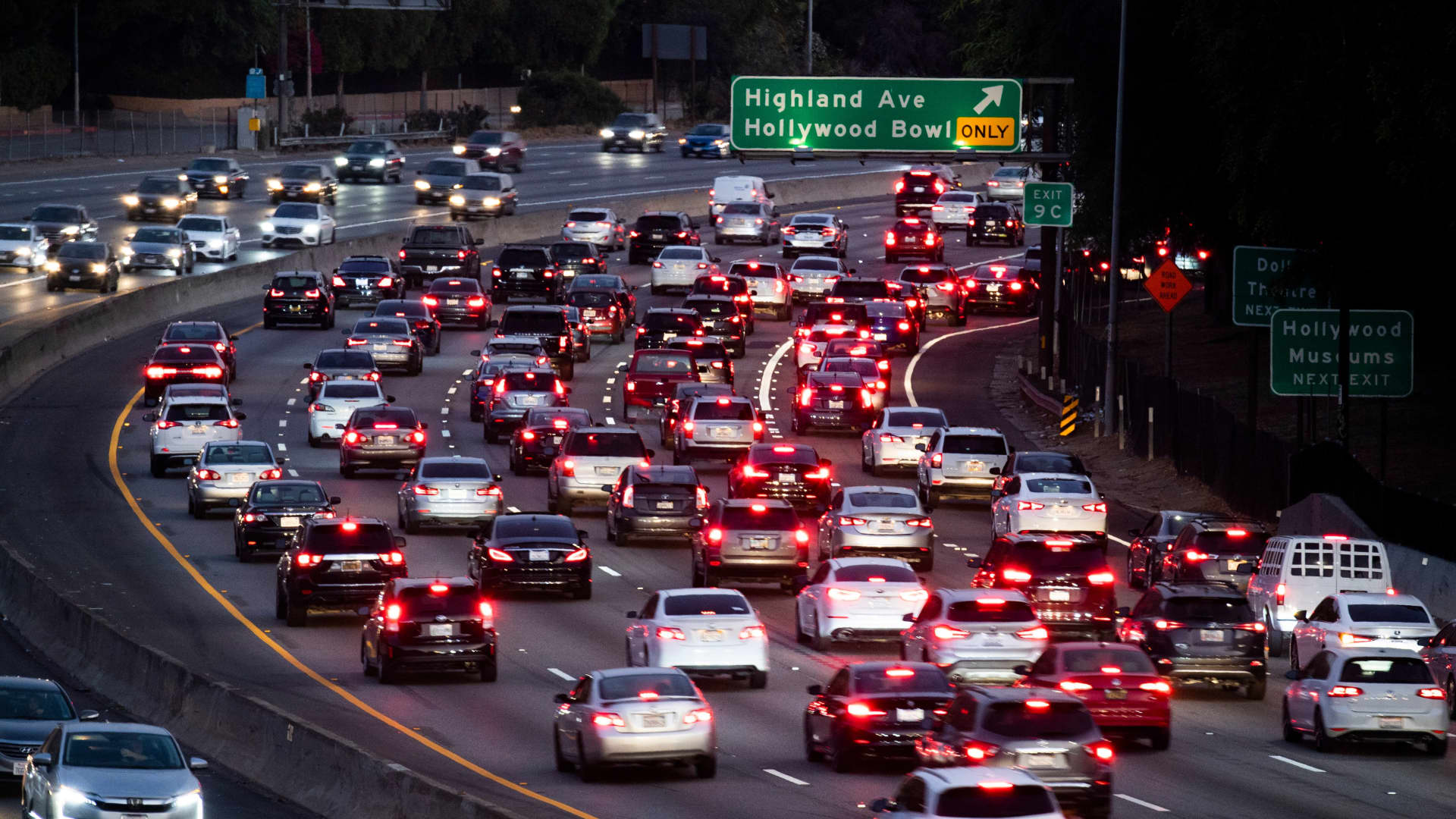
Motor vehicles drive on the 101 freeway in Los Angeles, California. Robyn Beck | Getty Images

California, home to congested freeways and the smog-filled skies over Los Angeles, has considerable authority over the country's auto industry. A federal waiver under the Clean Air Act allows the state to adopt stronger fuel economy standards than those of the federal government and it has set the precedent for the rest of the country on how to curb vehicle emissions.  California's ability to control vehicle emissions has spurred innovations like catalytic converters that convert toxic gases and pollutants in exhaust gas into less-toxic pollutants, as well as "check engine" lights. The state established the nation's first tailpipe emissions standards in 1966. The Trump administration in 2019 revoked California's authority to regulate its own air quality, but the Biden administration restored that authority earlier this year. State officials said the rule is critical to meeting the state's goal of transitioning to 100% renewable energy by 2045, adding that resulting emissions declines would lead to fewer cardiopulmonary deaths and improved health for those suffering from asthma and other illnesses.

However, meeting the timeline will face challenges, including installing enough charging stations across the state and having adequate access to materials needed to make batteries for electric vehicles. John Bozzella, president and CEO of the Alliance for Automotive Innovation, which represents major automakers, said California's mandate would be "extremely challenging" for automakers to meet. "Whether or not these requirements are realistic or achievable is directly linked to external factors like inflation, charging and fuel infrastructure, supply chains, labor, critical mineral availability and pricing, and the ongoing semiconductor shortage," Bozzella said in a statement. "These are complex, intertwined and global issues." The rule comes after President Joe Biden signed the Inflation Reduction Act earlier this month, which provides funding for electric vehicle tax credits and clean vehicle manufacturing facilities. The Biden administration also issued new nationwide limits on tailpipe emissions last year for new cars and light trucks made through 2026. Environmental groups praised the decision on Thursday, though some argued that the board needed to set even tougher targets to meet the urgency of the climate crisis. Some groups had previous urged the board to impose a rule to achieve 100% zero-emission vehicle sales by 2030, five years earlier than the actual regulation. "This rule needed to match the urgency of the climate crisis and instead leaves Californians making sputtering progress in the slow lane," Scott Hochberg, an attorney at the Center for Biological Diversity's Climate Law Institute, said in a statement. "California needs to act strongly on gas-powered cars instead of ignoring them, and shift to EVs much sooner or watch our climate stability slip away," Hochberg said. Daniel Barad, California senior policy advocate at Sierra Club, said in a statement that the rule is "a major step towards breathable air in California communities, and will be critical for the state to meet its climate goals and emission reduction targets."

"Other states should move swiftly to join California and adopt this life saving rule, which will improve air quality and help slow the climate crisis," Barad said.


#California #bans #sale #gaspowered #cars https://www.globalcourant.com/california-bans-the-sale-of-new-gas-powered-cars-by-2035/?feed_id=15832&_unique_id=6307f839529fc

Automakers investing in the South as EVs change the auto industry

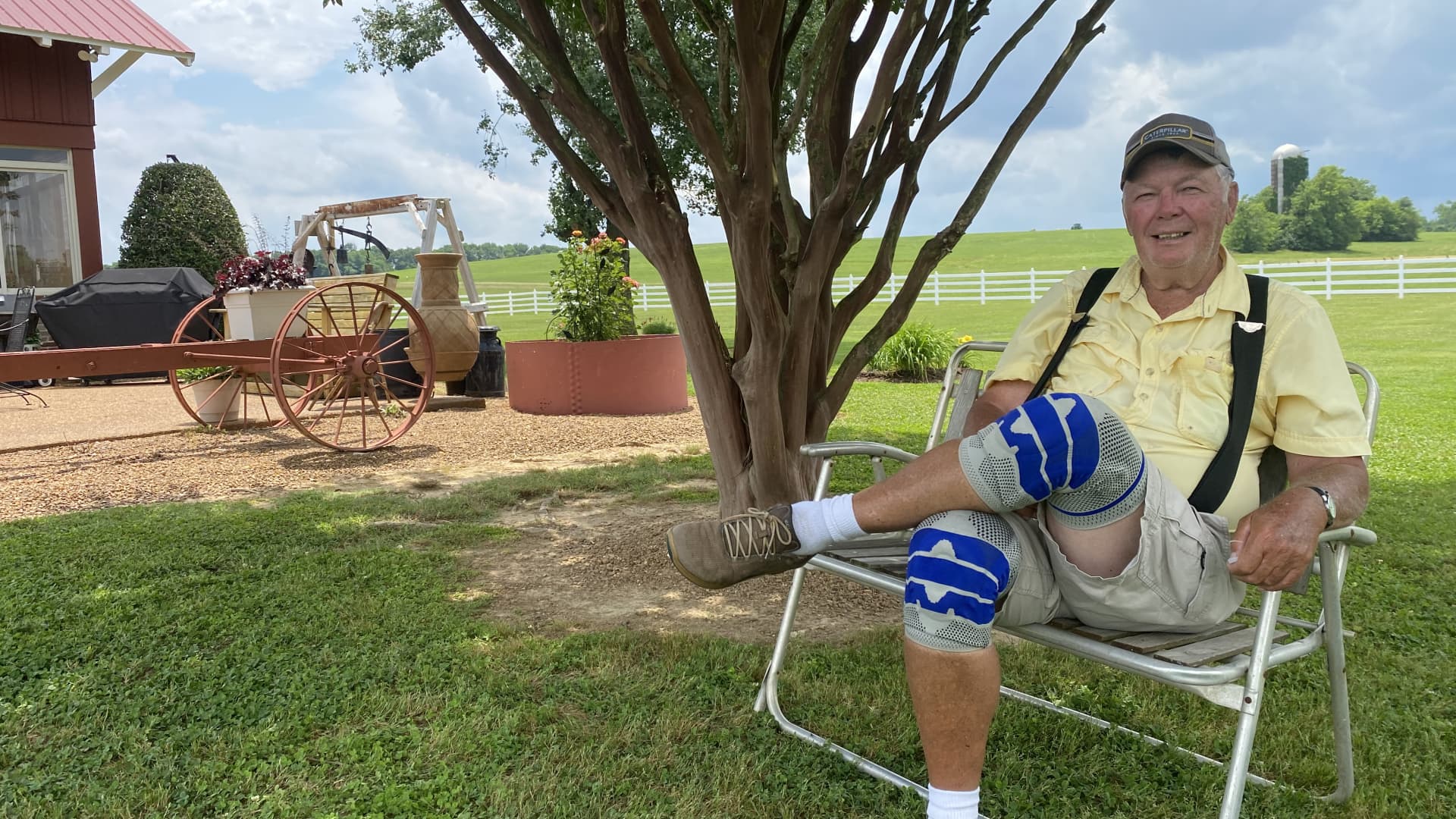
Jack Weaver, an 82-year-old retired dairy farmer whose house sits on a Civil War battlefield, lives near General Motors' Spring Hill plant in Tennessee.

Michael Wayland / CNBC

SPRING HILL, Tenn. – Jack Weaver can point to a cannon on a Civil War battlefield from the comfort of a shaded bench in his backyard — a visible marker of his land's rich past. As he speaks about his small town, it's over the loud rumble of cars and trucks at the intersection in front of his farmhouse red home.

The 82-year-old retired dairy farmer has lived in Spring Hill nearly his entire life. He's watched the once-quiet town in middle Tennessee grow into a burgeoning Nashville suburb. The evolution of Spring Hill has come in conjunction with a population boom in the state as well as the introduction of new industries — in particular, auto companies — that have poured billions of dollars in new investments into the state.

"It's good and it's bad," says Weaver, who complains about cars hitting his fence and the traffic General Motors' Spring Hill plant has brought since it opened in 1990. "I'm not against development at all. I'm not. I think a man outta do what he wants with his own land."

Detroit is the city that "put the world on wheels," but it's towns like Spring Hill and others in neighboring states that are attracting the most investments from automakers in recent years, as production priorities shift to a battery-powered future with electric vehicles.

Companies more than ever want to build EVs where they sell them, because the vehicles are far heavier and more cumbersome to ship than traditional models with internal combustion engines. They also want facilities for battery production to be close by to avoid supply chain and logistics problems.

Among the first to invest in southern states was Ford Motor in the 1950s and 1960s in Kentucky, followed by foreign-based, or transplant, automakers starting with Nissan Motor, which established a plant in Smyrna, Tennessee, in 1983. Others such as General Motors, Subaru, Toyota Motor and BMW followed suit through the 1990s. More have followed since then, including recent announcements by Hyundai Motor and Rivian Automotive to build multibillion-dollar plants in Georgia.

As more companies look to the American South, the investments are changing the landscape of towns across the region and of the automotive industry's workforce, supply chain and logistics. Companies first to set up shop in the South earn early advantages over their northern competitors, and future newcomers, according to officials.

Auto executives say they're investing in the South for a combination of reasons: lower energy costs, available workforce and livability among them. Many southern states also come with other benefits, potentially controversial, such as all-in lower pay for workers, millions in tax breaks and a largely non-unionized workforce in many of the Republican-controlled, right-to-work states.

But the shift brings unique challenges, too. As the Motor City moves and expands south, it has to grapple with preservation of historic plantation farms, unearthing of slave burial grounds and pushback from citizens and local politicians who aren't used to the traffic or industries.

Investments shifting

Automakers have announced $45.9 billion of investments in southern states since 2017, according to The Center for Automotive Research, a nonprofit think tank based in Ann Arbor, Michigan. That's the first year the South outpaced the Midwest, or Great Lakes region, for announced investments since at least 2010.

Midwest states such as Michigan, Ohio and Indiana saw $39.9 billion in announced investments in that same timeframe.

Most of the money heading south – $34.2 billion, or 74% – has come in since last year from traditional automakers such as GM, Hyundai and Ford Motor as well as EV startup Rivian. Others such as Volkswagen and Nissan continue to invest and expand their operations in the South, largely for new electric vehicles.

"We are basically undergoing the single biggest industrial transformation, I would say, not to understate it, in the history of America," Scott Keogh, CEO at Volkswagen of America, told CNBC in June at the automaker's new battery lab in Chattanooga, Tennessee. "It's happening right now in this area."

Scott Keogh of Volkswagen of America at the VW plant in Chattanooga, TN, June 8, 2022.

Michael Wayland | CNBC

Keogh singled out energy capacity and costs as the top priority for the company's investments in Tennessee, including the potential for new assembly and battery facilities that the company is "actively" scouting locations for. He and other executives have also cited incentives, tax support, labor and workforce training as other key elements.

Ford CEO Jim Farley put a similar emphasis on the cost and availability of energy in September, announcing an $11.4 billion investment in new vehicle and battery plants in Tennessee and Kentucky.

"We want to work with states who are really excited about doing that training and giving you access to that low energy cost," Farley told the Associated Press then.

Tennessee has among the lowest electricity prices in the country, according to the most recent data from the U.S. Energy Information Administration. The state's average industrial price of electricity per kilowatt-hour was 6.31 cents as of May. Michigan's industrial energy cost was 8.72 cents per kilowatt-hour, and the national average was 8.35 cents.

Mississippi and South Carolina were under 7 cents, while Georgia was 9.05 cents – among the highest in area, according to the U.S. Energy Information Administration.

While those cost differences seem minimal, they add up quickly. Ford's new battery plants will have an annual capacity for 43 megawatt-hours of production. There are 1,000 kilowatt-hours of electricity in a megawatt-hour, meaning tens of thousands of dollars in savings per year.

The expansion south is expected to continue for years to come, according to AlixPartners. The global consulting firm expects investments from automakers and suppliers in southern states such as Alabama, Georgia and Kentucky to total $58 billion for electric vehicles between 2022 and 2026. That's nearly four times the $15 billion that's expected in Midwest states, and $20 billion elsewhere in the country.

"It definitely will change but right now there's a lot more interest and activity happening in the Southern states, particularly with all these automakers making investments on the EV front," said Arun Kumar, a managing director in the automotive and industrial practice at AlixPartners.

Southern hospitality

With billions of dollars on the line and tens of thousands of new jobs, states have offered enormous incentive packages for the companies in the forms of land, tax abatements/incentives and other support such as installation of utilities and roadways.

For example, Tennessee approved an $884 million incentive package for Ford's plans to spend $5.6 billion in the state, as well as in-kind services and a $2 million grant for training services. Ford's investment includes a new electric truck plant and battery facility with supplier South Korea-based SK Innovation.

Bob Rolfe, who oversees The Volunteer State's economic development, said such actions are needed to compete with others. He said to attract Ford last year the state spent years accumulating enough land for an "electric vehicle mega site" ahead of securing the automaker's commitment.

"We tell our team every day to continue to recruit. Is enough, enough?" Lewis said ahead of a trip to Japan for automotive recruitment in June. "The more great companies that call Tennessee home, the softer the landing when we do hit the next wind shear that's going to be developed around the next recession."

Unique issues

But not all agree that the automotive industry should be expanding South into rural areas. Rivian has faced notable pushback since announcing plans last year to build a $5 billion plant about 45 miles east of Atlanta, Georgia.

While hailed by many politicians, including Gov. Brian Kemp, local news outlets report residents of the rural area are concerned with how it will impact their community. Others, including politicians, oppose a $1.5 billion in tax breaks and other incentives that state and local officials have offered Rivian.

Haynes Haven is a historic landmark in Spring Hill, Tennessee that has been maintained by GM since the automaker built an assembly plant near the site in the 1980s.

"[Union Army General] Sherman and his troops destroyed our community. Now this supposedly green company is coming to destroy it again," JoEllen Artz told NBC News in May. Artz is president of the grassroots No2Rivian group, which says it has raised over $250,000 and hired Atlanta lawyers to fight the plant. "We want to keep it just like it is."

Building massive assembly plants in traditionally rural areas can also involve a unique set of challenges.

Decades ago, when GM was building its Spring Hill plant, the company unearthed an unmarked slave graveyard. GM paid for the remains to be moved to a nearby burial site.

"When we invest in properties, we're also investing in communities, their history and culture," GM said in an emailed statement to CNBC. "With any building or renovation project, we expect to encounter the unexpected, and we try to work with community members to find solutions to fit the unique needs of each situation. In many cases, like in Spring Hill, the unexpected finds become intertwined in our own history, as well."

It wasn't the first time GM has operated around such a site. On the property of its Detroit-Hamtramck plant, there's an active Jewish graveyard that the company agreed to build around when it built the plant in the 1980s.

There was reportedly another cemetery moved in Smyrna, Tennessee – located about 28 miles northeast of Spring Hill – when Nissan's plant and railroads were built there in the early 1980s.

GM maintained and updated a historic plantation in Spring Hill, Tenn. called Rippavilla as part of a deal for land to build an assembly plant in the city in the 1980s.

Michael Wayland / CNBC

Since GM's Spring Hill Assembly plant was built, the company also has maintained two historic plantations as part of land deals struck during the construction. It still maintains one called Haynes Haven, whose historic horse stables were turned into a welcome center and used for other events. The surrounding area is currently being used for employee parking during construction of the company's new $2.3 billion battery plant, next to the original plant.

The other site, called Rippavilla, sits across the street from the plant and was donated by the company to the city in 2016. It is now being run by a nonprofit organization, The Battle of Franklin Trust, committed to Civil War preservation and education.

"The last people that owned Rippavilla were pretty insistent that they wanted it to be a historic site. They did not want to happen to what happened to Haynes Haven, which Haven is owned by GM and able to use however they see fit," said Eric Jacobson, CEO of the organization.

Jacobson credits GM with saving and maintaining the site in the form of $100,000 a year up until 2016, when a 10-year deal to maintain the property ended. GM said it continues to support the site.

Battling the union

Ford's more than $11.4 billion investment to build new U.S. facilities in Tennessee and Kentucky is expected to create nearly 11,000 jobs to produce electric vehicles and batteries.

Both GM and Ford officials have said the decision of whether to unionize at their U.S. battery plants, which are joint ventures, will be left to the workers.

While the labor cost gap has narrowed between the Detroit automakers and other non-unionized automotive plants, organized labor costs are higher for the companies.

At the end of a current four-year contract between the Detroit automakers and UAW in 2023, the Center for Automotive Research estimates average hourly labor costs per worker will be $71 for GM; $69 for Ford; and $66 for Stellantis, formerly Fiat Chrysler.

"There's quite a bit of anti-union attitude that prevails in the international carmakers," said James Rubenstein, a professor emeritus at the University of Miami Ohio, who specializes in the automotive industry. "It's a little bit easier to do that down South, to keep the union out."

Correction: A graphic in an earlier version of this article misrepresented industrial energy costs from the U.S. Energy Information Administration. They should have been in cents, not dollars.

Source https://www.globalcourant.com/automakers-investing-in-the-south-as-evs-change-the-auto-industry/?feed_id=10860&_unique_id=62f9394fa159c

World facing true climate emergency, says climate activist

ANKARA 

Extreme weather events like the deadly wildfires and flood-causing rains simultaneously gripping the world are signs of a looming climate emergency, according to a young environmentalist.

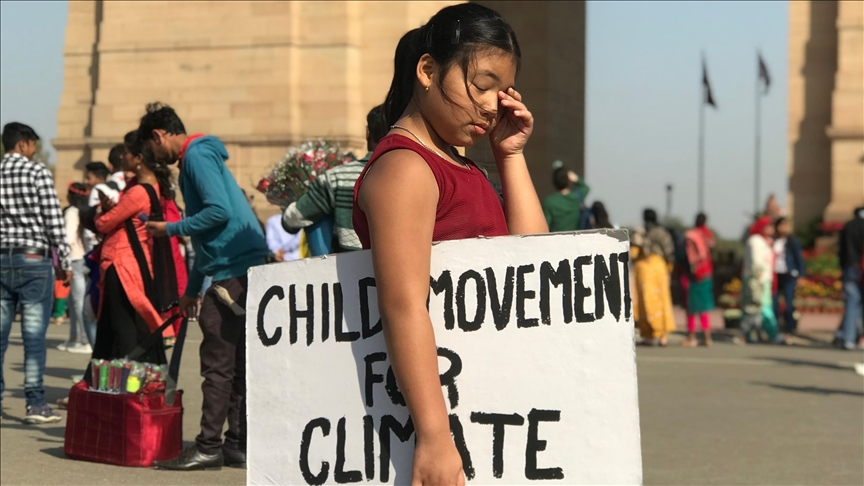
Speaking to Anadolu Agency, Indian climate activist Licypriya Kangujam warned of the increasing frequency and intensity of climate change-linked weather events and called on world leaders to take concrete steps on the matter.

"We want clean air to breathe, clean water to drink, and a clean planet to live (on), so these all are basic rights for all of us," she said.

Defining the reduction of carbon emissions as "the biggest challenge" at the moment, Kangujam said another urgent issue was biodiversity loss related to climate change and that both must be tackled together as "many biodiversity hotspots become climate hotspots."

Pointing to the wildfires, droughts, floods, food shortages, cyclones, heat waves, and air pollution that are currently impacting different parts of the world, she underlined the need for "equal attention and climate justice."

"This is true climate emergency ... These are all the impacts of climate change and our world leaders need to act now as soon as possible" for vows on paper to become action to "save our planet and our future," said the 10-year-old activist who was also a leader of The Child Movement, a climate and child rights group.

While the world must shift to renewable energy to achieve a low-carbon future, she stressed, global events continue to make achieving this goal harder.

"Considering natural gas and nuclear as clean energy is unacceptable at any cost. We want to have clear transition to clean energy," Licypriya underlined, referring to the European Parliament's decision last month backing EU rules labeling investments in gas and nuclear power plants as climate-friendly.

On the move, she said Europe had taken the war in Ukraine as "an excuse" to increase their reliance on fossil fuels, rather than expand the capacity of renewable energy sources.

Simply more 'greenwashing'

The ongoing energy crisis is proof that Europe is fully dependent on fossil fuels and will not quit them easily in the next few decades despite ambitious plans under the Paris climate agreement, Licypriya stated.

Signed on Dec. 12, 2015, the accord sets out a global framework to avoid dangerous levels of climate change by limiting global warming to well below 2C and pursuing efforts to limit it to 1.5C. To achieve this, the Paris deal focuses on lowering greenhouse gas emissions through a system of pledge and review.

The EU wants to encourage private investment in natural gas and nuclear, making it "very difficult" to make the transition from fossil fuels, particularly coal, to clean energy, warned Licypriya, arguing that this amounted to simply another case of "greenwashing."

In response to a question on the main focus of an upcoming global climate strike on Sept. 23, the Indian activist pointed to the climate crisis of the global south.

"We will draw the attention to our world leaders and also to the global media to stop neglecting the voice of the global south when we suffer the most. We want a concrete climate solution now," she added.

On how climate activism has developed in recent times, especially with the COVID-19 pandemic, Licypriya highlighted that online climate activism had gained huge momentum during the lockdowns all over the world.

"In street demonstrations, we need physical presence which is difficult for everyone. Now, the participation in climate activism is in huge increase all over the world after the pandemic."

Anadolu Agency website contains only a portion of the news stories offered to subscribers in the AA News Broadcasting System (HAS), and in summarized form. Please contact us for subscription options.

Source https://www.globalcourant.com/world-facing-true-climate-emergency-says-climate-activist/?feed_id=5496&_unique_id=62e8d16fd6a0c