#Stock #futures #fall #Wall #Street #closed #August #losses
https://www.globalcourant.com/stock-futures-fall-after-wall-street-closed-out-august-with-losses/?feed_id=18597&_unique_id=6310418ecb8c5

#Stock #futures #fall #Wall #Street #closed #August #losses
https://www.globalcourant.com/stock-futures-fall-after-wall-street-closed-out-august-with-losses/?feed_id=18597&_unique_id=6310418ecb8c5
Click here to download Jim Cramer's Guide to Investing at no cost to help you build long-term wealth and invest smarter.
#Cramer #avoid #speculative #investments #crypto #Fed #stays #hawkish
https://www.globalcourant.com/cramer-says-avoid-all-speculative-investments-like-crypto-as-the-fed-stays-hawkish/?feed_id=18016&_unique_id=630e9a08015cd
Reservoir police observe the water release from the Ross Barnett Reservoir Spillway onto the Pearl River, Sunday, Aug. 28, 2022, in Rankin County, Miss. Rogelio V. Solis | AP
The governor said the exact cause of failure was unknown, adding that the treatment plant had been inadequately staffed and operated for years. Reeves said the plant's two primary pumps had stopped working, which left the system to depend on unreliable backup pumps. "It's not operating anywhere near capacity," Reeves said of the plant. "We might find out [Tuesday] it's not operating at all. We'll find out." The water crisis is affecting the roughly 150,000 people who live in Jackson and the 30,000 who live in surrounding communities that rely on the same water treatment facility. Jackson is about 82% Black, according to U.S. Census data. In addition to the unreliable water system, the city has been grappling with crime and problematic infrastructure.
The Mississippi Emergency Management Agency is distributing water to residents and the state is overseeing efforts to begin emergency repairs and maintenance to get the water system up and running, the governor said.
#Mississippi #governor #declares #emergency #Jackson #water #crisis
https://www.globalcourant.com/mississippi-governor-declares-emergency-amid-jackson-water-crisis/?feed_id=17974&_unique_id=630e76ecc8d08
The coming week brings more Fed speeches, including Vice Chair Lael Brainard on Tuesday, before August's nonfarm payrolls report on Friday.
#Dow #futures #sink #points #Fridays #rout #Wall #Street #set #continue
https://www.globalcourant.com/dow-futures-sink-300-points-as-fridays-rout-on-wall-street-looks-set-to-continue/?feed_id=17190&_unique_id=630c1d127b49a
#Playing #sustainable #energy #transition
https://www.globalcourant.com/playing-the-sustainable-energy-transition/?feed_id=16721&_unique_id=630a9f7464450
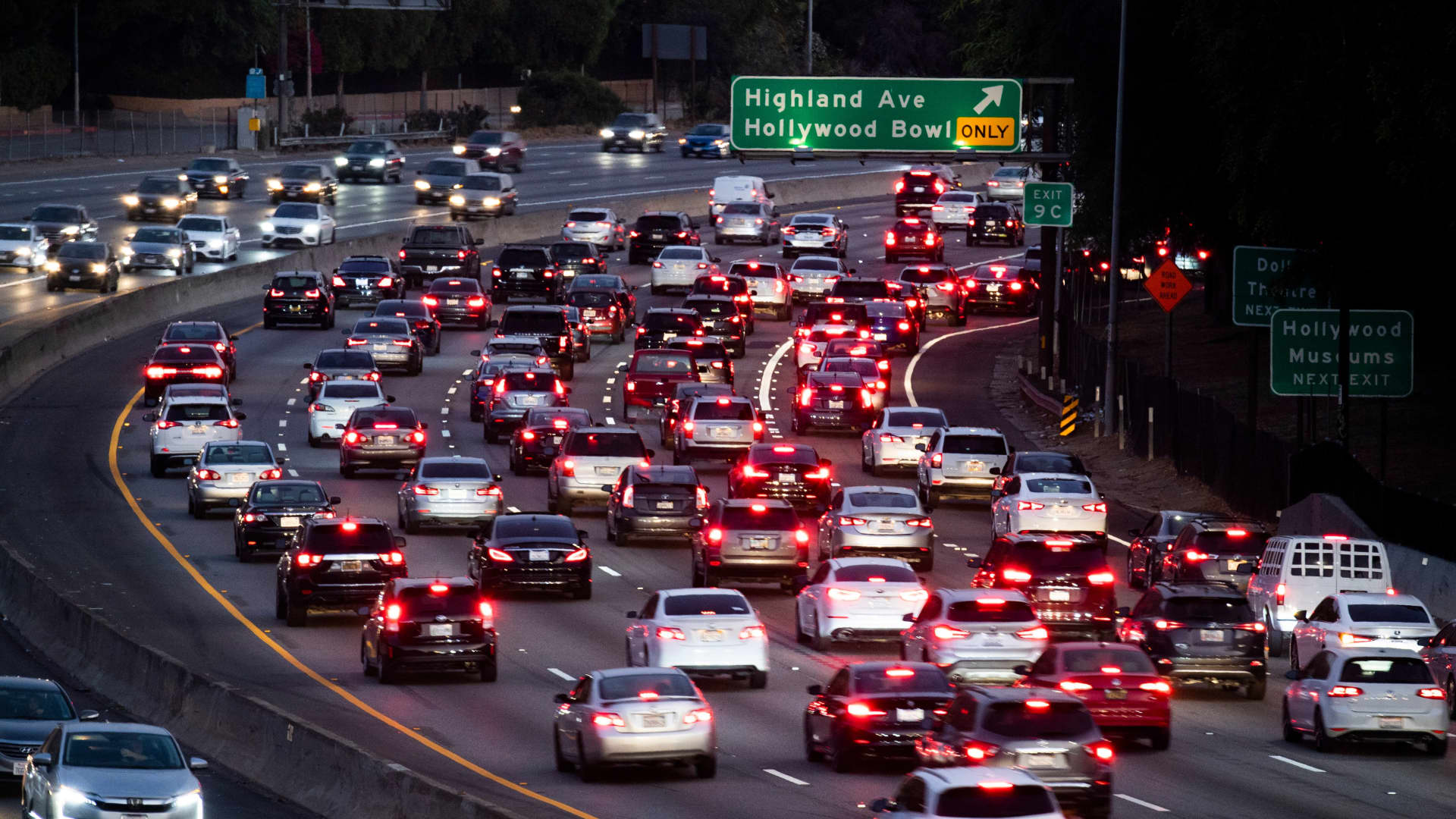
Motor vehicles drive on the 101 freeway in Los Angeles, California. Robyn Beck | Getty Images
California, home to congested freeways and the smog-filled skies over Los Angeles, has considerable authority over the country's auto industry. A federal waiver under the Clean Air Act allows the state to adopt stronger fuel economy standards than those of the federal government and it has set the precedent for the rest of the country on how to curb vehicle emissions. California's ability to control vehicle emissions has spurred innovations like catalytic converters that convert toxic gases and pollutants in exhaust gas into less-toxic pollutants, as well as "check engine" lights. The state established the nation's first tailpipe emissions standards in 1966. The Trump administration in 2019 revoked California's authority to regulate its own air quality, but the Biden administration restored that authority earlier this year. State officials said the rule is critical to meeting the state's goal of transitioning to 100% renewable energy by 2045, adding that resulting emissions declines would lead to fewer cardiopulmonary deaths and improved health for those suffering from asthma and other illnesses.
However, meeting the timeline will face challenges, including installing enough charging stations across the state and having adequate access to materials needed to make batteries for electric vehicles. John Bozzella, president and CEO of the Alliance for Automotive Innovation, which represents major automakers, said California's mandate would be "extremely challenging" for automakers to meet. "Whether or not these requirements are realistic or achievable is directly linked to external factors like inflation, charging and fuel infrastructure, supply chains, labor, critical mineral availability and pricing, and the ongoing semiconductor shortage," Bozzella said in a statement. "These are complex, intertwined and global issues." The rule comes after President Joe Biden signed the Inflation Reduction Act earlier this month, which provides funding for electric vehicle tax credits and clean vehicle manufacturing facilities. The Biden administration also issued new nationwide limits on tailpipe emissions last year for new cars and light trucks made through 2026. Environmental groups praised the decision on Thursday, though some argued that the board needed to set even tougher targets to meet the urgency of the climate crisis. Some groups had previous urged the board to impose a rule to achieve 100% zero-emission vehicle sales by 2030, five years earlier than the actual regulation. "This rule needed to match the urgency of the climate crisis and instead leaves Californians making sputtering progress in the slow lane," Scott Hochberg, an attorney at the Center for Biological Diversity's Climate Law Institute, said in a statement. "California needs to act strongly on gas-powered cars instead of ignoring them, and shift to EVs much sooner or watch our climate stability slip away," Hochberg said. Daniel Barad, California senior policy advocate at Sierra Club, said in a statement that the rule is "a major step towards breathable air in California communities, and will be critical for the state to meet its climate goals and emission reduction targets."
"Other states should move swiftly to join California and adopt this life saving rule, which will improve air quality and help slow the climate crisis," Barad said.
#California #bans #sale #gaspowered #cars
https://www.globalcourant.com/california-bans-the-sale-of-new-gas-powered-cars-by-2035/?feed_id=15832&_unique_id=6307f839529fc
Peloton reports quarterly earnings Thursday before the bell, along with Gap, Dollar Tree and Dollar General. Ulta Beauty, Workday and Affirm Holdings will release their own results after markets close Thursday.
#U.S #stock #futures #flat #Dow #break #threeday #slide
https://www.globalcourant.com/u-s-stock-futures-flat-after-dow-sp-500-break-three-day-slide/?feed_id=15377&_unique_id=6306a4d7c2f83
On the earnings front, traders are expecting Palo Alto Networks and Zoom Video to report results Monday after the bell.
Source
https://www.globalcourant.com/stock-futures-fall-as-wall-street-looks-ahead-to-jackson-hole/?feed_id=14003&_unique_id=6302d435499a0
Sam Bankman-Fried, founder and chief executive officer of FTX Cryptocurrency Derivatives Exchange, speaks during an interview on an episode of Bloomberg Wealth with David Rubenstein in New York, US, on Wednesday, Aug 17, 2022.
Jeenah Moon | Bloomberg | Getty Images
FTX rode the crypto craze to a billion dollars in revenue last year while expanding its global footprint through a flurry of acquisitions, according to internal documents seen by CNBC.
The audited financials give a rare glimpse into the privately held start-up's finances. FTX was profitable, quickly expanding across the globe and saw breakneck growth.
The privately held crypto exchange's revenue soared more than 1,000% from $89 million to $1.02 billion in 2021. Its profitability, like many start-ups, depends on how you measure it. Operating income was $272 million, up from $14 million a year earlier. FTX saw net income of $388 million last year, up from just $17 million a year earlier.
FTX declined to comment on the leaked financial documents.
The company brought in $270 million in revenue in the first quarter of 2022, and was on track to do roughly $1.1 billion in revenue in 2022, according to an investor deck shared with CNBC. But it's unclear how FTX held up in the second quarter as crypto prices plunged during the recent so-called "Crypto Winter."
By way of comparison, publicly traded Coinbase also experienced a cash boom times during crypto's bull market, with $7.4 billion in revenue and $3.6 billion of net income last year. But in Q2 of this year, it reported $808.3 million in revenue, a decline of 64% from the year-ago quarter, and a surprise net loss of $1.1 billion, compared with $1.59 billion in net income in the same quarter last year, as retail trading volumes cratered.
FTX was founded in three years ago by former Wall Street quant trader Sam Bankman-Fried. The 30-year-old CEO has recently stepped in as the industry's lender of last resort, looking to backstop companies as liquidity dried up. On top of multiple loans of hundreds of millions of dollars, Bankman-Fried's companies also looked to acquire distressed assets. In July, FTX signed a deal that gives it the option to buy lender BlockFi and was in discussions to acquire South Korean Bithumb. FTX also offered to buy Voyager in August but was turned down for what the company claimed was a "low ball bid."
According to the documents, FTX had roughly $2.5 billion in cash at the end of last year and 27% profit margins, according to the documents. Margins were closer to 50% if advertising and "related party" expenses are stripped out. It last raised money in January, collecting $400 million from investors like SoftBank's Vision Fund 2 and Tiger Global, at a $32 billion valuation.
FTX was founded at a time when Coinbase and Binance had solidified themselves as the world's largest trading venues. Coinbase still operates largely within the U.S. Binance, the largest exchange by trading volume got its start in China, later moved its headquarters to the Cayman Islands and is now making a push for the U.S. market with an American subsidiary.
FTX has been quietly building its own fleet of global subsidiaries to compete.
FTX Trading Ltd is headquartered in Antigua, with FTX Derivatives Markets based in the Bahamas, where Bankman-Fried lives. FTX Trading recently bought Digital Assets DA AG, out of Switzerland, as well as IFS Group and Hive out of Australia – bringing the total to 15 smaller companies across the world. Its portfolio companies span Cyprus, Germany, Gibraltar, Singapore, Turkey and the United Arab Emirates, among other countries, according to the documents. Crypto companies often acquire start-ups to quickly get the proper regulatory licenses to set up shop in a new country.
Bankman-Fried also founded trading firm Alameda Research, which accounts for about 6% of FTX's exchange volumes, according to the documents.
FTX's U.S. business is technically owned by a parent company, West Realm Shires Inc. As of 2021, FTX U.S. made up less than 5% of FTX's total revenue. Still, the company is making a push to expand here with a series of high-profile ads and sponsorships.
FTX spent roughly 15% of revenue on advertising and marketing in 2021, according to the documents. That may account for its 2022 Super Bowl ad with actor Larry David and high-profile celebrity endorsements by Tom Brady and Giselle Bündchen, who are also equity investors in the company. FTX also bought the naming rights to Miami's NBA arena, formerly the American Airlines Arena. FTX planned to spend an estimated $900 million in advertising in the coming years, according to the documents.
The crypto exchange is also expanding into stock trading. It launched equities trading weeks after Bankman-Fried took a 7.6% passive stake in Robinhood, fueling speculation that FTX is looking to buy the trading app in a landgrab for U.S. retail accounts. Robinhood and Bankman-Fried have denied that a deal is in the works.
FTX has certainly ramped up its retail expansion efforts. But the documents show that it's still mainly a venue for more sophisticated traders using derivatives – either futures, or options. Sixty seven percent of revenue came from futures trading fees, while roughly 16% came from so-called spot trading. Futures and derivatives trades tend to be more lucrative for exchanges.
Employees working on an air-conditioner production line at a Midea factory in Guangzhou, China.
Jade Gao | AFP | Getty Images
BEIJING — China reported data for July that came in well below expectations.
Retail sales grew by 2.7% in July from a year ago, the National Bureau of Statistics said Monday. That's well below the 5% growth forecast by a Reuters poll, and down from growth of 3.1% in June. Within retail sales, catering, furniture and construction-related categories saw declines.
Sales of autos, one of the largest categories by value, rose by 9.7%. The gold, silver and jewelry category saw sales rise the most, up by 22.1%.
Industrial production rose by 3.8%, also missing expectations for 4.6% growth and a drop from the prior month's 3.9% increase.
Fixed asset investment for the first seven months of the year rose by 5.7% from a year ago, missing expectations for 6.2% growth.
Investment into real estate fell at a faster pace in July than June, while investment into manufacturing slowed its pace of growth. Investment into infrastructure rose at a slightly faster pace in July than in June. Fixed asset investment data is only released on a year-to-date basis.
The unemployment rate among China's youth, ages 16 to 24, was a high 19.9%. The unemployment rate across all ages in cities was 5.4%.
"The national economy maintained the momentum of recovery," the statistics bureau said in a statement. But it warned of rising "stagflation risks" globally and said "the foundation for the recovery of the domestic economy is yet to be consolidated."
Analyst forecasts for July were projected to show a pickup in economic activity from June, as China put the worst of this year's Covid-related lockdowns behind it, especially in the metropolis of Shanghai.
Exports remained robust last month, surging by 18% year-on-year in U.S. dollar terms despite growing concerns of falling global demand. Imports lagged, climbing by just 2.3% in July from a year earlier.
However, China's massive real estate sector has come under renewed pressure this summer. Many homebuyers halted their mortgage payments to protest developer delays in constructing homes, which are typically sold ahead of completion in China.
The deterioration in confidence puts developers' future sales — and an important source of cash flow — at risk.
The potential for a Covid outbreak has remained another drag on sentiment. A surge of infections in tourist destinations, especially the island province of Hainan, stranded tens of thousands of tourists this month.
The local situation reflects the large gap between goals set at the beginning of the year and the ensuing reality. Hainan had set a GDP target of 9%, but was only able to grow by 1.6% in the first six months.
Similarly, at a national level, China's GDP grew by just 2.5% in the first half of the year, running well below the full-year target of around 5.5% set in March.
China's top leaders indicated at a meeting in late July the country might miss its GDP goal for the year. The meeting did not signal any forthcoming large-scale stimulus, while noting the importance of stabilizing prices.
The country's consumer price index hit a two-year high in July as pork prices rebounded.
This is breaking news. Please check back for updates.
During the 2010s, Sri Lanka had one of the fastest-growing economies in Asia.
Things took a 180-degree turn at the end of the decade as the country's economy stumbled. In May 2022, the government defaulted on its debt for the first time in history.
As inflation continued to spiral out of control, with a massive shortage of food, fuel and medicine for the country's 22 million people, Sri Lankans took to the street, forcing the president, Gotabaya Rajapaksa, to resign and flee the country.
Even though Sri Lanka has a new president, Ranil Wickremesinghe, protests continue. Inflation has risen past 50% — and could hit 70% — making it harder for people to survive.
Many experts believe that Sri Lanka's story is a warning sign for emerging markets.
"Sri Lanka is facing its worst economic collapse in its modern history," said Sumudu W. Watugala, assistant professor of finance at the Kelley School of Business at Indiana University. "This is due to long-standing structural weaknesses exacerbated by a series of idiosyncratic shocks. Sri Lanka's crisis can be a warning sign to other developing nations because it's a classic emerging market crisis in many ways."
So what does Sri Lanka's economic crisis signal about similar economies and emerging markets? Watch the video to learn about more risks involved in emerging markets, how Sri Lanka's economy collapsed and the country's path forward.
Dow futures were flat in overnight trading on Wednesday after all the major averages posted sharp gains on the back of a better-than-expected July inflation report.
Futures tied to the Dow Jones added 0.02% or 6 points, while S&P 500 futures and Nasdaq 100 futures inched 0.07% and 0.13% lower, respectively.
Disney added 6.7% in late trading after posting stronger-than-anticipated subscriber numbers and topping earning estimates on the top and bottom lines. Shares of Sonos slumped more than 19% after missing analysts' expectations.
Wednesday's regular trading session saw all the major indexes rally, with the Dow Jones Industrial Average jumping 535.10 points, or 1.63%, to close at 33,309.51. The S&P 500 added 2.13% to 4,210.24 and hit its highest level since early May, while the Nasdaq Composite gained 2.89% to 12,854.80, its highest close since late April.
The moves came after the headline consumer price index for July came in at 8.5%, slightly cooler than the 8.7% expected by analysts surveyed by Dow Jones, and raised questions as to whether inflation has hit its peak and the Federal Reserve will need to hike rates as aggressively as anticipated when it meets next month.
Beaten-up tech shares that have borne the brunt of this year's selloff drove Wednesday's market rally as shares of Meta Platforms and Netflix jumped 5.8% and 6.2%, respectively. Battered chip names such as Nvidia and Advanced Micro Devices jumped nearly 6% and 4%, respectively.
"For today, we're rallying, and I think it's really because inflation has been such an overhang for investors and for the market," Lindsey Bell, Ally Invest's chief markets and money strategist told CNBC's "Closing Bell" on Wednesday. "And I think what investors are thinking today is maybe the peak really has been put in the past."
Earnings season continues Thursday with reports from Rivian, Warby Parker, Poshmark and more. July producer price index data is also slated for Thursday.
Investors should eschew chasing recent rallies in stocks and bonds given the current economic uncertainty, according to the chief investment officer of Swiss asset manager Prime Partners.
Francois Savary said it was hugely difficult to have clear economic visibility due to the particulars of the current investment cycle, such as the Covid-19 recovery and the Ukraine war.
"One of the key factors that supported the rally, which was a strong bond market during the month of July, has disappeared to a certain extent," he told CNBC's "Street Signs Europe" on Monday.
Additionally, while the second-quarter earnings season has been robust so far, a key issue looming is how much analysts will revise their third-quarter earnings forecasts. "So we consider that the two elements that can support a further rally in the equity market are not clearly there," Savary said.
As such, he said investors should "absolutely not" be chasing the rally in equities that has been underway since mid-July. The S&P 500 is up almost 13% from its July lows, closing at 4,140 on Monday, but remains down since the start of the year.
On bonds, Savary said, "we all know it's very difficult to make money on the bonds side. I would not chase the bond rally that we experienced over the last two months."
Corporate, government and high-yield bond funds saw sizeable inflows last month. The U.S. 10 Year Treasury yield — which moves inversely prices — has slipped to trade around 2.76% on Tuesday after topping 3.48% in mid-June.
Investors in global markets are navigating a whirlwind of inflationary pressures, recession risks and central bank tightening cycles, with even juggernauts such as Berkshire Hathaway and SoftBank posting investment losses in the June quarter.
"It's a very difficult market environment," Savary told CNBC. "You need to have some hedge funds [and] some kind of decorrelating strategy that are in your portfolio."
Keeping some investment in stocks will provide partial protection from inflation, he said, however investors will need to be tactical and observe the latest economic figures.
Meanwhile cash, Savary said, is useful for providing flexibility.
"It's interesting to have some cash to check because everything is possible in this kind of environment. We could have a recession, but you could also get a slow but satisfactory rate of growth in the coming 12 months," he said.
For now, Savary said the market has priced in a recession. "But the numbers are not telling you that there is a recession, so we need to be nimble and to check what is happening week-by-week and month-by-month, and we should have more visibility by the early fall, in the U.S. in particular."
U.S. gross domestic product fell for the first two quarters of the year, meeting a common definition of a recession, although the NBER defines it differently and the White House insists the U.S. is not currently in recession.
Investors will be looking to U.S. inflation data out Wednesday for further clues on the state of the world's largest economy. It comes after the jobs report for last month showed unexpected strength and increased expectations of a 75 basis points rate hike in September.
Air travelers wait in the ride share lot near a sign for Uber at Los Angeles International Airport (LAX) on August 20, 2020 in Los Angeles, California.
Mario Tama | Getty Images
Shares of gig economy companies Uber, Lyft, DoorDash and Airbnb popped this week after the companies posted quarterly reports that showed strong demand.
Lyft finished the week up 46%, and Uber jumped 37%, the best week ever for both stocks. DoorDash closed up 15%, and Airbnb rose for a third straight week, climbing 5.5%.
Investors are encouraged to see that gig companies in the consumer market are, so far, withstanding inflationary pressures that have rocked other sectors, such as retail. It also may be an indication that grocery delivery platform Instacart can form a stronger pitch for an IPO. Instacart confidentially filed for an IPO in May, though it's had to bring its private market valuation down.
Uber CEO Dara Khosrowshahi said he's noticed a change in consumer spending from retail to services. And inflation may even have helped. Khosrowshahi said Uber saw a boost in the number of drivers on the platform as consumers look to other ways to increase their income.
Airbnb, meanwhile, posted an all-time high in bookings. DoorDash said it had a record number of orders. Lyft, which still had a net loss, posted its highest ever adjusted earnings figure.
Here are some of the highlights:
Investors are closely monitoring the health of the U.S. economy after recent numbers showed a second consecutive negative gross domestic product reading.
As a result, upcoming data releases related to the labor market will be highly anticipated by many money managers.
Nonfarm payrolls data will be released at 8:30 a.m. ET, alongside unemployment and average hourly wage numbers.
Richmond Fed President Tom Barkin is scheduled to deliver remarks at 8 a.m. ET on Friday.
Cleveland Fed President Loretta Mester on Thursday said the Federal Reserve plans to keep raising interest rates into 2023, in another sign that the central bank does not yet see an economic recession.
Stocks have broadly rallied in July, with the Nasdaq bouncing off earlier declines. And Wall Street is debating if markets have hit the bottom yet. Growth stocks such as tech have broadly slumped this year on the back of monetary tightening, recession and other risks. And Morgan Stanley in a Aug. 3 report warned that while the Nasdaq has bounced 16% since June 16, investors shouldn't get ahead of themselves. "This is not a market bottom, things are not going to go consistently up from here as we are going to be buying fewer tech products for a while, so everyone has fewer units to make as post-COVID demand = pre-COVID," the bank's analysts wrote. "Reality check – unlike 'big tech', the consumer discretionary related companies are giving more cautious guidance," they added. Morgan Stanley listed a few examples: Sony disappointed on guidance, Microsoft and Apple are slowing hiring. Microsoft, in addition, said small and medium businesses are spending less on IT and warned of a deteriorating PC market in June, the investment bank noted. The "outlier," Morgan Stanley said, is Apple. Consumption in China is down as well, thanks to the effects of Covid lockdowns, according to Morgan Stanley. That sluggishness will hit the e-commerce and consumer discretionary sectors, it said. Why shares may be bouncing The bank said that stocks are bouncing now for a few reasons — inflation expectations have eased due to declining commodity prices, and a perceived slowdown in interest rate hikes means less pressure on tech stocks. Earnings have been "lackluster, but not as bad as feared," it added. U.S. stocks mostly continued the rally this week. The Nasdaq is up 2.7% so far, while the S & P 500 hit its highest level since June on Wednesday, rising 0.5% so far on the week. But Morgan Stanley sounded a note of caution on what's ahead. Read more Asset manager predicts the next bull market — and reveals how to position for it Here’s how to invest for yields to beat a bad year for stocks and bonds — according to the pros Has the market hit bottom? Here’s what Wall Street has to say after the U.S. stock market rebound in July "Earnings aren't going to go higher — the issue is not on the current earnings season (that's backward looking) but we are on the wrong side of the profit cycle and it is the next earnings season and the one after, where we'll see write downs, top line pressure and mean reversion of margins," the analysts said. Tech stock picks Morgan Stanley said Samsung is one tech stock that can weather "the storm." It says the firm has a "tremendous range of resources" it hasn't yet monetized, and has seen its valuation drop by a level that's "most significant" since late 2018. Morgan Stanley gave the stock a price target of 70,000 Korean won ($53), around a 14% upside. The bank said it likes companies that have the ability to consistently grow better than their peers, naming chipmakers TSMC and Alchip as two such examples. Morgan Stanley gave TSMC a price target of 780 Taiwanese dollars, an upside of about 55%. It also gave Alchip a price target of 1,420 Taiwanese dollars, an upside of more than 120%. Morgan Stanley said it would sell parts of tech such as cloud semiconductors and Japanese semiconductor capital equipment.
Fast News
Clashes between police and the Departmental Association of Coca Producers (ADEPCOCA) have continued in the capital La Paz, where coca growers demand the closure of what they say are new illegal coca markets.
"We want to close this illegal market. We will not accept any more (coca) markets, we will be in constant protest, so this must be shut down, whatever it takes," said one of the coca growers during the protest.
ADEPCOCA manages the main coca market in the capital and claims to be the only market authorised to trade coca leaves.
Coca-leaf trade
In recent years, the organisation has been opposed to the former president and leader of the ruling MAS party Evo Morales, who heads another coca growers' union in the Chapare locality in the central region of Cochabamba.
The coca leaf trade is legal in Bolivia and takes place in markets specifically designated by law and managed by the coca growers' unions.
This sale generates profits for the leaders and is at the root of the conflict.
In Bolivia, the constitution classifies coca as a "sacred leaf" because of the Andean cultural heritage and traditional uses such as chewing and natural medicine, which are widely practised in the country.
However, much of coca leaf production is diverted to cocaine, of which Bolivia is the world's third-largest producer after Colombia and Peru.
Source: AP
The S&P 500 fell nearly 1% on Friday, but finished the week higher, as investors digested disappointing results from Snap that sent social media shares reeling.
The Dow Jones Industrial Average lost 137.61 points, or 0.43%, to 31,899.29. The S&P 500 declined 0.93% to 3,961.63, while the Nasdaq Composite traded 1.87% lower to 11,834.11.
Those losses cut into weekly gains for all three major averages, with the Dow closing out the week nearly 2% higher. The S&P 500 advanced about 2.6%, and the Nasdaq capped the week up 3.3%.
An earnings miss from Snap, which sent shares tumbling about 39.1%, halted this week's Nasdaq rally. Traders, eyeing some better-than-expected results from tech companies, had deliberated whether markets had finally found a bottom.
"Snap has managed to snap the uptrend in the Nasdaq by reporting disappointing earnings, which has created a cascading effect on the S&P," said Sam Stovall, chief investment strategist at CFRA Research.
"This is just an example of the volatility that investors should expect as earnings are reported, and, therefore, could cause fluctuations in prices in response to better than or worse than results," Stovall added.
The results from the Snapchat parent were followed by a slew of analyst downgrades on the stock. Snap's quarterly report also weighed on other social media and tech stocks, which investors feared could face slowing online advertising sales.
Shares of Meta Platforms and Pinterest fell about 7.6% and 13.5%, respectively, while Alphabet lost 5.6%.
Twitter rose 0.8% despite reporting disappointing second-quarter results that missed on earnings, revenue and user growth. The social media company blamed challenges in the ad industry, as well as "uncertainty" around Elon Musk's acquisition of the company, for the miss.
Verizon was the worst-performing member of the Dow after reporting earnings. The wireless network operator dropped 6.7% after cutting its full-year forecast, as higher prices dented phone subscriber growth.
About 21% of S&P 500 companies have reported earnings so far. Of those, nearly 70% have beaten analyst expectations, according to FactSet.
Meanwhile, concerns over the state of the U.S. economy also weighed on sentiment after the release of more downbeat economic data. A preliminary reading on the U.S. PMI Composite output index — which tracks activity across the services and manufacturing sectors — fell to 47.5, indicating contracting economic output. That's also the index's lowest level in more than two years.
The report comes a day after the U.S. government reported an unexpected uptick in weekly jobless claims, raising questions about the health of the labor market.
Still, Wall Street has enjoyed a strong week for markets, as traders absorbed second-quarter results that have come in better than feared. On Friday, the S&P 500 touched the 4,000 level, which it hasn't hit since June 9, before coming back down.
The Dow got a boost earlier in the session following a robust earnings report from American Express. The credit card company jumped about 1.9% after beating analyst expectations, because of record consumer spending in areas such as travel and entertainment.
"This is showing you that market expectations are really low, that a little bit of good news can go a long way when you have low expectations," said Truist's Keith Lerner, noting that investors rotated back into growth stocks even amid weak economic data.
To be sure, some market participants do not believe the bear market is over despite this week's gains. Since World War II, nearly two-thirds of one-day rallies of 2.76% or more in the S&P 500 occurred during bear markets, with 71% occurring before the bottom was in, according to a note this week from CFRA's Stovall.
Stovall believes the broader market index could rally as high as the 4,200 level before coming back down to challenge June lows.
— CNBC's Fred Imbert contributed to this report.